Marketing reports and market data
Documents

The Measurement Crisis (in mobile UA) | #1 of 5 in State of Measurement Series
The mobile user acquisition landscape is currently undergoing a profound transformation, driven by the deprecation of device identifiers like IDFA and the implementation of stringent privacy regulations.
- The deprecation of device identifiers like IDFA and stricter privacy regulations have rendered legacy last-touch attribution models obsolete and unreliable.
- The industry is experiencing a measurement crisis marked by fragmented data, declining performance metrics, and longer payback periods for marketing investments.
- Incrementality testing using holdout groups is now the primary method for isolating causal installs and determining true return on investment.

FOUR Secrets To Gorgeous Game Art!
The creation of visually striking game art relies on the strategic integration of thematic hooks, intentional contrast, and disciplined color theory.
- Align all visual elements—including character design, environments, and UI—with a central thematic hook to establish a cohesive narrative and a distinct brand identity.
- Utilize visual juxtaposition by blending contradictory aesthetics, such as pairing cartoon-style visuals with dark or mature themes, to generate player interest and viral potential.
- Develop a 'style bible' early in production to define core colors, fonts, and motifs, ensuring visual consistency across scaling development teams.
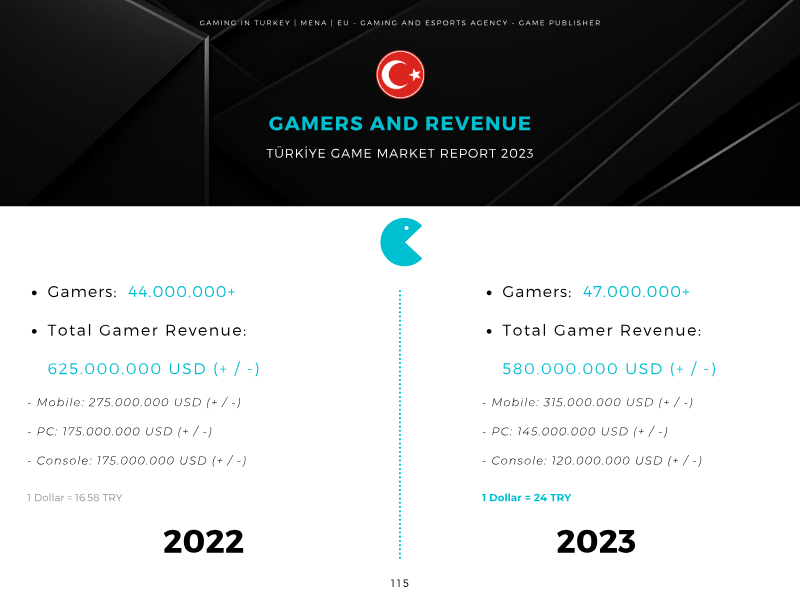

Türkiye Game Market 2023 Report
The 2023 Türkiye Game Market Report provides a comprehensive analysis of a resilient and evolving gaming ecosystem navigating significant economic volatility and geopolitical instability.
- The Turkish gaming market generated $580 million in revenue in 2023, supported by a player base of 47 million people.
- Approximately 90% of games produced in Türkiye are exported internationally, with titles like Royal Match demonstrating the country's capacity for world-class content.
- The industry is strategically shifting away from hyper-casual mobile titles toward more sustainable business models, including hybrid-casual, indie productions, and PC/console development.
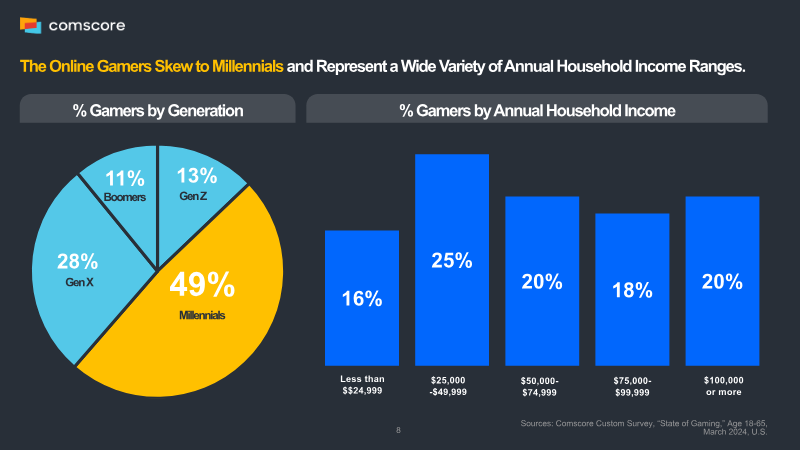


Level Up – Harnessing the Power of Gaming Audiences
The gaming industry has evolved into a mainstream entertainment pillar, commanding significant consumer time and offering a robust landscape for brand engagement.
- Gaming is a mainstream U.S. medium, with 62% of adults aged 18–65 playing games multiple times per week.
- Cross-platform engagement is high, as 77% of gamers use more than one device and 40% play across PC, console, and mobile platforms.
- Two-thirds of gamers view in-game advertisements as having a neutral or positive impact on their experience, with 34% noting that product placement enhances realism.

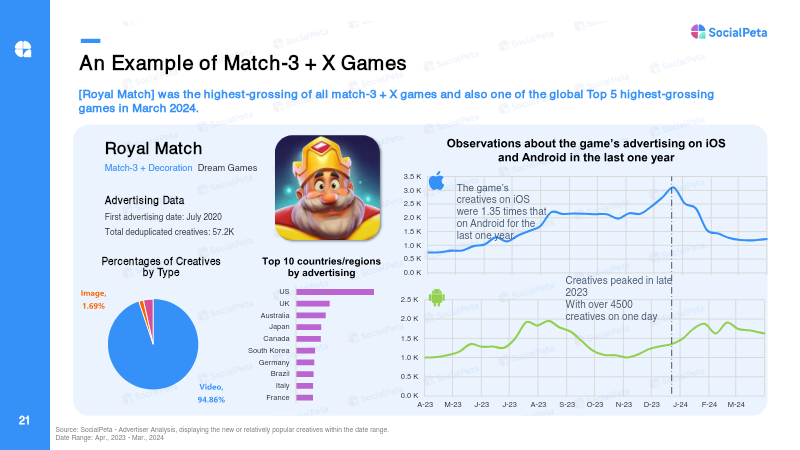

Marketing Insights into Global Casual & Puzzle Games for Q1 2024
The global mobile gaming landscape in the first quarter of 2024 is characterized by a significant expansion in the advertiser base, which grew nearly 29% year-over-year to approximately 51,300 monthly active participants.
- The global mobile gaming advertiser base grew 29% year-over-year in Q1 2024 to 51,300 participants, while the volume of unique creatives per advertiser dropped by 18% as firms shifted toward quality over quantity.
- Casual and puzzle games dominate the market, accounting for 50% of all active advertisers, with casual games alone responsible for nearly 40% of total ad creatives.
- Success in saturated markets like the US and Europe requires high-quality short-form video content and rapid creative iteration to mitigate player fatigue.



Turning Organic Success into Long-Term Revenue: A Framework for F2P Mobile Games
This industry guide provides a strategic framework for mobile game developers to transition from initial organic traction to sustainable, long-term revenue growth.
- Developers should treat monetization and user acquisition as iterative, scientific processes, using predictive modeling to forecast ROAS up to one year in advance to ensure profitability.
- Implementing a hybrid ad mediation setup that combines real-time bidding with manual waterfalls can yield an immediate 10% to 20% uplift in ARPDAU.
- Personalized, segmented in-app purchase offers can increase player spending by up to 23%, while regional pricing adjustments in lower-purchasing-power markets can boost ARPDAU by as much as 30%.

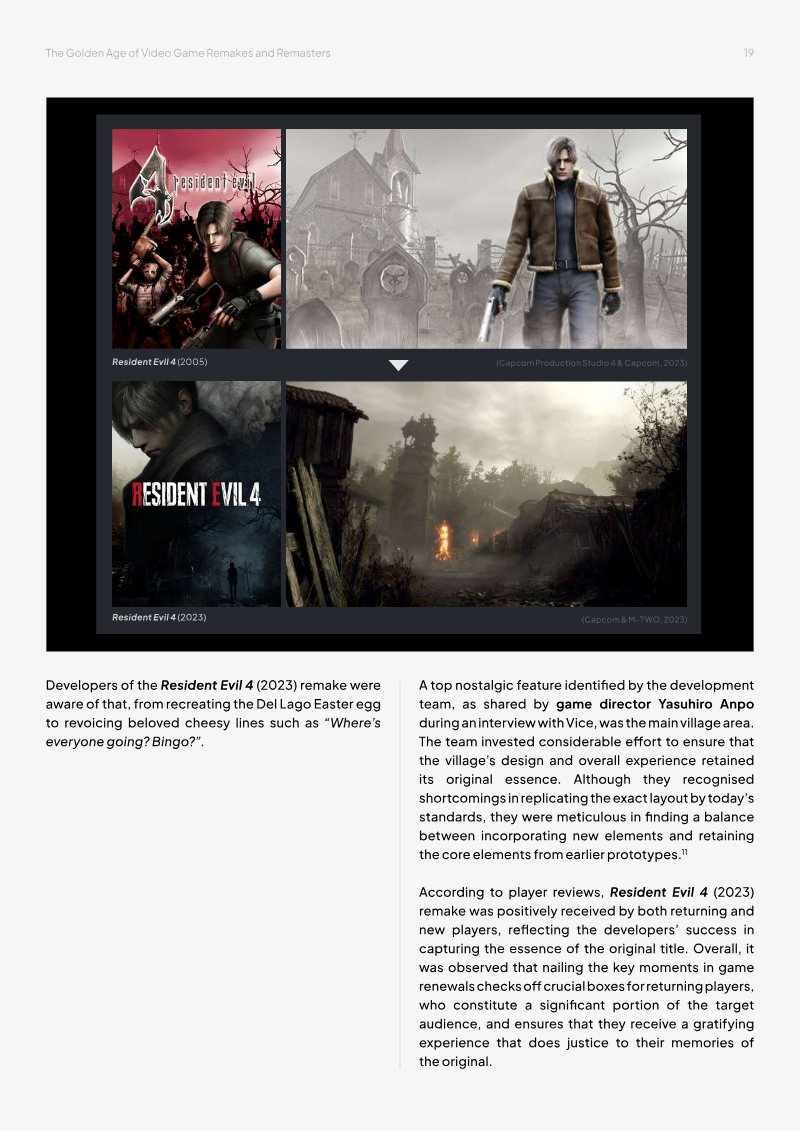

The Golden Age of Video Game Remakes and Remasters
The video game industry has entered a definitive era of remakes and remasters, fueled by a risk-averse development climate and the significant purchasing power of nostalgic Millennial consumers.
- Remakes and remasters serve as a strategic financial hedge against the rising costs of developing original intellectual property in a risk-averse industry.
- Full remakes require a gestation period of nine to twenty-five years to ensure technological advancements are significant enough to justify a full-price purchase.
- Remasters are most commercially effective when released within five years of the original title to capitalize on hardware transitions.

The Long, Perilous Journey of Creating "Cult Of The Lamb" — Full Time Game Dev Podcast Ep. 008
The development of Cult of the Lamb represents a strategic pivot from the rapid, high-turnover environment of the Flash gaming era toward a disciplined, premium-focused model for PC and console markets.
- The visual identity of Cult of the Lamb was a conscious decision to blend cute, Saturday-morning cartoon aesthetics with dark, gritty themes, drawing inspiration from the success of games like Don't Starve and The Binding of Isaac.
- Maintaining a consistent color palette—specifically black, red, white, and a 'holy' neon green-blue—was critical for the game's UI and marketing, ensuring a cohesive visual identity across all assets.
- The development team prioritized strong, clean silhouettes for character design to ensure they remained recognizable and iconic, often simplifying shapes to prevent visual clutter.
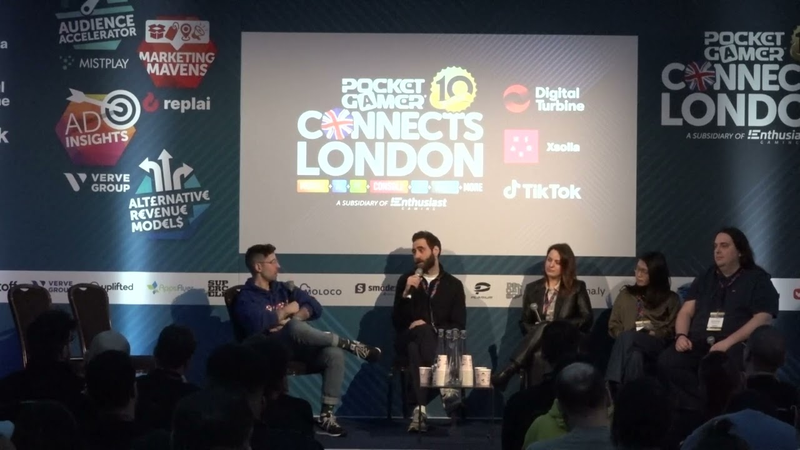
Panel: The Mobile Marketing Survival Guide: How to Navigate new Industry Trends.
Mobile marketing success in the current landscape depends on a sophisticated synthesis of cultural localization, AI-driven automation, and rigorous creative testing.
- Creative strategy is the primary driver of user acquisition, requiring strong storytelling and compelling hooks within the first three seconds of an advertisement.
- Global scaling requires moving beyond generic assets to prioritize localized content, regional influencer partnerships, and high levels of linguistic and cultural accuracy.
- Developers must shift from short-term metrics to long-term retention by aligning product development directly with marketing efforts to create player-centric experiences.
When you Said 'Attribution', did you Mean 'Contribution'? - Maor Sadra & Hadar Telem, INCRMNTAL.
The shift toward a privacy-centric digital landscape has rendered traditional user-level attribution increasingly unreliable, necessitating a transition in how gaming companies allocate marketing budgets.
- Marketers must shift from deterministic user-level attribution to incrementality-based contribution analysis to account for the erosion of data accuracy caused by Apple’s App Tracking Transparency and privacy manifests.
- Budget allocation should be determined by measuring the actual incremental value a channel provides to total market performance, rather than relying on potentially duplicated or skewed attribution data.
- Companies can identify cannibalization by comparing total conversions against paid traffic, revealing instances where increased ad spend fails to generate a net lift in overall installs.
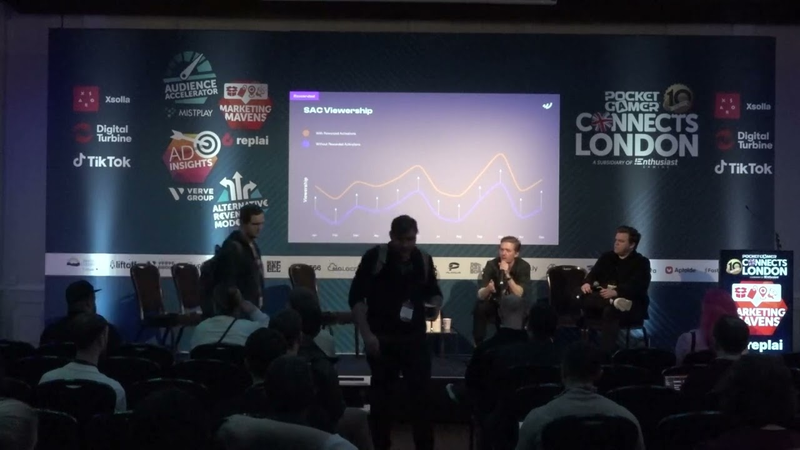
Creator Collaborations in Gaming - 2024 & Beyond - Axel Danielsson & Björn Karlsson, WeHype.
The gaming industry is experiencing a strategic shift in how developers and publishers engage with content creators, moving beyond traditional paid sponsorships toward a more integrated, multi-tiered approach.
- Long-term game success is increasingly dependent on designing titles that are inherently 'watchable' and optimized for content creation, rather than relying solely on traditional paid sponsorships.
- Publishers should adopt a three-tiered collaboration strategy: paid partnerships for high-control campaigns, revenue-sharing models for consistent long-term promotion, and non-monetary support (e.g., early access, skins) to build brand affinity.
- Coordinating user acquisition, marketing, and community management teams to achieve 'market takeovers'—where creator-led content dominates—is a proven method to measurably reduce cost-per-install (CPI) for paid campaigns.

Redefining the UA Playbook in the new era of Mobile - Gabe Lewis, Mistplay John Wright, Kwalee
The mobile gaming industry is currently navigating a challenging landscape where traditional user acquisition metrics, such as high install-per-thousand-impressions (IPM) rates, no longer guarantee commercial success.
- Integrating physical rewards into virtual gameplay can increase user lifetime value (LTV) by up to 40x compared to standard acquisition models.
- Mobile publishers must pivot from a rapid-prototyping model to long-term development cycles that prioritize player retention and loyalty over high-volume install rates.
- Bridging the gap between virtual and physical worlds—a strategy historically successful in social casino games—is now a viable economic model for broader mobile gaming genres.