Marketing reports and market data
Documents
Privacy vs. Ad Monetization with Google's Ross Brockman and Kwalee's John Wright
The mobile advertising industry is undergoing a fundamental structural transition, moving away from legacy waterfall ad-buying models toward real-time bidding (RTB) systems.
- The mobile advertising industry is shifting from legacy waterfall models to real-time bidding (RTB) systems to reduce latency and increase market efficiency.
- Developers should anticipate a manageable 10% to 20% decline in ad revenue throughout 2024 as the ecosystem adjusts to ongoing privacy-centric mandates.
- To maintain access to personalized ad demand, developers must implement standardized consent management platforms in response to EU and UK regulatory pressures and Apple’s App Tracking Transparency.
It's Better To Be Friends: Marketing "Asks" and the Reality of Game Production
Successful game development requires a fundamental shift in how studios manage the relationship between production and marketing.
- Integrate marketing teams into the development process early to identify and plan for required assets, rather than treating marketing requests as last-minute interruptions.
- Build marketing needs directly into the development schedule, treating assets like trailers, demos, and screenshots as core deliverables that must be planned for alongside game features.
- Aim to spend only 10% of total project time on final asset production by completing the bulk of the planning and preparation work well in advance of marketing deadlines.
Product Madness’ Piyush Mishra On Smart Questions For Smaller Studios
Smaller mobile game studios must transition away from expensive, traditional soft launches toward a model of strategic, low-cost concept validation.
- Marketing must be integrated into the product development process from the start, as marketing teams provide essential data-driven feedback on target demographics and user retention that product teams cannot identify in isolation.
- When evaluating game viability, studios should benchmark against current genre standards—such as 30% D1 retention and 7% D7 retention in the Social Casino space—rather than relying on historical performance or internal success metrics from older titles.
- To minimize early-stage UA costs during soft launches, studios can test in lower-cost markets like the Philippines, Malaysia, or India to validate basic retention metrics before moving to high-value markets.
Drive Profitable Business Growth With Meta’s app ads & Audience Network, Toby Wilkins.
Meta’s strategy for driving profitable growth for app developers centers on three pillars: optimizing user acquisition through AI-driven automation, improving attribution accuracy, and evolving monetization capabilities within the Audience Network.
- Meta has removed campaign limits for Advantage Plus app campaigns, allowing for unlimited creation to support high-liquidity, AI-driven performance optimization.
- The Meta Install Referrer for Android, which integrates with all major mobile measurement partners (MMPs), has demonstrated a 20% increase in attributed conversions by capturing edge cases missed by Google Play's standard referrer.
- Meta is transitioning toward privacy-resilient ad serving solutions for iOS and Android (via Google Privacy Sandbox) to move away from the traditional one-to-one user match requirement.
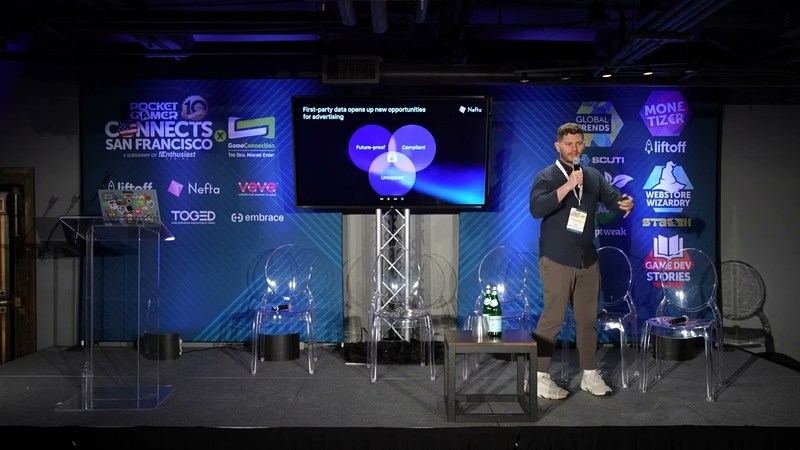
Seizing the First Party Data Opportunity in Mobile Games Advertising, Fernando Pernica, Nefta.
The mobile gaming industry is currently navigating a challenging transition into a privacy-first era, characterized by stringent regulations and the widespread adoption of opt-out mechanisms.
- The mobile gaming industry has seen a 35% decline in in-app purchase revenue following the implementation of recent privacy-first regulations and opt-out mechanisms.
- The loss of traditional identifiers has caused significant drops in advertising revenue and eCPMs, forcing advertisers to struggle with effective user targeting.
- Large industry conglomerates are responding to privacy shifts by creating siloed, opaque data environments that prioritize their internal optimization over publisher transparency.
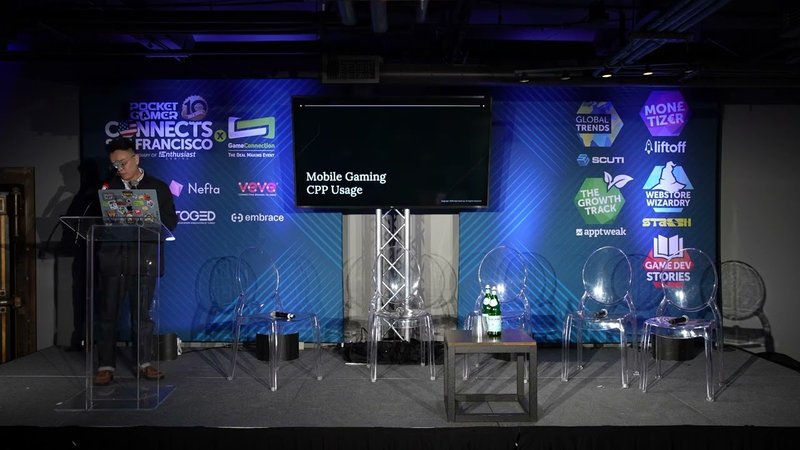
ASA & CPP Playbook for Mobile Game, Ian Pernia, AppTweak.
This analysis examines the strategic application of Apple Search Ads (ASA) and Custom Product Pages (CPP) to optimize mobile game growth.
- Aligning Apple Search Ads (ASA) with Custom Product Pages (CPP) significantly improves conversion rates by matching ad creative directly to specific user search intent.
- While default product pages often yield higher tap-through rates due to broad appeal, CPPs consistently outperform them in the critical transition from impression to install.
- The analysis is derived from a large-scale dataset encompassing over 20 million keywords and 6 million applications.
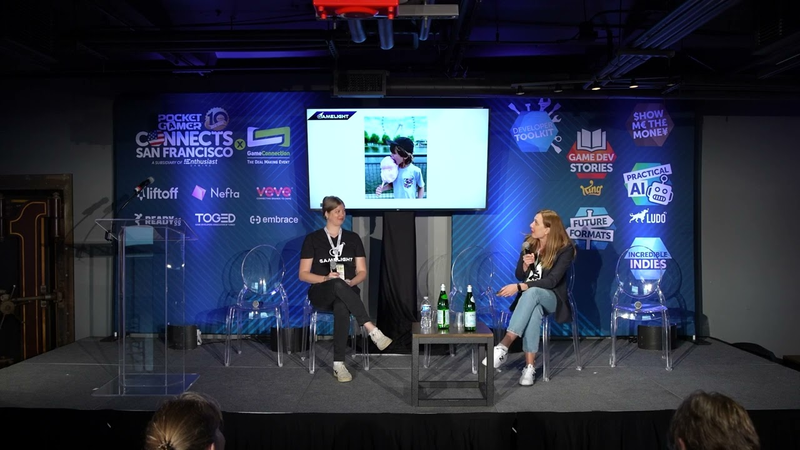
Gamelight: Power of Game Recommendation Apps, Valentina Bailly & Kathleen Sherman, Gamelight.
Gamelight operates as a rewarded game discovery platform, functioning as an ad network that connects mobile game publishers with users through personalized recommendations.
- Gamelight’s AI-driven recommendation platform delivers an average 40% increase in day-seven retention and return on ad spend (ROAS) for its publishing partners.
- The platform functions as a rewarded discovery engine that utilizes behavior-based incentives, such as coins for reaching milestones, to drive sustained user loyalty rather than short-term extrinsic motivation.
- Gamelight operates as a first-party data owner, requiring explicit user permission to track app usage data to ensure compliance with privacy standards like ATT and IDFA.
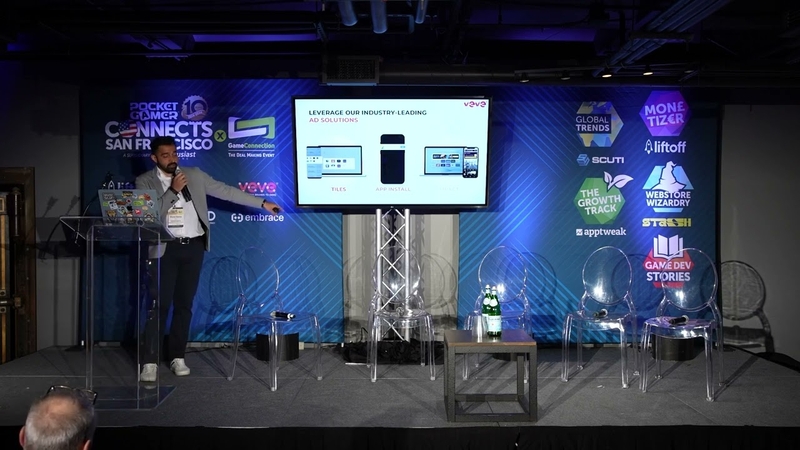
Delivering Performance Advertizing Outcomes at Scale Beyond Traditional Media Platforms.
The advertising landscape is shifting as hardware manufacturers, or original equipment manufacturers (OEMs), emerge as significant alternatives to traditional big tech platforms like Google and Meta.
- Original Equipment Manufacturers (OEMs) are emerging as a major alternative to traditional big tech platforms, with the OEM software industry projected to reach $600 billion within five years.
- Affinity Global acts as a strategic intermediary, providing a unified layer to manage ad delivery and technical integration across fragmented OEM ecosystems like Xiaomi, Oppo, and Vivo.
- The platform provides access to one billion global users, including 500 million daily active users on the web and over 100 million on mobile apps.
How to Advertise Hybrid-Casual Games in 2024
The hybrid-casual gaming sector has emerged as a strategic evolution for developers transitioning from hyper-casual models, which often suffer from low lifetime value (LTV) and retention challenges.
- Hybrid-casual games should target a revenue split of 40% to 50% from in-app purchases (IAPs), with the remainder derived from in-app advertising to balance monetization between spenders and casual players.
- Success metrics have shifted from hyper-casual CPI benchmarks to long-term ROAS and LTV, with day-30 and day-60 ROAS serving as the primary indicators of sustainability.
- The Asia-Pacific region is projected to dominate the market, accounting for approximately 64% of total ad spend revenue in 2024.

Elia Games’ Clary Xiaodan Zhang On Saving Marketers 50 Hours/Week With No-Code Automation
Modern user acquisition and monetization strategies are undergoing a significant transformation through the implementation of no-code automation systems.
- Implementing no-code automation systems using tools like Google Sheets and Notion can save marketing teams up to 50 hours of manual labor per week.
- Automation should function as a filtering mechanism that removes operational noise, allowing marketers to prioritize high-impact strategic initiatives over repetitive tasks.
- Human judgment remains essential for cross-platform decision-making and brand management, as current AI and automation tools lack the capacity for nuanced creative consistency.

"I Had 100,000 Wish-lists for my game..." and then THIS Happened...
This analysis examines the challenges of independent game development, specifically focusing on the discrepancy between high pre-launch wishlist counts and actual commercial performance.
- Accumulating a high number of wishlists over a long period (e.g., two years) is less effective than gathering them in a short timeframe, as Steam’s algorithm prioritizes recent momentum over total volume.
- Despite achieving 100,000 wishlists prior to launch, the game sold approximately 40,000 units over two years, demonstrating that wishlist conversion rates can fall significantly below industry-standard expectations.
- A gross revenue of roughly $300,000 is heavily reduced by platform fees (30%), taxes (approx. 30%), and living expenses, meaning a 'successful' launch by unit count may still fail to provide long-term financial sustainability for a solo developer.

Behind the GDC Booths: Unpacking Industry Challenges | 342
The contemporary gaming industry is currently defined by a profound disconnect between the stagnant output of large, well-funded studios and the agile innovation emerging from smaller, independent teams.
- The gaming industry is experiencing a structural disconnect where large, well-funded studios face stagnant output and bloated development cycles, while independent teams are capturing market share through agile innovation.
- Widespread industry instability, marked by recurring layoffs, is eroding institutional knowledge and threatening the long-term viability of major development projects.
- Corporate strategy is currently dominated by a focus on short-term quarterly growth and performative marketing, which prioritizes financial metrics over workforce retention and sustainable creative development.