Marketing reports and market data
Documents
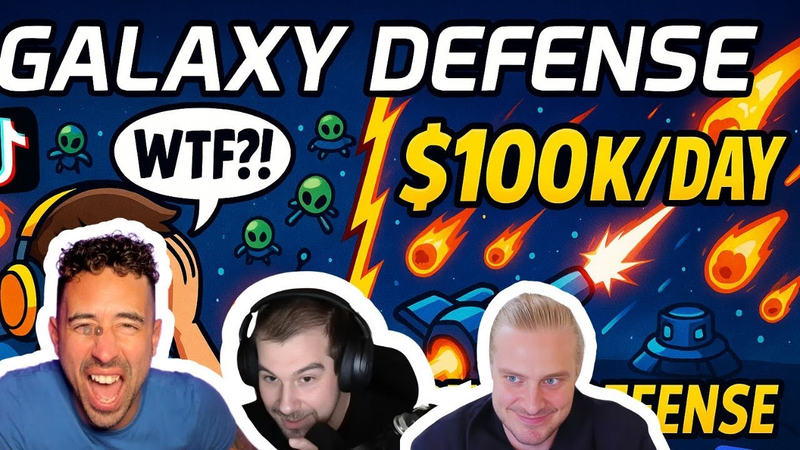
Galaxy Defense Review: Bang Bang Survivor in space. Jakub’s Prophecy Still Unfulfilled!
Galaxy Defense functions as a sci-fi iteration of the popular roguelite tower defense genre, mirroring the core gameplay loops found in titles like Bang Bang Survivor and Doodle Magic.
- Galaxy Defense generates $220,000 in daily revenue with 135,000 daily active users, demonstrating the immediate financial viability of the roguelite tower defense genre.
- Customer acquisition costs for the title in Tier 1 markets are prohibitively high, frequently ranging between $50 and $100 per user.
- The game relies on derivative marketing tactics, including AI-generated 'fake interview' advertisements, to sustain its user base despite a lack of original conceptual depth.

Let's Review Your Games — Ep. 024
Effective game development hinges on the seamless integration of intuitive mechanics, immersive narrative delivery, and rigorous adherence to intellectual property standards.
- Indie developers should avoid using robot protagonists, as they make it difficult for players to project themselves onto the character and lack the emotional resonance required for effective storytelling.
- Game narratives must provide immediate context to the player, such as establishing the character's location and their lack of knowledge about their surroundings, to ground the player in the experience.
- Forcing players to abandon core mechanics, such as jumping, requires a strong narrative or visual justification, like a specific item or environmental change, to avoid feeling unintuitive or restrictive.

Tom Francis: How He Sold 1,000,000 Copies Of His Games | Ep. #052
Successful game development relies on an iterative, experimental process that prioritizes human-led design over rigid planning or data-driven optimization.
- Achieve financial and operational stability by utilizing self-funded business models and small, agile teams rather than chasing speculative market trends.
- Prioritize an iterative, experimental design process that establishes a solid core structure early to facilitate effective testing.
- Utilize large-scale public beta testing with thousands of participants to gather reliable quantitative and qualitative data, avoiding the risks associated with small, anomalous sample sizes.
Want To Make Games? Listen To Advice From A 10 Year Veteran...
The primary objective for aspiring game developers in 2025 is to prioritize the completion of small, tangible projects to validate their skills and market interest.
- Aspiring developers should prioritize finishing a small, complete project to prove their capability, as studios and collaborators value the practical experience of navigating a game from start to finish.
- Testing a game concept with friends or a local circle is a vital validation step; if the idea fails to generate genuine enthusiasm, it is often better to pivot rather than continue development.
- While a clear, high-concept pitch is helpful, execution, atmosphere, and 'vibes' can be more important for commercial success than a unique mechanical loop, as seen in games like Inscription and Gone Home.

🤯 Creative trends July 2025: Jonas Brothers, LEGO + Gucci in Mobile Ads? Yes, Really.
The mobile gaming industry in July 2025 is defined by a hyper-aggressive, scale-at-all-costs approach to user acquisition.
- Major publishers like iKame are achieving annual run rates exceeding $200 million by prioritizing high-volume, AI-driven creative experimentation over traditional production standards.
- The mobile gaming industry is shifting toward a model where success is defined by the ability to scale aggressive, high-frequency ad formats rather than original intellectual property or technical polish.
- Publishers are increasingly utilizing controversial and bizarre hooks—such as 'childhood trauma' tests, bait-and-switch tactics, and ASMR puzzles—to maximize immediate user engagement.

Cyberpunk 2077’s troubled launch taught CD Projekt the value of physical events (and other stories)
Modern game marketing demands a shift away from luck-based strategies toward data-informed, long-term engagement models.
- CD Projekt’s experience with the Cyberpunk 2077 launch highlights that failing to align promotional materials with the final product quality destroys community trust and long-term commercial viability.
- Marketing strategies must shift from high-risk, stealth-launch tactics to long-term engagement models that prioritize consistent, high-quality gameplay experiences over cinematic trailers.
- Physical industry events like Gamescom are essential for gathering direct, high-fidelity feedback and building community energy that digital channels cannot replicate.
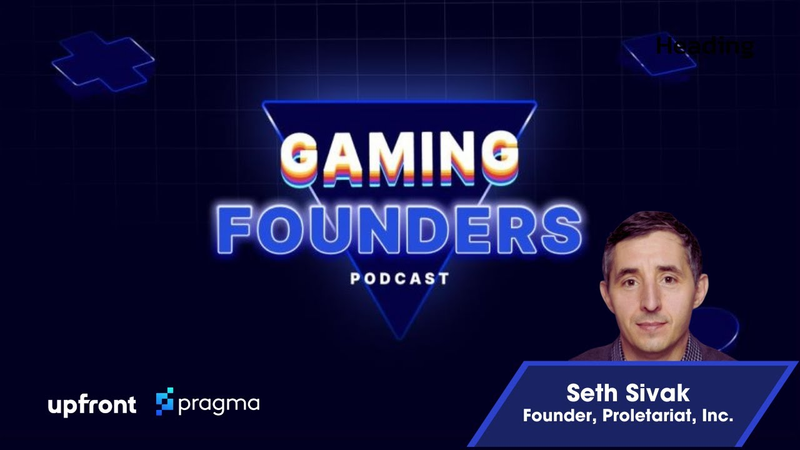
Discord Community Building: Seth Sivak on How Spellbreak Built a Fortnite Sized Community
Proletariat’s evolution from a small startup to an acquisition by Blizzard underscores the critical necessity of team cohesion, transparency, and strategic adaptability in the volatile gaming industry.
- Proletariat survived multiple near-death experiences by maintaining transparency with investors and employees, including a period where they operated with less than two months of runway for years.
- When building community, prioritize experimental growth over maintenance; Sivak advises against spending limited resources on standard social media posting until the game has proven sustainable.
- Large tech partnerships carry significant execution risk, as evidenced by an Amazon store integration that yielded only 16,000 installs—less than 5% of the projected 500,000 target—before Amazon shut down the platform.

Marketing Your Game Under the New Steam Rules
Steam visibility is fundamentally driven by the strategic deployment of high-quality demos, which function as the primary catalyst for wishlists, streamer interest, and algorithmic exposure.
- Demos are the primary driver of Steam visibility, with successful developers using them to trigger significant spikes in wishlists and unlock access to content creators and festivals.
- Steam's 2024 algorithm changes prioritize games that perform well in the Discovery Queue, where high engagement—measured by clicks, wishlist additions, and purchases—can scale a game's impressions from a base of 25,000 to over 70,000.
- Developers should utilize the 'Playtest' feature to iterate on their game and build momentum before a formal demo launch, as playtests can generate visibility spikes comparable to official demo releases.

Turn a Text-Only Game Into A Steam Hit
The long-term commercial viability of niche, text-based titles on platforms like Steam relies heavily on a philosophy of iterative development and deep community integration.
- Focus on building a game you personally enjoy rather than chasing market trends, as creating something you are passionate about increases the likelihood that others will find it engaging.
- Leverage procedural generation to create unique, unpredictable experiences by building complex systems that layer rules on top of raw generation, rather than relying on shallow, noisy randomization.
- Prioritize outreach to smaller YouTubers and streamers, as they are often more receptive to covering indie games and can provide the initial content momentum needed to attract larger creators.

🚗 Car Match Review: A 9/10 Product With with 3/10 UA Strategy = Heartbreaking 💔
Car Match represents a highly polished puzzle title that successfully utilizes a proven meta-game template to achieve significant commercial success.
- Car Match is generating approximately $120,000 to $130,000 in daily revenue by utilizing a highly polished, proven puzzle game template similar to Royal Match and Match Factory.
- The game's monetization is highly efficient, with roughly 30% of total revenue derived from ad placements and a well-structured system of layered bundles and level-gated interstitials.
- Despite strong product performance, the game's user acquisition (UA) strategy is considered a scaling risk because the studio is currently running only 5–7 active creative concepts.
Game Dev Recap: Making Viral Games
Designing games specifically for content creators serves as a primary strategy for achieving viral success in the indie game market.
- Designing for virality requires prioritizing the viewer experience over the player experience by focusing on instant conflict, clear readability, and structured tension curves with distinct relief periods.
- To maximize content creator interest, developers should avoid 'flow breakers' and incorporate long-form story arcs, boss fights, or chase sequences that prevent viewer drop-off.
- Effective viral game design builds upon human instincts like survival and fight-or-flight responses, layering unique brand identity over familiar, recognizable concepts to ensure mass appeal.
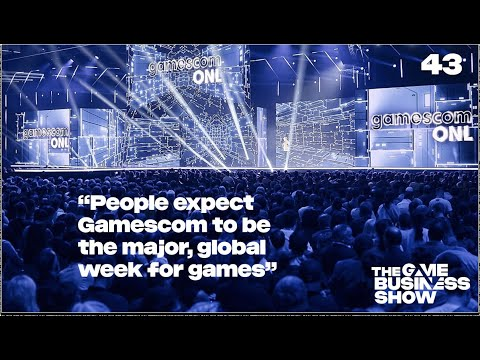
Gamescom: E3’s demise has been good and bad for us
Gamescom has emerged as the preeminent global gaming event, successfully bucking industry trends of declining attendance by hosting 1,500 exhibitors from 72 countries.
- Gamescom has solidified its position as the leading global gaming event by hosting 1,500 exhibitors from 72 countries, successfully blending B2B networking with a consumer-facing festival model.
- The industry is shifting from hardware-centric models to community-based engagement, with publishers prioritizing multi-platform releases and mobile accessibility on platforms like Roblox to reach younger demographics.
- While Gamescom has filled the void left by E3, it no longer serves as the primary venue for major global announcements, a role now largely occupied by platforms like The Game Awards.