VideoThomas Brush
Want To Make Games? Listen To Advice From A 10 Year Veteran...
28 Aug 202512 min video
Transcript
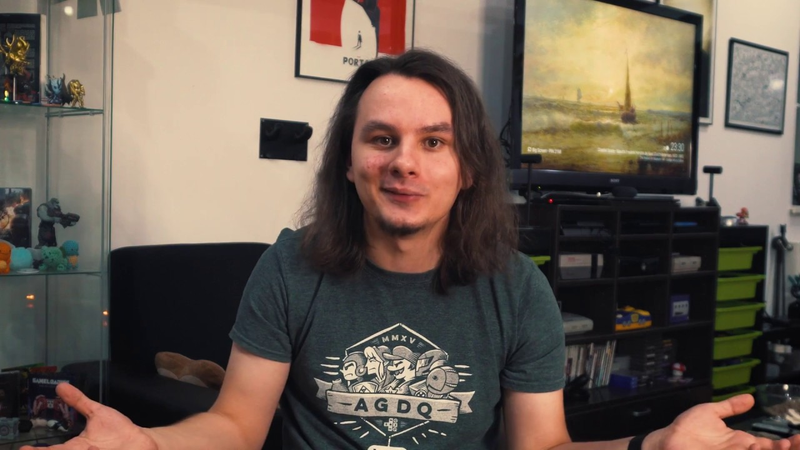
All right, so you want to make games in 2025. And hey, you maybe want to make a career out of this. Imagine sitting in your bedroom or your home office and making indie games that come straight out of your brain and onto your computer monitor. That's exactly what Tom Francis has done for over a decade. With no outside funding, no publisher, Tom has released some wildly successful indie games that all came out of his brilliant mind like Gunpoint, Heat Signature, and his latest hit, Tactical Breach Wizards, which won excellence in design at IGF this year. This video is a clip from the fulllength podcast. And in it, Tom goes into detail about how to start making games in 2025 and specifically the crucial ingredients you'll need to actually finish your game and hopefully make some money doing it. If you're someone who wants to make a living making indie games, it's best to listen to someone who's actually doing it right now. This conversation is gold, so stick around. And by the way, if you need help on your game, but you don't want to
partner up or hire somebody, perhaps consider a tool that is well almost like a real person that will help you with your project. The tool is called Bezi and it's today's sponsor. Bezi is like having a development partner. And with their new agent mode, it's almost like you're adding another team member. It doesn't just respond to your prompts. It has this full context of your entire project and makes tailored suggestions by searching your assets, your scripts, your scene graph, Unity Docs, and even the internet to give you the most accurate help possible. See, with agent mode, you can modify and create code directly in your project through the Bezi app. It speeds up repetitive tasks, helping debug tricky issues, pinpoint performance bottlenecks, and it even tracks every change so you can revert at any time. I've been trying it out on my own projects for a while, and I recently made a full video showing how it quickly helped me fix four very real issues I've been meaning to fix in my game, Brave
Boy. It really shows how powerful Bezi can be and how much time it can save during development. So, definitely check it out through the link below. The best thing is that Bezi is completely free to try and if you like it, you can get 50% off your first month of Pro using the link in the description. I've got young people in my life, nieces, nephews, uh, kids of friends, and they want to make games. They want to do what you're doing. They want to do what I'm doing, but you're you're you're killing it. You're just crushing it. And I also am really impressed by you because you haven't taken outside funding, and so you figured out how to comp like completely do this from scratch. And that's super duper impressive. So, what do you tell these people, these young people? What's the plan? What's the framework? How do you how do you land where you've land?
Yeah. Yeah, I mean the first thing to say is like to manage expectations. The thing I did worked in 2013 and probably wouldn't work today. Like it's it's much harder day today to do what I did. Uh which is start something in your spare time, mess around with it. At the time I needed artists and composers. I put out
a little video of it and and showed what I had and said, "Hey, does anyone want to work on this with me?" But it might be free. We might not charge for it. Uh so um wasn't offering any money. Uh but if we did charge for it, we'd do revenue share and just don't risk anything was was my strategy. Like just let's let's experiment or see where we're going. It can be risky to go into it with teammates if you decide like a five of us are going to make a game together. I think there's so much that can go wrong there. Um uh if that's how you start, I think what
Sorry,
what can go wrong? uh people having different ideas about what the game's going to be, people being unreliable. You know, might be great friends with someone and you know that they make music or whatever and uh then only once the project starts do you realize, oh god, working with this person is hell. They keep changing their mind. They keep throwing their work away. A healthy professional relationship with someone who's also talented at something you're not talented at is in very rare to to find, I think. Um and and you like working with them and you still like being friends with them and and all of that. I'm very lucky to have found those people. When I started it was to find out, you know, can I do game design?
I've been a critic for a while and I've been I've been trying to suppress the armchair game designer in me when I'm reviewing stuff. I'm like, okay, my job is to say whether this game is good or not and why. There's a part of me that wants to say what they should have done instead. Like, I don't see why they didn't do it this way. Why Why isn't there a mini map in this? Why why can't you load an early save in this? And I had all these ideas and and theories and, you know, wanted to put them to the test, but I knew I couldn't judge myself unless I built something. So, I had to learn programming to do that. I didn't want to be a programmer particularly. I just had to learn what I needed to learn to build something. And I think I'd advise anyone to do that. Even if you're an artist and you want to be an artist, like learn enough that you can build something. It doesn't have to be Game Maker or Unity. You could do like a Twine game or something. But uh there are so many different tool sets out there that you can mess around with that have good tutorials and you don't need to build something. You don't need to build a good game to test whether you can make good art for it or or or writer. I know a lot of writers who would like to be writing for games but um haven't had an experience doing it. And uh I think you just got to make something of your own and then you'll
find out whether you like doing that and and having those skills is going to be useful anyway. Like uh our programmer John Window, one of the reasons that he was appealing to me even on paper before I met him and tried working with him is that he had made a jam game. He actually won the game jam with this this jam game flourish. And just knowing he'd been through the whole thing from start to finish was very reassuring of like okay this person is going to know that when you're making games sometimes you have to take shortcuts. Sometimes you have to um you got to have a a practical mindset about it. And so that's that's great. I think anyone who if you're looking to get a job at an existing studio, they are going to love that you've made something that they can play and and that you've been through the whole thing. Like this just just gives you a bit of peace of mind about a candidate that they know what making a game is is like even if it's a very small and simple thing. And then yeah, doing that is going to teach you what you have on your hands. Like am have I made something that's that stands out? Have I made something that I'm proud of? Uh do my friend are my friends excited about it? if they are excited about it then show it publicly and well show it publicly either way I think uh and see if the public get any attention. I obviously had a big head start in this as well because being a games journalist
all my friends not only um were into games but also had a good handle on the industry and what's out there and so when they told me this is something interesting like I think you should charge money for this uh I could believe them and uh
right
take it seriously cuz that it meant something. I knew that like okay they're my friends and they'd be nice to me but they wouldn't be this nice out of politeness like for them to say that as a games journalist means means something. Um, but you know, anything if you make anything that excites your friends, I think that's a good sign. Yeah. Who was I listening to the other day? He was talking about their very first game. Oh, it was um the person who made The Root Trees Are Dead. They made a bunch of games that didn't really go anywhere as part of game jams. And when they started showing The Root Trees are dead to people, like people would get addicted to it. They they would just uh lose themselves in it. And he'd never seen that before. And so that was when he knew he had something that he could, you know, make something of. And I think that that's a really good approach. just, you know,
would you would you finish a game if you didn't get a good response from your friends or your local circle?
Um, probably not. I've a few times I've
um started on on an idea and shown it to people and just not got the enthusiasm that I that I hoped for and what I find is that it kills my own enthusiasm. Like my part of my enthusiasm is not just that I want to make this for myself, although I do. it's that I think people will be excited by this and then when I find out they're not going to be excited by it then I'm like okay never mind.
Yeah. Yeah.
You got to be pretty flexible with that stuff. There's some things I I did um there's an aspect of this next game that I pitched to some friends and uh it didn't get quite as positive of a response as I thought it would um or as I hoped and they had some very uh fair issues with it and I rethought it in response to their issues um and they like the new version better but I still didn't necessarily walk away with like the the boost of enthusiasm that I uh that I want to get from showing people. Um, but with this idea in particular, I found myself still really fixated on it. It's a it's a fairly like complicated thing. It's a little bit hard to pitch. So, I'm not too put off that people haven't quite seen it yet. I haven't
built anything really yet. So, that's the main thing is I'm just pitching the idea. So, there could be something wrong with a pitch. Uh, and I really want to go further with it and build enough that we can do, you know, ideally a prototype, but if not, like a a mockup trailer where we could show like here's what we would show if we had the game and see if that excites you. If something's hard to pitch, doesn't that mean
that it's potentially a bad idea?
Yeah.
And I think that's another thing to say to to people starting out is is yeah, if you pitch your idea to people and they don't get it, then that might be a red flag.
Uh I'm hoping I've been through the process enough times now to sort of tell the difference between the pitch. I mean, I I've pitched it again since this these revisions to new people. I pitched it a lot of GBC to friends and I got a really good response then. And uh it's got a title that we're not announcing yet, but um sometimes when I say a title for people, they're like, "Oh, yeah, awesome." Uh which is that was the Tactical Breach Wizards, you know, secret weapon was um the only title we've ever done where people like get kind of what the game is from the title.
Just from the title. Yeah.
Some people are just sold right away. This next title is not going to be as good as that. I can pretty much guarantee that. But um it was just a question of like, is there anything we can convey with a title? Because it titles are very difficult and um and most titles do not convey anything at all. You know, I I I kind of feel like people listening right now, this is just my opinion, I feel like they should be weary of trying to prove an idea without at first trying to flesh it out because I don't know, like I used to be an advocate for if your game doesn't make sense in a sentence, you probably shouldn't do it. But I tried out my own advice on my on my own games. I made a game about like a it's like a a game where you play as a dog and you have a sword and you can go and unite different breeds of dogs and and do like basically medieval warfare as dogs
and you can unite it's a great idea. I really do. I think it's a great idea,
but and I I thought I executed it well. I just I really went for it and nobody cared. Um, I launched the demo and people are like, you know, and the opposite seemed to happen with my other game, Twisted Tower, where it's like it's storydriven. There's not a really unique loop. There's not really a unique mechanic, but people are just really interested in the story and the atmosphere,
right?
And the execution is what made it work, not the idea.
So, you never really know.
Once you can show something, I think vibes and art become a big part of the pitch. Like um
like if you asked me to market Gone Home, I would have been like, "Oh, [ __ ] hell. This is going to be impossible." Because
the best thing about it is like a twist basically and almost everything you can say about it would be a spoiler. And uh but it sold really well and and people were really into it because the vibe was was you know captivating.
Um and I think uh I know you had Dan on on here and Inscription is is kind of the masterclass in that. feel like the without knowing hardly anything about it, if you just see a clip of playing
that game across the table from this foresty creature in a dark and spooky cabin, uh you're just sold on that game. You're just like, "Yeah, I want to play this." I don't need to know that if it does anything clever with mechanics. And of course, Dan had a similar problem where a lot of the what's makes that game unique is would be a huge spoiler to show anybody.
So, but but it succeeded anyway because the vibes are so good up front. Also, hey, if you're looking to streamline your development workflow, don't forget to check out Bezi and their new feature, agent mode, and how I used it to fix four problems in my game, Brave Boy. It makes it very easy to create and modify code directly in your projects at your approval, and provides tailor suggestions specifically to your project. It's completely free to get started and if you like it, you can get 50% off your first month of Pro by clicking the link in the description.
Auto-generated captions from YouTube — names and numbers may be misheard.
Key insights
7 takeaways · ~3 min read- 01Aspiring developers should prioritize finishing a small, complete project to prove their capability, as studios and collaborators value the practical experience of navigating a game from start to finish.
- 02Testing a game concept with friends or a local circle is a vital validation step; if the idea fails to generate genuine enthusiasm, it is often better to pivot rather than continue development.
- 03While a clear, high-concept pitch is helpful, execution, atmosphere, and 'vibes' can be more important for commercial success than a unique mechanical loop, as seen in games like Inscription and Gone Home.
- 04Building a prototype or a mockup trailer is a more effective way to test market interest than relying solely on a verbal pitch, especially for complex or hard-to-explain game concepts.
- 05When forming a team, prioritize finding reliable partners with complementary skills, as the risks of misaligned visions or unreliable collaborators can derail a project.
- 06Learning the fundamentals of programming or development tools is essential for designers and writers to test their own ideas, even if they do not intend to become full-time programmers.
- 07Game titles that clearly communicate the core experience, such as Tactical Breach Wizards, provide a significant marketing advantage over abstract or vague titles.
Ask AI about this video
Cite this video
Citation
Generating citation…



















Comments