Marketing reports and market data
Documents
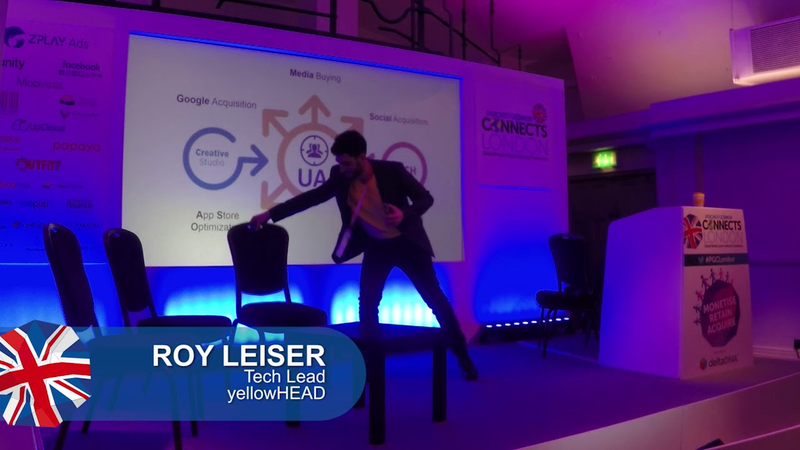
From missile defense to user acquisition – How advanced AI models predict performance
Predictive intelligence technology, specifically machine learning, serves as a transformative tool for optimizing user acquisition (UA) and mitigating wasted advertising spend.
- Integrating predictive AI into user acquisition can nearly double the success rate of campaign management decisions compared to manual oversight alone.
- Predictive models identify an 'optimum CPI' threshold where additional advertising spend transitions from boosting ROI to yielding diminishing returns.
- Machine learning algorithms analyze granular metrics, such as day-by-day ROI accumulation and the correlation between CPI and user value, to forecast future performance with high precision.

3 Game Names! - Which ONE? [Jonas is confused.]
Selecting an appropriate title for a game represents a significant challenge for independent developers, often requiring a balance between memorability, uniqueness, and aesthetic potential.
- Visual experimentation with typography, fonts, and graphic treatments is essential to determine how a game title functions as a brand identity.
- Quantitative scoring systems are often insufficient for selecting a game title when candidate names yield nearly identical ratings between 7.7 and 7.9.
- Independent developers must balance the strategic trade-offs between rhythmic memorability, search engine optimization, and general auditory appeal when naming a project.

Let's Name My Game!!! (STOP ME :D)
Selecting an effective title for an indie game is a critical development step that significantly influences market success and discoverability.
- Prioritize searchability by conducting a 'Google test' to ensure the title is unique and ranks highly in search engine results for better discoverability.
- Use a structured comparison matrix to objectively score potential titles against criteria like memorability, thematic alignment, and phonetic accessibility.
- Avoid generic industry buzzwords that can signal low quality and instead use synonym finders and word associations to create distinct, memorable branding.

Papaya Mobile building its user acquisition empire
Papaya Mobile operates as a long-standing performance marketing specialist focused on mobile user acquisition, evolving over a decade from a game developer into a cross-promotional platform, an ad network, and finally a social media-focused agency.
- Papaya Mobile acts as a major reseller for global advertising platforms including Facebook, Google, Pinterest, LinkedIn, and Snapchat to facilitate cross-border user acquisition.
- The company has transitioned from a game developer into a specialized agency that bridges Chinese mobile applications with international markets, with a current strategic focus on the European games sector.
- Marketing strategy has shifted from prioritizing simple install volume to focusing on post-install events and long-term user value (LTV) to drive monetization efficiency.

Influencer marketing with Zorka.Mobi
Influencer marketing serves as a critical driver for mobile game user acquisition, bridging the gap between game developers and relevant audiences through native video content.
- Influencer marketing drives mobile game user acquisition by utilizing native video content to reach specific demographics across platforms like YouTube, Twitter, and Facebook.
- Campaign effectiveness is optimized through a data-driven methodology that uses proprietary tools to analyze historical influencer performance and predict outcomes.
- Agencies typically initiate campaigns with a test phase involving three to ten influencers to gather data for refining larger-scale, subsequent launches.

MoPub on how advanced bidding services can 'revolutionise' mobile advertising
MoPub’s primary objective in the mobile advertising sector is to transition the industry toward advanced bidding, a technology designed to optimize monetization for app developers.
- MoPub is transitioning mobile advertising from fragmented ad networks to advanced bidding, a model that creates a unified, real-time competitive environment to increase publisher yield.
- Advanced bidding allows programmatic demand to compete directly against traditional ad networks, capturing larger brand advertising budgets while improving transparency.
- Since 2010, the mobile market has shifted from premium paid-to-download apps to a free-to-play model where advertising is a core revenue stream rather than an intrusive element.

7 Game Development Facts - Let's Face It!
Independent game development is a demanding discipline characterized by significant market saturation and high barriers to commercial success.
- Market saturation in the independent game sector is high, meaning developers cannot rely on organic discovery and must implement deliberate, strategic marketing to achieve visibility.
- Consumers are indifferent to the technical methodology or personal struggles behind a game's production, prioritizing only the final product's quality and playability.
- Success requires transitioning from a romanticized view of development to a pragmatic business approach that treats the game as a commercial product rather than a personal project.

Landing Page Review: Accelebot (Indie Game Marketing)
This analysis evaluates the landing page and promotional trailer for Accelebot, a 2D mobile platformer for iOS.
- The trailer fails to demonstrate the game's core unique selling point, which is the specific control scheme involving device tilting and tapping to jump.
- Marketing copy should avoid sarcastic or self-deprecating humor, as it risks undermining the professional credibility of the project.
- Email lists for mobile games often see conversion rates below 20%, making the quality of initial community outreach more important than raw subscriber volume.

Monument Rivals: Jonas Plays Your Game #002
Monument Rivals is a turn-based, multiplayer trading game developed in Unity by XscoGames.
- Monument Rivals, a Unity-based prototype by XscoGames, currently suffers from a lack of strategic depth due to an over-reliance on luck-based mechanics like dice rolls and random card draws.
- The game's pacing is hindered by long, unskippable animations for movement and dice rolls, which negatively impact the user experience.
- The current monument destruction mechanic creates a frustrating, repetitive cycle in two-player sessions rather than fostering constructive competition.

How Facebook supports developers in getting their games discovered
Facebook serves as a critical infrastructure for game developers seeking to scale their titles by leveraging a massive, data-rich ecosystem.
- Facebook leverages its massive user base, including 2 billion monthly active users on Facebook and 800 million on Instagram, to help developers target players based on specific interests and platform engagement data.
- The Facebook SDK allows developers to track in-app events such as tutorial completion, level progression, and purchase history to optimize user acquisition.
- The 'Value Optimization' method, introduced in August 2016, enables developers to create custom audiences from high-value players and use them as seed audiences to find similar users globally.
Why Do Games Cost So Much To Make? - AAA Game Budgets - Extra Credits
The high cost of AAA game development is driven by a complex interplay of operational overhead, technical requirements, and market pressures.
- Total investment for a single AAA title typically ranges from $75 million to $100 million, driven by the necessity of marketing budgets that often match or exceed development costs.
- Personnel costs are the primary expense, with an average monthly cost of $10,000 per employee; a 200-person team working for two years incurs $40 million in salary, benefits, and tax expenses alone.
- Operational overhead beyond salaries includes significant expenditures for office space, high-end software and engine licensing, middleware, equipment, and professional localization and voice acting services.

I Will Play Your Game! - Let's play (+Feedback)
The initiative to revive a series dedicated to playing and critiquing indie games serves as a platform for developers to gain exposure and constructive feedback.
- The initiative functions as an experimental feedback loop designed to provide actionable design critique to indie developers while offering educational content to a YouTube audience.
- Developers must submit a functional download link, a project summary, and visual assets to be considered for the critique series.
- Submissions are prioritized based on the developer's ability to identify specific areas for critique, such as core mechanics, design choices, or unresolved technical challenges.