Marketing reports and market data
Documents

The Future of UA+PM | N3TWORK's Nebo Radovic talks Product Management and User Acquisition Strategy
The integration of user acquisition (UA) and product management (PM) teams is a critical driver of competitive advantage in the mobile gaming industry.
- Integrating User Acquisition (UA) and Product Management (PM) teams is a primary driver of competitive advantage, shifting from siloed operations to shared accountability and unified goal-setting.
- High-frequency communication, including daily or near-daily meetings, is required to synchronize live game events with UA strategies and monitor metrics like early retention and payer conversion.
- Genre specialization is mandatory for success, as distinct game genres require tailored creative assets and targeting strategies that align with their specific Lifetime Value (LTV) curves.
All Systems No: Learning from the Doomed Launch of Brigador
The debut of the indie title Brigador serves as a cautionary case study on the disconnect between critical acclaim and commercial viability.
- Marketing must prioritize conveying the subjective player experience over technical feature lists, as traditional trailers often fail to communicate a game's core value proposition.
- Personality-driven outreach and candid discourse on public forums can be highly effective, with such efforts accounting for approximately one-third of total sales for niche titles.
- Indie developers should prioritize intuitive onboarding over complex tutorials, as the majority of players drop off within the first two hours of gameplay.

Build Your Own Fan Club: How to Use Your Email List
Email marketing serves as a critical, high-conversion tool for game developers seeking to cultivate a dedicated player base.
- Email marketing provides a direct, permission-based connection that bypasses algorithmic volatility, resulting in superior click-through rates and more reliable conversion metrics compared to social media.
- Developers should prioritize proactive lead magnets—such as exclusive soundtracks, early access demos, or unique in-game items—to convert casual observers into committed subscribers.
- A nurturing communication sequence that prioritizes high-quality content over aggressive sales tactics is essential for building community trust and reducing unsubscribe rates.
Overview of MENA markets
The Middle East and North Africa (MENA) region represents a significant, high-growth market for mobile gaming, characterized by a young, tech-savvy population and increasing digital spending power.
- The MENA region features a highly engaged gaming demographic where 30% of the population is under 25 years old.
- Effective market entry requires cultural localization, specifically implementing right-to-left text support and avoiding literal translations in favor of Modern Standard Arabic.
- Monetization strategies must prioritize direct carrier billing through local telecommunications operators and account for a strong preference for iOS devices among higher-income users.
Leveraging key learnings in UA to happily grow your studio
The primary thesis of this presentation is that mobile game studios should treat talent acquisition with the same strategic rigor and messaging consistency as user acquisition.
- Mobile game studios should apply the same strategic rigor and messaging consistency to talent acquisition as they do to user acquisition.
- A studio's mission and core values are more effective at attracting and retaining high-quality talent than technical skill requirements alone.
- Traditional job boards are often inefficient; one example showed a $700 investment in a job board yielded only two irrelevant resumes.
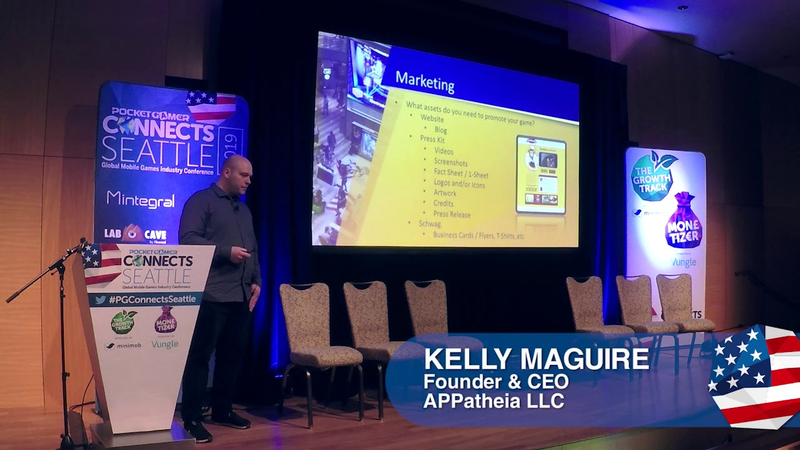
Marketing and business on a budget for indie developers
Indie game development requires a shift in perspective from viewing a project as a creative passion to treating it as a commercial product.
- Indie developers must treat marketing and monetization with the same level of rigor and resource allocation as the actual game development to succeed in a competitive market.
- Marketing strategy should focus on identifying a unique selling proposition and communicating it through concise, digestible content tailored to short attention spans.
- Paid acquisition should leverage sophisticated targeting on platforms like Facebook, Instagram, and Google, while utilizing cost-per-install networks and micro-influencers for scalable growth on limited budgets.
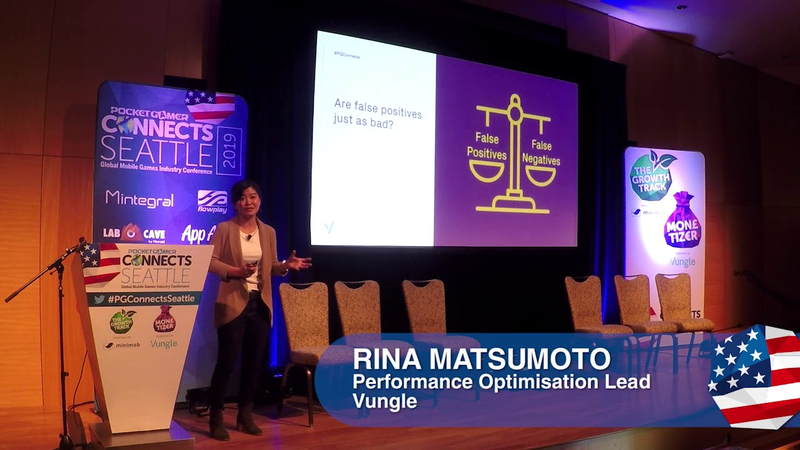
Which mobile fraud solution is right for you?
Mobile ad fraud remains a persistent and evolving challenge for the gaming industry, with recent data indicating that approximately 25 to 30 percent of paid app installs globally are attributed to fraudulent activity.
- Approximately 25 to 30 percent of global paid app installs are currently attributed to fraudulent activity.
- Fraud prevention solutions should prioritize real-time blocking capabilities over retrospective reporting to prevent budget loss before it occurs.
- Advertisers should focus on publisher-level data rather than device-level reports, as the latter often lacks the statistical significance needed to identify and act on fraudulent patterns.
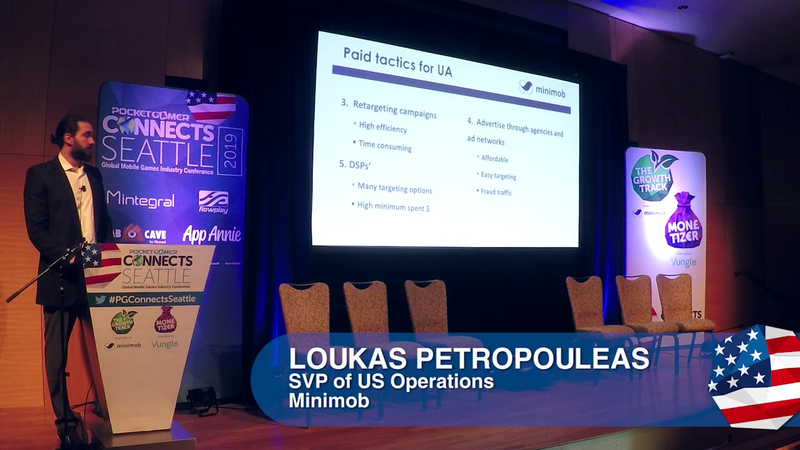
Creative user acquisition tactics for mobile apps
Effective mobile user acquisition requires a disciplined, data-driven approach that balances aggressive growth with long-term retention.
- Prioritize user retention over acquisition, as acquiring a new user is four to ten times more expensive than retaining an existing one.
- Adopt a 90/10 budget allocation strategy, dedicating 90 percent of funds to proven acquisition channels while reserving 10 percent for testing new sources to mitigate risk.
- Implement sophisticated user segmentation based on geographic data, purchase behaviors, and interaction timelines to trigger personalized re-engagement campaigns, such as targeted discounts for abandoned purchases.
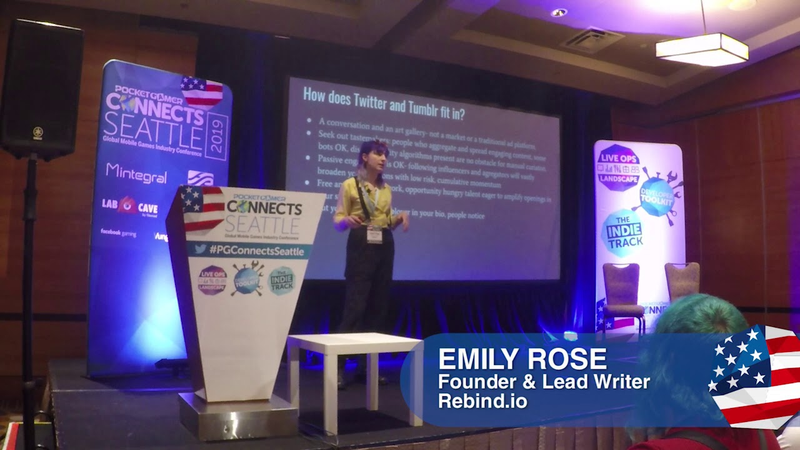
How can we grow the social reach of micro-indies?
The presentation explores strategies for micro-indie developers to improve discoverability and social reach within an increasingly saturated and algorithmically complex gaming landscape.
- Micro-indie developers should prioritize itch.io over mainstream storefronts like Steam to benefit from superior tag management, zero entry fees, and a more accessible, enthusiast-focused audience.
- VR arcades represent an underutilized distribution channel for narrative-driven or non-action games, offering a 'Goldilocks zone' that caters to diverse demographics seeking unique content.
- Social media reach is best achieved through consistent, passive engagement on platforms like Twitter and Tumblr using motion-based content such as GIFs.
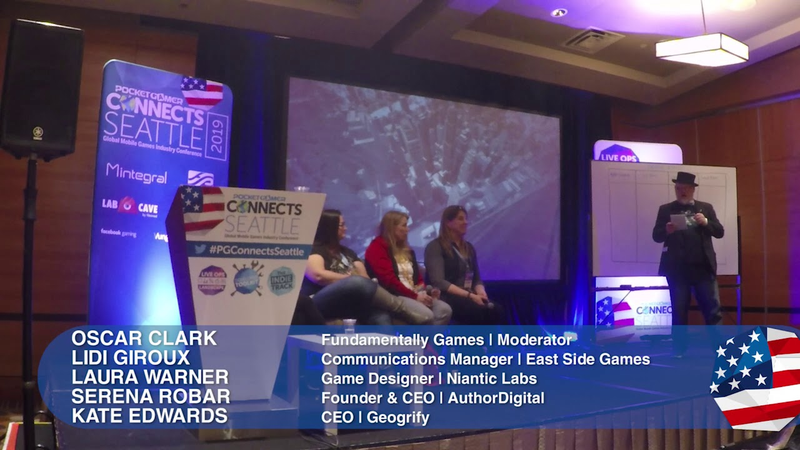
Fantasy games pitching
This session from Pocket Gamer Connects Seattle 2019 explores the creative challenges of game design and the unpredictability of market concepts through an interactive pitching exercise.
- Visual cues are often misinterpreted by observers, highlighting a significant disconnect between a game's initial aesthetic impression and its actual core gameplay mechanics.
- The 2019 Pocket Gamer Connects Seattle session demonstrated that developers frequently project complex, sophisticated systems—such as emotional comfort meters or social simulations—onto obscure titles that may actually feature surreal or simplistic designs.
- Pitching exercises serve as a vital tool for testing creative agility, forcing designers to synthesize disparate visual elements into cohesive narratives under time pressure.

Tips on how to make creative ads for the Asian market
Successful entry into the Chinese mobile gaming market requires a sophisticated approach to creative advertising that prioritizes deep localization, high-quality video production, and interactive formats.
- Localization in China requires more than translation; it necessitates adapting font designs, layout, and character aesthetics to match local preferences, such as the strong demand for fine art styles among female users.
- Cultural nuances significantly impact conversion rates; for example, adjusting game visuals to align with local preferences for cleanliness and specific character aesthetics in Japan resulted in a 70% increase in click-through rates.
- Standard gameplay recordings are no longer sufficient to capture attention in China's information-overloaded market; advertisers should instead use creative storytelling, real-life integration, and local trends like popular BGM and memes.
Dream Daddies and Fearful Fathers: How Indies Can Cope with Being Terminally Online
The modern independent game development landscape is increasingly defined by a toxic attention economy that prioritizes performative outrage over meaningful creative discourse.
- The current digital attention economy prioritizes performative outrage over creative discourse, leading to severe developer burnout, imposter syndrome, and physical exhaustion.
- Platform affordances cause 'context and temporal collapse,' which flattens complex human interactions into performative exchanges that reward cynicism and inflammatory behavior.
- The fear of dogpiling and harassment discourages developers from exploring nuanced or controversial themes, stifling creative expression in favor of social capital.