1 free read left. Create a free account for unlimited reading + AI research.
Create free account
How can we grow the social reach of micro-indies?
Key insights
6 takeaways- 01Mainstream platforms are becoming increasingly difficult for small developers to navigate due to market saturation and unfavorable algorithmic shifts.
- 02Micro-indie developers should prioritize itch.io over mainstream storefronts like Steam to benefit from superior tag management, zero entry fees, and a more accessible, enthusiast-focused audience.
- 03The increasing consumer preference for ethically sourced and transparently developed games favors the direct, community-centric business model of micro-indie studios.
- 04Building brand credibility and organic growth is most effective when developers focus on direct community engagement and networking with industry tastemakers.
- 05Social media reach is best achieved through consistent, passive engagement on platforms like Twitter and Tumblr using motion-based content such as GIFs.
- 06VR arcades represent an underutilized distribution channel for narrative-driven or non-action games, offering a 'Goldilocks zone' that caters to diverse demographics seeking unique content.
Ask AI about this video
Transcript
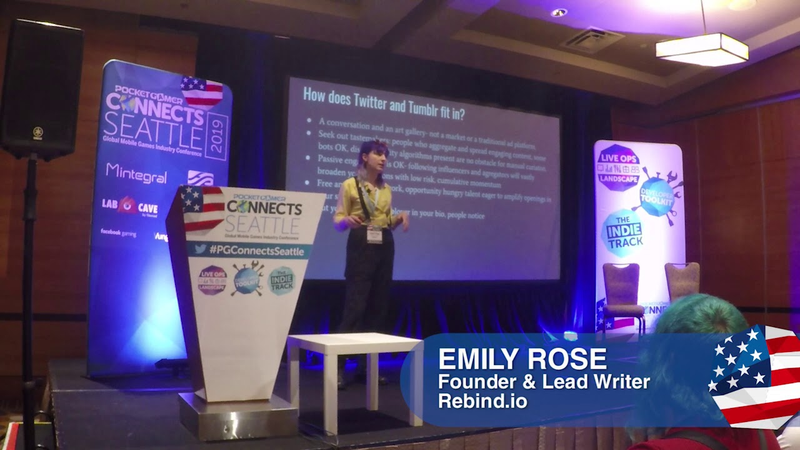
well first off thanks everybody for joining me I'm Emily Rose I work and I'm the founder of we we're a press outlet that specifically tries to focus on micro Indies small studios pretty much anyone who doesn't typically get the press coverage that we're kind of used to having access to it these bigger industry events so I wanted to talk about discoverability and how it's become kind of more difficult especially in the past year as things have changed and I think people don't realize how the landscape is shifted and how to take advantage of it but that's a two-way street right it's not just the Indies themselves but it's also the companies that are looking for talent be the contractors games to sign on for publishing so on and so forth so without further ado we'll get started
so a few things I wanted to mention just at the start of this is that there is there's been a lot of VR arcades popping up and a popular platform with them right now is a surface called springboard so kind of like the old internet cafes and gaming cafes you pay a monthly fee to them and they negotiate licensing deals with Indies or anyone on the platform to do sort of like charging by minute and I've in my time speaking to a couple of VR and these and things like that they don't realize that that's an option for them and while springboard isn't like super huge right now they have been growing quite a bit and I've seen good results with them at the local VR caves near me as well and they treat developers fairly but they're also fair to the VR cafes themselves and it's kind of interesting because I see a lot of Indies really
reticent and scared to touch VR as a platform which is interesting to me because of the fact that Triple A tends to have a hard time conceptualizing of what's a good product to launch there so for me it's this like possible ideal space like a Goldilocks zone for the people who want to do the alternate experiences because at the VR kids near me there's a wide set of demographics and VR is this very like overstimulating overwhelming like sort of experience for people new to it and so it's kind of like they want experiences that are a little less action-oriented that aren't quite so overwhelming and there's already a lot of market saturation in VR when it comes to action-oriented Ganci they like you know sort of like shooters or sort of tower defense games and things like that but um what is kind of colloquial referred to as like the walking simulator that
has performed pretty well a normal PC I think has an exponentially like strong potential home here and it's something that's really accessible to any developers who are working with you know a stock standard unity or Unreal development kit because they can focus on narrative are just the general experience and I think there's a lot of potentiality for that to again be just kind of a native genre there here's an example of how licensing kind of works when it's negotiated directly as opposed to going through springboard I don't have exact figures on this but they do have them on their website Arizona sunshine is a very very popular VR action game and it's easily a figure that you know when you have so many different stations it's on a per station basis versus the one time per month like springboard fee and it can quickly add up when you have like 8 VR stations
being almost like triple four times the amount that you would be paying per month so I think it's somewhere around the ballpark of like a hundred and fifty to fifty per like license per station when it comes to Arizona sunshine so there may inherently be advantages for you to directly negotiate those licensing costs with arcades and things like that if that's something you're interested in but springboard is good if you just kind of want to get presents out there and you don't want to have to think it through too hard or negotiate too many direct relationships another popular topic has been subscription models which surprise more broadly true traditional game and the issue with it is that we've all kind of heard about Spotify being really difficult for musicians you know you can have millions and millions and millions of play and see you only a fraction of that revenue as the artist let alone as the publisher and everybody else so I think it's important to be weary and cautious of subscription models out there especially streaming based ones
for the fact that we don't want to create an environment that potentially suffocates out smaller developers because I truly do believe it's a larger ecosystem and if you don't have those smaller developers that pressure starts getting pushed on Triple A and those who have the resources another thing that we move into is curators sometimes I mean we're all familiar with influencers and youtubers but as we've seen a really big decrease especially over the last year of they've gone from covering you know 20 to 30 games as the most popular streamers to slowly dropping down to a couple of their favorite games that their fan base comes to them they've almost sort of like transformed into talk show hosts in a way and the fans are there for them and not necessarily the games so when you do get traction with them it's not quite be like booming results that we used to see and it's become more focused on kind of like negotiating promotion deals in the way
that we would on like the days of TV and you're trying to get a product like spoken of and a lot of people both indie and on the business side aren't aware of HIO which is a indie marketplace that is a self publishing platform I like to kind of think of it as like if you're familiar with Bandcamp where you have kind of full control of this like templated like publishing page you can set up pay as what you got want or you can set a prepaid amount or you can even put your game out there for free it tends to run a lot of their own operations out of pocket they want to really be accessible to any developers out there and what's kind of cool is I noticed a lot of really small Indies using this as a place to keep their portfolio because you're not having to pay hosting fees or entry fees like you would with steam or awaiting authorization on platforms like epic and things like that
so it's really important to take a look through there because it's been a huge resource for Indies and there's a lot of people on there it's lower traffic overall but the trends that I've noticed have pointed towards higher engagement the kind of people who are on there are going there for the game jams that HBO curates or acts as a coordinating portal for it's also complements and coexist really well with Twitter and Tumblr because the fact that you can just link to a very simple each page that's direct and straight to the point you know someone goes your is profile or the itch page for your game and all the informations there a trailer a description the genre classifications and tags and then a download a purchase link and it's because of this that it's really easy to link to you never have to feel like someone's gonna lost on the page only goes to the content that you're linking to on it and because of
that it's really easy to be a big fish in a small pond there if you have a really impressive commercial product and you decide to launch it on H first there are a lot of advantages in that you're gonna get a lot more eyeballs on it than you would in something that's a little more saturated like the steam marketplace and the community there is really enthusiastic because a lot of them are developers or smaller streamers that still have pull with their audiences and discovering and recommending things that they like to play horror games do especially well a niche and the thing about that is because it's an enthusiast community and especially one that developers have a large social presence on there's really minimal techno toxicity and there's also just better audience targeting in general you can kind of get a better picture of who's downloading your games on itch
there's better tag management and everything we're clear and you're also get a better picture of who the other players in that space are in terms of other developers you can look up like the top like performing like horror games you can look up the top performing RPGs anything like that and there's tags for LGBTQ stuff as well which is really great that they have that as like one of the major category pages that you can investigate I guess like the kind of way I try to think of it as like it really comes across as like analogous to in Fairtrade coffee or chocolate beer things like that customers want to know that things that they consume are ethically sourced and I think that's going to become an emergent trend in games as well especially as customers become more socially conscious they want to know that the developers are getting a fair deal so if you haven't been looking at these already
and you're working in HR or you're a publisher talent is going unnoticed it's one of the few really open platforms where there aren't a lot of algorithmic barriers with recent changes in how the steam store curation works and things like that it's become increasingly difficult to be noticed it's not the days where you use to just be able to get featured on the front page and have a huge spike in sales it's getting tougher by the day especially the fact that like with a platform or is kind of going on between the epics store and steam it creates this very like temperamental environment where if your little guy you're gonna get lost in it and that can be very intimidating and it's very labor intensive to try and combat and again steam your your small fish in a big pond there's so many players in that space there's so many other developers there and it's really easy to get lost in the noise especially nowadays and it can be a really good place to build up that credibility and
brand before you branch out and other platforms now I mentioned Twitter and Tumblr and how they integrate well and I think it's because Twitter is despite its shortcomings a really good conversation for platforms it's a really good platform for conversations especially like short ones it's it's a great place to meet strangers basically especially people who are already in your industry that you don't have any prior connection to because you'll notice a lot of these small indie developers have less than two thousand a thousand follower counts and because of that they're not getting overwhelmed with interactivity and because of that even if you're a recruiter even if you're a publisher and things like that you can reach out directly to them and catch their interest and begin a conversation around their work and developers have tended to now link their H pages there but their art station their art portfolios their game
portfolios and it's a really good place to post gif and other marketing snippets that like are eye-catching that just show up in people's timelines and that kind of builds in the next thing which is Twitter has a lot of tastemakers there's a lot of people who retweet things simply because they just know what looks good to them sorry they know what looks good to them and because of that their audiences start to follow them possibly to get that same kind of content and to sort of trust in their tastes it's the same principle behind influencers but it's in a much more low-impact way and it's a lot easier to get the attention of if you know how-- and its really good for passive engagement not everything has to be an active conversation on Twitter or even tumblr for that matter they're both like content oriented and focused if you post a gift up there you don't even necessarily need to have text with it if your bio on Twitter identifies the content in some way or the account is
dedicated to that brand so it's a really good way to like broaden your horizons without taking too much time out of your day so if you are looking for diverse talent that you're having a hard time getting a hold of especially when it comes to programmers or technical artists that's a place where they are in droves really easy to get a hold of so you don't have to put in a lot of effort if you start following the right people who are good at sort of seeking them out for you and the same goes the inverse it's basically a free ambassador network a lot of people on there hungry for opportunity a lot of really talented folks or people who know talented folks so if you have a job opening and you're looking for a specific kind of like culture fit in your company you can put that out there give some specifics and then ask people to signal boost it and they will generally know at least like five to ten people in their social circles even it's an extended social
circle that they can pass that information on to and it's good to put who you are in your bio as well I want to leave some time for questions here so I'm going to speed through the next few panels gifts go a long way about consistency and timing matter even if it's just a gift a week or maybe a gift a day or gifts work best as opposed to still images because they are eye-catching by their very nature of being in motion so it gives you an opportunity to like highlight something special about your game set piece or what have you I kind of already covered about letting diverse candidates know that they're wanted but you know it kind of goes in line with my talk yesterday the panel I was on and make them feel comfortable and they'll come to you that's another thing beyond tastemakers as influencers there's also people organized game jams usually they're game developers but sometimes they're people who work in press sometimes they're youtubers and that's a great way to get an overview of seeing how people perform
as teams and perform under pressure but on top of that if someone's running a lot of game jams on itch they're gonna know a lot of talent so this is an example of kind of the way in which people can build up a presence really quickly this game Sabol is sort of like been a fan favorite of late and they're just short of 30k followers they have about average community participation like in terms of conversations and their tweet reception ranges from they post a gif of 20 to 30 km media post and that's not even really counting the retweets on top of that which are usually not quite as many as likes but we're still talking in the thousands which is a lot of engagement it's a lot of reception Twitter provide some awesome analytic tools rollerskate came kind of came out of nowhere like about a year ago he said less than 98 tweets and
has now nearly 10k followers and very low community participation in terms of conversation but definitely they're on but the gift tweets are averaging two to three hundred replies one thousand to three thousand retweets and definitely really up there and the likes as well these are examples of like high-end metrics like sort of on the fringe of it um but it's an example of like two points of like what you can do with a lot or a little reach and how to quickly establish yourself there so if you have an eye-catching game I wasn't able to get a gift in here but like it's sort of like a action-oriented game where you're rolling up and down these skating ramps and you have this like fun gunplay and it just really visually pops on a time line people love that thank you again for coming I already explained about rebind I do community outreach locally and internationally and
you can find us on twitter at rebind underscore IO or I'm Caravan malice on Twitter and I'm always open to emails for conversations as well and I also work with VRA arcades in the area to help them do curation so yeah if we have time for a couple questions we got a few minutes here definitely yeah thank you for watching - I don't want to start with questions or shall I I'll stop them often and so but VR arcade in particular are using a different kind of audience than you maybe say on the household stuff you know they can have the the mobile or their other vibes and they say yeah we we get a lot of older age demographics older folks who are in you know the the forty to sixty age bracket small children in okay it's really yeah yeah they come in because you tend to notice groups come in as a family and they all split some time on some head set so they revolve out on a head set and becomes a much more social experience and people think it is people are so impacted by a memorable VR
game that they're really engaged by it and they want to like talk about it with people who have also experienced it so even though there's really high-performing games like super hot in Arizona sunshine it's like one of my local arcades still the top of the charts it's like Google Earth tilt brush things like that Oh people love that stuff they absolutely adore it escape rooms are big and even just like cool alternative like art galleries like the Museum of other realities is launching soon and that's one that we've seen a lot of hype for in terms of like it's a virtual art gallery that you can go in and explore with other players so to see like artwork that is exclusive to VR so it's really interesting yeah I think that's gonna fit it kind of changes the way that you look at the moment of experience exactly yeah I think that got a mindset of of what we try to Crane a lot of the stuff I talk about is about games the service of an ongoing perpetual experience but actually this is a very different kind of way of looking at it
Summary
The presentation explores strategies for micro-indie developers to improve discoverability and social reach within an increasingly saturated and algorithmically complex gaming landscape. The central thesis posits that small studios can bypass traditional, high-barrier platforms by leveraging niche marketplaces, social media engagement, and emerging distribution channels like virtual reality (VR) arcades. By focusing on community-driven platforms and direct engagement, developers can establish brand credibility and reach target audiences more effectively than through mainstream storefronts.
Key findings emphasize the utility of itch.io as a primary hub for indie developers, noting its superior tag management, lack of entry fees, and high engagement levels compared to larger, more competitive marketplaces. The analysis highlights that while platforms like Steam are increasingly difficult for small developers to navigate due to algorithmic shifts and market saturation, itch.io serves as an accessible, enthusiast-focused environment that facilitates better audience targeting and portfolio building. Furthermore, the discussion identifies VR arcades as an underutilized "Goldilocks zone" for developers, particularly those creating narrative-driven or non-action experiences, as these venues cater to diverse demographics seeking unique, non-overwhelming content.
Methodologically, the insights are derived from industry observations and case studies of successful social media strategies. The analysis points to the effectiveness of Twitter and Tumblr for passive engagement, specifically through the use of eye-catching, motion-based content like GIFs. By maintaining consistency and utilizing these platforms to connect with "tastemakers" and fellow developers, small studios can achieve significant organic reach. The presentation concludes that as consumers become more socially conscious, there is an emerging trend toward valuing ethically sourced and transparently developed games, making the direct, community-centric approach of micro-indies a sustainable and increasingly viable path for long-term growth.















Comments