Market Analysis reports and market data
Documents

Mobile moguls on why consumer connections are key to brand success
The mobile gaming industry is undergoing a strategic shift from a primary focus on user acquisition to the development of long-term, globally recognized brands.
- Mobile gaming strategy is shifting from a primary focus on user acquisition toward building long-term, globally recognized entertainment franchises.
- Developers are prioritizing the creation of deep, authentic player connections through nuanced storytelling, consistent visual identities, and high-quality gameplay.
- Sustainable growth is increasingly achieved by focusing on fewer, high-quality titles rather than releasing numerous games in hopes of finding a hit.

Console devs are going mobile and mobile devs are going triple-A
The gaming industry is currently experiencing a significant convergence as triple-A console developers expand into mobile markets while mobile developers increasingly adopt high-end production values and leverage major entertainment intellectual property (IP).
- The gaming industry is undergoing a convergence where triple-A console developers are expanding into mobile markets while mobile developers are adopting high-end production values and major intellectual property.
- Mobile platforms have evolved into a mass-market medium with computing power now approaching the capabilities of previous-generation consoles, enabling more complex gaming experiences.
- Industry strategy is shifting toward 'midcore' and 'hardcore' titles that prioritize high visual fidelity, deep storytelling, and sophisticated monetization models over simple casual games.
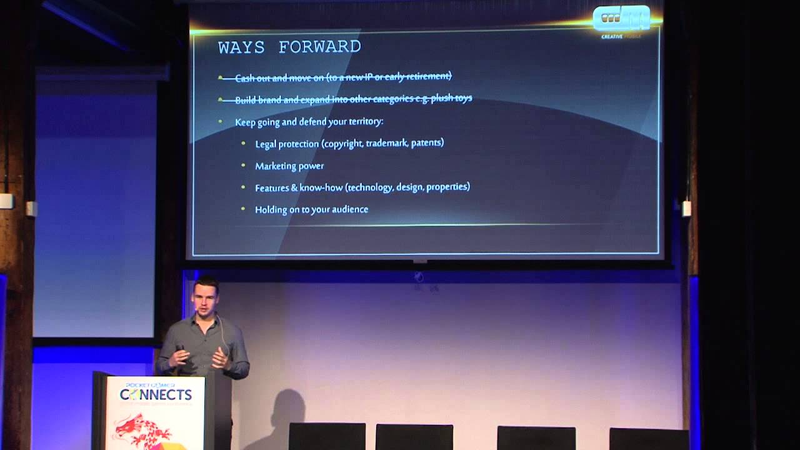
Build a brand or throw in the towel, says Creative Mobile's Vladimir Funtikov
The mobile gaming industry has shifted from a landscape where initial launch success guarantees longevity to a highly competitive, oversaturated market where developers must actively build a brand to survive.
- The mobile gaming market has shifted from a launch-success model to an oversaturated environment where brand identity is the primary defense against rapid cloning by competitors.
- Developers must transition from speculative development to a long-term business model by focusing on deep, iterative engagement with a core, loyal audience.
- When a game lacks strong intellectual property or recognizable characters, active community feedback loops via social media and forums are essential to drive product evolution.

TrailPlay on engaging fresh audiences
The primary thesis of this analysis is that developers can overcome the saturation and high user acquisition costs of the mobile market by adopting a cross-platform strategy that includes desktop and web-based platforms like Facebook, Steam, and Kongregate.
- Adopting a cross-platform strategy across desktop and web channels serves as a low-cost user acquisition alternative to the saturated and expensive mobile market.
- King reported a 50% increase in average play time and a 100% increase in user engagement after porting their titles to additional platforms.
- PopCap successfully utilized Facebook Connect to enable cross-platform play, resulting in 20% of their monthly active users engaging with these connectivity features.

What role does the games media play in the modern mobile era?
The role of games media in the modern mobile era centers on the critical function of curation.
- Word-of-mouth is the primary discovery driver for 60% of mobile game consumers, with media coverage acting as a critical catalyst to initiate this process.
- Games media serves as a vital curation filter in a saturated market, providing the initial validation that influences both the public and platform curators like Apple when selecting store features.
- The value of media outreach is determined by the monetization model: premium paid titles benefit significantly from editorial reviews, while free-to-play games rely more on immediate, short-term user engagement.

Getting inside the heads of F2P players who pay $50 per month
This analysis examines the behavioral patterns and motivations of high-spending players, commonly referred to as whales, within the free-to-play (F2P) mobile gaming market.
- High-spending players, defined as those spending $10 to $50 monthly, are highly social and competitive, contradicting the stereotype of the isolated whale.
- YouTube is a critical discovery and engagement hub for heavy spenders, rivaling Facebook in importance for this demographic.
- Heavy spenders are significantly more likely than non-payers to discover games through online word-of-mouth, social media, blogs, and video content.

10 trends shaping the global mobile games industry
The global mobile games industry is currently navigating a period of significant structural evolution, characterized by shifting publishing models, changing platform dynamics, and the maturation of emerging markets.
- Free-to-play remains the dominant revenue model for mobile gaming, accounting for 70% to 94% of total App Store revenue.
- The industry is shifting from traditional publishing toward comprehensive 'publishing services' that integrate data analytics, cloud infrastructure, and monetization strategies.
- Rising costs-per-install (CPI) on iOS and Android are forcing developers to rely more heavily on aggressive user acquisition budgets and direct platform-holder support to overcome discoverability challenges.

Too Many Games - Why Can't You Find the Games You Want? - Extra Credits
The rapid expansion of digital distribution platforms has led to a perceived crisis of oversaturation in the video game market.
- The perceived crisis of market oversaturation is actually a failure of digital storefront infrastructure to provide effective search and discovery tools for consumers.
- Current platforms like Steam and the Apple App Store rely on outdated search technology that fails to accommodate modern browsing behaviors, such as searching by mood, theme, or similarity to previously played titles.
- Existing discovery features, including user reviews and category tagging, are often insufficient, inaccurate, or buried, preventing users from navigating vast catalogs effectively.

Challenge, engage, and analyse your players, says Plarium's Oren Todoros
Plarium’s mobile PR specialist, Oren Todoros, outlines five strategic trends currently shaping the mobile gaming industry, emphasizing the need for developers to actively challenge and engage their player base to maintain retention.
- Developers should experiment with genre mashups, such as combining RPG mechanics with card-collecting elements or blending hardcore and casual gameplay, to increase player engagement.
- Retention can be improved by implementing periodic, time-sensitive special events and tournaments, which prevent player churn by providing consistent challenges and rewards.
- Push notifications should be treated as a data-driven marketing channel; developers should utilize A/B testing and analytics to track open rates and click-throughs rather than relying on generic messaging.
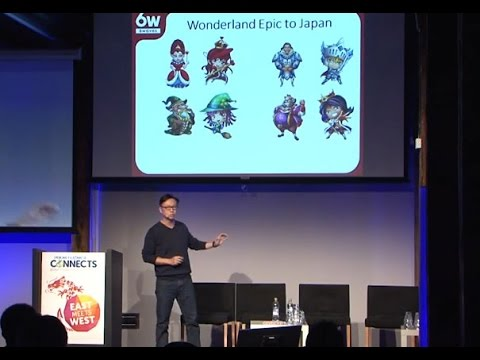
English language games ignore two-thirds of global market says 6waves
The global mobile gaming market is significantly underserved by developers who focus exclusively on English-language releases, effectively ignoring two-thirds of the potential audience.
- Releasing games only in English ignores approximately two-thirds of the global market, as 82% of current industry growth originates from Asia.
- Asia accounts for 45% of the total global games market, with seven Asian countries ranking in the top 20 for iOS and Google Play revenue.
- Localized game versions can yield significant revenue growth; for example, Supercell’s 'Boom Beach' saw a 17% increase in downloads and a 4x revenue increase after launching a Japanese version.

Chinese mobile gamers want pay-to-win says localisation expert
The Chinese mobile gaming market represents a massive, high-growth opportunity for Western developers, characterized by a unique set of consumer preferences and structural challenges.
- The Chinese mobile gaming market is a high-growth sector that reached a $3 billion valuation in 2014, representing a 175% year-over-year increase.
- Chinese gamers demonstrate a cultural preference for pay-to-win mechanics, requiring developers to ensure that financial investments yield tangible competitive advantages.
- The market is highly fragmented with approximately 200 Android distribution channels, which account for 70% of total revenue compared to 30% from iOS.

SkyMobi on why it's focusing on casual Chinese mobile gamers
The Chinese mobile gaming market is undergoing a significant shift, with growth increasingly driven by users in third-tier cities and below rather than major metropolitan hubs like Beijing or Shanghai.
- Sixty percent of China's mobile gaming population resides in third-tier cities or below, representing the primary driver of current market growth.
- SkyMobi’s Maopao app store reaches 147 million users and maintains 25 million monthly active users by securing pre-installation on 40 percent of new Android devices in China.
- Lower-tier city gamers prioritize Android devices and require lightweight game files due to hardware limitations and restricted 3G/4G network infrastructure.