Live Ops reports and market data
Documents
LiveOps Secrets Revealed: How Top Game Developers Drive Success
Effective LiveOps strategies in mobile gaming rely on three core pillars: the ability to deploy content updates without client-side changes, sophisticated player segmentation, and a robust, data-driven analytics infrastructure.
- Successful LiveOps requires the technical capability to deploy content, events, and shop offers instantly without requiring client updates or server maintenance.
- Player segmentation is essential for personalization; developers should offer targeted discounts or rewards based on individual player history, such as rewarding lapsed spenders or celebrating specific gameplay milestones.
- LiveOps strategy involves balancing revenue-focused offers with retention-focused rewards, using multivariate testing to find the optimal ratio between game difficulty and reward value for different player segments.

Helldivers 2, Warframe, First Descendant, and Once Human - How to Operate a PvE Shooter?
The PvE shooter market currently faces significant volatility, characterized by a reliance on massive initial launches rather than sustained, long-term player retention.
- The PvE shooter market is shifting away from the unsustainable 'Destiny-style' decade-long live service model toward strategies that prioritize upfront profitability and defined product lifecycles.
- Newer titles like Helldivers 2 and The First Descendant demonstrate high viral appeal and strong initial sales, but they frequently struggle to maintain player retention once launch content is exhausted.
- Long-term success in the genre, exemplified by Warframe, relies on deep, aspirational endgame loops and complex RPG progression systems that facilitate continuous theory-crafting and character investment.
Casual Games Report 2024: Following the 5 Routes to Success
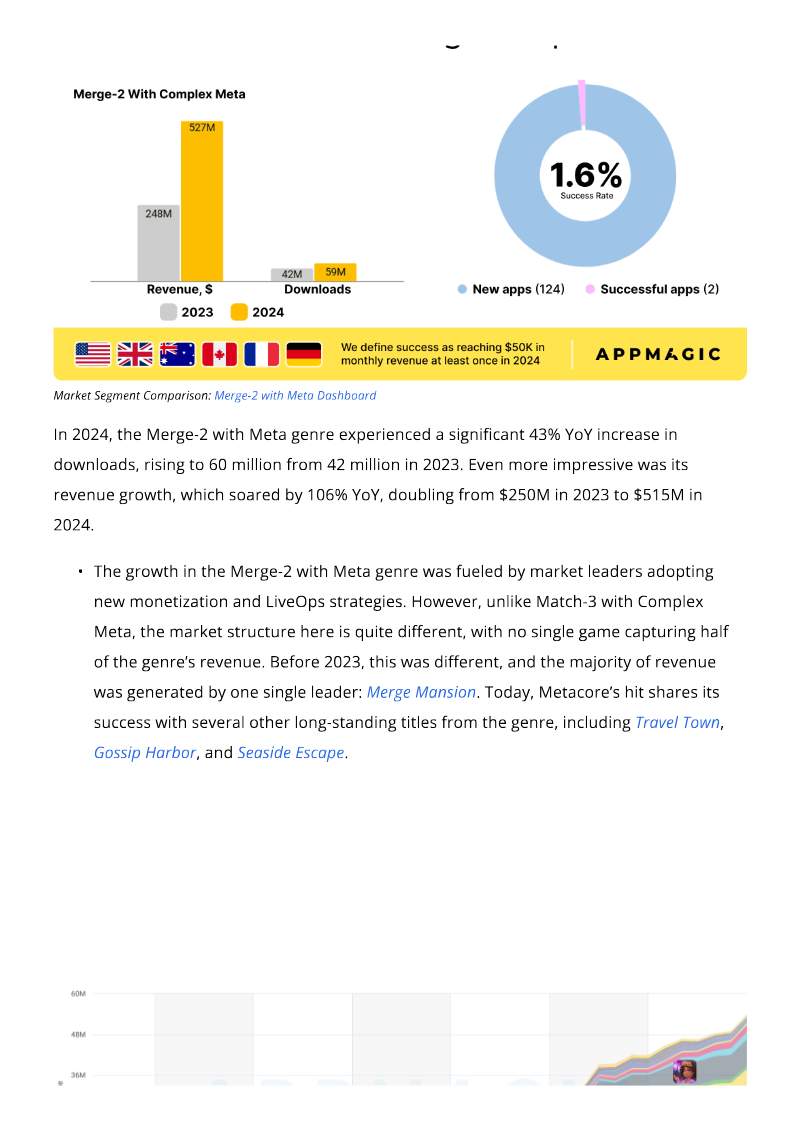
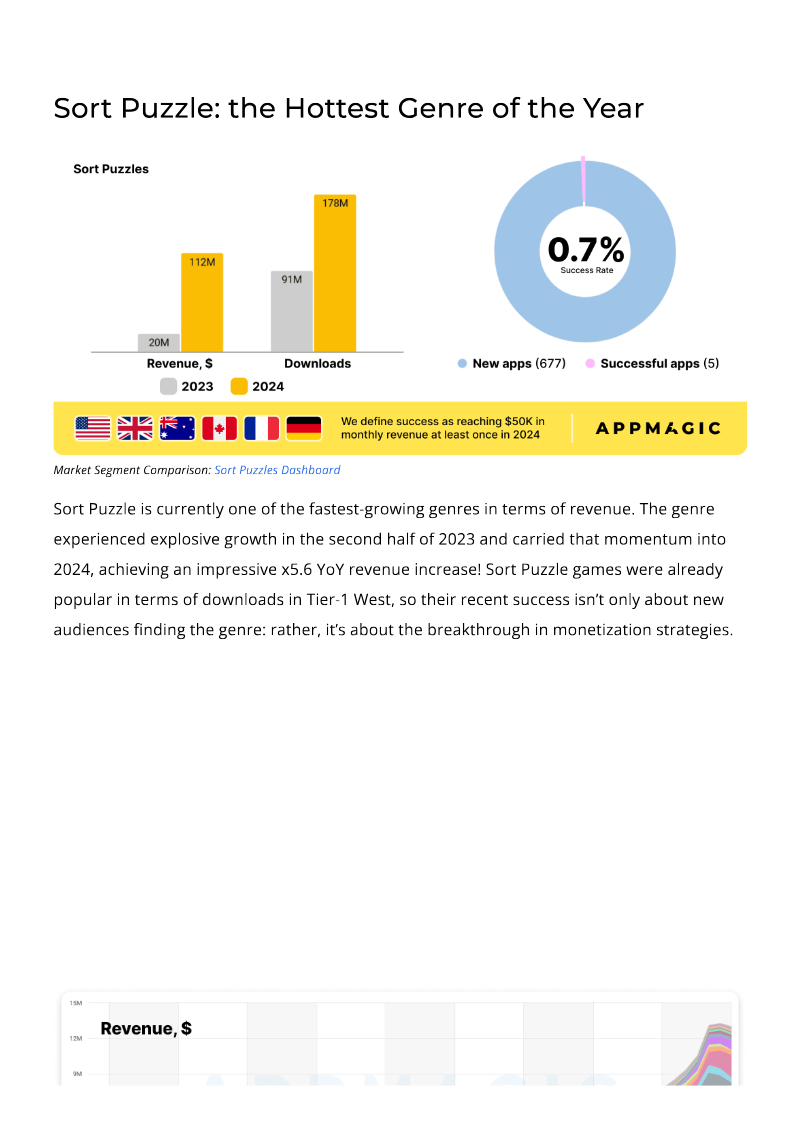
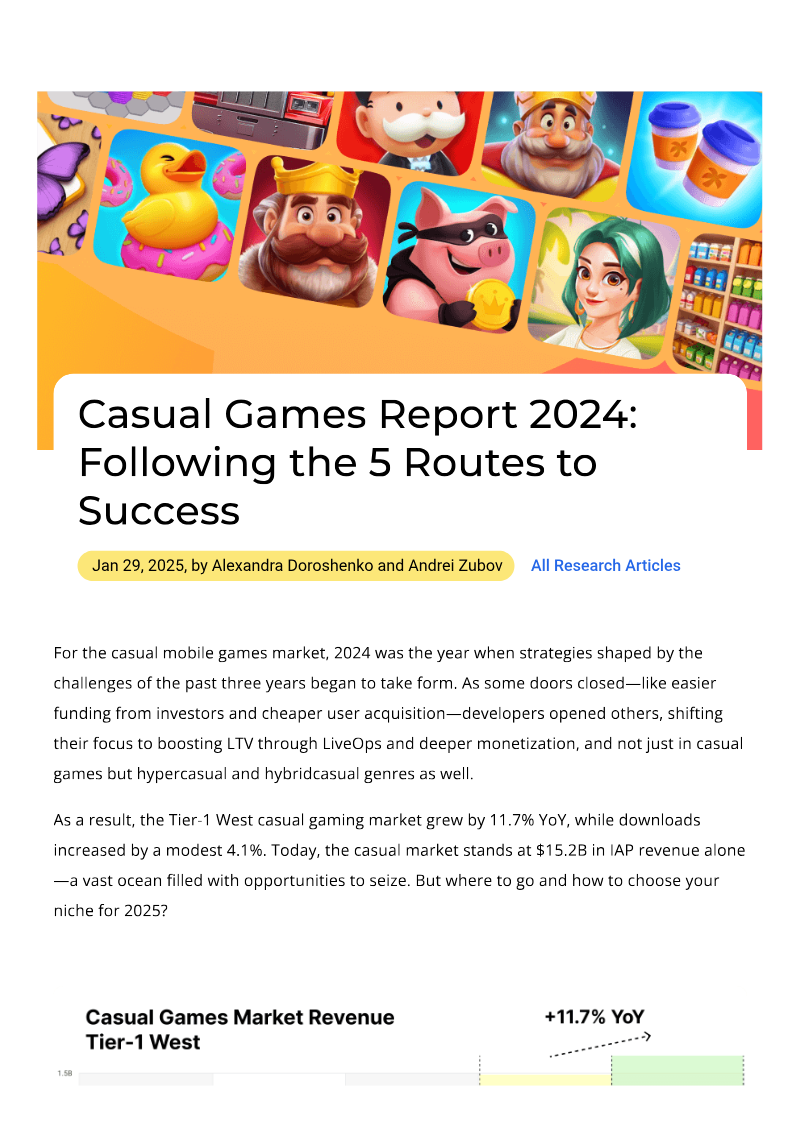
The 2024 casual mobile gaming market across Tier-1 Western nations is defined by a transition toward maturity, characterized by an 11.7% revenue increase despite escalating user acquisition costs.
- The casual mobile gaming market in Tier-1 Western nations grew revenue by 11.7% in 2024, despite rising user acquisition costs necessitating a shift toward complex meta-layers and data-driven LiveOps.
- The Merge-2 with Meta segment is the fastest-growing category, recording a 106% surge in growth as competition among top-tier titles intensifies.
- The Casual Casino sector is highly consolidated, with three dominant titles capturing approximately 80% of total revenue and high barriers to entry limiting new releases.

How do Playtika and Wooga nail their Live Ops strategies?
Successful Live Ops strategies in the modern casual gaming market rely on a layered framework that integrates social interaction, engagement mechanics, and data-driven monetization.
- Top-performing casual games now utilize collectible frameworks, such as albums and multi-stage missions, in 75 percent of titles to unify progression and reduce player cognitive overload.
- Successful Live Ops strategies are shifting from large-scale clan structures to intimate, one-on-one partnerships that leverage social accountability and psychological triggers like the prisoner’s dilemma.
- Monetization models have evolved from static purchasing to gamified, effort-based bundles that are dynamically tailored to a player’s specific progression stage.

The Truth About Gaming's Crisis: 2024 Recap & 2025 Predictions
The global gaming industry is currently navigating a profound transition from an era of unchecked expansion to a period defined by operational efficiency and fiscal discipline.
- The gaming industry is shifting from an era of unchecked expansion to fiscal discipline, evidenced by the fact that only 15 percent of Steam playtime in 2024 was dedicated to new releases.
- Chinese developers are successfully capturing Western market share by leveraging sophisticated, quasi-social gaming platforms and high-end production capabilities, putting pressure on established giants like Microsoft, Ubisoft, and Unity.
- Generative AI is transitioning from a simple production assistant to a foundational element of game design and live-ops, which is expected to significantly lower development costs by 2025.



Global LiveOps Trends 2025
The global mobile gaming landscape in 2025 is characterized by a notable deceleration in overall market growth, with revenue increases stalling at 0.7% and download growth slowing to 4.1%.
- The global mobile gaming market has stagnated, with revenue growth slowing to 0.7% and download growth to 4.1%, forcing a shift toward maximizing the lifetime value of existing players.
- Hybridcasual games have emerged as a high-growth sector, recording a 75% year-over-year revenue increase despite flat download numbers.
- LiveOps strategy has shifted toward high-frequency engagement, with the average number of monthly events per game rising to 89.

How to Prepare Your Live Ops for the Holiday Season
A well-designed Live Ops strategy is essential for capitalising on the heightened player activity that occurs during the holiday period.
- Implement a series of short-term, 1-to-3-day events to generate immediate spikes in player engagement and session frequency.
- Structure holiday content as a 'soft-sawtooth' difficulty curve that alternates between periods of challenge and respite to maintain player momentum.
- Integrate holiday events directly into the core gameplay loop to ensure they feel like natural extensions of the existing experience rather than disruptive additions.
David Nelson: The Maverick’s Guide for Thriving in BIG Organizations**
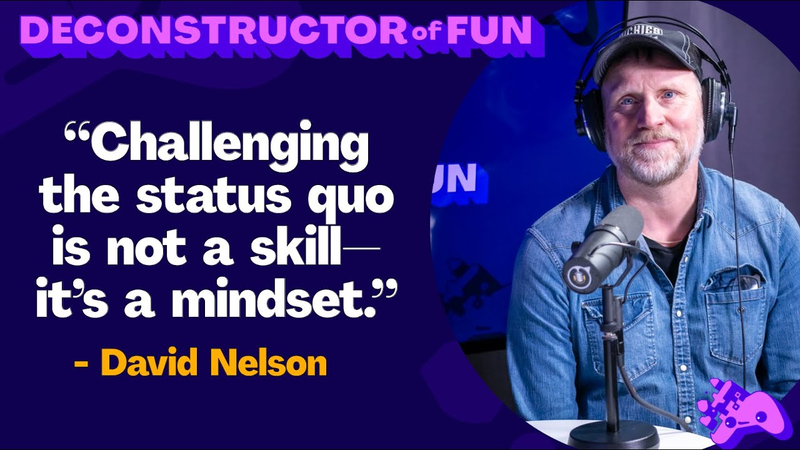
Navigating large-scale mobile gaming organizations requires a departure from passive, incremental management toward a culture of constructive conflict and high-stakes experimentation.
- Large-scale mobile gaming organizations must shift from incremental A/B testing toward high-stakes experimentation that challenges fundamental product mechanics to drive long-term retention.
- The 'fail-fast' methodology often produces derivative products; developers should instead prioritize 'succeeding fast' by leveraging deep genre expertise and intuitive market insight.
- Data-driven optimization is a necessary tool for efficiency, but it cannot replace the creative vision and gut-level understanding of player motivations required to build enduring titles.

TWIG #313 Netflix Games Gets Jacked while the Game Awards Jacks Up Numbers
The global gaming industry is currently navigating a period of strategic recalibration, characterized by shifting investment priorities and the search for sustainable growth models.
- Long-term retention in the mobile gaming sector is increasingly driven by core gameplay depth rather than high valuations or marketing, as evidenced by established giants like Supercell struggling to maintain engagement for new titles.
- Netflix is re-evaluating its gaming strategy by potentially pivoting toward internal intellectual property after experiencing challenges with the high costs and removal of major licensed titles.
- The Game Awards reported 154 million viewers, but industry analysts remain skeptical of this figure due to the use of non-traditional measurement methodologies that lack standard broadcast rigor.
How to Launch an Online Game and Still Attend the Launch Party
Launching a cross-platform online game with a lean engineering team requires a fundamental shift away from traditional, manual server management toward managed infrastructure and high-level observability.
- Odyssey Interactive successfully launched Omega Strikers on 8 platforms with a services team of only 2–3 engineers by relying on robust observability to maintain system stability.
- The team utilized a 'single environment' strategy where all development features and upcoming content were always in production, managed through logical barriers and feature flags to simplify the deployment process.
- Observability was implemented using OpenTelemetry standards, resulting in approximately 1,200 instrumentation points that allowed engineers to proactively inspect system states in real-time.

Running a Successful Live Service Game with Sergei Vasiuk
The gaming industry is undergoing a fundamental transition from traditional product-based models to games as platforms, where the developer’s primary role is to foster an ecosystem for social interaction, user-generated content, and community engagement.
- Transition from product-based models to games-as-platforms requires shifting organizational focus from launch-day revenue spikes to long-term player retention.
- Operational success depends on balancing quantitative analytics with qualitative community feedback and expert intuition to avoid analysis paralysis caused by over-reliance on A/B testing.
- Sustainable monetization should prioritize cosmetic items over pay-to-win mechanics to preserve a fair competitive environment and maintain long-term player trust.

Inside Timi Studio: How Call of Duty Mobile Set the Stage for Delta Force
TiMi Studio Group’s evolution from a mobile-centric developer to a global powerhouse is defined by a strategic shift in platform priority and genre focus.
- TiMi Studio Group is shifting from a mobile-first strategy to a PC-first development model with the upcoming Delta Force title to capture Western audiences accustomed to higher production values.
- The studio has scaled its development team from under 200 people for Call of Duty: Mobile to 400 people for Delta Force to support a more rigorous content cadence.
- Delta Force utilizes Unreal Engine 4 to enable cross-progression across PC, console, and mobile while explicitly excluding cross-play to maintain competitive integrity.