Hypercasual reports and market data
Documents

2.5 gamers x Live Game Review - Hole People by Rollic Games
Hole People, published by Rollic Games, exemplifies the current evolution of the hyper-casual market, where deterministic puzzle mechanics are leveraged primarily as vehicles for low-cost user acquisition.
- Rollic Games has shifted its business model from producing many small games to focusing on high-revenue 'hit' titles, with a single successful game like Color Block Jam potentially outperforming the combined revenue of ten smaller projects.
- The game 'Hole People' utilizes a modular development approach where core mechanics—such as the bench system, boosters, and level design—are inserted into established templates, allowing for rapid production with minimal new feature development.
- The 'Hole' theme in 'Hole People' is primarily a strategic choice for User Acquisition (UA) to achieve low CPIs, rather than a core gameplay necessity, as the game mechanics are essentially a variation of existing puzzle-genre templates.


Mobile Gaming by Genre: Hypercasual
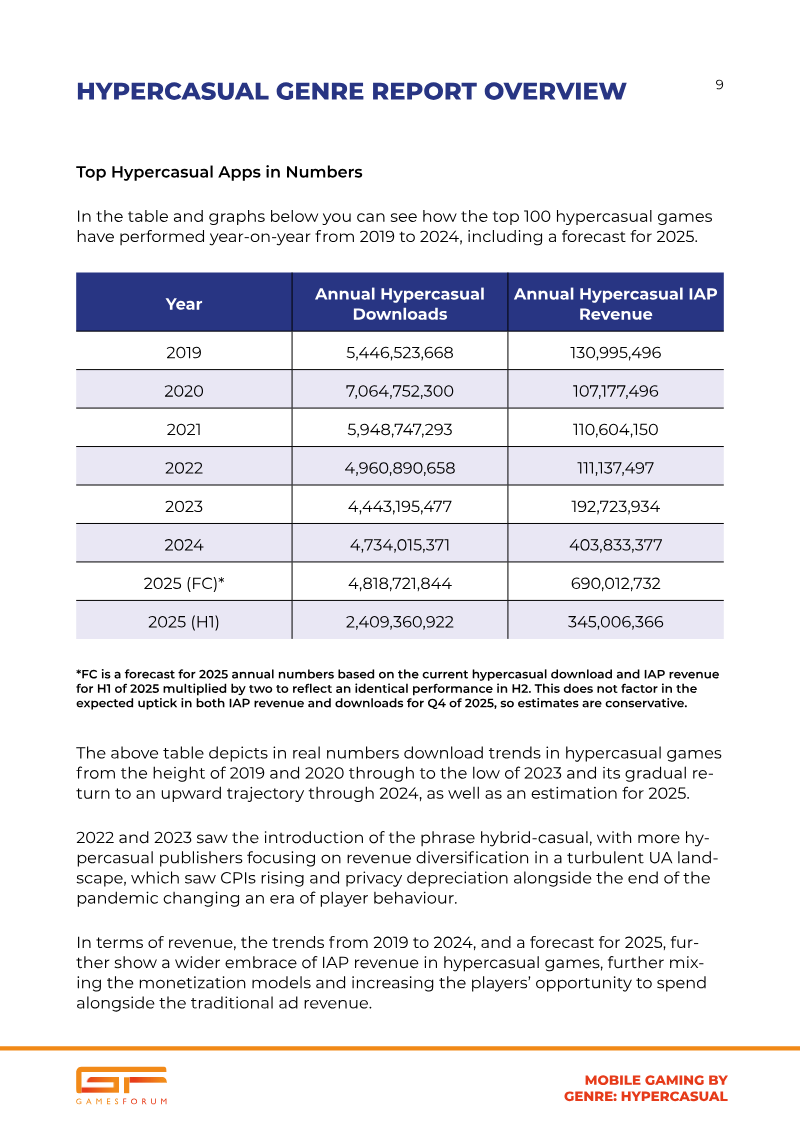
The hypercasual segment continues to dominate mobile gaming revenue, with the top 100 titles achieving 5.48 billion downloads and $345 million in in-app purchase (IAP) revenue during the first half of 2025—double the figures from 2024 and the highest ever recorded for this genre.
- Hypercasual revenue for the top 100 titles is projected to reach $690 million in 2025, a significant increase from $403 million in 2024.
- H1 2025 performance for the top 100 hypercasual titles hit record highs of 5.48 billion downloads and $345 million in IAP revenue, doubling the figures from the same period in 2024.
- Leading publishers like AZUR GAMES, Supersonic Studios, and Voodoo are shifting toward hybrid-casual models that blend traditional advertising with deeper IAP monetization to extend player engagement.

Why Most Games Deserve to Die — And How Voodoo Finds the Ones That Don’t
The modern mobile gaming landscape demands a rigorous, data-centric approach to publishing that prioritizes long-term engagement over subjective creative intuition.
- Voodoo maintains a rigorous testing pipeline of approximately 2,000 prototypes annually, discarding the vast majority early to focus resources exclusively on high-potential projects.
- Success is measured by long-term engagement metrics, specifically tracking retention rates at the one, three, seven, and thirty-day marks rather than initial release volume.
- Publishers are shifting from ad-only monetization to hybrid models that integrate in-app purchases with rewarded advertising to ensure profitability within a 120-day window.

Ad Monetization Secrets: Top Mobile Games Printing $$$ in 2025
The mobile gaming landscape in 2025 is defined by a shift toward high-volume ad monetization, where studios prioritize rapid iteration and aggressive ad placement to capture global market share.
- Vietnamese studios like ABI Games are achieving high-scale monetization by utilizing template-based development, where proven game mechanics are rapidly reskinned to target low-CPI markets before expanding to Tier 1 geographies.
- Top-performing titles in the current market, such as 'Dreamy Rooms,' can generate up to $78,000 per day in combined ad and in-app purchase (IAP) revenue by leveraging decorative trends and ultra-casual engagement loops.
- Hyper-casual and hybrid-casual games are increasingly shifting away from misleading 'fake' gameplay ads toward real engagement loops that prioritize high-frequency interstitial ads, sometimes reaching 10 ads per daily active user.

Screwdom 3D Is PRINTING MONEY! 💸 Vietnam’s Game Devs Just Raised the Bar
Screwdom 3D represents a significant evolution in the hybrid-casual gaming landscape, demonstrating how Vietnamese developers are successfully scaling sophisticated puzzle titles.
- Screwdom 3D is a hybrid-casual title generating approximately $3.6 million in monthly revenue, split roughly 40% from in-app purchases (IAP) and 60% from ad revenue.
- The game utilizes a physics-based core mechanic where players must manipulate and 'wiggle' 3D objects to clear levels, drawing design inspiration from titles like Screw Jam and Pinout Master.
- Despite being in a scaling phase with limited penetration in the US market, the game is achieving significant traction in Tier 2, 3, and 4 countries, with daily IAP revenue reaching approximately $200,000.

From Prototypes to Hits: Inside Rollic’s Playbook with CEO Burak Vardal
The mobile gaming industry is undergoing a fundamental shift from hyper-casual, ad-driven models toward hybrid-casual experiences that prioritize long-term retention and in-app monetization.
- The mobile gaming industry is shifting from hyper-casual, ad-driven models to hybrid-casual experiences that prioritize long-term retention and in-app monetization.
- Successful hybrid-casual titles now require sustainable engagement cycles spanning 180 to 365 days, moving away from the short-term production cycles of the past.
- To maintain a competitive edge, studios must employ a rigorous testing culture that involves discarding over 1,000 prototypes annually to focus resources on high-potential concepts.

Key aspects for Mobile Game Growth in 2025: UA, speed, monetization & globalization with Airbridge
The mobile gaming industry is undergoing a significant transformation as it moves toward 2025, characterized by the rise of hybrid-casual mechanics and a shift in innovation hubs toward emerging markets like Vietnam, Turkey, and South Korea.
- Mobile game growth in 2025 is driven by three core pillars: speed, monetization, and globalization, with industry development shifting away from Europe toward regions like Vietnam, Turkey, and South Korea.
- The number of apps on the Apple App Store doubled between 2022 and 2023, indicating that despite increased competition and user acquisition headwinds, developer interest remains high.
- Hybrid-casual games are defined by a revenue profile where 40–60% of income is generated via ads and 0–40% via in-app purchases, necessitating a focus on deep game economies to support long-term monetization.
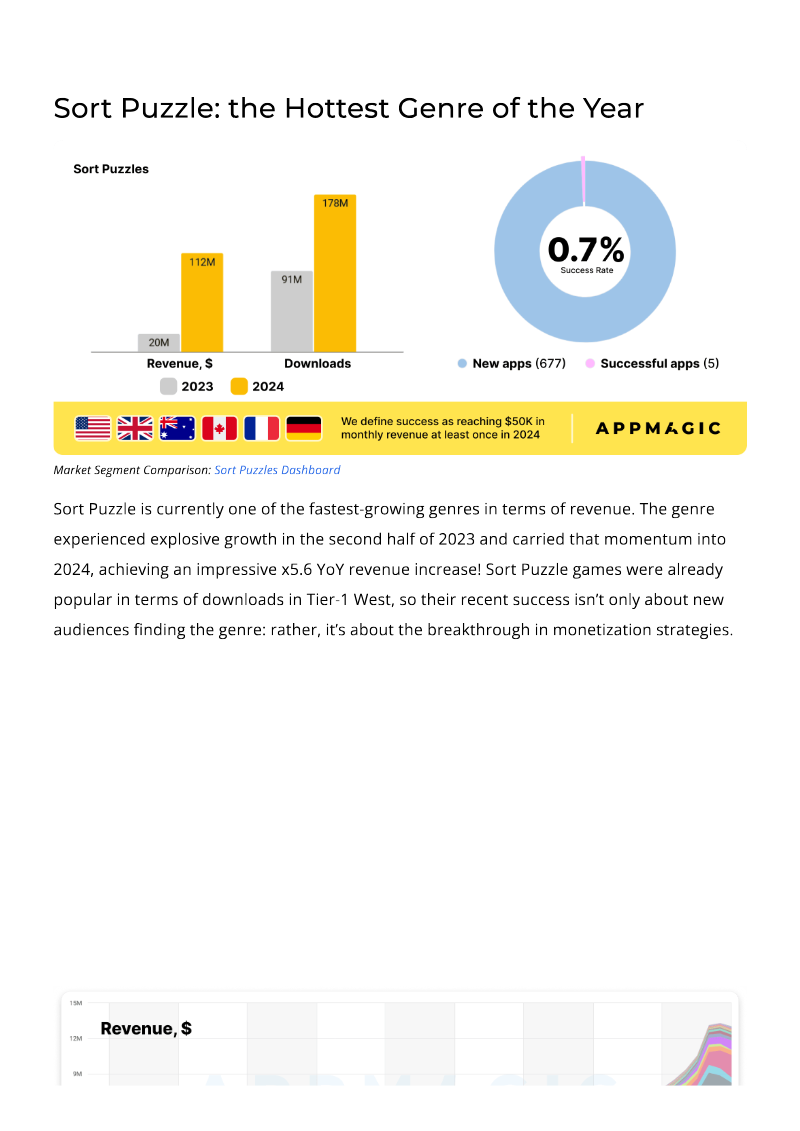
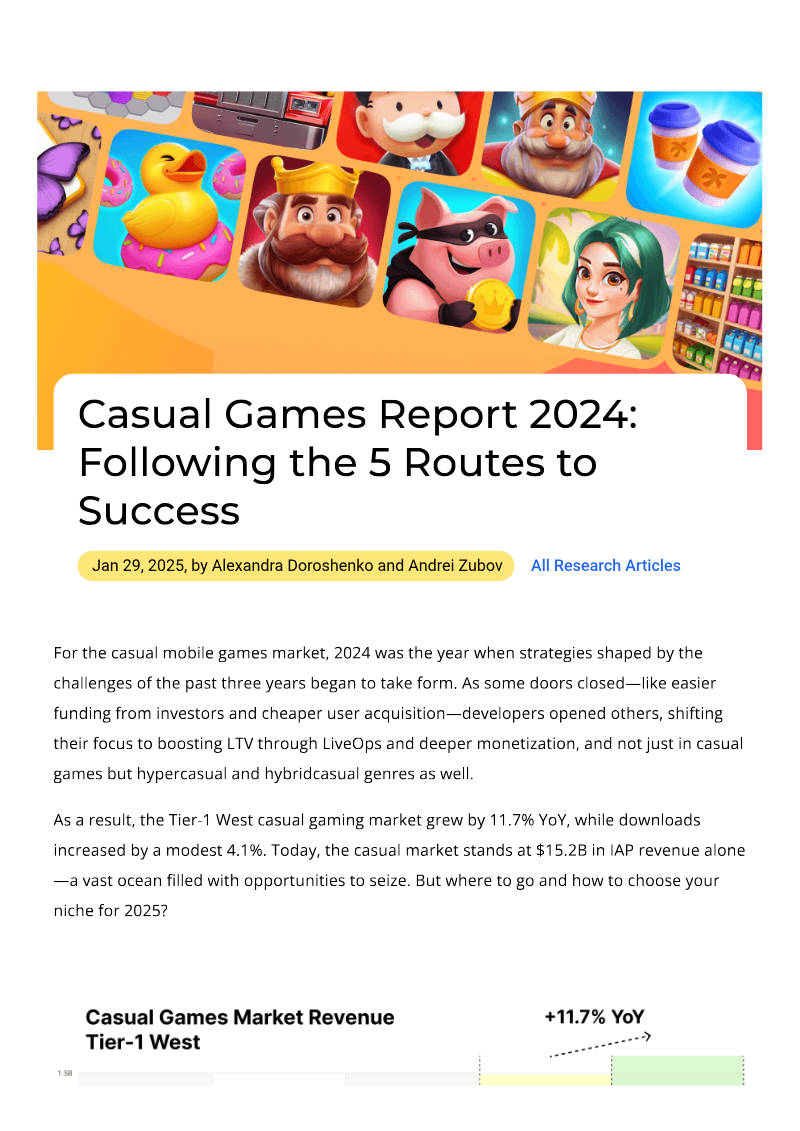
Casual Games Report 2024: Following the 5 Routes to Success
The 2024 casual mobile gaming market across Tier-1 Western nations is defined by a transition toward maturity, characterized by an 11.7% revenue increase despite escalating user acquisition costs.
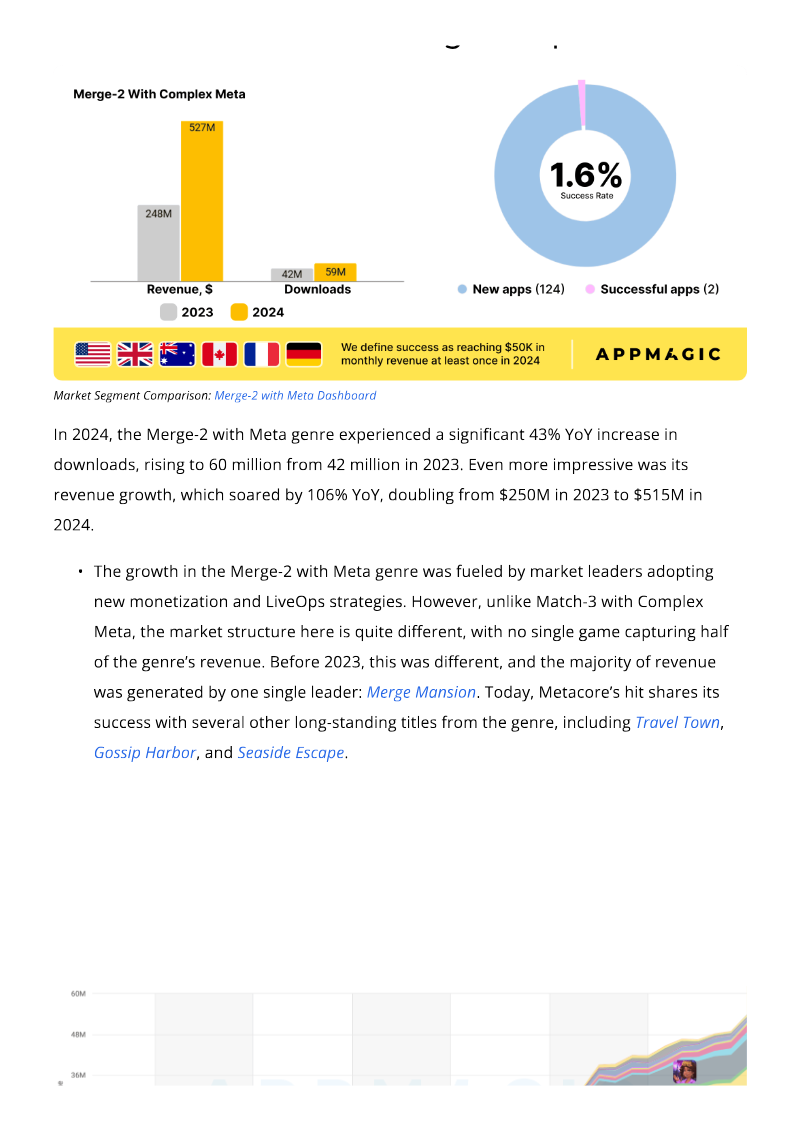
- The casual mobile gaming market in Tier-1 Western nations grew revenue by 11.7% in 2024, despite rising user acquisition costs necessitating a shift toward complex meta-layers and data-driven LiveOps.
- The Merge-2 with Meta segment is the fastest-growing category, recording a 106% surge in growth as competition among top-tier titles intensifies.
- The Casual Casino sector is highly consolidated, with three dominant titles capturing approximately 80% of total revenue and high barriers to entry limiting new releases.

The Secret Sauce of French Game Publishers with Vincent Février, CMO of TapNation
TapNation has successfully navigated the transition from a hyper-casual publisher to a hybrid-casual studio by maintaining a lean, tech-centric operational model.
- TapNation has successfully scaled to $55–$60 million in annual revenue with a lean team of approximately 80 employees by transitioning from hyper-casual to a hybrid-casual business model.
- The company has shifted its financial strategy from 30-day break-even cycles to 6-to-12-month payback windows to prioritize long-term retention and in-app purchase revenue.
- Growth is driven by a tech-centric operational model that utilizes proprietary user acquisition automation, AI-integrated management, and sophisticated lifetime value prediction models.

Hyper-Casual Games – Industry Snapshot 2020
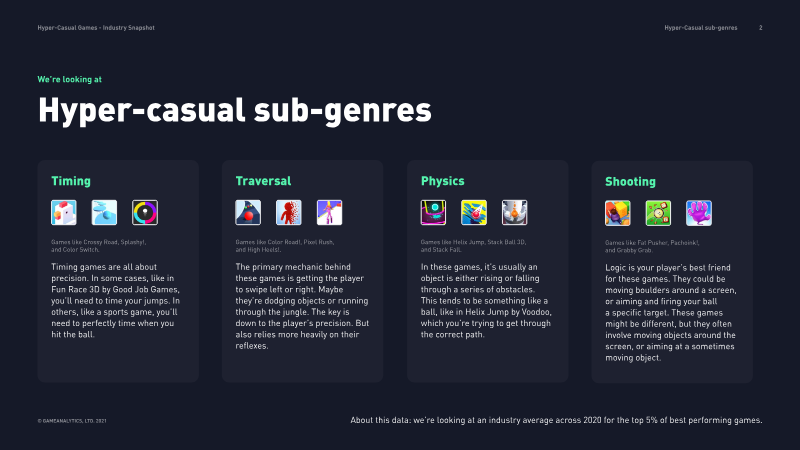
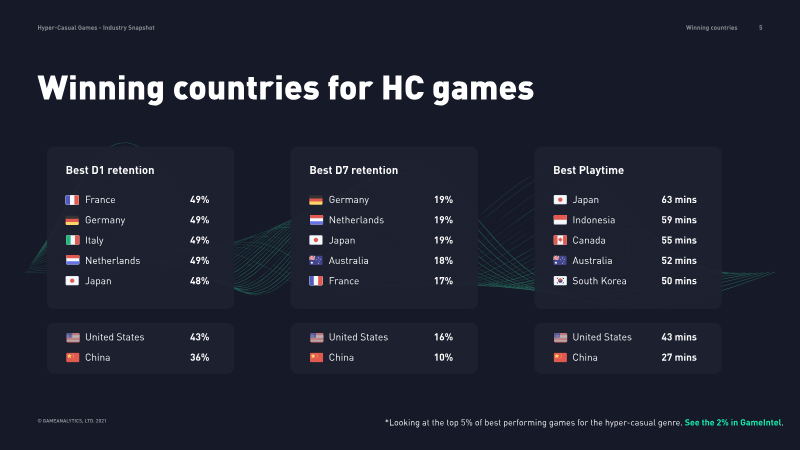
The snapshot presents a quantitative overview of the hyper-casual mobile game sector for 2020, drawing on data from over 140 000 titles and more than 2 billion monthly sessions.
- Hyper-casual developers should target a day-one retention threshold of approximately 40% early in the development cycle to ensure viability.
- Timing games lead the sector in day-one retention at roughly 44%, while traversal titles demonstrate superior long-term engagement with day-seven retention near 41%.
- Monetization performance varies significantly by sub-genre, with ARPPU ranging from $18 for physics-based games to $42 for timing titles, despite conversion rates remaining consistently below 1%.


Mobile Game Genre Report: Comparing and Contrasting Eastern and Western Markets
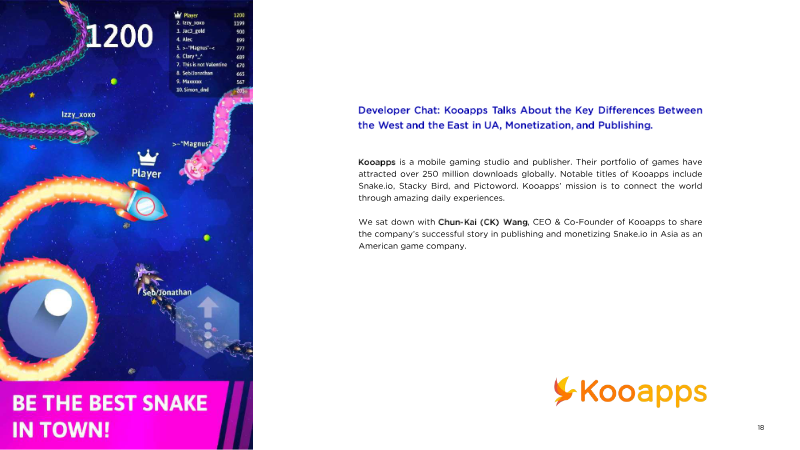
This analysis explores the hypercasual mobile gaming landscape, comparing market dynamics between Western regions, such as the United States and United Kingdom, and Eastern markets, specifically Japan and South Korea.
- Hypercasual games represent 36% of the top 100 global mobile downloads, though they command nearly 50% of top charts in the U.S. and U.K. compared to only 20% in Japan and South Korea.
- The hypercasual sector suffers from high volatility, with only eight of the top 36 titles from 2020 maintaining their positions in the 2021 rankings.
- Developers are shifting toward 'hybrid-casual' models—incorporating lite meta features and live operations—to address retention rates that typically drop below 10% by day seven.


Newzoo Hypercasual Mobile Game Genre Report: Eastern vs Western Markets
Hypercasual mobile games represent a significant and evolving segment of the global gaming industry, accounting for 36 of the top 100 downloaded mobile games in 2021.
- Hypercasual games accounted for 36 of the top 100 most downloaded mobile games in 2021, though the sector is highly volatile with only eight of the top 36 titles from 2020 remaining in the top rankings the following year.
- Standard hypercasual titles struggle with retention, typically seeing less than 10% of players return by the seventh day, which is driving a strategic shift toward hybrid-casual models that incorporate meta-features and live operations.
- Runner and racing games became the most downloaded subgenres in 2021, surpassing the previously dominant simulation and puzzle categories.