ReportAppMagic
Casual Games Report 2024: Following the 5 Routes to Success
29 Jan 202528 pages~38 min full read
Key insights
6 slides
Market Performance
The casual mobile gaming market in Tier-1 Western nations grew revenue by 11.7% in 2024.
Success now requires complex meta-layers and data-driven LiveOps.
Fastest Growth
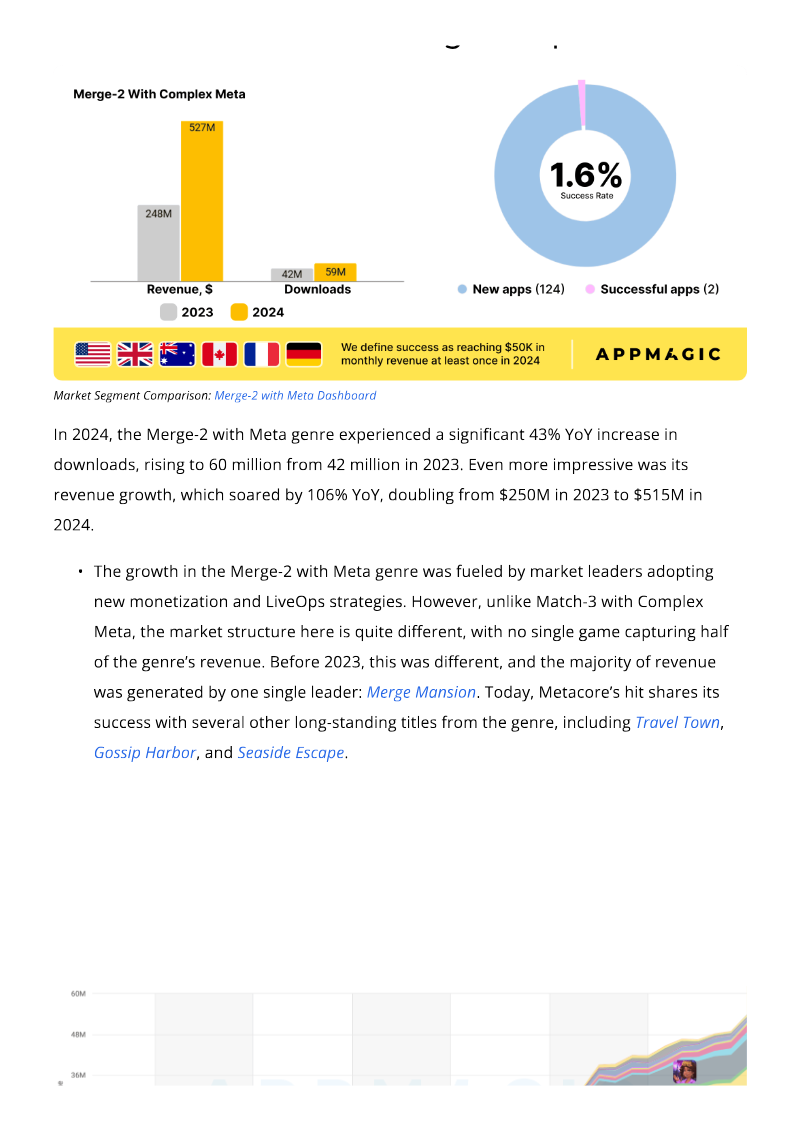
The Merge-2 with Meta segment is the fastest-growing category, recording a 106% surge in growth.
Competition among top-tier titles in this segment is intensifying.
Market Consolidation
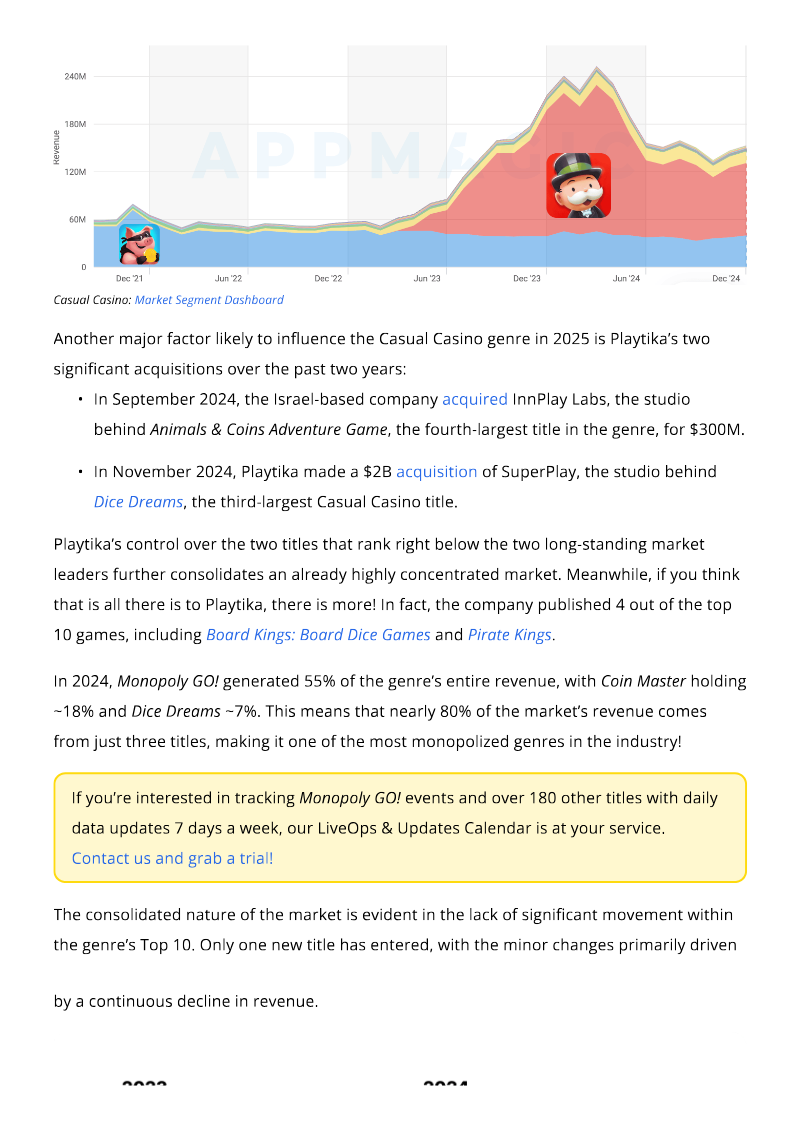
The Casual Casino sector is highly consolidated, with three dominant titles capturing approximately 80% of total revenue.
High barriers to entry limit new releases in this sector. Major publishers rely on mergers and acquisitions to sustain market share.
Like a small pond with a few very large fish, this sector has limited space for new entrants.
Retention Strategy
Long-term retention and monetization are driven by blending hypercasual core loops with sophisticated social features, decoration systems, and…
This strategic pivot is essential to offset rising market entry expenses. It also helps maintain relevance in a saturated landscape.
New Entrant Challenges
New entrants face low success rates, forcing major publishers to rely on mergers and acquisitions to sustain market…
This occurs in a saturated, resource-intensive ecosystem. The market demands a departure from traditional development models.
Innovation Mandate
Success in the current market requires a departure from traditional development models in favor of cross-genre innovation and…
This is crucial for long-term viability as the market matures. It balances accessible core gameplay with deep, evolving meta-features.
Strategic Shift. Success in the current market requires a departure from traditional development models in favor of cross-genre innovation and heavy investment in post-launch engagement strategies.
1 / 6
Ask AI about this report