Global reports and market data
Documents

MDM Podcast, Season 7, Episode 11: Understanding Unity's Vector (with Felix The)
Unity’s Vector platform represents a strategic evolution in mobile user acquisition by leveraging the company’s dual role as a game engine provider and an advertising network.
- Unity's 'Vector' advertising product leverages engine-level runtime data to improve user acquisition performance by providing high-fidelity, sequential event signals that are superior to traditional, often fragmented, software development kit (SDK) data.
- Unity is shifting from fragmented machine learning approaches to 'massive unified models' that allow for better autocorrelation, covariance, and causal understanding of user behavior across the advertising ecosystem.
- The company is prioritizing generative AI tools that focus on improving Return on Ad Spend (ROAS) rather than just increasing creative volume, ensuring that advertisers do not simply shift costs from production to marketing without performance gains.

3 Steps To Gorgeous Game Art (With NO Modeling Skills) - Live Workshop
High-quality game environments are achievable without advanced 3D modeling skills by prioritizing foundational design principles over technical complexity.
- Effective game art relies on five core principles: scale, asset distribution, color, lighting, and sound, all of which can be applied to simple primitive shapes like cubes and spheres to create a polished aesthetic.
- Proper scale is essential for defining the player's relationship to the environment; using consistent reference objects, such as a humanoid character or standardized furniture, prevents visual confusion regarding world size.
- Avoid uniform spacing by arranging assets in natural clusters or groups, as this mimics organic environments and prevents the unnatural appearance of isolated, 'socially distanced' objects.

How to leverage incentivised rewards for high value UA | Nicholas Bloom from Exmox #PGConnects
The incentivized user acquisition (UA) sector has emerged as a significant force in the mobile gaming industry, currently accounting for approximately 30% of the total UA marketing share.
- Exmox, a rewarded user acquisition platform, facilitates high-LTV traffic by incentivizing users with cash rewards to complete specific in-game events, currently accounting for approximately 30% of the total UA marketing share of voice.
- Exmox plans to triple its UA spend in 2026 to $300 million, following a $100 million spend in 2025 and a doubling of its internal headcount from approximately 60 to 120 employees.
- Rewarded UA platforms require users to opt-in to tracking to function; this acts as a necessary trade-off for users to receive rewards, as the platform must verify in-game event completion via MMPs in real-time to trigger payouts.

Pokemon Go owner: There’s less of a need for new games
Scopely co-CEO Javier Ferreira provides an analytical overview of the current mobile gaming landscape, emphasizing that while the market has reached unprecedented scale, the requirements for success have shifted significantly.
- The mobile gaming market has shifted from rapid user acquisition to a focus on longevity, with 80% of Scopely’s revenue now generated by players who have engaged with their titles for over a year.
- Scopely has reached $15 billion in lifetime revenue and 2 billion downloads, anchored by six distinct billion-dollar franchises including the recent hit Monopoly Go.
- Market maturity has reduced the demand for new, transient game titles, placing a higher premium on the development of exceptional, long-term player experiences.

Let's Review Your Games — Ep. 042
Indie game development success relies heavily on balancing creative vision with rigorous technical polish and user-centric design.
- Streamability is a critical development priority because streamers and YouTubers are essential channels for game revenue; technical issues that prevent a game from being streamed represent a major red flag.
- Onboarding should be integrated into the gameplay experience rather than presented as a wall of text, as players are unlikely to retain complex instructions provided outside of active play.
- Combat feedback is essential for player satisfaction; developers should implement clear indicators such as knockback, sound effects, particle effects, or reticle flashes to confirm successful hits.


2026 Digital Advertising Trends Report
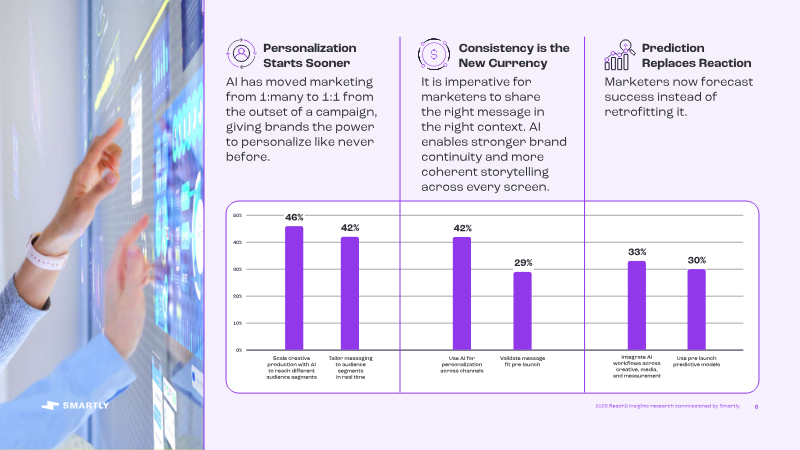
The 2026 Digital Advertising Trends Report examines the evolving landscape of digital advertising, emphasizing the transformative impact of AI, cross-channel strategies, and predictive intelligence.
- 92% of marketing decision-makers identify AI as the primary driver for redefining the customer journey, signaling a shift from linear funnels to fluid, data-driven ecosystems.
- Marketers categorized as 'precision-first'—those who integrate AI into workflows and utilize six or more platforms—are 27% more effective at minimizing media waste than their peers.
- Generative AI adoption has reached 95% among marketers, who primarily use the technology for the creation and optimization of advertising assets.

The Future of Consumer Apps: How AI and Game Design Principles Are Reshaping Every Category
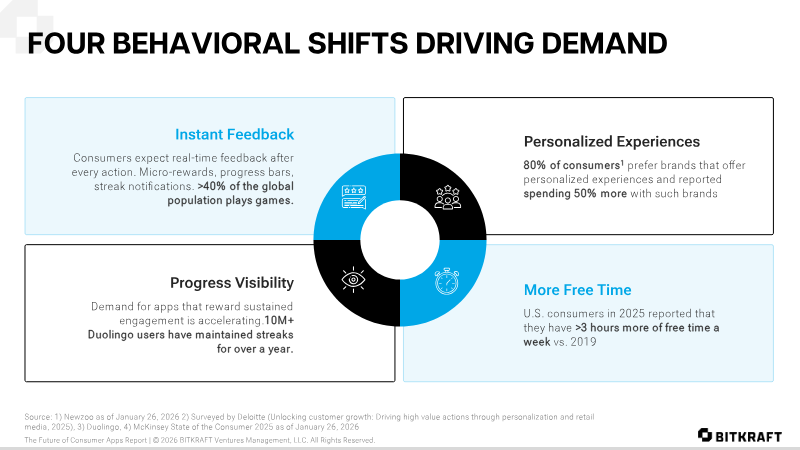
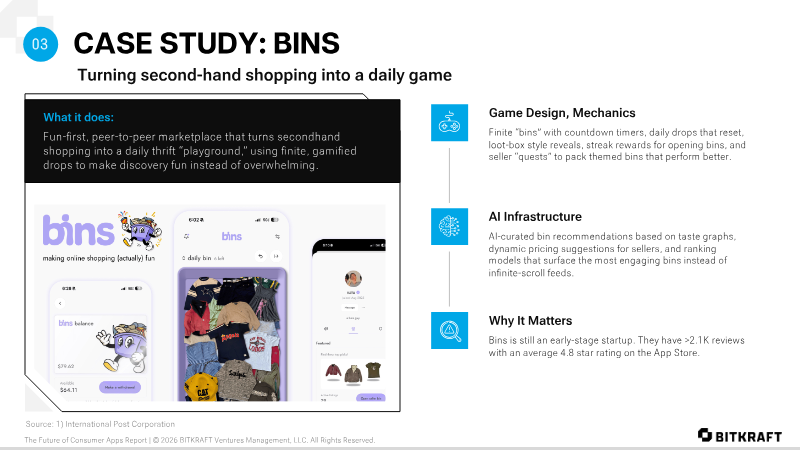
The future of consumer applications will be defined by the strategic integration of artificial intelligence and game design principles, a shift already evident as non-gaming app revenue surpassed gaming revenue in 2025.
- Non-gaming mobile app revenue is projected to reach $150 billion by 2030, with spending in this sector already surpassing traditional gaming apps as of 2025.
- AI-driven gamification is the primary catalyst for revenue and engagement, with BITKRAFT forecasting at least five non-gaming consumer companies will exceed $10 billion valuations by 2035.
- High-friction sectors are successfully using game mechanics to drive retention; for example, fintech platforms like StockGro use leaderboards and AI-personalized tutorials to convert financial discipline into instant gratification.

The final word on GDC | Week in Mobile Games podcast
The Game Developers Conference faces a precarious future following a sharp decline in 2024, where attendance plummeted by 33% to 20,000 participants and exhibitor numbers reached their lowest level since 2012.
- Starting June 2026, PEGI will expand its age rating criteria to include in-game monetization and online features, with games containing loot boxes or paid random items likely defaulting to a PEGI 16 rating.
- Epic Games Store GM Steve Allison described the recent Google-Epic settlement, which allows developers to keep more revenue, as a 'meaningful reset' that provides developers with a toolkit to improve margins.
- King’s Farm Heroes Saga has surpassed $2 billion in lifetime revenue, highlighting the continued success of the studio's casual portfolio despite its historical, largely unsuccessful attempts to pivot toward midcore titles.

Measuring the long-term effects of brand advertising (with Carl Mela and Ross Link)
Modern marketing strategy faces a significant crisis as the accessibility of direct response metrics incentivizes firms to prioritize short-term sales and discounting over long-term brand equity.
- Modern marketing measurement often prioritizes short-term direct response metrics like clicks, which can erode long-term brand equity and lead firms to mistake promotional discounting for sustainable brand growth.
- Effective brand measurement should focus on two key indicators: baseline sales volume (representing brand power) and price elasticity (the ability to raise prices without losing customers).
- Marketing mix modeling should be used to optimize for long-term profit rather than just top-line revenue, as agencies often have misaligned incentives to maximize spend rather than margin.

MDM Podcast, Season 7, Episode 7: MDM Mailbag #7 (with Matej Lancaric)
The mobile gaming industry is undergoing a structural shift toward web-based onboarding and direct-to-consumer payment strategies to mitigate the impact of platform-level tracking restrictions and high app store fees.
- Mobile game developers are increasingly using web-based onboarding and shops to bypass the 30% platform fees charged by Apple and Google, though major companies remain hesitant to fully move their monetization stacks due to security concerns and the difficulty of auditing web-based transactions.
- Artificial intelligence and no-code tools have drastically shortened production cycles for high-quality video and playable ads, allowing developers to deploy new creatives in as little as one day using pre-built templates.
- The effectiveness of mobile measurement partners (MMPs) remains debated, with smaller studios often lacking the internal resources to manage complex data attribution, leading to a reliance on internal dashboards built on top of Firebase and Looker.

Model Dev Memo Podcast, Season 7, Episode 5: Ads in ChatGPT (with Rishabh Jain)
The integration of advertising into ChatGPT represents an economically rational evolution designed to scale the platform while enhancing user discovery.
- OpenAI's transition to an advertising model is an economically rational move that allows the company to fund product improvements while providing users with access to more advanced models.
- The initial high-CPM (cost per mille) entry strategy is likely a deliberate tactic to prioritize signal collection and system training over immediate mass-market adoption.
- OpenAI is expected to prioritize large, established brands for early ad placements to minimize user friction and avoid the risks associated with niche or controversial product targeting.
The Relationship between Career Decision-Making and Parental Support in Esports Players
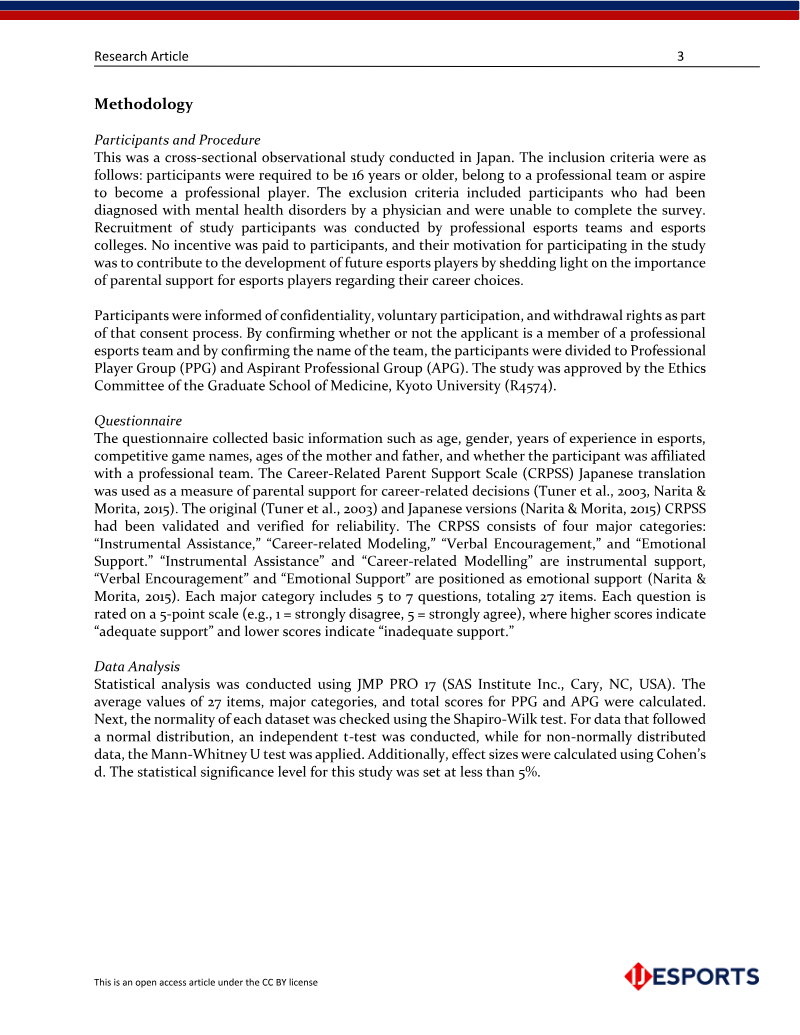
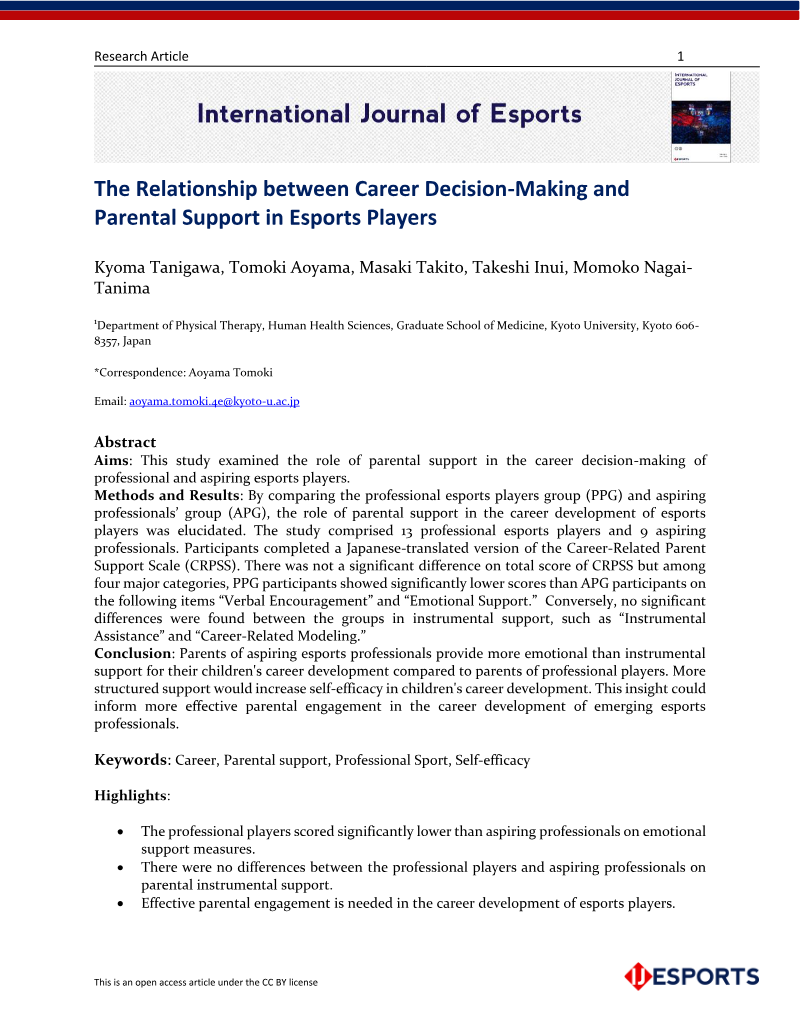
This study investigates the relationship between parental support and career decision-making among professional and aspiring esports players in Japan.
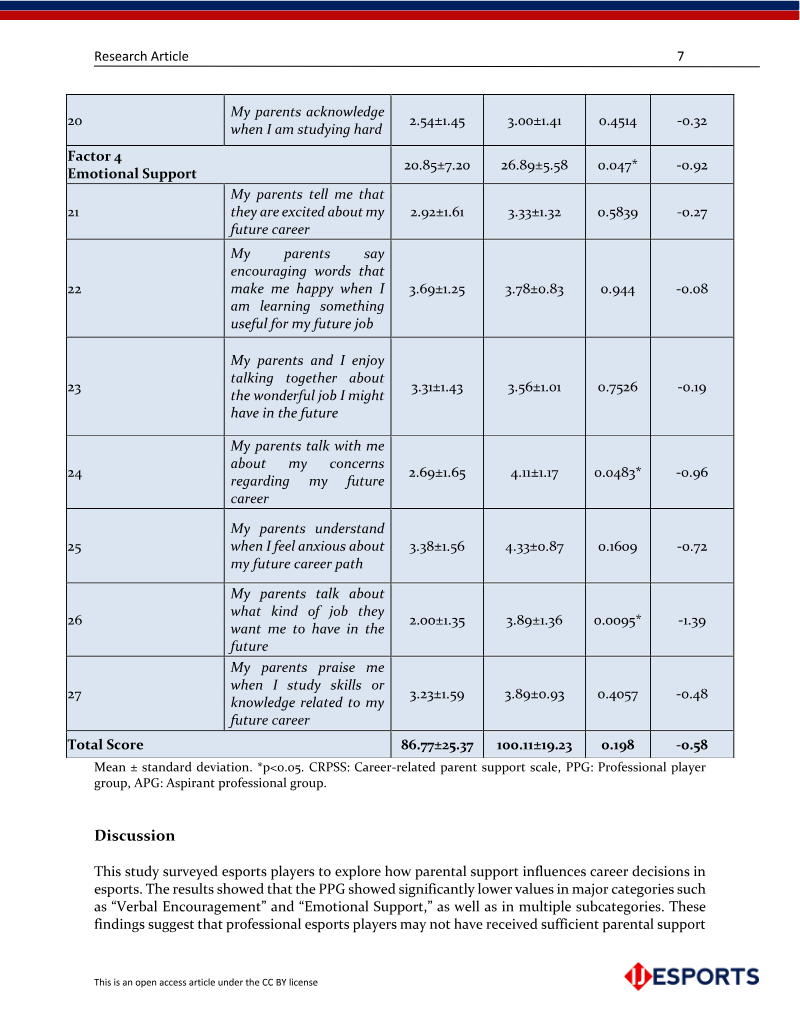
- Parental career support was studied in 22 Japanese participants (13 professional esports players and 9 aspiring players, aged 16 or older), using a 27-item Career-Related Parent Support Scale across four categories.
- Total parental support scores did not differ significantly between professional and aspiring players, but professionals scored significantly lower on verbal encouragement and emotional support.
- Instrumental support (practical assistance and career-related modeling) showed no meaningful difference between the two groups, and the authors conclude aspiring players receive more emotional than instrumental support.