Transcript
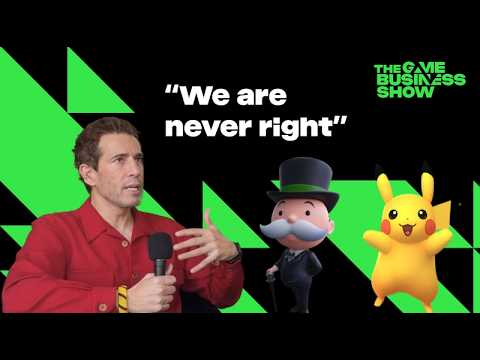
Nobody has been more wrong at Scopely than I have than Walter has. That's a fact. The reality is that maybe there's less of a need for new games. Having said that, exceptional games that make players feel like that can achieve levels of success that are unrivaled and bigger than anything that was happening a decade ago.
[music]
Hello and welcome to the Game Business Show with me, Christopher Dring. This is our 100th episode of the Game Business. It is also our 1-year anniversary since we launched the show. It's been amazing. I've had an incredible time. We've had some amazing guests and we've got so many cool things coming up. Um celebrate our 100th episode and our 1-year anniversary, we were offering 20% off paid subscriptions to the Game Business. Um if you are a paying subscriber to the Game Business, we do have a bonus version of the show for you that comes out on a Monday. It's called the Micro. As well as it being a show, we also have a newsletter that goes with it as well. Um
Paid subscribers also get a monthly market report from us. We do occasionally drop bonus pieces for subscribers, too. And if you're going to some a Game Fest, paid subscribers can get a ticket to our event, the Game Business Live, for no extra cost. Of course, our Tuesday and Thursday shows are free. They have been free from the beginning. But that's what you get if you become a paid subscriber. If you want to take up our 20% off offer, check out our latest newsletter. You can get a link to the promotion there. You can also find out all about it on the gamebusiness.com. But enough about us. Today's the Game Business Interview is with mobile games giant Scopely. It's the company responsible for the mega hit Monopoly Go and is the new owner of Niantic, which of who is of course the developer of Pokémon Go. Two of the biggest mobile games in the world we're talking right here. Now, Scopely is celebrating its 15th anniversary and it shared a whole load of stats around that. It's now generated over 15 billion dollars in lifetime revenue, which seems awfully coincidental. Um it's had over 2 billion game downloads. It employs 3,000 people
across four continents. It's acquired over 10 developers and games and operates six billion-dollar franchises. In fact, six games have been live for more than a decade at Scopely. It all sounds very impressive, but Scopely is also a rarity. It's a Western mobile game publisher that's actually delivered a breakthrough hit over the last five years. Indeed, we saw comments from Supercell just last month that says the Western games market in mobile is falling behind. So, what is the truth behind the mobile games market in the West and what does the future hold for Scopely and how has it managed to buck the trend? To find this out, I visited co-CEO Javier Ferreira at GDC just earlier this month. And this is what he had to say. Hi Javier, welcome to the show. Thank you. How you doing? Doing good. Doing good. Enjoying here San Francisco, sunny and warm. You can't get mad at you know, every time you come up here so excited. Are you it's 15 years of Scopely, which feels mad to me. Yeah,
it's it's been 15 years. But the company has been on this you know, on this journey. The way that I think about it is just a milestone on a kind of journey that continues. Mhm. But obviously a moment of kind of celebration and some pride. You know, when you start a company like this, the reality is that at the beginning you don't know anything. You don't know simply you don't know how to build a company. You don't know how to build a product. And most of all, you don't know whether you're going to be able to be successful. In some ways you don't even know whether you're going to be able to survive. And so, 15 years in, we have been able to survive. I think we have been able to be successful or at least successful enough, which is which is great. And uh and now, you know, we have an opportunity to be meaningful and to do hopefully even better and more ambitious things. It's you revealed a lot of stats as part of your anniversary. Revenue generated and size of the team. Which is which is the stat that means the most to you?
Um Maybe the the the thing that is kind of most exciting for me is the people that that that work at the company. I I've always wanted to build a company that was working for us. And what I mean by that was that an ecosystem and a space and a and a company where a lot of us could fulfill a lot of the professional goals, ambitions that we had, where we could have a meaningful relationship with work. Um And where we could do things that felt, you know, personal. I never wanted to have a transactional relationship, you know, with my career. And to the extent that we've been able to do that for at least a fraction of the three 3,000 people that work at Scopely, to me that's the that's that's the most meaningful stat. Yeah. You always talk about the importance of learning quickly at Scopely. You have done in the past. How do you manage that? Learning
quickly, reacting quickly, teaching from each other, learning from each other, when you've got an organization that big. Yeah, I think uh you know, we talk about this uh operating system and um and of course the culture that kind of governs that, right? I think I think one of the things that we try to kind of make sure that people internalize when they work at Scopely is that is that first, we are ever we're an ever-evolving organization. So, nothing is ever done. We have this kind of idea of iterating to greatness. And underlying that kind of you know, fact is is the belief that uh we're never right. Right.
We are always in the kind of pursuit of what I think of more accuracy, greater levels of accuracy, which means can we find better ideas than the ones that we have? But but you know, we we're never right. And and that is not something that we just say, it's something that we've all you know, we've learned. And uh And so, if you if you internalize
that, the next kind of the most reasonable thing to do then therefore is, okay, how do I learn? How do I learn so that I can get to a better idea, to a better hypothesis and iterate from that. And so, I think that's the leadership of the company is very clear about that. We're very clear that nobody nobody has been more wrong at Scopely than I have than Walter has. That's a fact as well. And so, if we can kind of normalize that, then I think we can then focus our energy on the on the on the real work, which is learning and growing, you know. But when you've got so many people, I guess cuz the idea is you learn from each other. You learn from mistakes. Sometimes I guess somebody over in this office in this country may not always get So, you how do you have to put things in place to make sure that that's No, I don't I don't believe I I I think those things kind of need to happen kind of organically at at companies. And they happen organically first, obviously because you verbalize them. Um And you kind of make sure that people understand them and you communicate them. But then those those beliefs and
those ideas have need to have weight. And what I mean by that is the people that um exemplify those kind of behaviors are the people that get more responsibility, the people that they get promoted, the people that you know, become more influential or accumulate more power within the company. That's I think that's I think the only kind of dynamic that can really works. I don't think in a talent industry you can govern from the top. So, so we try to distribute decision-making and behaviors as close as possible to the players. And then what we we observe and we try to kind of elevate and promote the people that we think, you know, best follow or or live our values, if that makes sense. Have you learned Has Niantic brought any learnings into the business?
Absolutely. Yeah, yeah. I mean, I think you know, the Niantic team I think the Niantic team has been truly inspiring for us. You know, the the game has had a you
know, an amazing 2025. I think it's the ninth year that it's been live and it's been the biggest year in the history of of the game. Um And I think the team um you know, has kind of I think inspired us in terms of two things. You know, first the fundamental kind of deep deep kind of community Sorry, deep deep kind of commitment to the community. Um Uh when you go to some of these kind of Go Fest events all over the world, the the the the work that the team puts in putting together these events and the and the kind of bonding that is created with the player base is it's just extraordinary and I think it's a good reminder of why we do what we do and it's kind of really inspiring. So, I think that's uh that's been kind of one thing that I think has been really exciting. And I think the other thing that I've been really impressed with is that they are very mission-oriented team. And and their mission is you know, they they they want to make the the
world, you know, more fun and more interesting through play, the real world. And uh And that's that's a mission that's exciting. But the way to stay true to that mission, you got to pay a price. Like you got to [clears throat] the decisions that you got to make around the game and how you're evolving it that restrict, right, what the types of things that you can do. And and their their their belief in that mission and that discipline around it, I think has been something that I think has energized the whole company. Yeah. Obviously, Niantic's a big acquisition that you've made. You've you've made another big investment in Loom. What do you look for when you're investing in businesses or acquiring businesses? What's your What's your number one thing?
Yeah, yeah. I think that the maybe sometimes from the outside are looking at scale, right? Okay, obviously with these acquisitions you're adding you know, revenue or audience. And of course that those things matter. But I think the one thing that we are always on the lookout for is
how do these acquisitions make the company better? How do they make the company's strategy more powerful? How do they enhance the capabilities that we have and how together as a platform they are they accelerate, you know, the journey that we're on, you know, and so you know, in the for example in the case of Niantic, we were I think the number one thing that we were valuing in that in that acquisition was the communities that they had that they had built. I think they are the most engaged and uh you know, largest communities in mobile gaming bar none. And we thought that that was an incredible unique kind of asset from which we could learn a lot and which could make the company better and I think it has. And I think in the in the case of you know, in the case of Loom Games, obviously Pixel Flow is an amazing game with some some phenomenal kind of long-term retention and KPIs. But I think what I'm really excited about is also how their prototyping
culture, the way that they have of making games is so different from the way that we've been making games traditionally and how that gives us another another kind of lever, right? In our strategy as we think about reaching players and touching kind of players across different genres and that's capability that we didn't have and so I'm excited to be on that journey with them for sure on Pixel Flow, but hopefully many games beyond that. Well, Pixel Flow is obviously not a lot of your games are licensed, you know, that that someone else's IP or someone else's license. I spoke to Ed Frank on the show last year and he talked about how that a little bit and but you seem to be that's still being your big thing, but obviously you've just invested in Pixel Flow. I don't know what question I'm trying to ask here, but is that still the big thing for you those sort of working with those properties and those IPs? Um you mean like third-party IP?
Yeah, yeah. I think you know, we are we are we are trying to kind of build people's
favorite things and and some of these IP universes are people's favorite thing, right? For some people Pokémon is the kind of favorite thing. For some people Marvel is their favorite thing and so They all love Monopoly. Yeah, yeah and so and so we're excited about you know, kind of partnering with with such IPs, you know, I I don't think I don't think we are interested in IP as a universe. I think we are interested around the fandom and the communities that exist around those IPs. But to your point, those communities can happen and can be built around original IP, third-party IP. It's not the IP that kind of governs our strategy. It's making sure that we have and are building kind of fandom and deep deep communities. It's interesting I was talking about some of the things you're doing about how people are doing differently and how Loom are doing something differently. I don't know if you saw Ilkka's blog post around Supercell's numbers and he was quite critical of the West really accusing it of falling behind because of a lack of radical new gameplay
innovations. I think cited Monopoly Go as one of the few exceptions of sort of Western breakout hits in recent years. What's your take on the market right now? What's I know that's quite a broad question I guess, but is it is it falling behind? Yeah, yeah. Look, I think the market is is the largest that's ever been.
Yeah, of course.
I think I think if we were having this conversation six years ago and and we were thinking about the scale of the market which we are today, I think both of us would have been saying, "Wow, that that would be an amazing kind of outcome, right?" And on top of that, I think it's unquestionable that that gaming and play has won. That is it's it's it's when I started my career in gaming, a lot of people would say to me, "I'm going to I don't play games or you know, I'm a non-gamer." Nobody ever said to me, "I don't read books, you know." And so I think today we're in a totally different place in terms of cultural significance. Like this is a really culturally significant kind of category
and a cultural artifact. And so I think that's an amazing thing and we have billions and billions of people playing these products every day. So that's kind of where I start. I think it's never been more exciting to be in this industry. Now, having said that, the industry has changed, right? And what is successful today is not the same things that were successful five years ago. And I think most importantly, the path to success today is different than the path to success that existed kind of five years ago. And I think and I think uh you have to be nimble and you have to be very adaptable to be able to react to kind of different conditions. You know, five years ago or 10 years ago um you still had a lot of people coming in and discovering mobile games. That is no longer the case. Five, 10 years ago, you still had a lot of people trying to kind of maybe build a long-lasting relationship with some of these games. That is not
the case today. All of these billions of gamers are playing these games with you know, really high levels of engagement. Think about the fact that uh about 80% of our revenue comes from people that have been playing our games for more more than a year. All right. You know, that's that's gives you a sense of what are we what are we building? We're not building things where we launch and monetize for three or five or six months. We're building things that last for years and decades, right? Uh uh And so if you want to kind of find success in that market, you're having to you know, you're having you're asking basically players to abandon those experiences that they have deep deep allegiance to and not just go and try a new thing, which we see quite a lot of success in people trying new things, but not just try. Try and stay and stay not for a week, not for two months, but stay for years. And so you know, how you need to make a gamer feel to achieve that? You know, you got to make them feel something very special and I think
that's maybe some of the some of the internalization that still hasn't happened uh uh across the industry and uh it's more difficult. It's more difficult and the reality is that is that maybe there's less of a need for new games. Having said that, exceptional games that make players feel like that can achieve levels of success that are unrivaled bigger than anything that was happening a decade ago, right? So Monopoly Go got to $6 billion in revenue faster than any mobile games in history and we launched that game in 2023 when a lot of people were saying, "Hey, you know, you it's not possible to launch new new games in on mobile, yeah." Is that what is that is that does that make acquisition more important for you then acquiring those games rather than than necessarily building them? No, I think I think I think um uh you know, we've been we've been doing M&A. We do M&A every day at the company. Obviously, we we can talk about kind of
Loom Games. We could also talk about the hundreds and hundreds and hundreds of teams and companies that we look at and and you know, we don't acquire for for for you know, a number of reasons. And we've been doing that, you know, for the last kind of decade. Uh And and the reason for [clears throat] that is because you know, we believe that you build a stronger kind of company and a more resilient company and a more strategically powerful company if you're able to bring in new people and new teams that can accelerate what you're doing, that can kind of bring new skill sets, that can kind of really enhance the DNA of the company. And so that hasn't changed and and you know, maybe what has changed is the scale of those acquisitions and now we have more capital, so maybe we can do kind of bigger deals, but there's no change in our strategy as as we think about an M&A. And and likewise, there's no there's no change in how we think about organic growth. Over the last over the last kind of 15
years, I think we've grown our revenues every single one of those years and we have done that through a combination of organic growth and in some cases through M&A. And as we think about the future, we remain very committed. We have you know, many games in development and and we we think that we can you know, make games that are going to delight kind of new games that are going to delight players and and remain very committed to that strategy and invest and are investing kind of substantial amounts of capital against it, yeah. How significant are the the fee changes that Google and have agreed to make in the last few days? I don't think it's um you know, if if you are if you are if you are using a billing kind of provider, you could say I could say Scopely that that the lower the fees the better, right? Having said that, I don't think it's I don't think it's a big driver
of of um of how we think about the business today or in the future, you know, I think I think there's bigger themes that that our success depends on than than than than those to be honest. I guess if you have that slightly more open platform, you can have might be easier for having that direct conversation maybe. I don't I know that Epic talk about that quite a bit. I I I've I've never felt I've never felt that that neither Google or Apple have restricted our ability to build that regulation with players to be honest. This piece, I know in the past you've I I I ran into Paramount earlier today and they were talking about Star Trek your Star Trek game and stuff like that. I know in the past you do bits and bobs in the worlds of PC and not so much console. Is that an area that's still of interest to you? Yeah, I think I think any area where there are players is an area of interest to us, you know, and then I think it's a question of uh um uh first we have teams and people that want to go after kind of those opportunities
um and uh you know, how do we build uh um you know, teams to go after that, you know? I think and I think today um if I had to answer that question for us on mobile, I think we're pretty good at that and I think [clears throat] uh on some of these other platforms, we still have a you know, a lot of uh learnings to do and a lot of growing and a lot of building that we need to do, but uh I would say that uh if there's a if there's a gamer uh uh we want to be there. Is it like a different industry in a way? I know there's some similarities, there's some crossovers, but those worlds it's a lot of conversation that the games industry is actually multiple different industries and what you do and the skill sets you've got in mobile can be quite different from the
I think I think I think they're the same industry and I you know, I've I've heard kind of Matthew Ball uh talk about it kind of different industries and and I've seen his kind of presentation and it's super insightful, of course. Uh um and he's right, but I the way that I think about it is that maybe the drivers of success uh are different and the capabilities required uh are different, but I still think that the kind of fundamental
product or the fundamental experience that you are delivering is very much the same, you know? And I think it's just different types of players and and and the players of Monopoly are different than the players of Pokémon that are different from the players of Star Trek that are different from the players of uh you know, Call of Duty that are different from the players of
Yeah.
for me, I go back to the kind of players, you know, uh uh Walter was saying it kind of before uh in some other kind of thing where having that, you know, they are bosses uh and uh and uh you know, we'll we'll try to kind of live up to the expectations, wherever they are, yeah. Conscious of the time um but I was I was I was going to I have to question you about AI. It's the most generic AI question I've ever written there. I mean, it's like uh what's your position on it, you know, in terms of like uh the role it can play in mobile and then your well, just your business generally.
Yeah, I go you know, I I go back to some of the themes that we were discussing before. Uh um as a as um as a company, we want to
thrive. Um we want to be successful. Um if we are thriving and we're successful, then um then our people are thriving, then our people are successful, then we can kind of do amazing things for players uh and um and you know, when new technology comes along that uh has the uh potential of of shifting uh and impacting what we need to do to be successful, we embrace it, you know? Uh we embrace it. There's no point kind of judging it. Uh um uh it is there uh and so as a as a as a team and as a company, we try to kind of, you know, figure out how to use it to the best uh uh to best support our teams and what they're trying to build and to build better games for our players. What area of the industry or maybe it's new markets, new territories, maybe it's new technology like AI, what is exciting you the most about where things are at the moment? Yeah. Um for us [clears throat] specifically, I think um I'm super excited about hybrid casual
uh um and uh what we can do with Loom um I think it's a kind of really interesting category from a from a you know, you can kind of build some really fun and uh
some simple, but at the same time really fun kind of uh um uh core loops and kind of gameplay uh gameplay loops um and uh now the challenge is how do you kind of lay on top of that um some really long-term engagement kind of uh uh mechanics so that uh so that uh you know, you can build kind of really durable businesses. And so, that for us is is a new journey and new kind of experience that we're going on, you know, with uh with with Loom and I'm really excited about that. And I think the other thing for us is some of the things that you were saying before. I mean, we've uh I I always enjoy the most when we operating in our sphere of incompetence. And by that, what I mean is when we are starting to kind of hit ourselves against the wall of things that we don't know how to do. Uh um and that's how we have gotten better, that's how we have grown, right? Uh and so as we think about the future of the
company, uh believe me that there's a number of uh teams and projects that we're working on that uh that where we're hitting our, you know, walls against uh hitting our heads against those walls um and um and you know, the opportunity to go to new platforms, to new gameplay uh new genres is of those opportunities more in the future, yeah. Yeah, I think it's it's great to it's great to see some of the success you've had, you know, the industry is having a challenging time. We're facing competition from the short-form videos and and the other thing that's competing for our time and that the stuff that you're saying and the innovation and the new areas, that's where we we could fight back, I guess, as a business. Not not that you're necessarily in the in that situation, but
Yeah. Yeah, no, but I think but I think um you know, um we we we don't kind of wake in the morning go to Scopely and say, "Oh, we're so successful." We really don't, right? The the the feeling is like one of continuous challenge. And uh and uh and it's difficult, right?
We start the day and the at zero. No players, no revenue. And and then we got to kind of do amazing things or our teams doing amazing things to kind of build the business every day, every week. remind them uh and so, you know, I think um I think my my overall kind of my my I think it's something what we've internalized and what we try to kind of make sure that everybody believes in and understands is that uh is that uh you don't choose the conditions of success. You don't choose the conditions of success. Like you know, the market has certain kind of characteristics, certain dynamics um and what you can choose is how you operate, you know? And uh and uh and how you react uh uh to that kind of marketplace. And uh and as I said, the opportunities are huge. There's still companies that are that are growing, you know, very meaningfully uh and have found the success uh and um and uh yeah, it requires evolution and innovation at the company level. By the way, at the individual level.
Uh uh who we were uh as game leaders, as game makers 5 years ago, are not going to serve us for who we need to be today and most likely who we are today is not going to serve us and our teams and our companies in terms of who we need to be, you know, 3 or 4 years from now. Well, that's a good good way to answer my last question is where would you like to see yourselves in the next 15 years? Yeah, I hope um you know, I hope we can continue to be um a a company where uh as we say, people continue to have the best professional experience of their lives. I think this is uh a kind of fundamental kind of pillar uh of what we're trying to do and trying to build. Um That would be the that would be the first one. A place where uh 15 years from now, we're talking about not maybe 3,000 people, but more thousands people saying, "You know, I really thrived in that ecosystem and that was an amazing experience that allowed me to uh to do so many things." So, that would be the first the first thing. And then I see I
think the second thing is can we can we you know, develop a even more meaningful relationship with our players? Can we touch more players? Can we grow our audience? Can we um can we deliver products that become more meaningful and more important in kind of people's lives? I think if we can if we can achieve both of those things uh uh service uh our build a company where people can thrive. And secondly, um build games that really touch people in a meaningful way. I think I think that's that's what I can aspire to, yeah. Brilliant. Thank you, Javier. Thank you. Thank you for joining us. Awesome. Appreciate it. Thank you. That's it for today's episode of The Game Business Show. If you enjoyed that and would be interested in supporting us as a paying subscriber, we have a limited 20% off promotion going on right now. Just head to the gamebusiness.com to find out more. We will be back, of course, in the coming days for more news, analysis, and insight. Make sure to subscribe to our newsletter so that you don't miss a thing. But until then,
thank you for tuning in.
Auto-generated captions from YouTube — names and numbers may be misheard.























Comments