Global reports and market data
Documents
The Words of Warcraft: Relational Text Analysis of Quests in an MMORPG
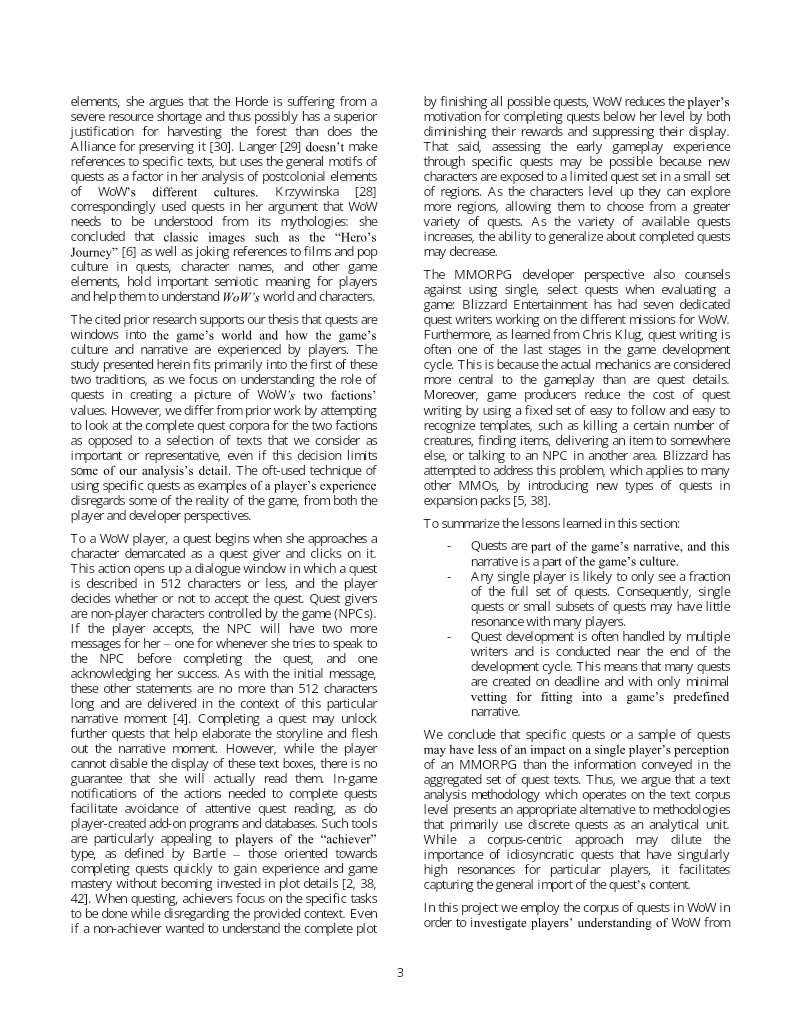
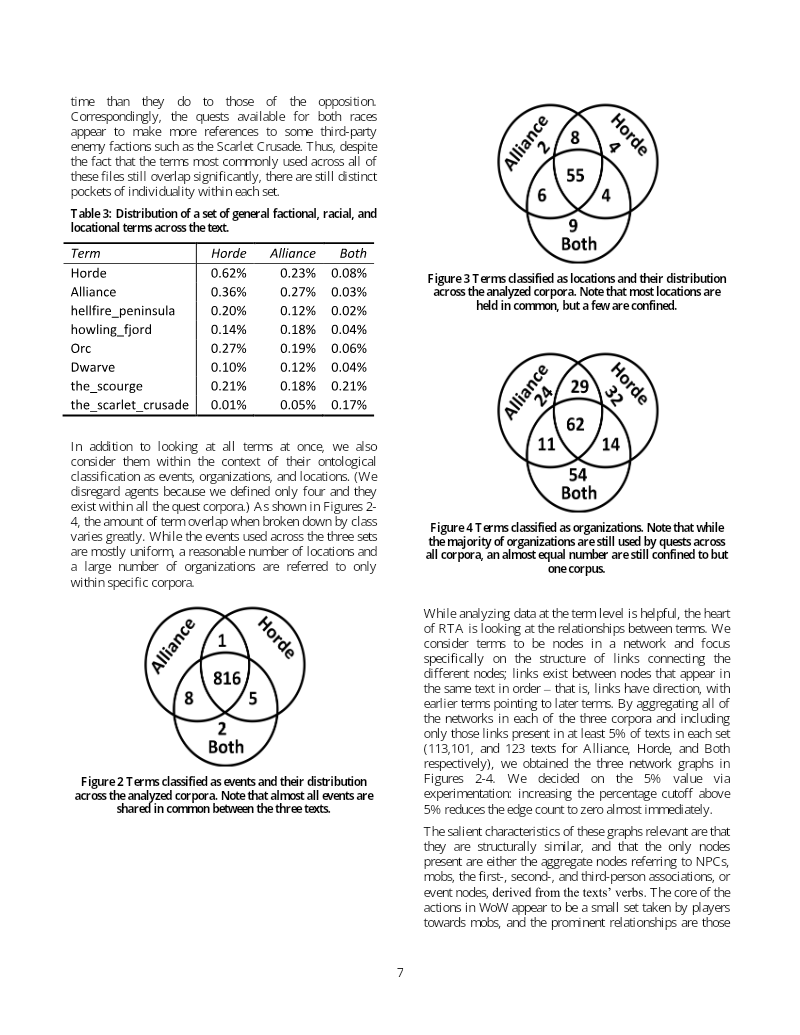
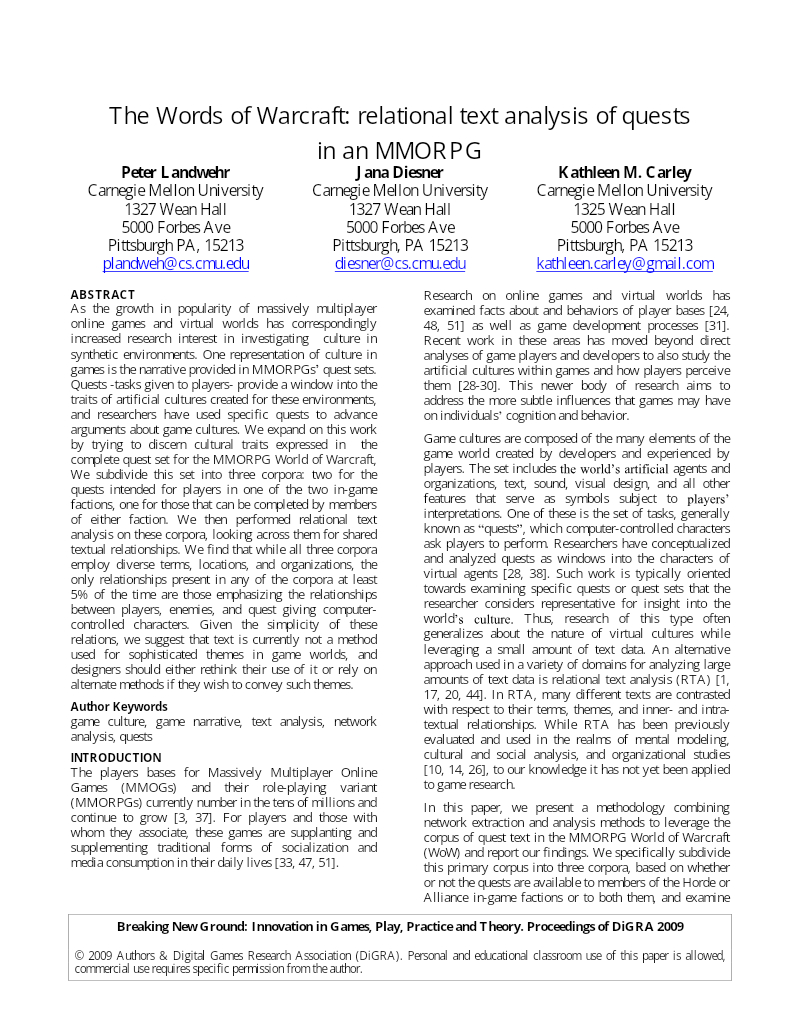
This study applies relational text analysis to the full World of Warcraft quest corpus, roughly 6,765 texts divided into Horde-only, Alliance-only, and shared sets, arguing that examining the complete body of quests captures game culture more faithfully than focusing on a handful of representative examples.
- Faction-specific quest corpora in World of Warcraft are strikingly similar: the five most frequent terms appear in identical rank order across Horde-only, Alliance-only, and shared sets, and over half of faction-available content is shared verbatim between Horde and Alliance.
- The dominant shared core across all quests is a small set of actions, chiefly players confronting enemy mobs at quest givers' request, which outweighs narrative content in structuring the text.
- Local differences exist: Horde texts use more aggressive language and reference their own faction more often, violence-related vocabulary appears slightly more in Horde and shared quests than Alliance quests, and Scarlet Crusade references cluster in shared quests.
Processing Play: Perceptions of Persuasion
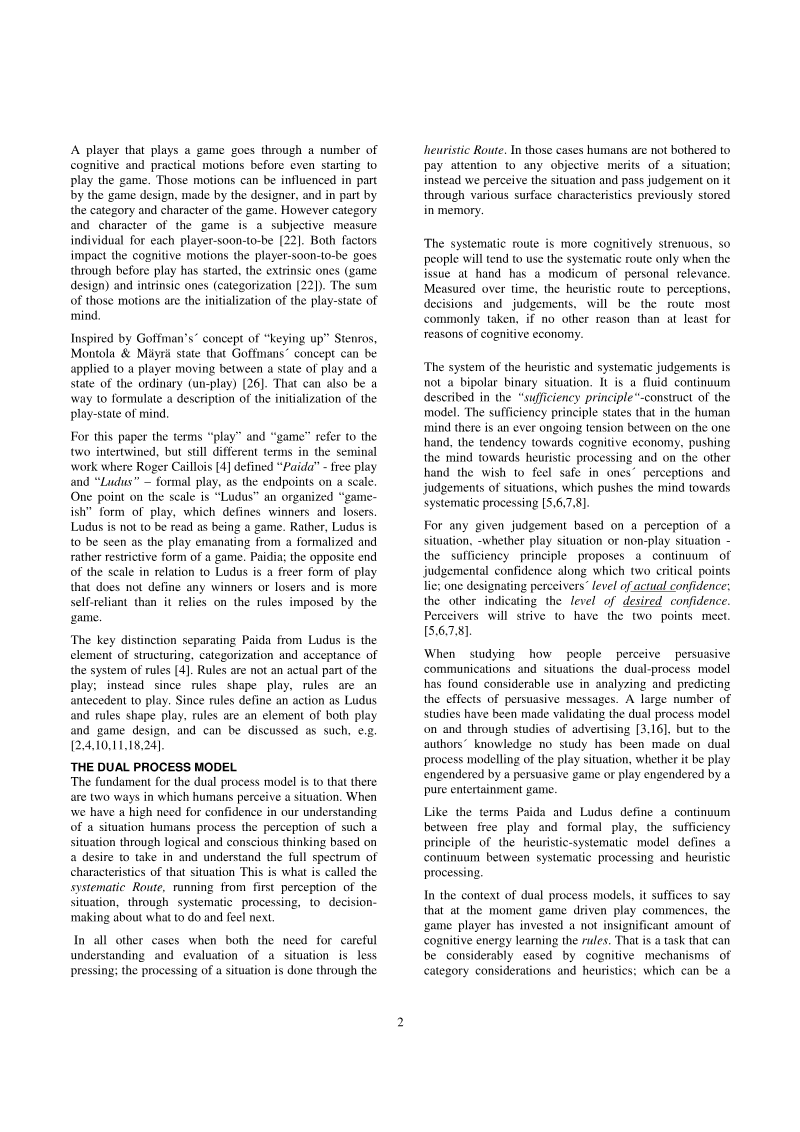
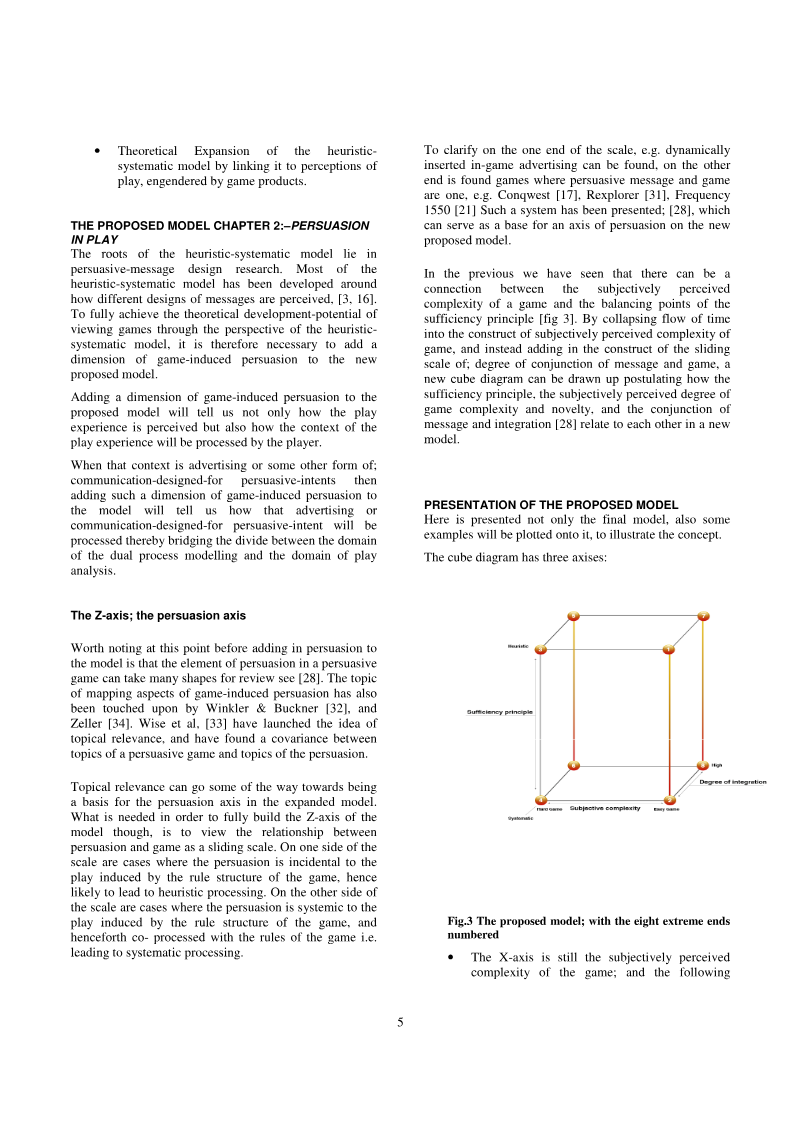
This position paper by Mattias Svahn of the Stockholm School of Economics proposes a theoretical model for understanding how players perceive and process "play" when it blends with persuasive intent, such as in advergames, serious games, and pervasive games.
- The paper proposes a theoretical model merging the heuristic-systematic dual-process theory of persuasion with Roger Caillois's Paidia-to-Ludus continuum of play to explain how playful experiences are cognitively processed.
- The model rests on a sufficiency principle: perceivers balance a drive for cognitive economy against a desire for confidence in their judgments.
- The author predicts that games perceived as more complex or novel will be processed more systematically, while familiar or easy games, and the flow states they produce over time, will tend toward heuristic processing.
Modeling Games with Petri Nets
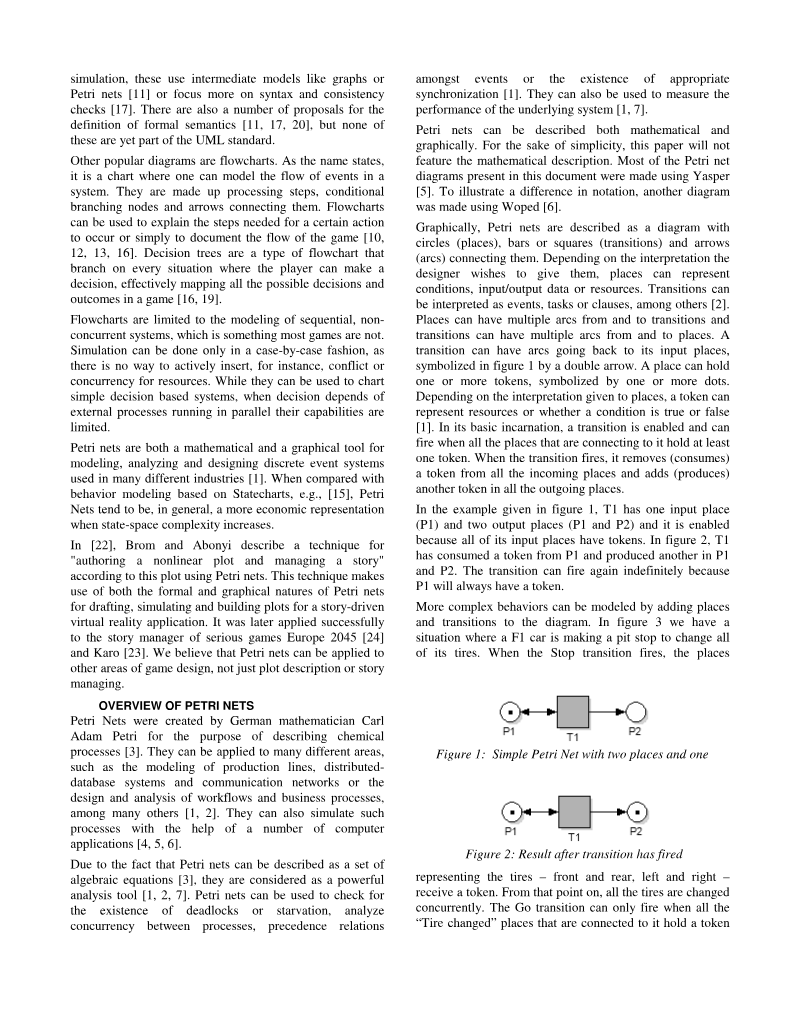
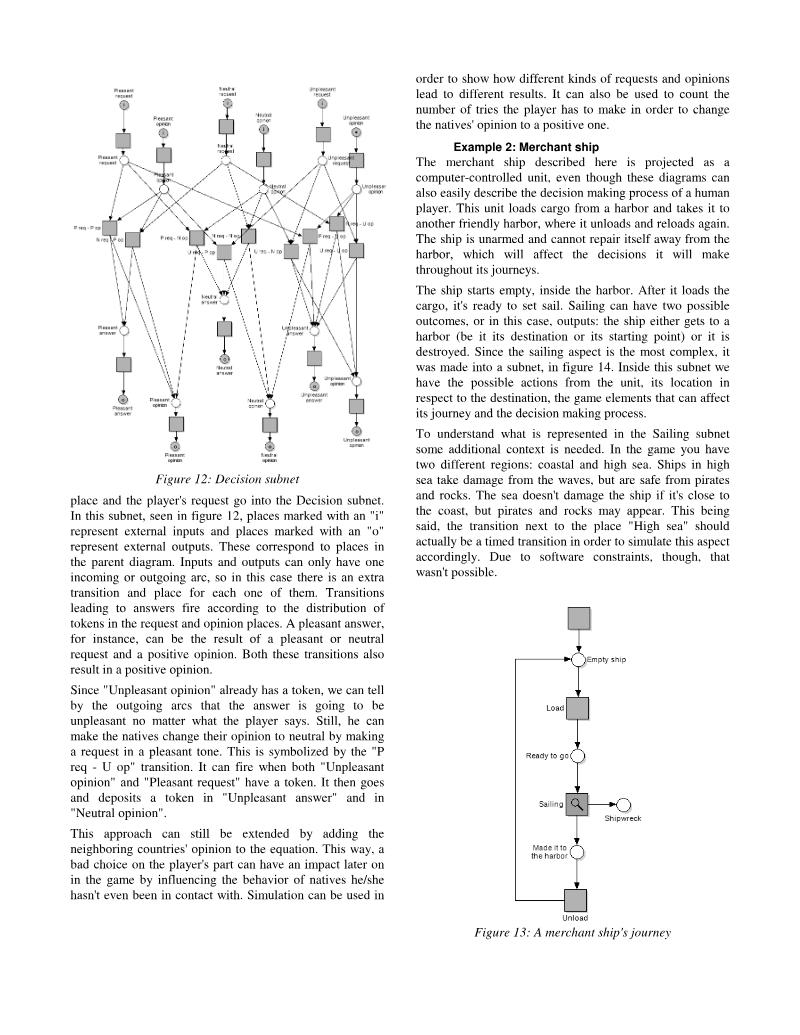
This paper argues that Petri nets offer a viable and in some respects superior alternative to conventional UML and flowchart notations for modeling game systems and game flow, particularly where concurrency, conflict, and resource management are involved.
- Petri nets are argued to be a viable and in some respects superior alternative to UML and flowchart notations for modeling game systems and game flow, especially where concurrency, conflict, and resource management are involved.
- Most common game-design visual notations lack formal semantics, so they cannot be rigorously validated or simulated, allowing unwanted behaviors, balancing problems, and loopholes to go undetected until playtesting.
- Petri nets pair a simple graphical notation with a mathematically defined structure that supports formal analysis for deadlocks, starvation, and precedence, as well as simulation during the design stage.
Playful User Interfaces: Literature Review and Model for Analysis
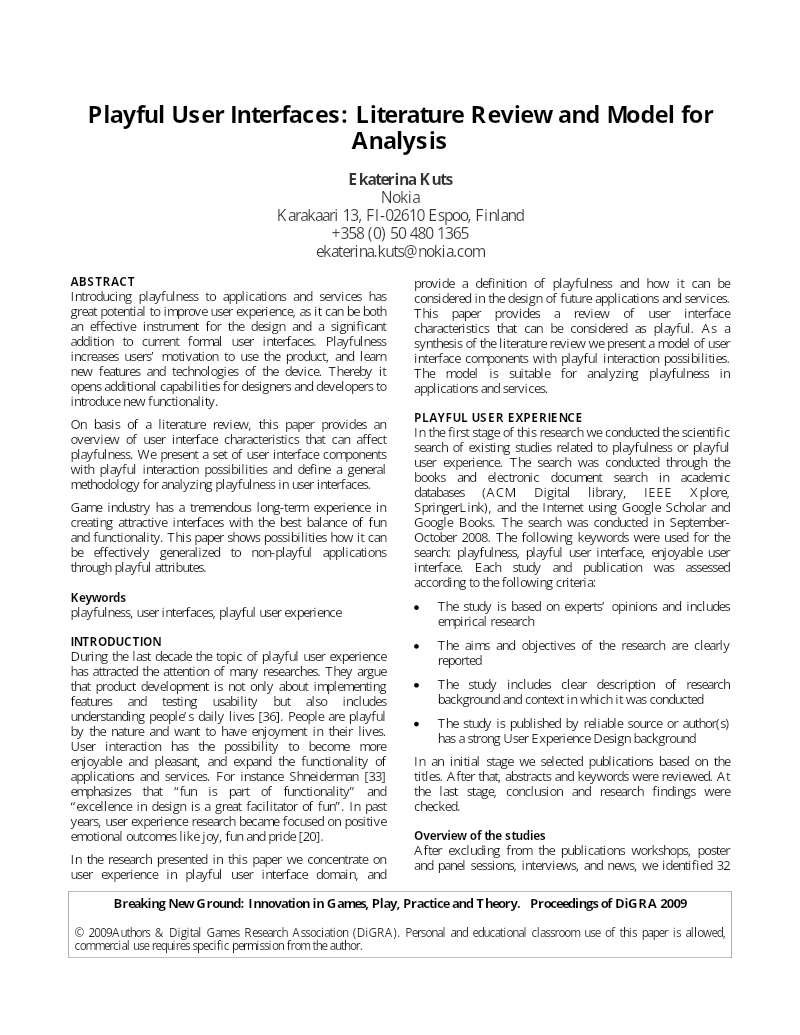
This paper reviews the literature on playfulness in user interfaces and proposes a model for analyzing where playful interaction can be introduced into applications and services.
- Playfulness is proposed as an additional design tool alongside conventional usability practices, with claimed benefits of improved user experience, greater motivation to use a product, and encouragement to learn new features.
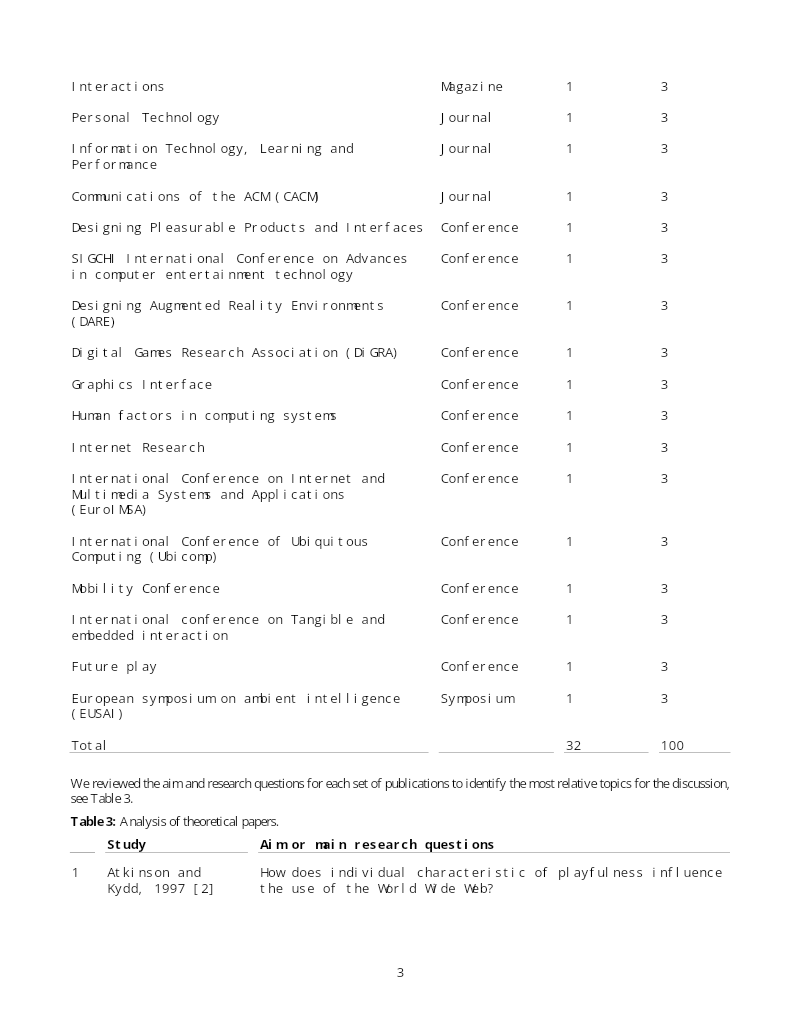
- The literature review, conducted in 2008, identified 32 qualifying studies (24 theoretical and 8 experimental), with half being conference papers and publications spanning 1982 to mid-2008 with a clear rise in interest over the last decade.
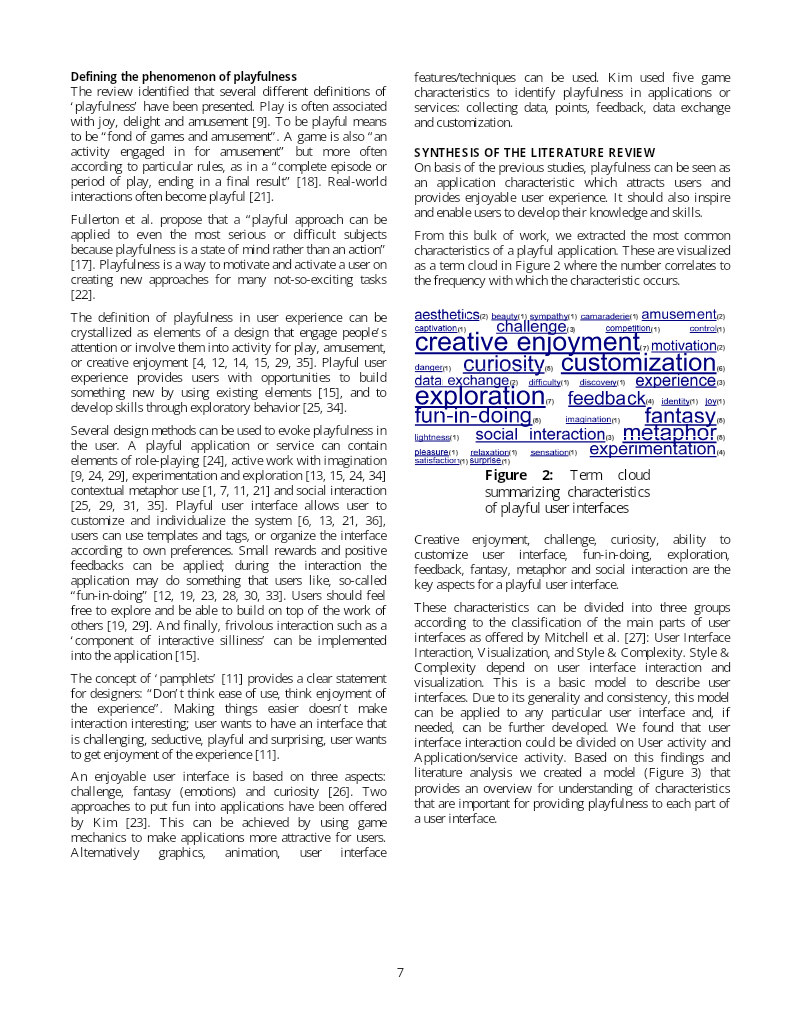
- The authors identify nine recurring characteristics of playful interfaces: challenge, curiosity, fantasy, fun-in-doing, exploration, customization, feedback, metaphor, and social interaction.
Better Game Studies Education the Carcassonne Way
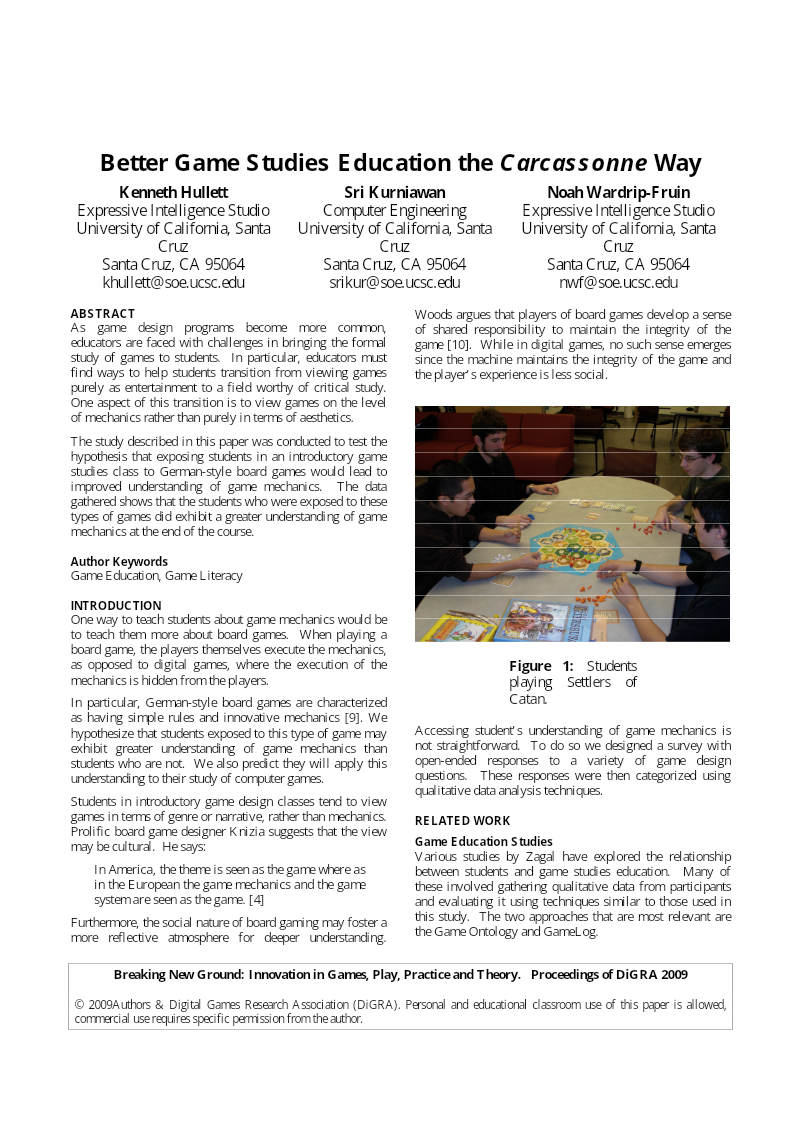
This study examines whether exposing students in an introductory game studies course to German-style board games improves their understanding of game mechanics.
- A study of 68 introductory game studies students tested whether eight one-hour seminars playing German-style board games (Carcassonne, Settlers of Catan, Ticket to Ride) would shift students from genre, narrative, or aesthetic framings toward mechanics-centered analysis.
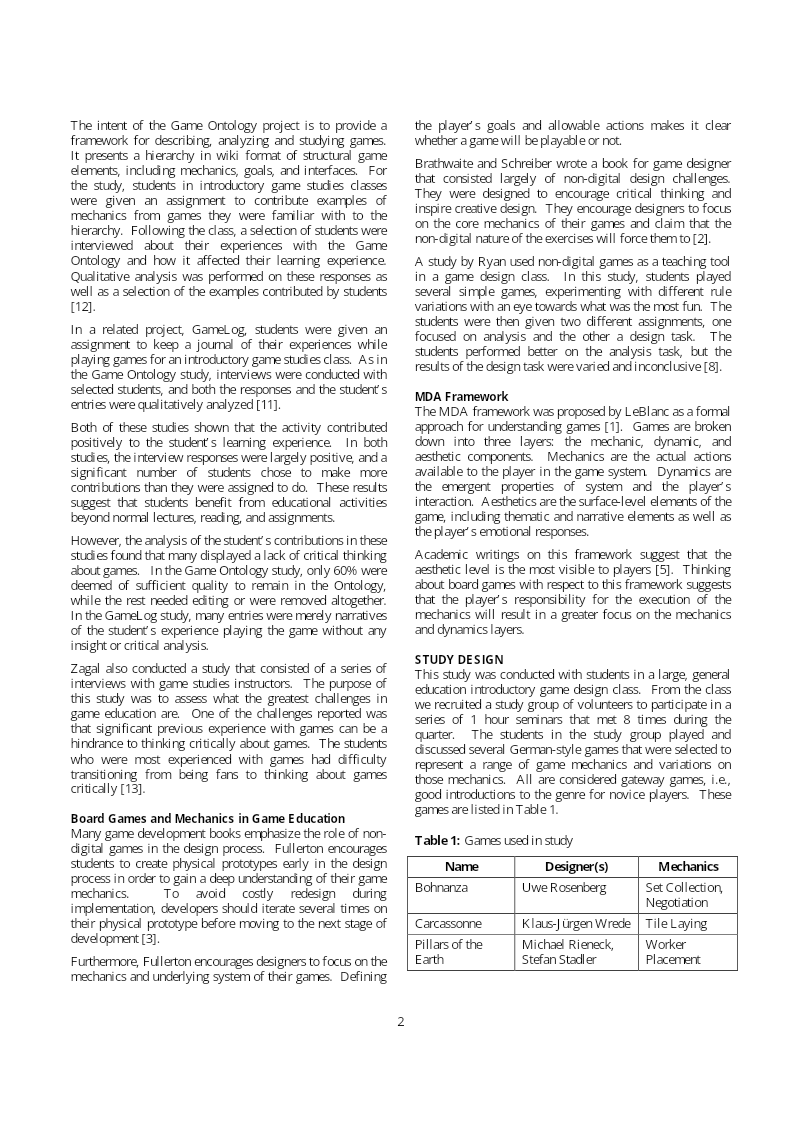
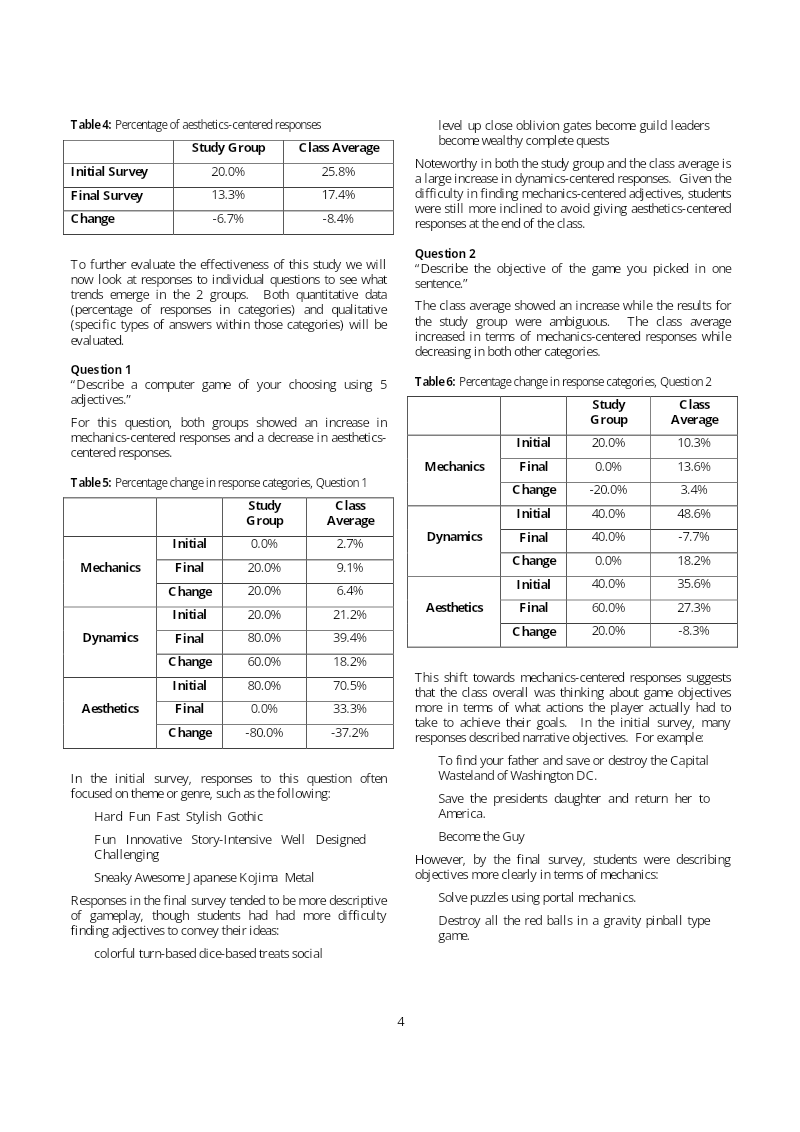
- The study group's share of mechanics-centered answers rose only modestly, from 40.0% to 43.3%, while the full class was nearly flat, moving from 30.6% to 31.1%.
- Question-level results were mixed, with some items shifting toward mechanics-centered responses and others moving the opposite way, and students often struggled with concepts such as player aids and abstracting a first-person shooter into a board game.
Defining Operational Logics
Mateas and Wardrip-Fruin's "Defining Operational Logics" proposes operational logics as a fundamental unit of analysis for procedural media, bridging the gap between the code and platform levels of a system and the meanings that authors intend and audiences construct.
- An operational logic is an abstract process that determines how a system's state evolves and underwrites gameplay, packaged with a representational strategy so computational structures can carry interpretable meaning.
- The authors argue operational logics are more fundamental than rules or mechanics, are inherently computational, and serve both authors (as representational tropes) and players (as actionable representations).
- The authors apply a stricter definition than common usage, rejecting cases such as file system abstractions lacking meaning-making and interactive fiction riddles lacking a supporting process.
Make Videogames History: Game Preservation and the National Videogame Archive
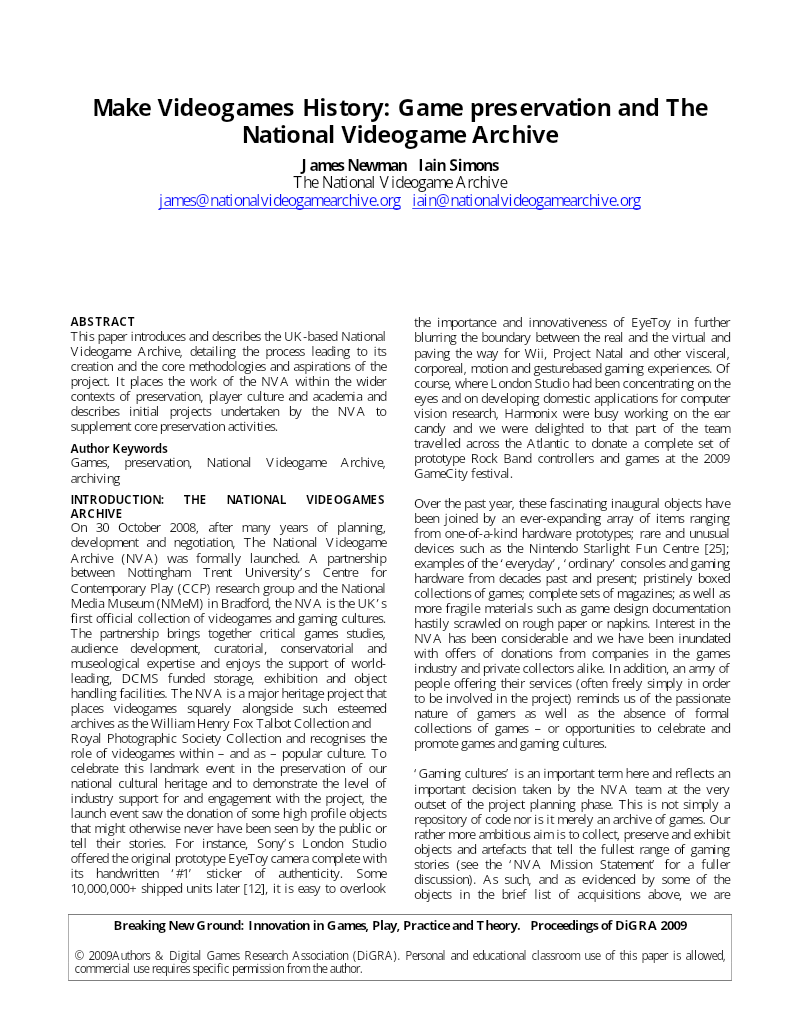
The National Videogame Archive, launched in October 2008 by Nottingham Trent University's Centre for Contemporary Play and the National Media Museum in the United Kingdom, makes the case that videogames and the cultures surrounding them deserve preservation alongside their underlying code.
- The National Videogame Archive, launched in October 2008 by Nottingham Trent University's Centre for Contemporary Play and the National Media Museum in the UK, argues that videogames and their surrounding cultures deserve preservation alongside their code.
- The report attributes neglect of game preservation to a "perpetual innovation economy" in which industry and society treat games as disposable, and obsolescence discourages archiving.
- Company in-house archiving is typically ad hoc, and academic research on game preservation is sparse, meaning the field is only beginning to take shape.
Mechanisms of the Soul: Tackling the Human Condition in Videogames
"Mechanisms of the Soul: Tackling the Human Condition in Videogames" by Doris C. Rusch argues that games are uniquely equipped to convey insights into the human condition, and that their greatest affective power lies in their rules and player-driven activity rather than in fiction alone.
- Games can convey insights into the human condition, and their greatest affective power lies in their rules and player-driven activity rather than in fiction alone.
- Fictional Alignment pairs game mechanics with narrative so that emotions produced by play and emotions depicted in the story reinforce one another, as in God of War II, where mechanics and cutscenes together make Kratos's shame, anger, and yearning for revenge tangible to the player.
- Procedurality, where a game's underlying systems model aspects of experience, succeeds only when players cognitively grasp what the game is modeling, as shown by the grappling-hook sequences and Rod Humble's The Marriage.
Transgressive Gender Play: Profiles and Portraits of Girl Players in a Tween Virtual World
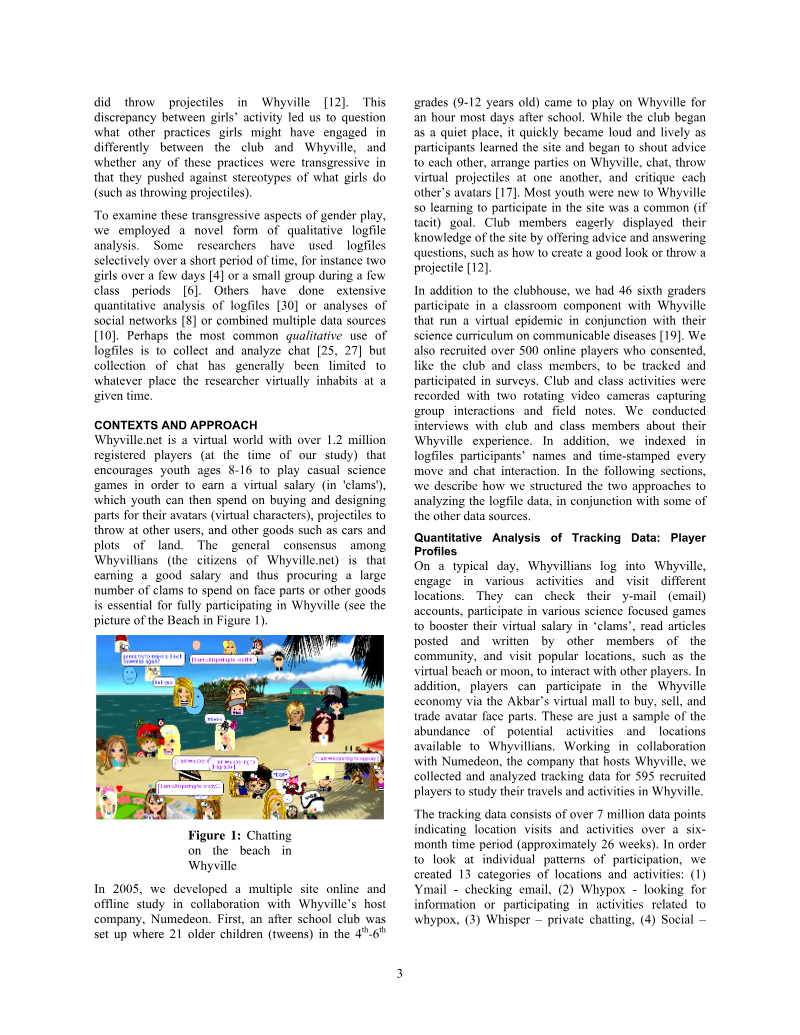
This study examines how girls play in Whyville.net, a tween virtual world with roughly 1.5 million registered players, 68% of whom were girls.
- Girls made up 68% of Whyville's roughly 1.5 million registered players, making it an unusually gender-balanced tween virtual world that the authors suggest may limit how far the findings generalize.
- Analysis of seven million data points from 595 players over six months found boys participated significantly more than girls only in economic, game, multigame, and whypox activity categories, and even those differences were small.
- A cluster analysis sorted players into core (7%), semi-core (34%), and peripheral (59%) profiles, showing most players engaged only lightly with the platform.
Role-Playing Games: The State of Knowledge
This panel document, presented at the DiGRA 2009 conference, offers a state-of-the-art overview of role-playing games (RPGs) research across tabletop, live-action, digital, and alternate reality formats.
- The Game Master's cognitive processes and detailed mechanics remain poorly understood despite decades of hobbyist discussion and some proposed models of authorial control.
- RPGs are treated as a "limit case" in game studies, testing the boundaries of what counts as a game and what is possible within one.
- Mechanics play a limited role in supporting role-play within commercial MMORPGs, where meta-game rules tend to dominate.
DATAPLAY: Mapping Game Mechanics to Traditional Data Visualization
The DataPlay paper, presented at the DiGRA 2009 conference, investigates whether traditional data visualization, dominated by printed and static two-dimensional charts, can be complemented or challenged by game-based forms that let people learn data through play and direct experience.
- The DataPlay paper (DiGRA 2009, Parsons The New School for Design) asks whether games can complement or challenge traditional static, two-dimensional data visualization by letting people learn data through play and direct experience.
- Its core premise is that games, as rule-based systems, reveal the dynamics of complex structures and may offer a learning modality distinct from the short-term visual memory demands of reading charts.
- The authors pose two research questions: whether data can generate "choice molecules" that make play possible, and whether play can reveal new insights in data.
Design Guidelines for Learning Games: The Living Forest Game Design Case
The "Living Forest" design case presents a set of guidelines for building purpose-specific learning games, using a sustainable forest management game developed for a science museum as its worked example.
- Learning games for formal education should be purpose-built around explicit learning goals, faithful representation of real phenomena, and alignment with curriculum competencies in the Physical and Natural Sciences, rather than repurposed commercial off-the-shelf titles.
- The Living Forest case study, a sustainable forest management game built for a science museum, is grounded in Portuguese National Forest Inventory data, expert forestry consultation, and established forest growth models, and asks players to balance economic, social, and ecological concerns across simulated ten-year cycles.
- To fit decades of forest management into sessions of 15 minutes to an hour, each three-minute day and fifteen-second night represents a decade of simulated time, a deliberate trade-off between temporal compression and fidelity.