1 free read left. Create a free account for unlimited reading + AI research.
Create free accountWhitepaper DiGRA
1 free read left. Create a free account for unlimited reading + AI research.
Create free accountWhitepaperDiGRA
They bridge the code and platform levels of a system and the meanings authors intend and audiences construct.
Mateas and Wardrip-Fruin's "Defining Operational Logics" proposes operational logics as a fundamental unit of analysis for procedural media, bridging the gap between the code and platform levels of a system and the meanings that authors intend and audiences construct. An operational logic is defined as an abstract process that determines how a system's state evolves and that underwrites gameplay, packaged together with a representational strategy so that computational structures can carry expressive, interpretable meaning. The authors contend that this concept is more basic than rules or mechanics, that it is inherently computational, and that it serves both authors, as representational tropes, and players, as actionable representations.
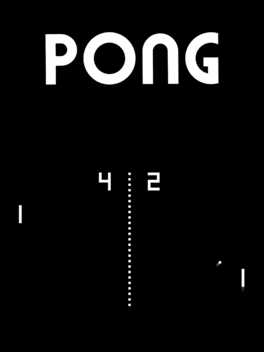
The argument rests on a stricter definition than prevailing usage. The authors show that broad applications of the term, such as file system abstractions that lack meaning-making, or literary riddles in interactive fiction that lack a supporting process, fail to meet the criteria. Through worked examples, they distinguish the executing machine from the rhetorical strategies that give it interpretive force for particular audiences. Two families are illustrated: graphical logics, including movement, collision detection, physics, and navigation as found in Spacewar! and Pong, and resource management logics, as in Hamurabi and Oregon Trail.
The scope extends beyond games to other procedural media, with the examples spanning early arcade and text-based titles as well as more recent interactive works such as Passage, Regime Change, Façade, and the story generator Tale-Spin. The analysis draws on the authors' broader concern with computational media studies rather than on a single platform or period.
The chief conclusion is that operational logics, understood as implementation-independent descriptions of fundamental computational actions, provide a precise analytical vocabulary that avoids both vague appeals to "magic" processes and the need to parse raw code. This vocabulary clarifies how logics constrain mechanics and rules, supports meaningful comparison and assessment of innovation across works, and exposes interpretive errors, such as earlier critics overlooking Tale-Spin's planning logic. Ultimately, the framework maps the space of possibility for procedural media and grounds interpretation of individual games in their underlying structures.
Each row is a game or company this document names, each column a document, oldest first. A mark means that document names it. Select a row to see those documents.

DiGRA · 2026

DiGRA · 2026



DiGRA · 2026



DiGRA · 2026



DiGRA · 2026



DiGRA · 2026



DiGRA · 2026



DiGRA · 2026

DiGRA · 2026



DiGRA · 2026



DiGRA · 2026

DiGRA · 2026

PocketGamer.biz · 2026