1 free read left. Create a free account for unlimited reading + AI research.
Create free accountWhitepaper Ludic Language Pedagogy
1 free read left. Create a free account for unlimited reading + AI research.
Create free accountWhitepaperLudic Language Pedagogy
Current classroom game-based learning is characterized by 'disposable' pedagogy.
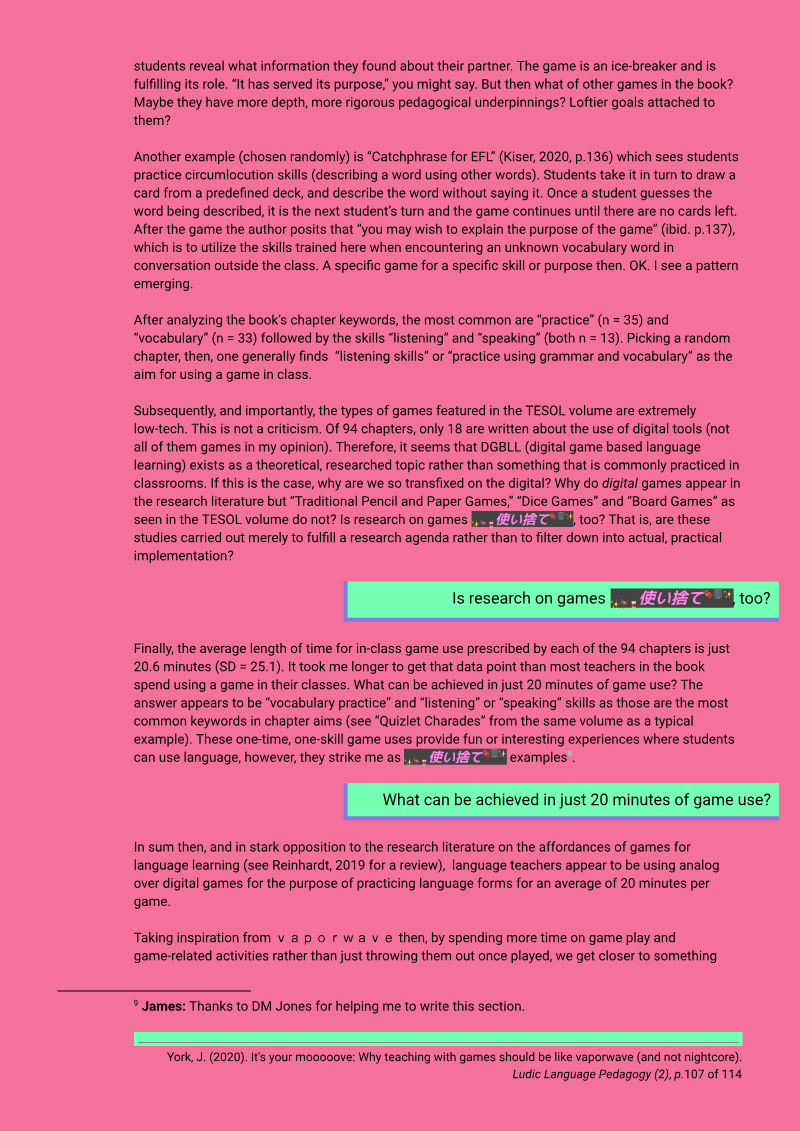
Key finding. The average in-class game session lasts only 20 minutes.
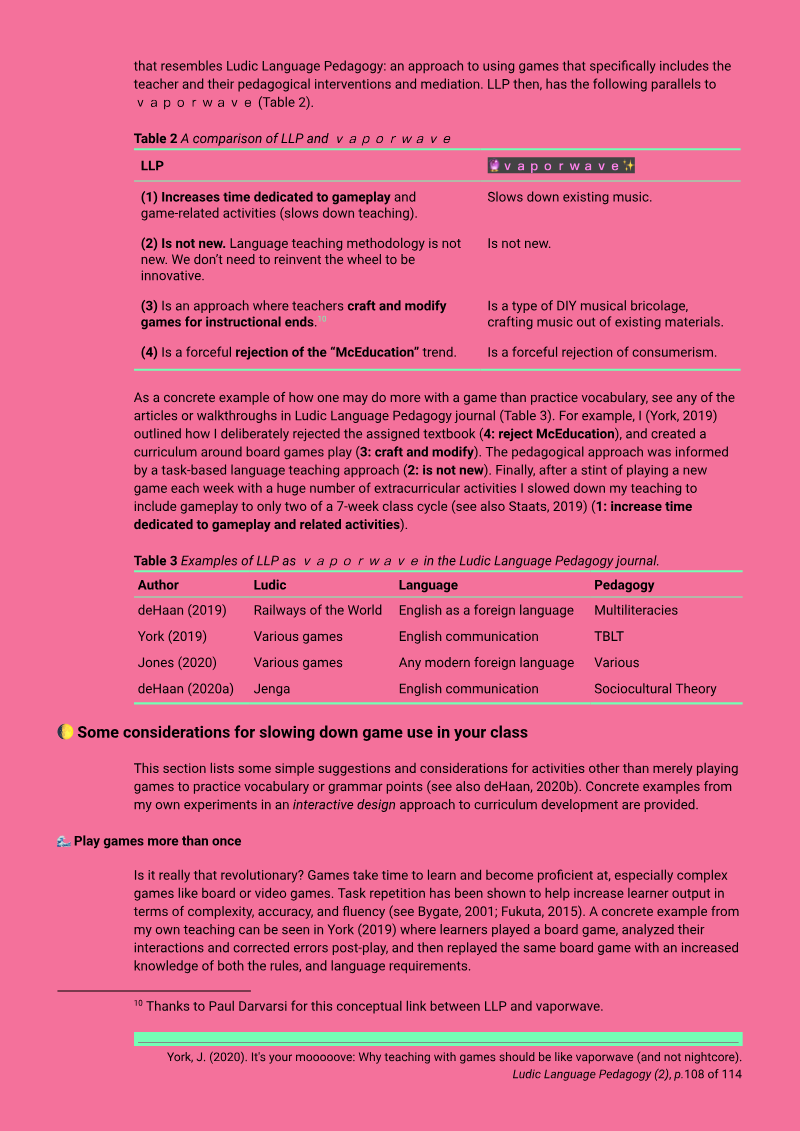
This analysis explores the integration of games into language pedagogy, advocating for a shift away from superficial, short-term game use toward a more deliberate, iterative, and reflective approach. The central thesis posits that effective Ludic Language Pedagogy should mirror the aesthetic and philosophy of vaporwave—a genre characterized by slowing down existing media to create something new and meaningful—rather than the fast-paced, disposable nature of nightcore. By slowing down the pace of instruction, educators can move beyond using games as mere "dopamine hits" or single-use activities and instead leverage them as robust tools for deep learning.
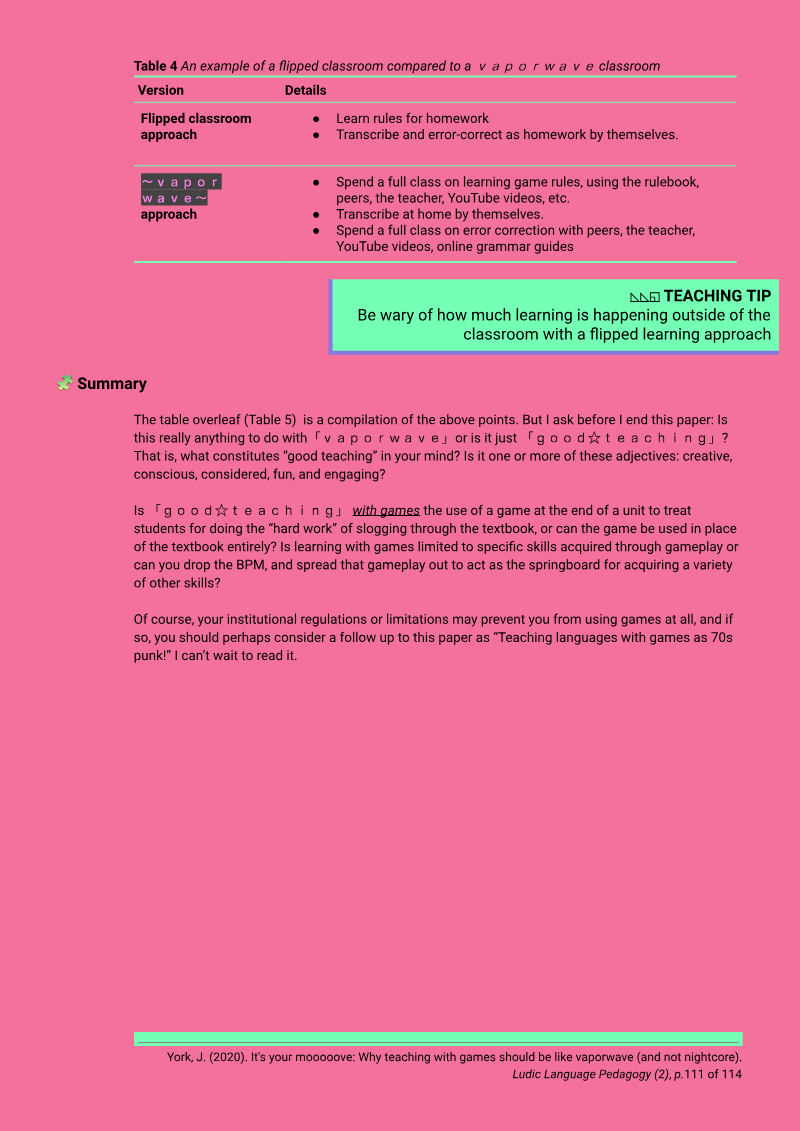
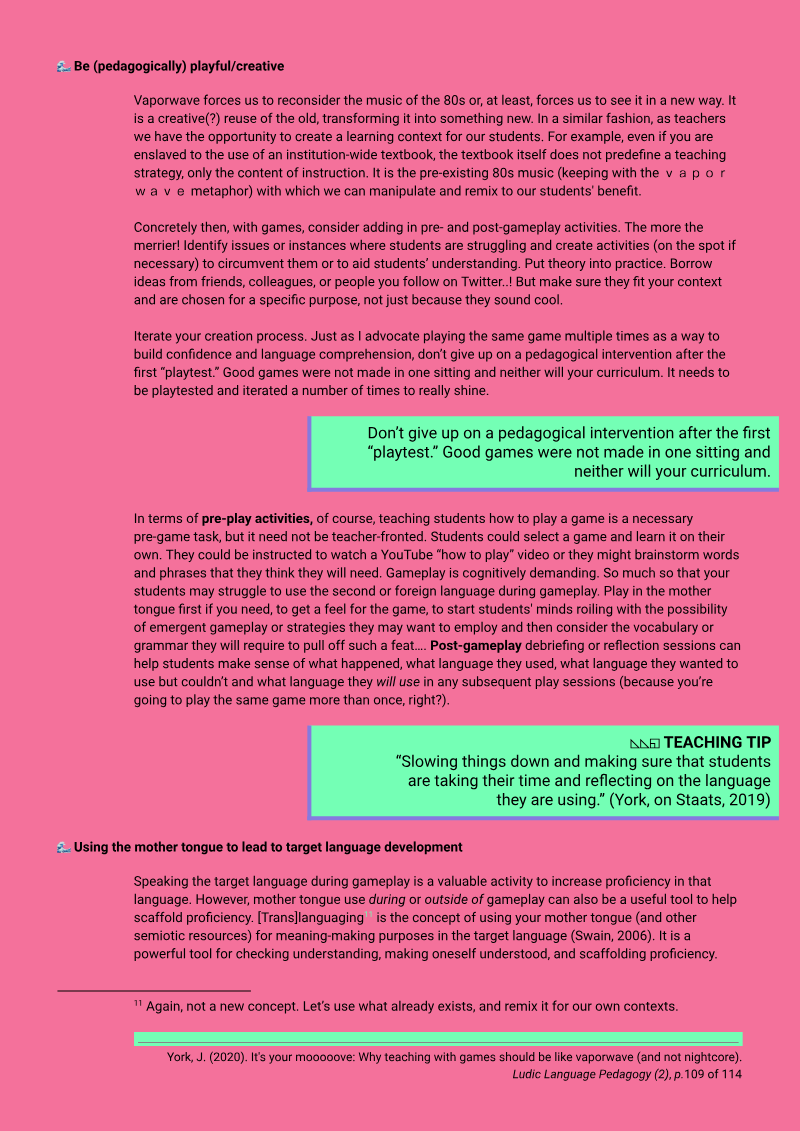
The analysis highlights a significant disconnect between the potential of game-based learning and current classroom practices. Data from a prominent TESOL volume on game-based teaching reveals that the average duration of in-class game use is approximately 20 minutes, with a heavy reliance on low-tech, traditional games focused primarily on vocabulary and basic speaking skills. This trend is characterized as "disposable" pedagogy, where games are treated as peripheral treats rather than central components of a curriculum. In contrast, the proposed vaporwave-inspired model emphasizes task repetition, post-play analysis, and the integration of the mother tongue as a scaffolding resource for target language development.
The methodology relies on a conceptual framework comparing educational practices to musical aesthetics, supported by a review of existing literature and personal classroom experiments. The scope encompasses language teaching environments, specifically focusing on the transition from "McEducation"—a one-size-fits-all, efficiency-driven model—to a more intentional, student-centered approach. The findings conclude that by dedicating more time to gameplay, iterating on pedagogical interventions, and treating games as complex artifacts for study rather than fleeting activities, teachers can foster more significant cognitive and affective growth in their students.
Ludic Language Pedagogy · 2026
Ludic Language Pedagogy · 2026
Ludic Language Pedagogy · 2026
Ludic Language Pedagogy · 2026
Ludic Language Pedagogy · 2026
Ludic Language Pedagogy · 2026
Ludic Language Pedagogy · 2026
Ludic Language Pedagogy · 2026
Ludic Language Pedagogy · 2026
Ludic Language Pedagogy · 2026
Ludic Language Pedagogy · 2026



Ludic Language Pedagogy · 2026
International Journal of Role-Playing · 2026