1 free read left. Create a free account for unlimited reading + AI research.
Create free account
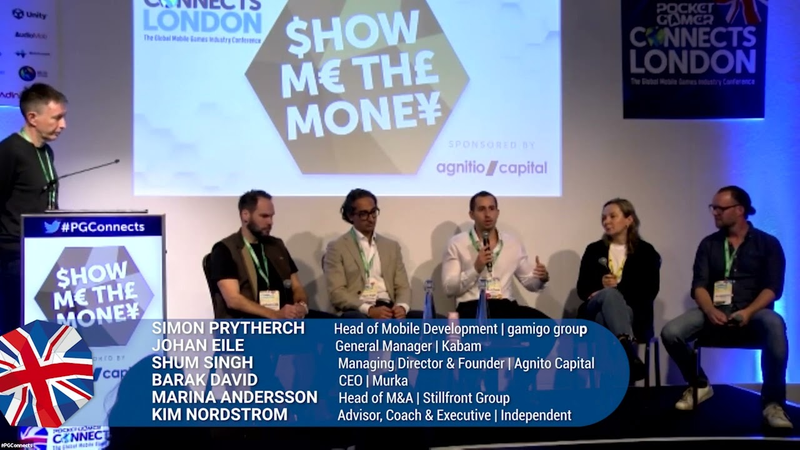
Panel: How Much are You Worth: How to Accurately Value Your Studio & Game
Key insights
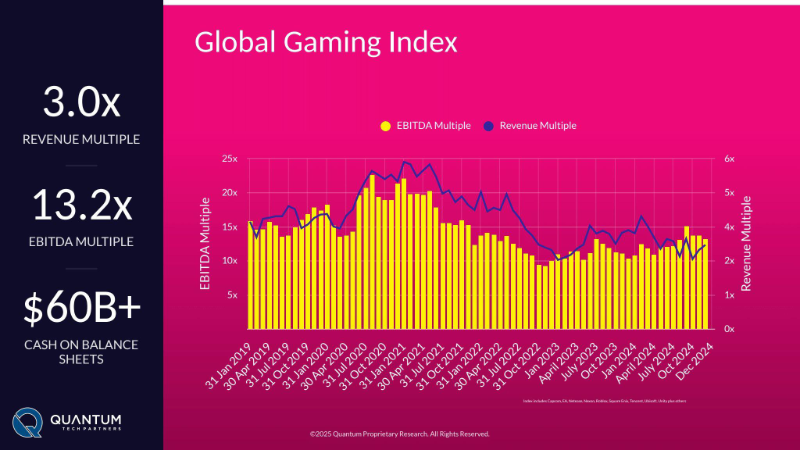
6 takeaways- 01Public game studios typically trade at valuation multiples of two to four times sales and eight to 25 times EBITDA.
- 02Strategic value is often unlocked through operational synergies, such as geographic expansion, enhanced publishing capabilities, and the reduction of administrative overhead for creative teams.
- 03Modern M&A processes have shifted toward rigorous, data-driven due diligence, requiring founders to provide standardized KPIs and professional documentation to satisfy institutional buyers.
- 04Private studio valuations are determined by a synthesis of financial metrics, intellectual property value, specialized technology, and team expertise, often adjusted by liquidity discounts or strategic premiums.
- 05Current market volatility is characterized as a normalization phase rather than a fundamental decline, with the global gaming sector maintaining strong long-term growth prospects.
- 06Deal structures increasingly rely on earn-outs and equity incentives to bridge valuation gaps and align buyer and seller interests regarding long-term performance.
Ask AI about this video
Transcript
[Music] [Music] today's panel is about how much you're worth and how accurately you value your studio and games um first of all i'd like uh to introduce the panel uh or let them introduce themselves actually with a very short introduction so going from johan here all right okay so my name is johan i'm currently the gm at cambod montreal kabam acquired our studio in 2019 and i'm here here today having a great time at poc gamer meeting tons of new
companies that we could maybe invest in or maybe buy or all kinds of fun stuff uh i'm shum singh the md and founder of ignition capital we've been around since 2003 exclusively focused on the games industry specialize in working with game founders in really kind of helping them figure out what they want to do whether it's potentially sell whether it's potentially raise some money or sit back relax and put out the next big hit title hello my name is barack i'm the ceo of mocha games european game developer specializing in the social casino and recently we started also to develop casual games hi my name is marina anderson i'm head of lemonade still friend group i've been with steelfriend group since more less exactly three years ago since then we've grown the number of our studios from 11 to 22. so i've been
having a lot of fun with still friend and before i joined steel front i've been doing m advisor in investment banking more or less like some all right hey everyone my name is kim i'm a studio guy so i released my first game in the 90s i spent time at playstation shipping playstation 4 in the us i was heading studio for king managing the pet rescue franchise and then i did a five-year stint with paradox working on the strategy side and right now i'm while trying to figure out if this whole investment thing is fun on my own and i think on this panel i probably represent more the the buyer's side so what happens when the studio when he actually bought it and integrating it thank you and um i'm simon privook i head up a mobile division at camigo the new uh mobile development uh i've also been on the seller side and uh sold studios
myself but now with gamigo i'm on the buyers side where i part of their m a team so first question for the panel um whether studios in talks around m a or even looking around for a publishing partner how do they value their studio how would you advise they value their studio or their game um sean do you want to go first of course i know you're going to select um i guess i guess there's many things right that you can look at to value a company it could be financially driven revenue profitability uh key performance metrics of your game in terms of you know sort of retention daus conversion so you have all those kind of very i would say fact-based type indicators to value your company but then there's other things intangibles right um
how amazing is that your is your team at perhaps building a you know unique piece of tech um are are you guys experts in ua in live ops um what about growth how fast are you growing um did you just release a hit title and it's scaling incredibly rapidly so with the right partner that game could grow 10x so i'm not trying to be evasive here but i think there's there's too many metrics to really look at and um you know i'm sure a lot of people in the room are probably asking themselves well i just read about this deal with this company got a 20 times ebitda multiple why isn't my company valued at the same multiple and as as uh as somebody who's been practicing m a for 25 years it's really hard to compare one deal against another there's so many intangible and specific factors that relate to each specific deal so of course there's the general kind of
accepted revenue and profitability kind of multiples that you see out there that public companies are traded at right so in the industry the averages are anywhere from two to kind of four times sales that's your current uh year sales and then ebitda can range as low as eight and up to as high as 25. so it's a really broad range of just publicly traded companies and where they trade at and again i think when you're applying it to private companies there tends to be a discount because of size and scale compared to the public companies kim do you want to give a solid yeah i mean so i um when i worked paradox we acquired five companies i think we looked at hundreds um i think obviously we looked at the whole multiple and you know whatever the growth was but paradox own and still owns a niche so for the strategy there every company acquired was to maintain the number one leader spot in that space
that was the whole idea and so everything looking at long term so obviously it was partly in aquahire but i think the goal was always to get studios on board who can make sure that paradox was still the owner of that niche in the long term and if that was a great deal or a poor deal in the beginning as long as we thought in the end that studio would deliver to the whole then then that was a good deal yeah so getting back to your question about i think that from the seller side it's very important to look at the potential partnership how it can help you grows how how it can help you improve your weaknesses and how together you can become a one strong company that will actually accelerate the growth so usually when we are talking on the seller side if you have if they have more than one opportunity for acquisition i think that we need to look at the synergies and also about the culture because many mergers are falling on the
on the marriage side and because of the culture difference so i think that it's very important to see actually you can run together for the upcoming several years and work together and grow your business dramatically uh faster other than being and staying a standalone for me it's one of the most important things and just to build upon what barrack just mentioned i would like to say that of course from valuation point of view so if there are signages and good collaboration potential this buyer who sees a lot of synergist potential and good like value building opportunity will be able to also offer higher price and that's natural the uh the angle that i've taken on this on the more on the cell side and like as as a founder you're actually quite uh emotional when you're when you're about to make a a deal right like you're about to
get a boss uh so when we looked at it for example we used that as part of the the called and it had to be baked into the price somehow that we were going to give up that freedom that we had even if you're still able to operate autonomously and creative freedom and all the stuff that we care about you still have somebody that you answer to now that is not your wife right like it's uh it's something that we made sure to factor in when we created sort of value that that we thought we were we were worth yeah obviously there's a lot of metrics and stuff but for us it was really important that we that we felt that value so you mentioned a lot of you mentioned synergies and how that affects valuations and in order to unlock the real potential of a deal then you need to find those synergies from both sides can you give any examples that you can talk about here where
you've uh where those synergies were important in a deal and you know what what were the companies involved and how did that affect the valuation well probably i can mention one which uh a deal that still front has done together with some on the other side but something that we show in each presentation i think of our capital market days it's our studio located in mina region babel so they're very very successful in publishing in mina and this is competence that still friend didn't possess at this point of time so it was very value creative for both bubble to be able to scale uh within a global company and for still front because they added something that was very unique for us this knowledge and the market how to localize how to publish games in minimum and well so i will not go into numbers you can see it
in our website and slides but this is a perfect example of value creation also very recently we acquired six waves which generate all their revenues from japan actually they're headquartered in hong kong but the team has great competency about publishing in japan and this is still to come but this is also what we hope will bring a lot of synergies because this is a competence we didn't have within still friend family and there there's different dif different types of synergies as well we found obviously a tremendous benefit from not having to do some of the more kind of boring stuff like admin and finance and that has been a great motivator for us we get to still continue to make and develop games and focus on what we're really good at uh so it could be as simple as simple of a synergy as that like you might not
need to integrate a bunch of tech and stuff like just be as simple as somebody taking care of some of the things that has maybe been dogging you for a few years as an entrepreneur um yeah i mean i think i think you know um maybe not answering your question directly but again with with a lot of experience um personal experience i can tell you that if both the parties buyer and seller aren't really committed or if only one is the potential for those synergies to materialize is pretty low so so there has to be a clear commitment from both sides particularly if those synergies involve real strategic value-add if it's if it's uh collaborating on user acquisition liveops um focusing on maybe uh specific development capabilities etc that knowledge transfer and know-how um that takes time and that takes a lot of additional resources people have their
day jobs to fulfill and so there either has to be clear an integration team a post-merger integration team that maybe the buyer has allocated to this specific uh particular project of integrating this new company in and has all these additional resources um so so yeah i think i think that's when the potential for synergies to to succeed um is just greatly enhanced is if you have a real plan a real post-integration plan i just i really agree about the commitment part because then to according the expectation yes to really drill down on the details and to understand what does it mean how the synergies will work and how the execution will actually be in the day to day i think it's very important in order to come with it with a really good faith and really to make it a a successful for both sides
what i'd like to ask about next to lead on phrase is how you go about searching for your ideal partners um what methods do you employ in searching for potential companies to acquire me to match hashtag great click um well not to be kidding about that all it's always been good with me and matt but for us it's very important with our internal network so our studios are actually very active and interesting to contribute to finding new studios and new companies that would be a good fit with still friends and people are passionate about that uh so of course we are doing some kind of like attending events and doing own um uh desk so pre desk uh top research to
find good partners and then we have very good friends like some bankers and brokers who know who we are looking for and there are always certain criterias for us for example as a company and we always want to see profitable well-managed companies growing so this is one criteria and then we want to see entrepreneurs who are who have competence within building developing and scaling successful games we want to see games that fit our portfolio of long cycle long life cycle games and then we want to see management teams who want to contribute to still front who want to stay with us and then it's very important of course with cultural fit so that's what you want to find normally well maybe i'm old school and this whole you know m a space has been crazy for the past two years but i you know i i truly
believe in just mutual respect of the product so if if i play your game and i love it and you play our games and and you know you love our games and we want to be part of the same family i think we're off to a great start because then the fundament of why you want to work together is clear you love each other's products and i think that's a good start and then all the other things comes on top of that of course there needs to be a financial deal and all those things but maybe again old school but i like the part where i really love the games and yeah we love their games and it's a mutual agreement the the lead generation that you're talking about is is what what is i mean why why we're here to to a large degree right like the idea of discovering something that and maybe see something that maybe is not in the papers or maybe they're not up in front there's you know certain people that have a public profile and stuff like that it's it's extremely rewarding like when you're when you actually see something and you're like like kim is saying like you see a demo or a prototype then you're like wow this is this has like some
serious potential and you know one of the most fun things in the world is then to go back and share that with let's say with the rest of the management team um and maybe start engaging people but you have to be excited about that opportunity and it's often very uh at least very tactile like something that somebody's showing you that's been one of the biggest challenges over the last last two years it's just like getting that connection through zoom it's just like it's just not the same i mean i pretty much agree with everybody here the only thing i'd add is um you know the the two years that we haven't really had a chance to get out travel meet people like this event it kind of forces you to do a lot of desktop research so i've had to force myself to learn about web3 and blockchain and and get on twitter feeds read read numerous posts that i have no idea what they under what what you know how to follow them understand them etc
the jargon vocabulary and it's been eye-opening because it tells you how much you actually don't know about what's really going on in that space so so it's a very humbling experience but i think there's tremendous amount of ways in which you can identify companies or people out there whether you're a buyer or seller that that you know you could have some sort of relationship with so i want to take advantage of the fact that we've got people from seller side and the buy side here [Music] how does the process differ from the buy side and the sell side from your perspective kim do you want to go first on this one no not really or yeah i'll uh i'll i'll i'll kick that off um i mean as a
as a sort of founder and uh it is uh completely uh usually start off in a completely different angle right and you think you're fairly well organized until you meet somebody whose job it is to extract that information from you uh it's just a completely different like your your life looks like chaos right like one once you start putting together let's say a data you know a data center with information and you've organized it in a certain way and might not be at all what what that you know the company or person is looking for so it forces you into a space that you might not be super comfortable with at first and then you got to repeat that a few times uh ideally not but most likely and it's uh it becomes another learning experience and and i mean i'm not here to to pitch anybody's services but that's why the value of of the service is that a broker or an investment banker can offer so if i look back on on on the experience uh
as somebody's running a games team you're usually the producer the executive producer of the game as well you might have several you might be you know running the testing crew for all that matters like you have a day job and and so that entire like self process is extremely uh uh tiresome uh the other angle i was gonna mention too it's like you might have started off with looking for a publishing partner and then the publishing partners are like well what about making a deal and then you might have to change your mindset again on what you actually need and what you actually want to accomplish so that's uh that's one of the things that we we saw at least from the from the from the sell side uh becomes a bit of an eye opener if i can add something that i really agree and i do believe that the process has changed dramatically in the last few years it was originally very all well organized and they're well prepared and so on and today we see especially with
the smaller studios that it's really about loving the product you see the product you approach and then you start discussion it's not necessarily that the seller or the buyer well organized before the process and then you'll start starting and see what is important for you also for the buyer side it's very important to focus of what really important not just coming with many many questions that sometimes can be really out of focus and make the the seller side burn a lot of calories which is not helpful and i think that that's what we saw in the last two years especially when everything was remote you cannot you know meet the people feel them so it's all about the the data sharing and be focused what's interesting for you uh which is i think it's it's changing all the time to become a shorter processes are more focused on what is important and really to the point other than collecting tons of information
that is is useful but it's less serving the the point yeah we were one of those guys who did all of that collecting of information our commercial dd document was extensive took forever to fill out we did though for our side when i worked at paradox it it was very helpful because you can easily get caught up in what you get in the relationship with a founder or a game and it all looks so amazing and you kind of miss out on a lot of things and i think when the space has moved so fast it gets harder i think to make a good deal and i think that's why also relying on on the you know the multiple where you can grow is more common rather than actually you know the long term as i see it but so we had like a hundred you know like day 100 a checklist so once we acquired a company there was a quite a bit of steps so it doesn't just
end in the whole ged process once a company is acquired there is a bunch of thing that needs to happen to integrate regardless of level so it is a tedious process and usually there's a clash between corporate large companies and smaller entrepreneur driven chaos um the uh what i wanted to tell what's really cool with all the attention that it's getting in media is that i think founders today are getting way more educated on what they need to present uh if i look at just the meetings that i've had today which has been great like people know they're the the lingo they know about all these things that we sort of learned through the process and what what let's say an investor or a somebody looking at buying a company what they're interested in they're now part of a pitch deck for a game like this is our studio and they they already talk about all the key company kpis the the key uh game kpis uh i don't think we saw that like two years ago when uh when people were
pitching games like now it's part of like the about us profile on uh you know how much money they ran raised like who's part of their investors is that just so the profile on how we present ourselves has changed as part of that um i'm not going to add much because i think everybody here kind of belabor the point i think i think it just helps on the sell side if if they are prepared right if you're going to run into a pro if you're going to run a process which is going to involve many buyers just for efficiency and speed it's just going to help a lot if if they have their documentation ready so then they can run their studio as opposed to get distracted by process i wish i'd had better advice when i sold my first company i think 14 years ago and uh yeah didn't we didn't get a very good deal but i definitely if you're too emotionally tied to your game in studio it becomes
it becomes really important to get some advisors in that can do the deal for you um anyway um looking back over the last 12 14 years since especially since the launch of android and iphones and then the access to capital um how has that changed the way studios are valued uh maybe maybe i'll take a stab at that um so i think again back uh if we go back way back let's say and we're talking about almost a pre-mobile evolution or maybe right at the right at the emergence of it um a lot of metrics um that i mentioned earlier kpis of a game you know whether it was retention uh arp dials daus conversion rates none of those really meant anything so those are all new metrics that now
can be placed to value games and and to and indirectly students um so i think there's a lot more metric driven measurement type of of of you know i guess uh benchmarks you can use to to value studios today that being said on the flip side you have this new emerging blockchain world where you know evaluation i mean it's it's really hard you know i mean you're promising um this incredible future and it kind of reminds me of the emergence of free to play when you didn't you didn't have any tools any any sort of metrics to determine what what studios could be valued at so you get these really lofty valuations that that that are stratospheric and aren't really based on anything um so so yeah i mean it's whilst you have a very um you know established way of valuing
companies particularly public companies or even smaller private companies that are even pc or mobile there's this new emerging landscape that that doesn't really have any you know clear metrics i think also so as uh times passes it's more similar situations and more similar transactions to compare with right so and the industry has been very fragmented it has seen quite some consolidation and more consolidation is to come and the more transaction there have been the more situation you can compare yourself to so i think that also impacts the valuation so i mean the access to capital has changed dramatically and again show them how to mention blockchain we're not going to talk about that right now uh but even in free-to-play mobile uh there's been just an incredible
progression even compared to like when when we when we started raising money uh when not getting companies to pitch in night and day today like i if you'd asked me five years ago i'd be like oh i'd like kind of guess you know a handful of guys that i knew i could talk to today it's like there are you know there's some syndication going on there's all these like early stage vcs that are extremely educated and very sharp that just have you have that instant connection and they're able to say yes or no like within like you know i wasn't going to say minutes but they're very quick on being able to judge where you're where you're at so i can't think of a better time to to actually start and there's also these clear exits there's these the clear interest you hit let's say 30 people and you're an incredibly interesting acquisition target all of a sudden like it didn't used to be like that so i think from an entrepreneur
point of view it's it's a it's a great landscape but it's also like i said it could be challenging if you're just starting off that conversation so the advice has always been like always be selling like all whether you needed the money or not should always always be out there and and promote yourself yeah i i think you can summarize this sorry it's maturity right so the industry is maturing and i think it's julie because you know all of you are building successful games and so that you know that creates this ecosystem you know games is the largest entertainment industry out there and it will continue to grow for a very long time so i think success creates more capital and it's a it's a good spiral i mean it was a conference like 10 15 years ago i remember i was walking into the conference and doors opened up and there's like 50 people in suits coming up and they're all smiling and i was like the beeps going on why are those people here and why are they smiling this is games you know we were kids and
t-shirts and i looked in and it said on the on the big screens like invest in games and then i understood okay so there's actually money coming into the space now that's 10 15 years ago and that was the first thing for me where okay so this is happening now we're actually becoming successful so the outside is looking into the game space saying okay maybe we got something here right okay everything being said all right um but that question about access to capital has as you say been driven by people's exposure to exits there's more and more games companies that have come to the to the stock markets and yeah if you look back 10 15 years ago there's only a handful of large global publishers that were on the stock markets but now you have all of these games
companies and games related companies on the stock market what i want to know is there's been a lot of volatility in the stock markets in the last few months and most of it's downward in in pricing how is that volatility and price correction affected the m a world valuations well so obviously obviously the listed companies they saw this correction in the first place and m a process is always like several months so you need to decide make up your mind probably find a broker who will help you and then prepare so it takes some time to adjust so and in my views the correction has happened in the public market and already now we've seen that happening in the private markets as well so you can never it's always very hard to predict but some adjustment has
happened and how it will develop going forward you will see but that's my take on that actually by by the dip um the i i think it's a really good time to when you're as a ceo of a company this is a great time to to decide if you put the uh put the pedal down or if you light up you know the natural reaction is is probably oh we got to slow down and watch what's going on it's also a great opportunity to accelerate uh and if i if i look at what's uh what's going on with net marvel and kabam today it feels more like we're we're pressing harder than than the opposite it's it's like there's an immense opportunity regardless of the emotions in the stock market it's a it's more like troublesome to see some of these like really aggressive companies like hit a little snag but it's uh i think it's a great time and it talks a lot about like like what the leadership and how they see the business if i see it quarter to quarter or if they see
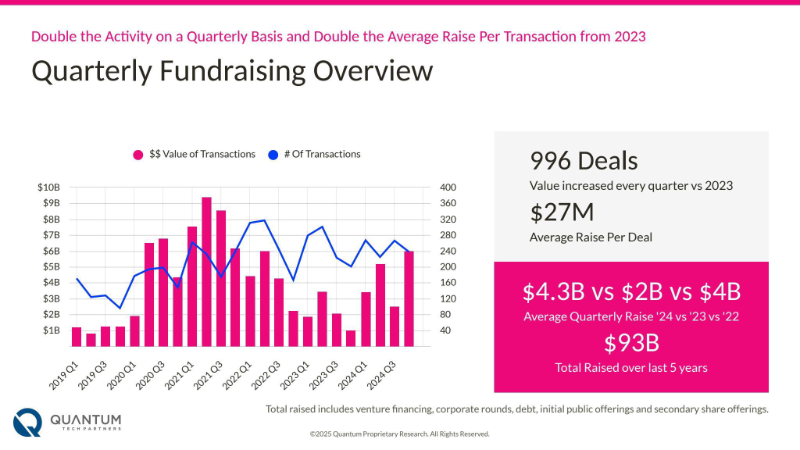
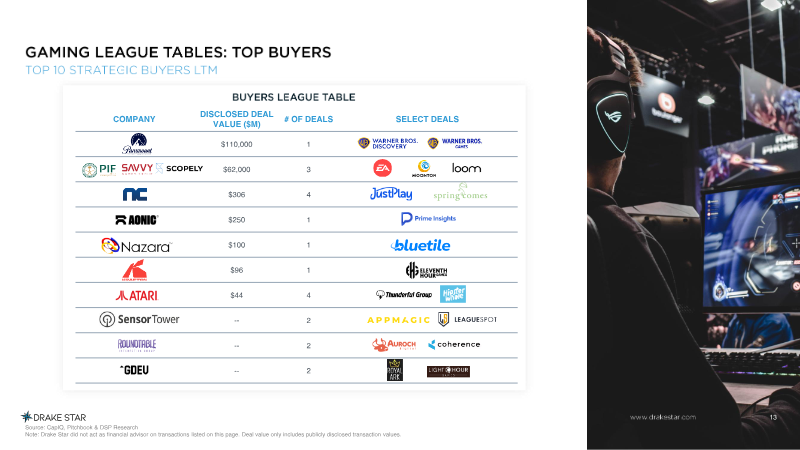
like kim was talking about if they see it in the long term um i'm just going to state some facts so 2020 uh even despite covet pandemic raging across the world was one of the most successful m a years in the games industry by announced deal value full stop 2021 was even larger we're not even to a month and a half into this year and it's a record year of course principally driven by three large mega deals but still um when you talk to equity research analysts when you when you when you talk to other industry visionaries they're all sort of forecasting 100 billion plus year of announced m a deal activity that is one of the largest industries in the world by announced deal value full stop i mean it's incredible utterly incredible so i mean i don't i don't i don't really think it's relevant to look at whether there's
volatility in the markets or not i think that's just um to johan's point uh investor ignorance um i think that they just don't understand how fundamentally large and and transformative games is as an industry and they're the ones missing out they're incorrectly applying discounted valuations to an industry that's growing on a kagger of you know 10 15 percent overall every year and it's three times the size of hollywood when i when i tell myself these facts i get i get frustrated as you can see but but it yeah it which is what you see right now uh in in public markets makes no sense and i mean even marina and i have had this discussion i mean it makes no sense to me it's severely undervalued just wait to that i believe that it's actually can uh can driven to accelerate the search for a good gross opportunity for for companies and to to find the the next innovation the next hit and actually it can
eventually contribute to to accelerate the potential sales that will come and i agree with the with the predictions the 2022 will be even better from that perspective and as the the space will become more mature so the volatility will also go down and it will come to stabilize and will get more trust from the public and so on so yeah because strong fundamentals are still there so and consolidation will continue there will be more m a so there is some correction now but the fundamentals are still strong like all curves you know they go up and they peak and they go down and then they normalize and they start growing again it's it's you know every curve out there goes through the same pattern it's the same thing here and also you know on chum's fact thing so there's uh three billion players accordingly in the world right now and it used to be 200 million you like 15 20 years ago there's 7.7 billion people in this world they're
supposed to be 10 within 50 years all kids growing up today are gamers engagement kpis are going up across the board monetization engage kpis are going up across the board we're going to see a population of maybe six billion players within a few decades something right and they're all going to play more and spend more according to the statistics so you know what other space could we be in who has such a growth opportunity and obviously you know there will be more public companies higher value all of this stuff it's just a matter of time i was playing devil's advocate in that and uh obviously i'm very aware of uh zinger dealing division blizzard deal and the things that have really hit the headlines this this year um and i think the games industry is probably the one of the it's probably the strongest sector coming out of covid and has proven to be even even during a global lockdown so
yeah i agree with the panel here um mna activities is bolstered by strong fundamentals everywhere i realize we've only got five minutes left in our session um i'm gonna open up to the floor um is there any questions here you wanna put to the panel thank you hi from from both perspectives i'd be interested in you know you talked about deals and motives and synergies and so on but about the structure of deals you know deferred payments earn outs taking equity what are the views on the sort of merits and demerits of anything other than cash up front thanks that's a that's a great great question very difficult to answer it's all about preferences and and about your company's ability uh in the in the very end it has to it has to be uh feel fair uh
and whether it's a an opera and it has to be a connection at one point where the companies meet like and really really and stay together and that's that's probably one of the hardest balancing acts and you know when it's kind of cool actually to read about all these public companies where they actually talk like uh you know still front they disclose a lot of the details in instructor and it's eye-opening for for people i think it's great because it gives us a much different perspective on what can be achieved especially if you're a founder and you're sitting by yourself and you don't have the support of somebody like shum even if you should like there just gives you a lot of a lot of that information on how how they look at risk and i mean as a founder i don't look at risk the same way as a still front would look at risk right so seeing these creative solutions has been really cool like i would again i wish i wish it would have been three years ago yeah for us when we're thinking about uh announce and paying in equity it's about
alignment of interest right so normally we acquire found our own companies and we do not want founders to live we want them to stay with us and help still fund to grow and that's the reason behind announce and behind equator components i'll probably add something to that as well when if you're a founder and you're confident in in your forward projections and your forward plans because it'll be risk it for the buyer they're they're gonna offer you a much much better better deal on the earn outs so if you are confident then go with that i was exactly i was just gonna say that any other questions it's all crystal clear yeah i think the the summary of it all is that for every deal well forever every
every company there is a partner out there somewhere at least one just like relationships and uh and the valuation is based on on who the synergies is being mentioned here between the the buyer and the seller so if you can make yourself really really attracted to just one one uh other company then you'll get the valuation you want thank you thank you penny [Music] [Music]
you
Summary
Valuing a game studio requires a sophisticated synthesis of quantitative financial metrics and qualitative strategic assets. While public entities typically trade at multiples ranging from two to four times sales and eight to 25 times EBITDA, private studio valuations are more nuanced, often incorporating significant discounts alongside premiums for unique intellectual property, specialized technology, and team expertise. Beyond raw financial performance, the true value of a studio is frequently unlocked through operational synergies, such as access to new geographic markets, enhanced publishing capabilities, or the mitigation of administrative overhead, which allows creative talent to focus on core development.
The acquisition landscape has transitioned from informal, product-centric negotiations to a highly professionalized, data-driven environment. Buyers now demand standardized KPIs and rigorous documentation, reflecting a broader industry maturation that relies on complex metrics ranging from mobile retention rates to emerging digital asset models. Consequently, founders must engage with the market continuously and employ professional advisors to navigate the intensive due diligence processes that define modern M&A activity. Cultural alignment and management competence remain critical pillars in these assessments, as they serve as primary indicators of long-term portfolio integration success.
Despite recent stock market volatility, the global gaming sector maintains strong fundamentals and consistent year-over-year expansion. Current market corrections are viewed as a necessary normalization phase rather than a decline in industry health, with long-term growth prospects remaining robust. To bridge valuation gaps and mitigate risk, deal structures increasingly utilize earn-outs and equity incentives. These mechanisms ensure that both buyers and sellers remain aligned on future performance, fostering a collaborative environment that prioritizes sustainable growth and strategic value over short-term financial gains.














Comments