Game Engines reports and market data
Documents
How 'Fortnite' Designers Made Their Own Tools
The development of Fortnite necessitated a fundamental shift in workflow strategy when traditional, spreadsheet-based quest editing systems proved too error-prone and inefficient for the game’s rapid production cycle.
- To resolve a production bottleneck where quest creation took days and was prone to errors, Fortnite's quest team empowered designers to build their own tools using Unreal Engine's Blueprint-driven Editor Utility Widgets.
- By shifting tool development to designers, the team reduced the complexity of the quest editor from six pages of tightly packed properties to a more user-friendly two-page interface.
- The new designer-centric workflow allowed for the creation of quest templates, which enabled fine-grained control and automated the addition of specific event rewards across multiple quest types.

Why legendary developers are jumping onto Unreal Editor for Fortnite (UEFN)!
Unreal Editor for Fortnite (UEFN) is emerging as a transformative platform for game development, attracting industry veterans by bridging the gap between professional-grade Unreal Engine capabilities and the massive, pre-existing audience of the Fortnite ecosystem.
- UEFN enables small teams of approximately five people to develop and ship high-fidelity game experiences within six-week cycles.
- The platform provides a competitive advantage by combining professional-grade Unreal Engine tools with access to Fortnite’s massive, pre-existing player base.
- UEFN is positioned as a higher-quality alternative to platforms like Roblox, prioritizing technical fidelity and customization over short-term content trends.
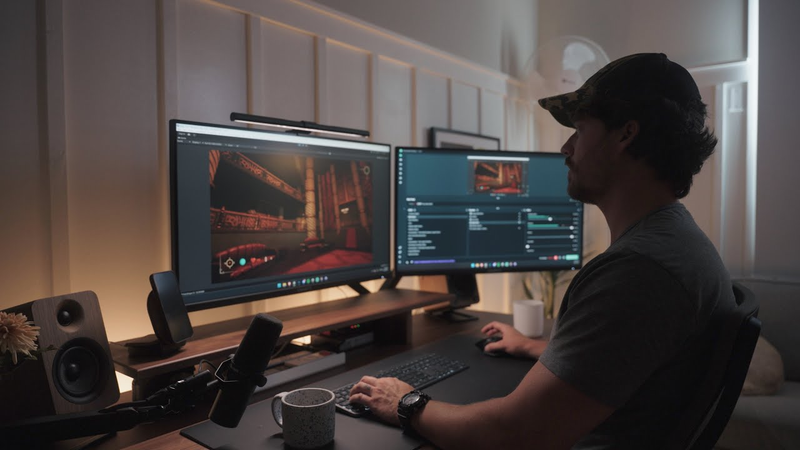
How To Create A 3D Level FAST In Unity
Efficient 3D level design in Unity relies on a structured, three-tiered workflow: establishing a structural blockout, applying custom textures, and finally populating the space with furniture and props.
- Implement a three-tiered workflow for 3D level design: structural blockout, texture application, and final prop population to ensure modularity and iterative flexibility.
- Utilize Unity’s ProBuilder for structural geometry, strictly adhering to a grid-based system to maintain precision and ease of future modifications.
- Use vertex snapping (triggered by the 'V' key in Unity) to ensure accurate alignment of prefabs during the structural phase.

Fireside Chat: Virtual Production: A Peek Behind the Curtain for Game Devs & 3D Artists
Virtual production represents a significant technological convergence between the gaming industry and traditional filmmaking.
- Virtual production leverages real-time game engines like Unreal Engine and Unity to display 3D environments on LED volumes, enabling in-camera visual effects (ICVFX) that replace traditional green screens.
- The Virtual Art Department (VAD) serves as the essential bridge between traditional art departments and technical teams, focusing on optimizing 3D assets for real-time performance on LED walls.
- Industry organizations such as SMPTE are currently working to establish necessary standardization protocols for metadata, color science, and interoperability between game development tools and film production requirements.
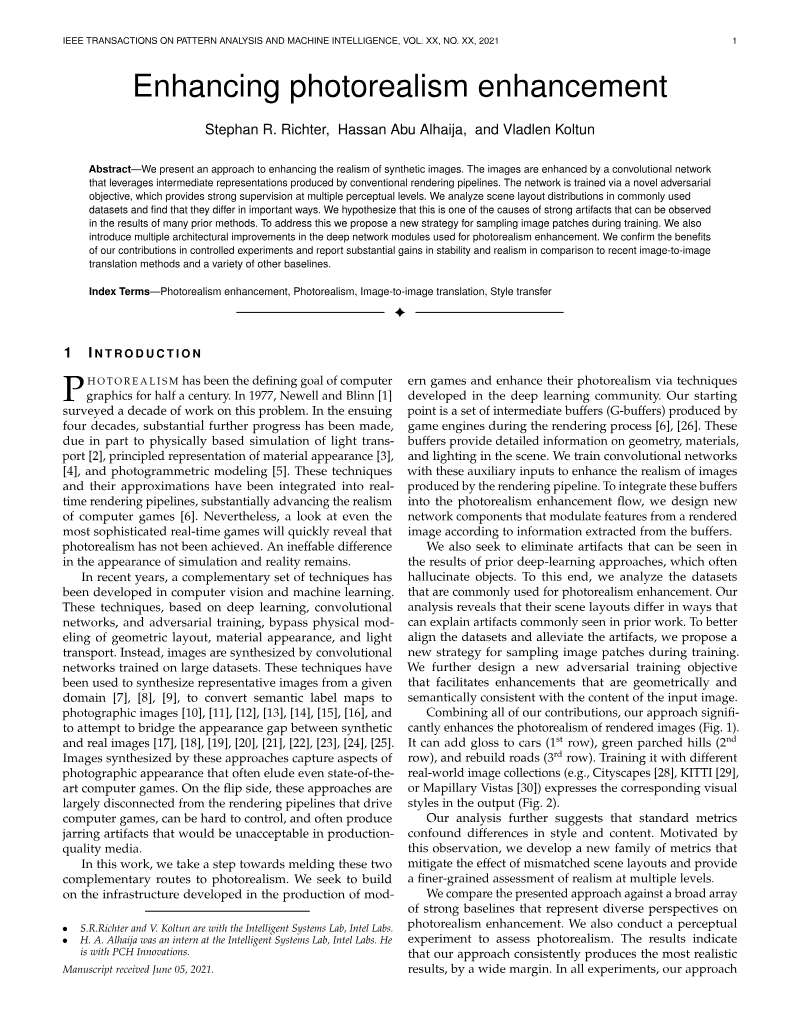
Enhancing Photorealism Enhancement
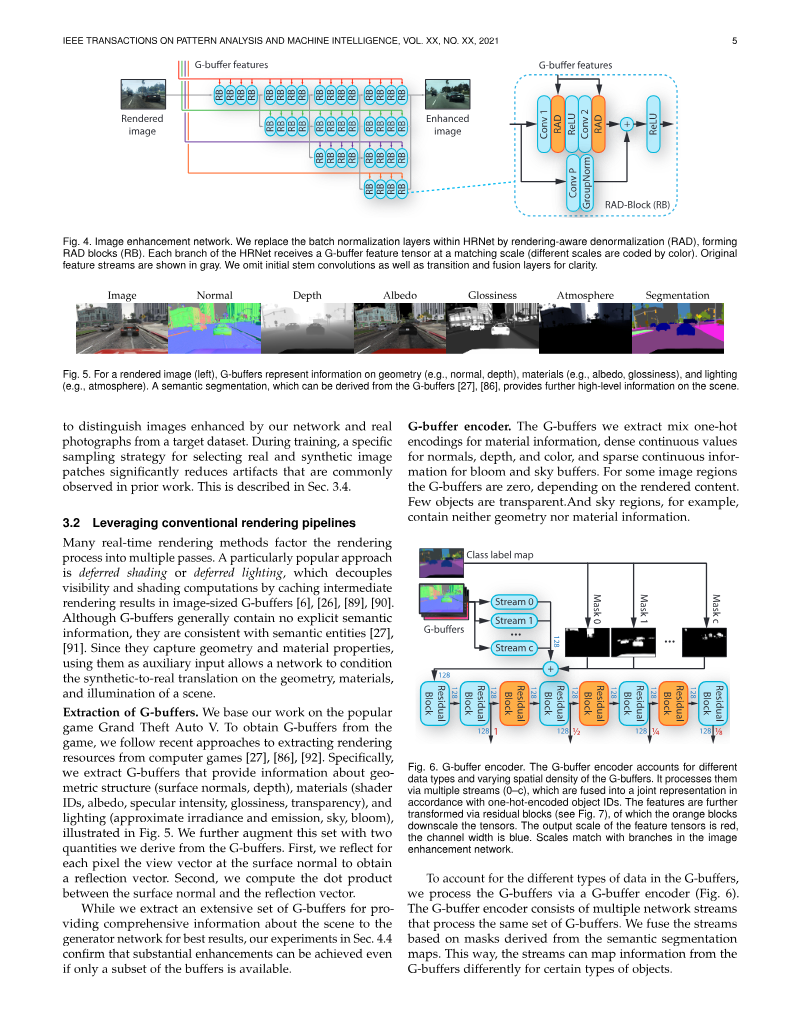
Advancing the photorealism of synthetic imagery requires a sophisticated deep learning framework that bridges the gap between rendered data and real-world visual fidelity.
- A new rendering-aware denormalization network improves synthetic-to-real image translation by integrating geometry, material, and lighting buffers to ensure high-fidelity visual output.
- The framework utilizes a multi-discriminator training protocol and patch-matching sampling to prevent GAN-related hallucinations and maintain semantic consistency between synthetic and real datasets.
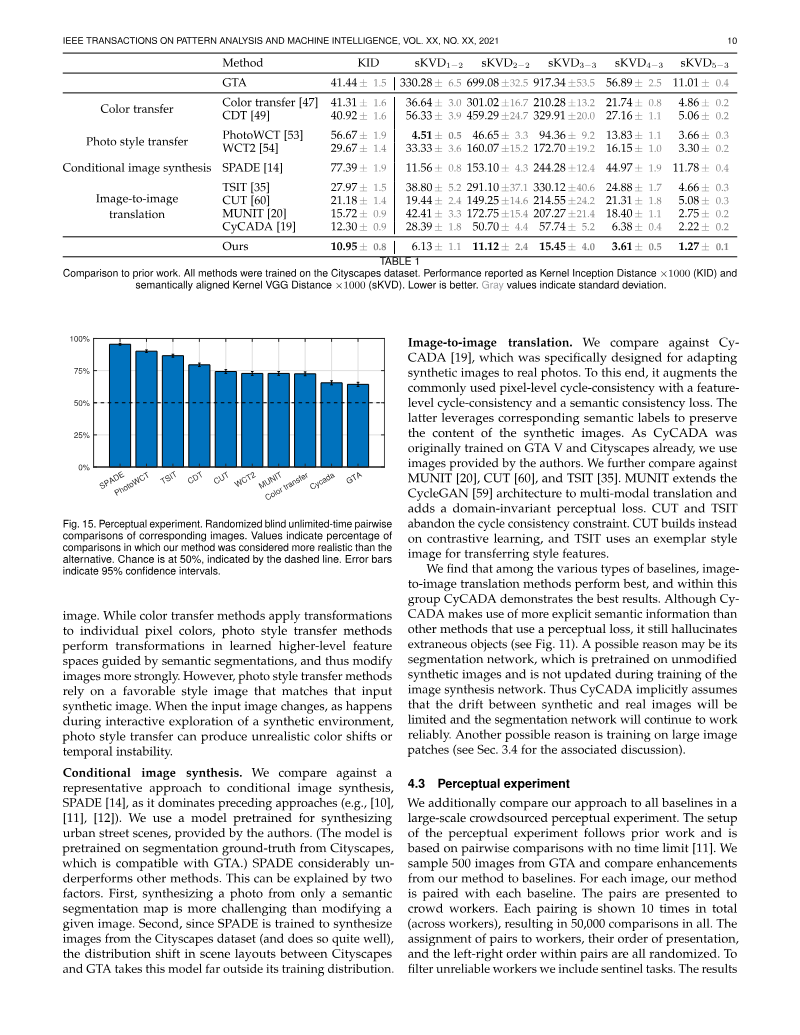
- The semantically aligned Kernel VGG Distance metric provides a more accurate assessment of perceptual realism than traditional metrics like the Kernel Inception Distance, which prioritize semantic structure over visual quality.
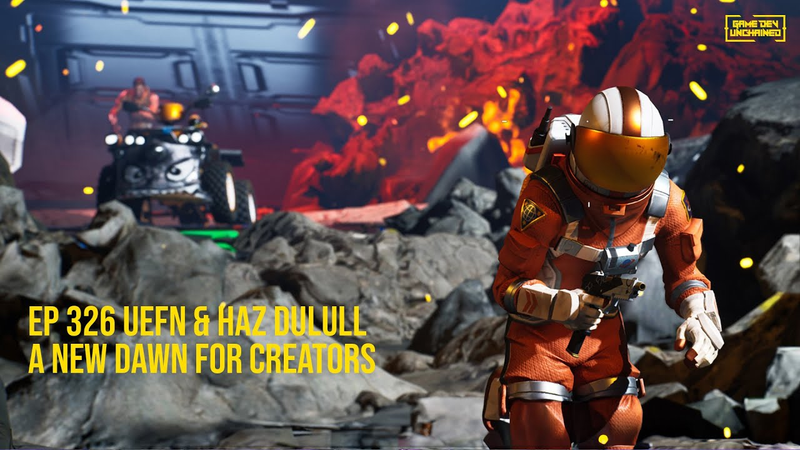
UEFN & HaZ Dulull- A New Dawn for Creators | 326
The convergence of film and video game production is fundamentally reshaping the creative landscape, driven by the widespread adoption of real-time technologies like Unreal Engine.
- Real-time technologies like Unreal Engine have equalized the quality threshold between animated cinema and game cinematics, allowing small, remote teams to produce high-end 4K content without massive studio infrastructure.
- Unreal Editor for Fortnite (UEFN) provides a direct pipeline for creators to distribute interactive experiences to massive, global audiences on major gaming consoles.
- The 400MB memory limit within UEFN acts as a constraint that forces optimized development and encourages creative experimentation for branded experiences.
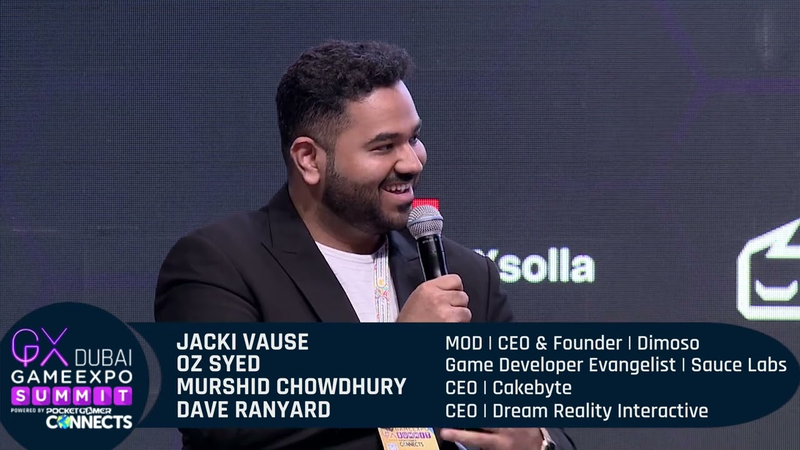
Panel: Powering the Future of Gaming: Exploring the Impact & Potential of AI in Game Development
The integration of artificial intelligence into game development marks a fundamental shift from traditional, state-based logic systems toward generative, probabilistic models.
- Game development is shifting from traditional state-based logic to generative, probabilistic models that accelerate production across ideation, coding, and asset creation.
- Studios must adopt closed-loop workflows and human-in-the-loop verification to maintain quality control and consistency when using generative AI tools.
- Developers are currently responsible for establishing internal accountability frameworks to address the lack of government regulation regarding data privacy and copyright liability.
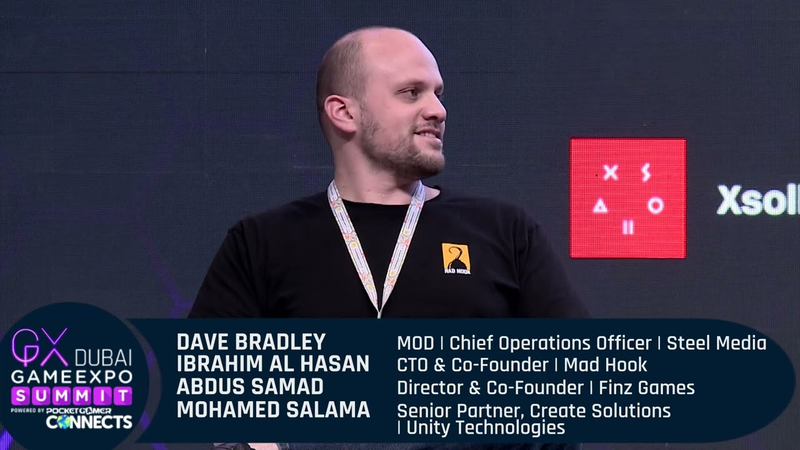
Panel: Mastering the Craft: Tools & Processes for Successful Game Development.
Effective game development requires a strategic alignment of technical infrastructure, project management methodologies, and data-driven decision-making.
- Success in global markets requires moving beyond simple currency conversion to implement region-specific pricing models and payment methods, such as mobile carrier billing in emerging economies.
- Engine selection should be based on project requirements: Unity is the primary solution for mobile ecosystems, while Unreal Engine is the industry standard for high-fidelity, performance-intensive 3D projects.
- Operational efficiency is maintained by pairing project management tools like Jira and Trello with a collaborative, remote-first culture to ensure transparent and agile development cycles.

Game Development for Dummies | The Ultimate Guide
Game development is fundamentally a process of integrating digital assets with logical scripts within a game engine.
- Game development architecture centers on integrating digital assets, such as 3D models and audio, with logical scripts within engines like Unity, Unreal, or Godot.
- Game objects or actors serve as the primary containers for all game elements, utilizing components like colliders and rigid bodies to define physical attributes and interactions.
- Scripting logic relies on two core functions: the start function for one-time initialization and the update function for continuous, real-time loops governing movement and input.
Modernizing Rendering at Supercell
Supercell has successfully modernized its rendering architecture to ensure the long-term viability of its high-revenue mobile titles, including Clash of Clans and Hay Day.
- Supercell developed a new core rendering framework called 'Thor' to replace legacy OpenGL ES systems, enabling better abstraction and support for modern APIs like Metal and Vulkan across their portfolio of games.
- The transition to Thor allowed Supercell to significantly reduce energy consumption on mobile devices, with internal metrics showing improved power efficiency for high-traffic titles like Clash of Clans.
- To manage the risks of updating billion-dollar live games, Supercell implemented a dual-path rendering system that allowed the new and old pipelines to coexist, enabling a phased, game-by-game migration.

Being Successful with Open Source in Game Development
Open source development functions as a strategic catalyst for the modern game industry, shifting the focus from proprietary isolation to collaborative innovation.
- Open source development allows game studios to focus internal resources on unique creative value by pooling efforts on foundational, non-proprietary 'industry plumbing' such as Agones and Open Match.
- Adopting a collaborative model provides commercial advantages, including increased company visibility, access to a global talent pool, and the ability to establish industry-wide technical standards.
- Studios can mitigate the risks of licensing complexities and maintenance costs by utilizing structured governance, clear documentation, and support frameworks like the TODO Group.

Finding Harmony in Anime Style and Physically Based Rendering
The development of Extraordinary Ones: Mirage demonstrates a sophisticated approach to reconciling stylized anime aesthetics with the technical requirements of physically based rendering.
- NetEase Games developed a custom rendering pipeline in their in-house 'Messiah' engine to integrate anime-style aesthetics with physically based rendering (PBR) for a multi-character RPG featuring nearly 100 playable characters.
- To maintain performance on mobile devices with Mali GPUs, the team utilized a minimal G-buffer layout capped at 128 bits to comply with a four-attachment maximum for GLES-based rendering.
- The engine employs a hybrid deferred rendering approach where anime-style shading models are pre-calculated during the G-buffer pass, using stencil masks to bypass standard lighting calculations and reduce branch instructions.