1 free read left. Create a free account for unlimited reading + AI research.
Create free account
Panel: Powering the Future of Gaming: Exploring the Impact & Potential of AI in Game Development
Key insights
6 takeaways- 01Game development is shifting from traditional state-based logic to generative, probabilistic models that accelerate production across ideation, coding, and asset creation.
- 02Studios must adopt closed-loop workflows and human-in-the-loop verification to maintain quality control and consistency when using generative AI tools.
- 03Tools such as GitHub Copilot and Stable Diffusion are driving efficiency gains, but their use requires proactive self-regulation to prevent systemic instability in the development pipeline.
- 04Developers are currently responsible for establishing internal accountability frameworks to address the lack of government regulation regarding data privacy and copyright liability.
- 05To mitigate risks of intellectual property infringement and content inaccuracy, studios are focusing on strict data licensing protocols and maintaining control over training datasets.
- 06The industry is prioritizing the protection of personal attributes like voice and likeness by pushing for future tools that feature automated citation and license-tracking capabilities.
Ask AI about this video
Transcript
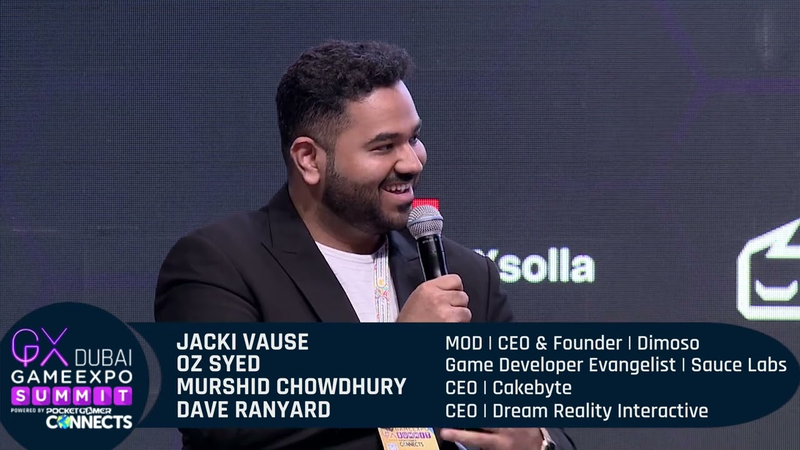
so I would like to welcome to the stage a panel now the panel is going to be moderated uh by Jackie walls from demosa who you just heard the question there we've also got uh Dave Brainerd from dream reality interactive Taiwan Young from Super Evil Mega core or Sierra oh time I can't make it unfortunately there you go um we've got Oz from Source labs and murshid from cake bite but I will let them all introduce themselves on hand over to Jackie now do you all have a mic there's one there hello everybody um nice to see you my name is Jackie vorz I'm the CEO of demoso which is the world's best PR marketing agency for the video games industry as could be attested to by many people at this event and so less about me and
more about the wonderful panel that you have in front of you I'm going to start right at the end I was why don't you introduce yourself yep um hello everyone my name is Oz I Sayed so I live in Toronto uh this is my fourth uh PGC event I was there last year in PGC Toronto and then Helsinki London and then this is the fourth one here so um I've been in the game industry for like 15 plus years primarily on the unity side uh Unity engineer uh Unity expert and I've worked on variety of projects like from Indie Studios to big companies uh and uh has been like a remarkable Journey because I've seen Unity growing from like 2.0 to 2022 and 2023 so that journey is like really fascinating and with that like the uh the emergence of AI and how game engines actually uh evolved with it so the
definition of via has changed over the years and will actually touch upon that so uh pretty much I was also like about for like six to seven years I was a professor uh teaching video gaming and software engineering as well in Toronto I developed a helped developed a completely new curriculum based on virtual reality emerging technology and AI as well as one of the components back in 2016. so uh so yeah so that's basically me so uh I'm Marcia the CEO and lead developer of cake byte which is a game Studio a startup in uh we're part of the 80 Gaming Community we have set up our company on May of 2022 and we're working on two titles one is the Battle Royale game PR 52 the other one is a racing game that's still in concept I've been fascinated by technology and gaming since I was 12. I used to run GTA communities when I was 10 years old and I started programming
at the age of uh 10 12. I don't even remember anyway so right now on this panel I'm really excited to talk about the uh the changes that AI is going to bring to the game production and hopefully everyone can learn something from it hi I'm Dave Ron yard I've been in the games industry for a long time I used to run a studio for PlayStation in London um and now I'm the CEO of dream reality interactive a UK game development Indie studio and I'm an advisor to a few companies as well but prior to all that I did a PhD in artificial intelligence which I realized I received a 26 years ago like this month and I can honestly say it's been useless for about 25 years but now you know I know a lot about it um it's actually though in truth from the gaming perspective you know I was writing AI code
in I don't know 98 uh We've so actually AI has been in games in the games that we play but also in the process for quite a long time but I think probably what's happened is the explosion of generative AI opens up a lot of opportunities but also questions about how we can use it as well so that's you know it's like there's a long tail to this but it's just kind of exploded a bit recently but so I'm really I'm really excited to see how much AI is taking off so am I so um you're the right person then to explain what you see the difference between the AI that we're using right now within the games development process and generative AI what what's the difference how does that change things I mean ultimately generative AI is making content whereas a lot of the other AI might I mean my PhD was prediction of where um uh nuclear fallout would go after a
Chernobyl accident so it was it was predicting where things would be so that we could then make decisions about it whereas now you know the stable diffusion models that people are talking about are basically taking inputs and then creating new newish according to the lawyers newish content that can be deployed so that's I think the the difference and that content creation is something you know I mean we all talk about an art furnace on big titles or having you know huge titles with a thousand artists working in different locations and that you know five years might change maybe it'll be 100 artists for the same amount of content so I think that's the big change uh that's in that sort of concept and also in language as in writing writing stuff whether that's scripts or game design documents or whatever so I think that's really what's kind of creating this explosion oh does that oh sorry merchanted you wanted to jump in there yeah so uh conventionally speaking AI has been around for three decades or
more uh specific to games usually those are predefined Logics so it's like if this then that so if you're a character in a game and the player shoots I either run or I either take cover or I shoot back so there's like three different uh Logics there but the AI right now that's explosive and everyone's talking about is more like it looks at different data sets different training like what has been done before from what decisions have been made before and then it uses that in a new scenario to judge and apply that logic so it's not a predefined steps it's more like the AI is actually deciding on what to do based on previous training I wouldn't completely agree with that actually so a lot of the probabilistic AI is not state-based yeah it's not state-based yes so but that's still been going along for quite a long time I mean uh I made a game but we made a game called isoy Play Back in the early 2000s and it used Vision tracking so that's not really a state-based Ai No it's just definitely
yeah uh but so I just think we we should probably be clear to the audience it's not yeah a lot of State based has been used for NPCs yes but actually there's a lot of other AI around around that that's also been used but it's more I mean like the camera phones when they find a face that's AI that's been in phones and cameras for 15 20 years it's not a state based yeah I was talking about that they are not state-based yeah so are you actually agreeing yeah so actually uh AI uh the way I see is um over the years the definition uh has basically evolved just like technology right like um calculator was considered the first computer I mean then uh what is the computer later on I mean it get got more powerful like and now like you have the computer in form of a mobile uh or even a VR headset so everything is a form of a computer so the definition of computers evolved over the years just like that I think like the the
definition of AI has like evolved uh so you like you would consider pathfinding algorithm like in those days as an AI because it was developed by AI Engineers so um and like uh in the maybe like if you just go back like to the like really like to early 2000s or even like 1990s or something so uh think about the AI like uh what is AI like the NPC character is like wandering like up and down waiting for the player to come towards it then it gets activated because it's within the range and then it starts shooting so that's that was considered AI so but now with all of this like generative Ai and uh technology that has got taken like a giant leap gone are those days where like the NPCs had like intelligence of a doorknob now the NPCs actually can be as cunning as Fox and uh still have like the sharpness of uh samurai sword so that's the way the AI is evolving and I would say like it's
it's basically a transformative step like uh we don't know like how far it's going to go but it's definitely not those days where like the AIS would like be really primitive so this transformation um are you using any kind of AI tools already Dave yeah I mean yeah I don't know how many people were here for the fun legal talk just before but at the moment when we're using AI in the creative process not necessarily in the final product uh and there are legal issues I think of it like Samplers in music right you know you can sample James Brown you can mess around with it enough that you can't spot it and you'll get away with it but if somebody spots it you'll have to pay and I think that there will be some court cases like that around AI so for us um we use it for aspiration a lot of the artists I mean a great example one of we were building uh this beautiful world and we needed a fountain so uh our
artists just use mid-journey to create 50 fountains and then he picked one and then he made it uh and you know it was just using it for inspiration so you didn't have to sketch stuff out he improved his process uh we were doing some ideation recently um an idea harvesting with a bunch of Post-it notes and I asked our AP right take each of the kind of key ideas that came out and use chat GPT to write a one-pager on what that game idea is just that we had a documentation of what we were doing but again I don't think we're ever going to release those things they're not like they're so early they're not really like a scary thing that somebody might see and we're in India anyway we're not Sony or so right now you see it as a game changer in the ideation process the creative creation the creative I'm going to put a shout in here for ludo.ai which actually does that which helps you come up with game art games game scripts gdds basically
um it's great for a first pass yeah you don't get the blank page you don't get oh what that word but what you do get it's a little bit Bland you know yeah that's exactly but that that I get as a starter Point yeah yeah where I'm really interested in is when you get more deep into the code and bringing in the the generative AI into the heart and soul and the playability of the game I can see it used in some games but it would be in a closed training set so we would set the art style we'd set the boundaries and perhaps where at the moment we might then Outsource to the Philippines or Vietnam or something we could probably do half of the Outsource and then get those people to do the checking and the tidy up so I think that would improve our process and make it faster and cheaper but we do it in a closed loop so we wouldn't be using uh there wouldn't be any kind of Getty Images sneaking in let's gotcha so merge it as a nerd as a
guy who's been coding since he was 12 years old what do you feel are you go are you learning to code are you learning to do the the the become an AI I'll let the experts take care of that right now I'm here to just make use of the tools as a game developer because I cannot defeat what they are doing currently because they're on a different level so uh in our company we are using AI we are actually learning about the tools rather than just using it on our end product right now because it's maturing so fast that even if you develop something right now you're probably going to be beat by someone else so it's not smart to do that but two examples I can provide from our own company is that we are using AI the image generation for vehicle paint jobs so you have like a car and then you want to apply a paint job to it which has like a specific uh template to give yeah and that can take okay I want it now to look like a Batman
car instead of like a Ferrari or whatever that yes that's doable that's something more complex but we're starting off with just the the texture the just a visual look and for example every day you give the players the option to choose from three different prompts which are set by us because we do not allow players to choose from by themselves leads to copyright issues so the players can decide to pick one of the proms and then they get a design that they like and they can decide to keep it in their inventory and another example I can provide is we are using uh chat GPT to create NPCs that are context aware so you can tell a character that hey you are in this specific world and you your world is like a post-apocalyptic like nuclear Zone with certain enemies around you and you are the owner of a gas station you give that to a Ai and then the player can ask a specific dialogue to the character and the character is going to respond so naturally that it feels like they are part of the world so that's something we're using AI for in our
studio that's that that's that that's interesting actually um so from my experience um chat GPD is like definitely one of the tools that you could definitely use like uh for uh you know for ideation for brainstorming because that's where it actually excels as well so um and there are like of course other tools uh especially from like I'm coming from the programming side so um GitHub actually came up with GitHub co-pilot so that's actually a tool which uh like it goes online takes a look at all of the public repositories and then from there it gives you suggestions uh and quoting improvements like uh Snippets or maybe even full functions so that's another tool that actually could be a good Arsenal a good good tool in the Arsenal for programmers from the artist's perspectives of course like uh for a really uh quick prototyping there
is like daily tools stable diffusion and uh these still so yeah so I think it's good enough to experiment with play around and like collect ideas but you cannot put AI in the driver's seat you have to be in the driver's seat so you have to like Direct what you want from the AI uh instead of that leading you and because then that's too chaotic and you have to be the person who's driving it and that one being the co-pilot so that's how I see it so what you're saying is that essentially you've got these tools you're using them you are prompting them and and I have a great belief that we're going to move throughout these tools as we grow up with this technology and become much more much better at being prompt Engineers than we you know in everything because AI goes into Healthcare goes into all sorts of different fintech so
thinking about that prompting and we're using the prompting do you see a time when AI might become part of or the users and the players might become the prompters within a game uh yeah I do actually I mean so I'm sure some indie's going to come up with a game where it kind of that the meta game is what game do I want to play today I want to like shoot shoot starfish with bananas and it makes it for you you know because actually you could probably do that now to be honest so and I think I'm more sophisticated version of that could come along so I'm a time traveler today I'm going to do a story that's set in the Victorian age and it kind of helps generate that so I think that's very true but you know ultimately The Prompt engineering thing is a bit like Google Search terms were 20 years ago it's like oh what do I do I type in a word and then it you know it's like there was a sort of a piece to that it was like an onboard
understanding of how to do it and now you know agencies that are just set up to work on on uh search engine terms right so I think it will be a similar process and probably similar businesses will work with it and you know you'll be able to do that and then the thing that's interesting with AI is you can close the loop like I say so if you were making you know an Assassin's Creed game you could probably do some quite interesting things with with prompts to make that particular one but also the prompts might turn into a character talking to you because it's not that much different to do some voice recognition and so on so you know I think that might be um how it actually manifests so um games where the players will actually start prompting are usually sandbox games for you can take Minecraft or other similar games where the players can actually be very highly creative so you can say create a drag statue of a dragon and in Minecraft like there's a random blocks and it looks like a chef dragon so those are the types of games I
feel like the players are going to start prompting in also probably most of the metaverse projects out there I was going to say this already starting a user prompting of you know exactly yeah so definitely that's where the players would take their Liberty but in different types of games where it's more story based uh narrative driven I think the players would probably not even realize that they're taking part in the prompting process yeah so they don't have to because the designers of the game will will set the parameters in that way I think that's how it's going to go yeah that's a that's a really good point actually because uh AI generative AI is actually really a master in storytelling so when you actually are in the process of like uh in such like roleplay playing and like storytelling games so um the response that you're providing so that actually becomes an input and then that's actually leading to more creative more personalized uh gameplay uh so that's one place I think where uh
generative AI would really excel in such games so I think up until now we've been quite positive in the discussion about Ai and other things it can do and we had um from wigging about you know the things that can go wrong let's let's just delve into that darker side of things and and what what do we see as potentially going wrong here well I think firstly there will be somebody's going to get a big court case against them you know just like the early hip-hop artists sampled records I think that that will happen but then you know I think we will get over that um I think there's there's the chance for um weird or inappropriate content to make it into games because the human checking bit just gets the foot that's taken off the gas you know and I think there'll be some scandals around that at some point I mean I I won't talk about something that happened at PlayStation a long time ago it was nothing through
their AI but you know those things new technology comes people aren't quite sure how it's used I think probably one of the risks is that the data that you put into things is is actually you know become it's like the Borg you know it becomes part of this big mass and it might spit itself out somewhere else so I would imagine that some unscrupulous people in the world might go in and actively train as data sets on bad stuff to get a negative output a negative reaction and I think that's something that that's a risk um I think it will actually people say oh will it take a lot of jobs it won't take all our jobs but it might take some you know I mean localization is going to change um I remember years and years ago my brother's a lawyer and it when he started you know there was effectively a group of people who did all the typing of the contracts and then they'd get printed out and then the lawyers would read them and put red pen on them and then they'd go back I remember saying well that's all that's going to say no lawyers will never type any obviously that has happened and so there will be some I mean copywriting might change uh and so on so there will be
some quotes casualties I think what will happen is those Industries will be a bit smaller so they won't disappear but those people will then be it'll be more about prompt engineering and checking and culturalization and those sorts of things so you know it will it will have a change and there'll be some negatives um uh like any technology I mean to be honest all technology you get some good stuff and you get some bad stuff and normally the bad stuff comes through Bad actors in the real world obviously my response to this is pretty straightforward really there will always be bad actors no matter what type of technology so content moderation and Community guidelines is what is going to solve it just like it has always been then you've got ai moderating ai I mean yeah yeah there's a certain threshold that can always be moderated and anything beyond that can be affected by the humans um actually I have an interesting story here so what are the things that can go wrong right so
um last week I was working on a particular project so how many of you here like are unity Developers okay quite a few okay so um I'll actually like develop a lot of tools as well on Unity so uh one of my projects actually required uh to detect how to re like when an asset is being renamed within Unity uh by a developer then I need uh a prompt like I need to know that asset has been renamed so um I know how it worked but I just for the fun uh went to charge gbd and said like HR gbd can you actually provide this uh function that can actually detect the renaming of an asset so it went through and then it said like this is this particular class and there is this method that you can use and it happens so that um just taking you a little side uh after off topic well come back so a few
weeks ago do you guys remember like there was this news where a lawyer was actually using chat GPT in a case uh where like the chat dpd actually produced list of links cases and that they were non-existent like and it was really con like chat GPD was really confident enough because the lawyer said are you sure these are real cases it said yes you can find it in journal so something like that happened with me so I actually went and said like this doesn't seem to be a valid method uh the one that you're saying it doesn't exist I think so um and then maybe I thought maybe I am wrong maybe Unity just brought it in in the recent version so I went back into the API and checked no it doesn't it doesn't exist then I went back to charge gbd and said this doesn't exist and then it said apologies so it doesn't exist and it said oh thank you I'm going to reset my data and that is what I find so fascinating about AI because everybody is sort of blindly going hey no this is good these tools are great
you can based on is predicated upon the validity of the data that it's using to come to its conclusions and my problem with with AI and this is where I get a little bit worried is that there is so much that is inaccurate and you've just absolutely nailed it odds it's almost like the internet itself really is the internet inaccurate but this is true and you know what this is the funny thing because obviously I do work very heavily in games but I also work with all sorts of different systems that are coded by intelligent Geniuses like you guys and it's even down to the bank systems and everything else the data that they hold on banks over here in in Dubai and Saudi Arabia are actually oftentimes flawed they've got the wrong sort codes they can't there's all sorts of things that are going wrong with data and so when we get into that into that horrible Loop how do you think we can counter that on a kind of like on a
a macro level in terms of how do you think we can work as good people within the games industry to ensure that our data is good well I think my from a production perspective for us I would start certainly the next two or three years with closed systems I wouldn't I'm nervous about throwing my data into the sort of Dead Sea of of chat GPT and not knowing where it's going or who else is using it I mean you know you talk about lawyers using it like lawyers creating contracts suddenly my contract that is like there owned by something else so anybody sees if they can extract it right you know I think I I'm caught knowing a lot about I'm cautious about making it very open how we use it but that's more paranoia for me than it's not necessarily being good to everybody else but it's advice I suppose so many people are dumping data into the
large language models and other uh um they don't even realize there's going to become part of the model later on so that's something you should definitely avoid only put information that you don't expect to find out later on outside in the public domain and perhaps use a more a strict version of the model or something that is inbuilt by yourself and that way it's much safer to deal with your own data yeah another point that I would like to add to that is uh basically it goes back to the first point that I made so uh you like you you have all of these tools but you have to be knowledgeable enough to use that and you have to be knowledgeable enough to detect so uh in a way like you um you cannot fully rely on these tools um because they could actually throw like all sorts of um like wrong information to you and you need to be knowledgeable enough to sort that information what's wrong and what's
right has to be determined and only then then you're going to be successful and whatever you're trying to do because then this is going to be uh your co-pilot and not the pilot I think that's a good analogy actually that's great um do we have any questions at all from the oldest right now because I'm mindful that we're coming up to we do Dave I'm gonna have to get you some exercise here do you have a microphone hello my name is I work for NQ gamecoin and my question is do you think eventually self-learning AI such as judge EBT can have a well-informed enough database that gives us accurate results always or will always be inconsistent well I I think as we said really it's actually anything like that it's only as good as its data and I'd be very surprised if all the data going to chat
GPT is accurate you know I mean there's what was the chat bot that Microsoft released that became a Nazi in about less than 24 hours was trained on Twitter you know so I mean that saying that's gonna happen but you know that was like a simplified example of where it can go wrong actually I think the same Tech was used in China it's still usually it's quite successful so it might be to do you know to do with behavior where it's set not saying I don't like America I'm just saying it started in America and that's what happened um so you know basically it's down to how good the data is and you know we all know what the internet's like so I wouldn't hold your breath for that one and that's why I think you do need to use it as a as a tool and not as a as a as a master because when that happens we are in trouble well uh for me I believe there's two factors two major factors there could be several but the first one is obviously the data that is trained on and secondly uh have you heard about Auto GPT yeah so uh GPT is more like chat jpt
talking to itself right so you have a first response which may be incorrect but then chat GPT can go back and read that again and come up with the reasons why that is incorrect and when it talks to itself multiple times you end up with a response much further down that's more accurate to the original data I'd just like to say it's also the first sign of Madness talking to yourself well that's what our brain does right when we try to be creative yeah I think both of you actually summarized good enough so I don't have anything more to add on the yeah I mean just um as a kind of add-on tour of this as well I don't know what you saw just recently the company voice mod that is bringing out AI voices for use within games metaverse etc etc I mean you're looking at using somebody's data on their voice which you know again so if you think
about your personal attributes celebrities need to start thinking about their own personal attributes and almost licensing the use of their voice or keep it so it could get really in terms of data I don't think that we'll ever have a clean kind of legislated it's all down to I think it's all down to the person at the end of the day yeah yeah I would agree with that actually I think people talk about your data is going to be really valuable in the future and I think unfortunately we are going to live in a Black Mirror episode where we've all got all value to our data and the celebrities is like you know ten thousand dollars a minute and mine is like a dollar an hour you know whatever so I I think that's a sad truth of the future do we have any other questions one here
what kind of um check and balances would you see within the AI system speaking of information recovery or AI doing something which is illegal um obviously there's a big anxiety in the market concerning AI as well as the excitement about it but how to make sure what technologies accept regulations which I don't think are going to rip properly um do you see as an effective tool it's like any other content you need to you need before it goes out for public release you know and I think that's going to be the case now how that happens could be interesting it might be to do with closed betas open beaters so I think if you had a living breeding World say say you took Assassin's Creed you make it a living breathing world right with a number of different times Etc then you might have a closed beta that's two months ahead and an open beat that's one month ahead and then the live version I think you could probably you that could stand up in court so if
something was going wrong in the closed beat or even the open Beats you said well we have a process we're trying to do this and we can show that by the time we get to the final one but ultimately I do think you need human eyes with a reasonable understanding of what is allowed checking all parts of the content that's what that would be my Approach programmatically speaking you can always generate different versions of a prompt right so when you're creating a game during production you can create variations of that that story that narrative or that model and and you can always leave out the ones that cross a certain threshold for you know violating the legal system so always make sure you choose the right one that has the maximum chance of not making sure it doesn't break any rules and regulations yeah this is actually uh another aspect of it is especially like
with tools like like I said like GitHub co-pilot where it actually goes like into public repositories and uh references that so traditional in traditional sense like when you actually code without these tools like you go online do some research then you're taking a quote from someone else then you're supposed to at least like look at the license terms and then um some some of those original authors would say like you have to you can use this code as long as you actually cite uh who wrote that or as long as that license is intact but with these tools none of that is actually taken into consideration now that's the problem but I'm pretty sure like um companies are aware of it like they eventually would come to that point where they could be uh like you could have that control like saying we I only need codes that will be publicly open sourced and then then there's no problem right or it could come to a point where it can actually give a citation of like the not like this is the list of uh
references that I like took from and then these are the license terms and then now it's up to you to actually uh fetch the license for that so it could come to that point I'm pretty sure it's a matter of time but it will come to that point I'm so glad you asked about checks and balances because I think it's one of the most important things as we move forward in this era of new technology just generally and one of the things that as human beings we're not very good at is setting the checks for down the line that's why you have prenups that's why lawyers um we are in a wild west at the moment with AI and it is incumbent upon us to try and set our own laws as we go along because there is nobody else out there there's no legislation saying you can't do this and you can do this now I know the governments are getting together and creating AI Ministries and all that kind of lovely stuff but none of them know what they're doing so it really is incumbent upon us to create our own checks and balances and yes that would stand up probably in a court that's
knowing that it's legislating over something that is legislated for yet um but yeah it's a it's a it's a classic problem right now and I do think that unfortunately some tech will come in to provide those checks and balances from some clever person who'll go okay I need to come and do some checking and balancing for the industry um thank you I think we're gonna have to leave it there but so thank you very much a round of applause for Jackie on her panel please thank you great very insightful love that
Summary
The integration of artificial intelligence into game development marks a fundamental shift from traditional, state-based logic systems toward generative, probabilistic models. While legacy AI has long governed basic NPC behavior and pathfinding, modern generative tools are now accelerating the entire production pipeline, from initial ideation and coding to the creation of complex assets and context-aware dialogue. This transition offers the potential for unprecedented levels of personalized, player-driven gameplay, yet it necessitates a strategic move toward closed-loop workflows. By utilizing these systems within controlled environments, studios can leverage AI for rapid prototyping and content generation while maintaining the rigorous oversight required to ensure quality and consistency.
Despite the efficiency gains provided by tools like GitHub Copilot and Stable Diffusion, the industry faces significant hurdles regarding data privacy, copyright liability, and the risk of generating inappropriate content. Because the current technological landscape remains largely unregulated, developers are tasked with establishing internal frameworks for accountability. This includes implementing programmatic filtering, rigorous human-in-the-loop verification, and strict data licensing protocols. Protecting personal attributes, such as voice and likeness, has become a critical priority, prompting a push for future tools that incorporate automated citation and license-tracking features.
Ultimately, the industry is navigating a transitional phase where the promise of AI-driven innovation must be balanced against the necessity of ethical and legal compliance. Rather than relying on lagging government regulation, developers are taking the lead in creating self-imposed checks and balances. By prioritizing human oversight and maintaining control over training data, the gaming sector aims to harness the creative potential of generative AI while mitigating the inherent risks of inaccuracy and intellectual property infringement. This proactive approach is essential for sustaining long-term development stability and ensuring that AI serves as a reliable co-pilot rather than a source of systemic instability.