Game Engines reports and market data
Documents

Unity vs Unreal (I'm Seriously Considering Switching To Unreal)
The choice between Unity and Unreal Engine represents a significant strategic decision for independent game developers, particularly as they transition from 2D projects to complex 3D environments.
- Unity holds a 43% market share compared to Unreal Engine’s 13%, making it the dominant choice for independent developers.
- Unreal Engine 5’s advanced features like Nanite and Lumen are optimized for high-end hardware, which can create significant performance overhead for mobile and Nintendo Switch development.
- The decision to switch engines is often hindered by the high cost of migrating established workflows and the potential loss of cross-platform versatility.
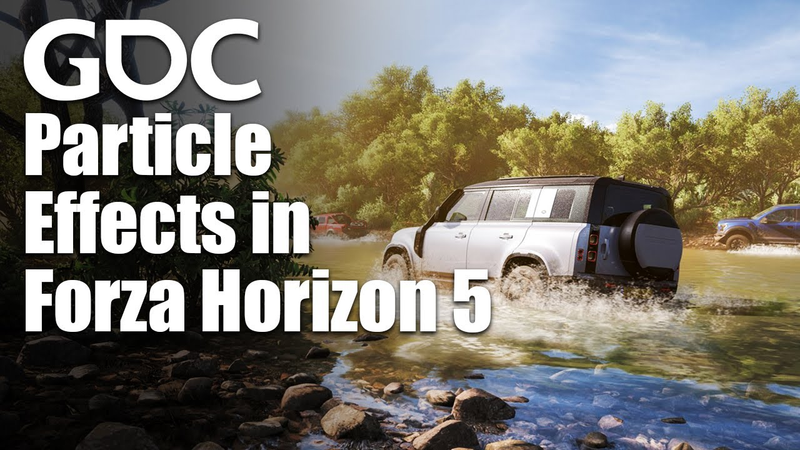
How Parameters Drive the Particle Effects of 'Forza Horizon 5'
The development of Forza Horizon 5 necessitated a fundamental shift in visual effects architecture to accommodate the game’s diverse environments and rigorous performance requirements.
- The Forza Horizon 5 particle system utilizes a node-based framework powered by PopcornFX to integrate real-time vehicle physics, such as RPM and tire slip ratios, directly into particle behavior.
- Engineers maintained a strict 2.5ms performance budget for particle effects by using XML-based templates and payload data to manage over 500 unique smashable props.
- The system replaces binary triggers with a temperature-based model for tire smoke and employs a six-directional light map shader to ensure consistent, per-pixel lighting across smoke volumes.
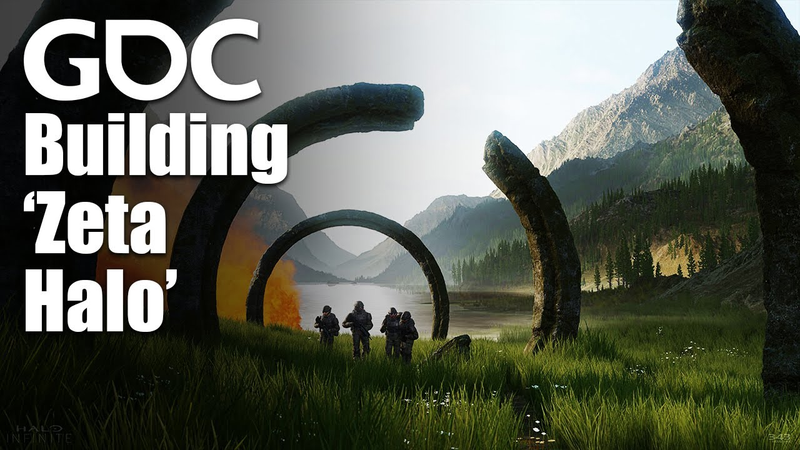
Building 'Zeta Halo': Scaling Content Creation for the Largest 'Halo' Ever
The development of Halo Infinite required a fundamental shift in production methodology to accommodate the franchise’s transition into a massive, open-world environment.
- To manage the massive scale of 'Zeta Halo,' which was roughly 10 times larger than the campaign levels of Halo 5, 343 Industries transitioned from manual, non-destructive editing to a modular, node-based procedural workflow.
- The team implemented a 'Mass Painter' system that allows artists to paint textures and material layers across multiple modular meshes simultaneously, decoupling the painting process from specific Uber Shaders.
- A custom terrain system utilizes two sets of graphs: a 'sculpting graph' for geometry and a 'surfacing graph' for materials and ground cover, which are optimized at runtime into virtual textures and procedural placements.

How To Make A 3D Game In 5 Minutes (Unity Tutorial)
Efficient 3D game development relies on establishing a standardized sense of scale early in the production process to prevent technical debt and burnout.
- Establish a standardized scale early by setting character controllers to a fixed height, such as twice the size of a standard Unity cube, to prevent technical debt and disorganized workflows.
- Use uniform texture resolutions, specifically 2048 by 2048 pixels, to ensure consistent asset reuse and simplify engine optimization.
- Streamline the development pipeline by importing source files like PSDs directly into the Unity project folder to leverage automatic engine conversion.
Shader Sauce: How to Use Shaders to Create Stylized VFX
Stylized visual effects represent a distinct design space defined by abstraction rather than a simple progression toward realism.
- Stylized VFX and realistic effects share the same foundational shader concepts, meaning the same technical principles apply regardless of where an asset falls on the realism spectrum.
- Alpha erosion creates non-uniform fading by subtracting a noise map from a texture and using a saturate node to clamp the result between 0 and 1, providing a more organic transition than traditional alpha fading.
- Vertex offset manipulation allows for dynamic mesh deformation by using vertex normals to move, scale, or rotate geometry in world space based on shader inputs.
The Rust Programming Language for Game Tooling
Rust serves as a highly effective bridge between the rapid development cycles of high-level languages like Python and the raw performance capabilities of C++, making it an ideal choice for modern game tooling.
- Rust provides a performance-oriented alternative to C++ while maintaining memory safety, as demonstrated by a Treyarch image-packing tool that experienced only two crashes over a three-year period.
- The language eliminates common development risks such as multi-threaded data races and memory corruption through static memory safety and compile-time validation.
- Rust’s ecosystem enhances developer productivity through integrated tools like the Cargo package manager and utilities for serialization, error handling, and CLI development.

I Was Wrong About Making A 3D FPS (Apology Video, 2 Years Of Learning)
Developing a 3D first-person shooter (FPS) presents significant technical and creative challenges that often exceed the complexity of 2D game development.
- 3D FPS development requires significant technical overhead, specifically regarding lighting bakes, complex navigation meshes, and multi-camera configurations for gun clipping and UI.
- Relying on modular assets and real-time lighting without proper optimization leads to severe performance degradation and technical debt that often necessitates rebuilding entire levels.
- Constructing environments from thousands of individual cubes instead of optimized meshes creates unsustainable performance costs, particularly when targeting hardware-constrained platforms.
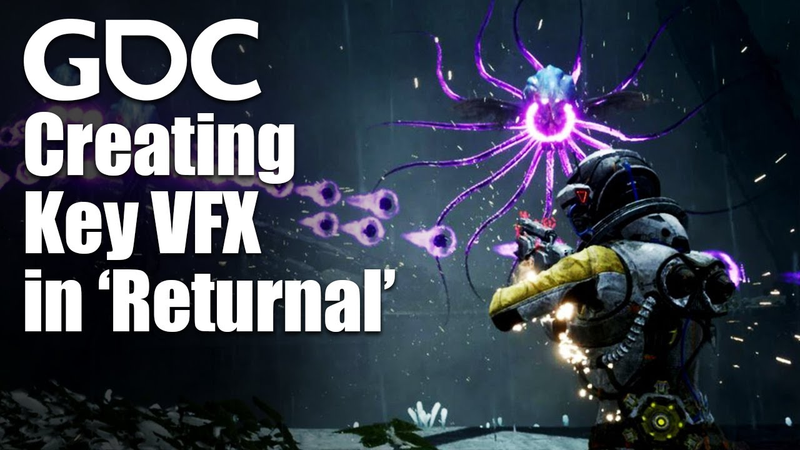
Can We Do It with Particles?: VFX Learnings from 'Returnal'
Housemarque’s development of the 2021 title Returnal leveraged a proprietary, GPU-based visual effects engine to achieve complex environmental and character effects.
- Housemarque utilized a proprietary, GPU-based VFX engine, originally developed in 2014 and integrated into Unreal Engine, which relies on custom HLSL-based code rather than pre-built nodes to achieve high-performance particle systems.
- The engine employs particle hierarchies, or 'node particles,' allowing child particles to reference parent data to procedurally generate complex structures like tentacles and destructible objects.
- By treating particles as control points for curves, the team implemented efficient tube rendering that manages complex movement and player collisions with minimal performance overhead.
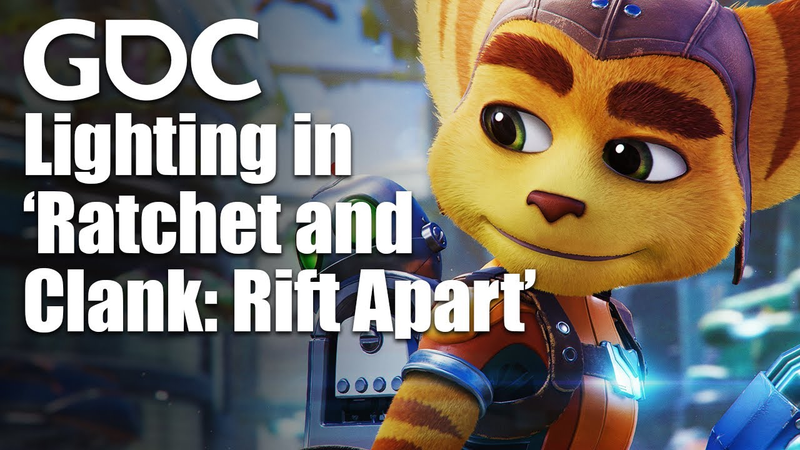
Recalibrating Our Limits: Lighting on 'Ratchet and Clank: Rift Apart'
The development of Ratchet & Clank: Rift Apart represents a strategic shift toward achieving feature-animation-level visual fidelity on PlayStation 5 hardware.
- Insomniac Games prioritized performance on the PlayStation 5 by mandating that all light sources cast shadows, abandoning previous-generation optimization tactics that sacrificed visual fidelity for performance.
- The lighting team established a consistent baseline by locking exposure and key light intensity as foundational variables, ensuring that all subsequent adjustments to fog, bounce light, and light intensity remained balanced throughout the project.
- To optimize performance and simplify workflows, the team utilized fewer, larger light sources rather than numerous smaller ones, which reduced performance overhead and created more realistic bounce lighting.
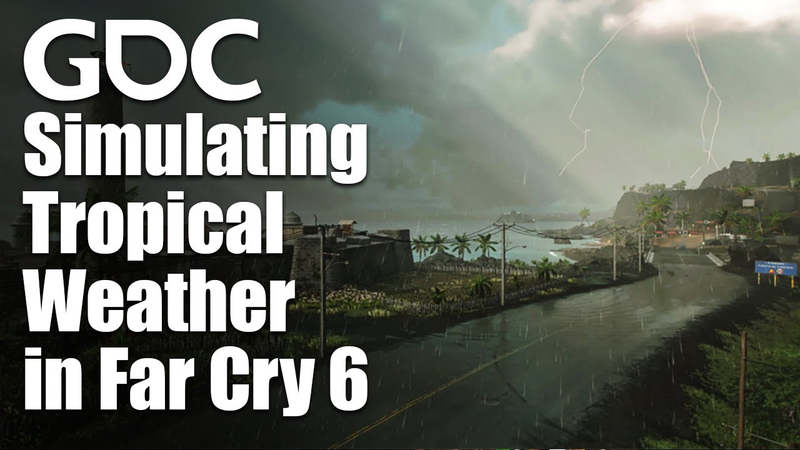
Simulating Tropical Weather in 'Far Cry 6'
The simulation of dynamic tropical weather in Far Cry 6 relies on a centralized Weather Manager that orchestrates transitions, lighting, and atmospheric effects through artist-designed presets and regional curves.
- The Far Cry 6 weather system utilizes a centralized 'weather manager' backend and a 'weather database' frontend, allowing developers to drive visuals, audio, and gameplay through unified parameters like wetness and rain factors.
- To implement wetness across diverse assets without disrupting artist pipelines, the team used a unified porosity-based formula that generated maps for existing PBR shaders, ensuring consistent material behavior without requiring manual asset updates.
- The team managed global illumination by fading out indirect lighting during high cloud coverage, while using a voxel-based system that packs 13 frames of data—11 for time-of-day increments, one for local lights, and one for sky occlusion.

Structure of Networked Action Games | Saturday School #3
The presentation outlines the fundamental architecture required for building responsive, deterministic networked action games.
- Treat game logic as a deterministic simulation function where the current state and player input produce a new state, ensuring consistency by decoupling the simulation loop from the rendering loop.
- Implement a fixed-tick system for physics calculations instead of variable frame rates to maintain a synchronized frame of reference across all clients and the server.
- Use integer-based ticks for state updates to prevent the synchronization discrepancies and floating-point errors common in network-based physics simulations.

Unity’s Love Triangle & Blizzard’s Breakup - The Metacast by Naavik
The global gaming industry is currently defined by a strategic pivot toward platform-based infrastructure and the consolidation of development tools.
- The gaming industry is shifting from proprietary, siloed development toward platform-agnostic, third-party infrastructure that serves both gaming and non-gaming sectors.
- Unity rejected an acquisition bid from AppLovin to pursue a merger with IronSource, prioritizing operational autonomy and cloud infrastructure integration with Microsoft Azure.
- Major publishers are increasingly canceling high-cost, cross-cultural co-development projects, such as Blizzard’s terminated mobile collaboration with NetEase, to favor leaner, faster-to-market mobile titles.