Game Engines reports and market data
Documents

National Game Engines Could Shape The World - The Metacast by Naavik
The gaming industry is currently navigating a complex intersection of participatory governance, geopolitical technological sovereignty, and aggressive market consolidation.
- State-sponsored development of national game engines is emerging as a tool for governments to exert political influence, surveillance, and social engineering within virtual spaces and the metaverse.
- Corporate consolidation is accelerating as companies prioritize financial synergy and technological control over organic growth, leading to a market dominated by fewer, larger-scale acquisitions.
- Unity’s acquisition of ironSource represents a strategic shift toward integrating ad-tech and monetization capabilities to maintain competitiveness against rivals like AppLovin.
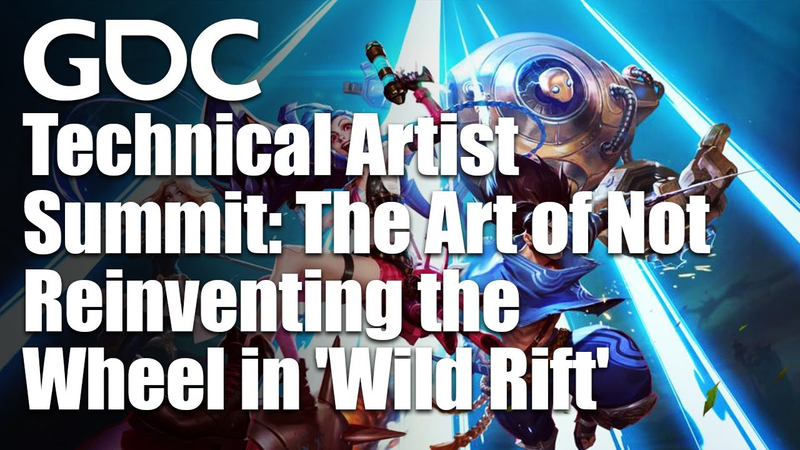
The Art of Not Reinventing the Wheel in 'Wild Rift' Asset Pipeline
Managing the complex asset pipeline for League of Legends: Wild Rift requires a sophisticated approach to oversight as the project scales from a prototype to a global live service.
- To manage the complexity of hundreds of champion skins and their associated animations, effects, and sound assets in 'Wild Rift,' Riot Games developed a custom asset analysis tool to establish a single source of truth for asset dependencies.
- The asset analysis tool was built using Python and designed to be standalone, requiring no Unity installation or project-specific dependencies, which significantly reduced iteration times and increased development flexibility.
- The tool functions by scraping the entire game project and ingesting JSON-based game logic files, utilizing Unity's native prefab and meta file systems to track character configurations and unique asset IDs.

Procedural Grass in 'Ghost of Tsushima'
The procedural grass system developed for Ghost of Tsushima was designed to achieve a specific artistic vision: vast, painterly fields of foliage that maintain high visual fidelity while adhering to strict memory and performance constraints.
- Sucker Punch Productions achieved high-density foliage in 'Ghost of Tsushima' by rendering approximately 83,000 individual grass blades per frame, processed in roughly 2.5 milliseconds using a compute-shader-driven pipeline.
- To avoid the limitations of traditional grass cards, the team used a compute shader to generate instance data for tiles, which are then rendered via indirect draw calls to maintain performance while allowing for per-blade wind animation and artist-configurable parameters.
- The system utilizes a clumping algorithm that groups blades based on artist-authored parameters, preventing the uniform, artificial look of standard procedural grass and creating the appearance of a natural, varied field.

The TOP FREE Software for Game Development (2022)
This overview evaluates essential software tools for independent game development, emphasizing cost-effective solutions that allow developers to bypass expensive industry-standard subscriptions.
- Blender serves as the definitive free, professional-grade solution for 3D modeling, sculpting, and animation in game development.
- Unity is the preferred engine for indie developers due to its superior documentation, extensive community support, and efficient cross-platform porting capabilities.
- Unreal Engine requires a five percent royalty on gross revenue once a developer exceeds the one-million-dollar earnings threshold.
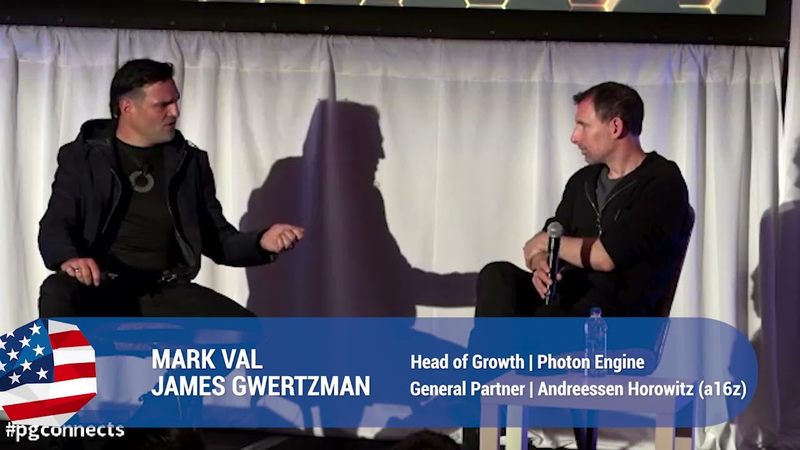
Fireside Chat: The Future of Multiplayer
Success in the modern gaming industry is increasingly defined by rapid execution and iterative development rather than rigid, long-term planning.
- Modern multiplayer success relies on rapid, iterative development and continuous updates rather than rigid, long-term planning or monolithic release structures.
- Studios should prioritize maintaining a playable build throughout the production cycle to mitigate the risks associated with the technical complexities of scaling multiplayer games.
- Multiplayer titles are evolving into persistent social networks, necessitating a shift in development strategy toward live-service models.

'FIFA 22's' Hypermotion: Full-Match Mocap Driving Machine Learning Technology
Electronic Arts has fundamentally transformed the animation pipeline for the FIFA franchise by shifting from traditional studio-based motion capture to full-match data acquisition.
- EA captured 11-vs-11 professional football matches using Xsens motion capture suits to generate over 4,000 new gameplay animations for FIFA 22.
- To resolve player drift and provide spatial context, the team integrated Local Positioning System (LPS) data using Wemo Pro sensors, achieving tracking accuracy within five centimeters.
- The team reconstructed 3D ball data by triangulating coordinates from eight static 8K cameras (50 fps) and calibrating them using known field landmarks instead of traditional checkerboard patterns.
Building Narrative Games with Yarn Spinner
Yarn Spinner serves as a specialized, open-source scripting language engineered to streamline the development of branching narrative games.
- Yarn Spinner is an open-source, domain-specific scripting language designed to bridge the gap between simple tools like Twine and more complex, logic-heavy systems like Ink.
- The tool allows developers to write dialogue as a screenplay, integrating text, branching choices, and game-state commands within the same script files.
- Yarn projects link multiple individual yarn scripts together, which is a recommended best practice for managing narrative complexity in larger game projects.
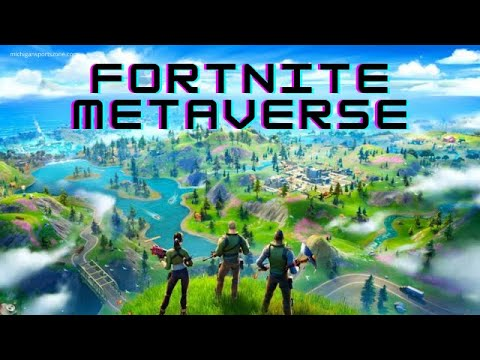
TWIG #180 Epic Games makes metaverse and crypto moves
Epic Games is strategically pivoting Fortnite toward a user-generated content (UGC) model, positioning the platform as a dominant force in the evolving metaverse landscape.
- Half of all player engagement within Fortnite is now driven by user-generated content rather than Epic-developed assets.
- Epic Games is transitioning Fortnite from a battle royale title into a user-generated content platform to ensure long-term growth over the next decade.
- The upcoming release of the Unreal Editor for Fortnite will provide creators with professional-grade Unreal Engine tools to build complex, multiplayer experiences.
One Frame in 'Halo Infinite'
The transition from the rigid, fixed-interval architecture of the Halo 5 engine to the flexible, job-based system in Halo Infinite represents a fundamental shift toward multi-platform scalability.
- 343 Industries transitioned from Halo 5's specialized thread architecture to a generic 'real-time worker thread' pool in Halo Infinite, allowing for more flexible execution across available CPU cores.
- To handle variable frame rates while maintaining physical simulation accuracy, the engine uses a 'twinning' interpolation system that projects character poses between the two most recent fixed-update game ticks.
- The engine employs a job-based graph system that dynamically constructs and submits fixed-update job graphs based on the current frame rate, allowing the game to perform multiple ticks per frame when necessary.

LIVE | Unreal 3D Environment with Daniel Martinger
Professional environment art requires a disciplined balance between technical proficiency and creative scoping.
- Professional environment art requires balancing high-fidelity artistic detail with the rigorous production speed demands of modern game development through time-boxing and realistic scoping.
- Mastering the foundational material types of wood, stone, and metal is a critical strategy for maintaining project momentum and preventing artist burnout.
- The core production workflow utilizes a manual, craft-based approach, specifically using Maya for blockouts, ZBrush for high-fidelity sculpting, and Substance Painter for texturing.
Increase Engagement, Stickiness & Revenue Opportunities with Real-Time Voice & Video
The integration of real-time voice and video into 3D gaming environments serves as a primary driver for increased user engagement, platform stickiness, and revenue growth.
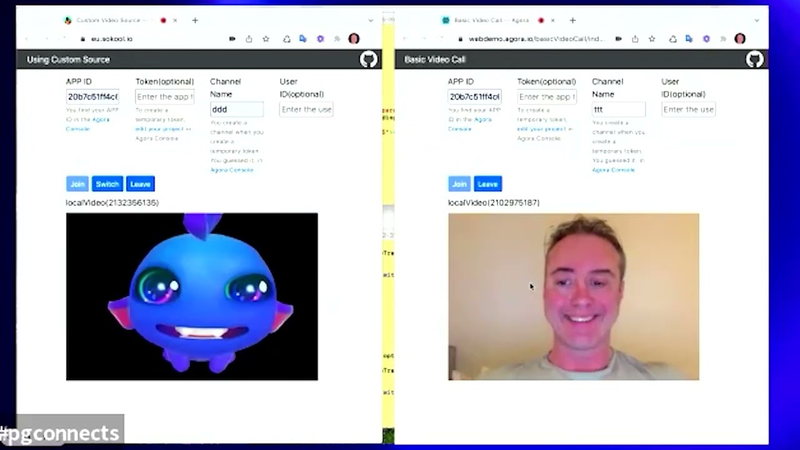
- Integrating real-time voice and video into 3D environments increases user engagement and platform stickiness by enabling features like spatial audio and photorealistic human video streaming.
- The infrastructure supports over one million concurrent users per session and currently handles 50 billion minutes of traffic per month across hundreds of mobile applications.
- Latency and packet loss are minimized by using AI-driven routing through a global network of selective forwarding unit routers, bypassing the inefficiencies of public internet paths.

Building an Expansive 'Star Wars' World in Mobile VR
The development of Star Wars: Tales from the Galaxy’s Edge for mobile virtual reality platforms, specifically the Oculus Quest and Quest 2, required extensive technical optimization to maintain high-fidelity interactive storytelling within constrained hardware environments.
- To overcome mobile CPU bottlenecks, the team implemented a custom object pooling system to eliminate hitches caused by spawning and despawning actors.
- Engineers optimized complex component hierarchies by replacing scene components with actor components and utilizing skeletal mesh detachment to allow animation graphs to function independently.
- The team developed a custom, automated pre-computed visibility system using navigation mesh geometry to limit cell placement, which significantly reduced computation time compared to standard occlusion methods.