Game Engines reports and market data
Documents

Multiplayer 101: Your Ideal Tech Stack
The evolving landscape of multiplayer gaming, accelerated by the global pandemic, has shifted player expectations toward high-quality, real-time, and cross-platform experiences.
- Modern multiplayer development requires a unified, cross-platform ecosystem that treats mobile, PC, and console as a single environment rather than siloed platforms.
- Mobile devices now dominate the gaming landscape, accounting for 71% of all gaming activity and representing a primary platform for 46% of MOBA players.
- The technical framework for multiplayer success relies on three pillars: scalable cross-platform creation, flexible connection infrastructure (matchmaking and server orchestration), and integrated social communication tools.

LIVE | Multiplayer Networking for Games with Glenn Fiedler
Successful multiplayer game development necessitates a multiplayer-first philosophy, where networking architecture is integrated into the design and production process from the outset rather than treated as an afterthought.
- Multiplayer networking must be integrated as a foundational architecture from the start of development, as retrofitting these capabilities onto single-player projects frequently leads to technical failure.
- Dedicated client-server architecture is the industry gold standard for high-fidelity, real-time interactivity, significantly outperforming peer-to-peer or decentralized systems in latency and synchronization.
- Blockchain technology is fundamentally ill-suited for large-scale multiplayer environments due to inherent scalability limitations and a lack of functional advantages over traditional, centralized databases.

Super Powering Technical Artists Using Deep Learning
Generative machine learning models are fundamentally transforming the role of technical artists by serving as high-speed prototyping engines.
- Deep learning models are currently functioning as high-speed prototyping engines, enabling rapid iteration on visual concepts, facial attributes, and environmental assets through techniques like style transfer and image-to-image translation.
- Reinforcement learning is replacing labor-intensive manual keyframing by allowing animation models to derive realistic movement and environmental reactions directly from motion capture data.
- Core development efficiencies are being realized through ESRGAN for texture remastering and the use of machine learning approximations to replace computationally expensive traditional physics simulations.
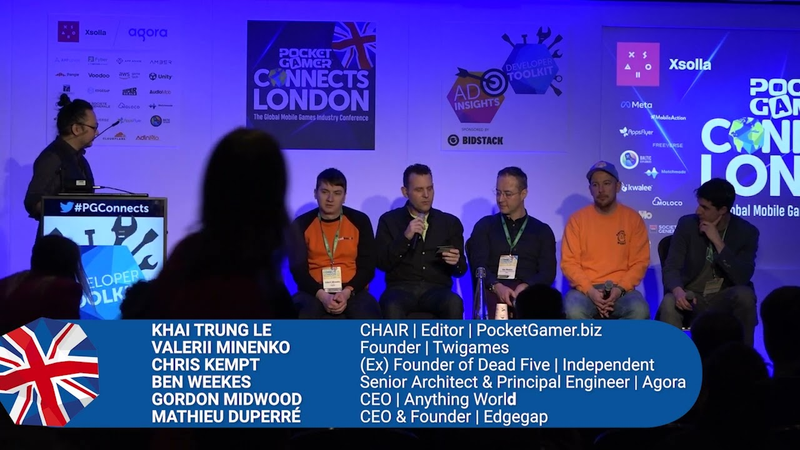
Panel: What Tools Should Game Developers Have at Hand at all Times?
Modern game development requires a strategic balance between standardized, high-performance technology and the flexibility to address unique project requirements.
- Prioritize mainstream engines like Unity and Unreal to ensure robust support and seamless integration, reserving proprietary solutions only for cases where standard software fails to meet specific technical benchmarks.
- Avoid premature over-engineering of content management systems to prevent the accumulation of technical debt and the loss of project agility.
- Streamline onboarding and troubleshooting by maintaining a lean, standardized toolkit that is accessible to both technical and creative staff.

Environmental and Motion Matched Interactions; 'Madden', 'FIFA' and Beyond
The integration of advanced animation systems within sports titles like Madden and FIFA represents a significant shift toward fluid, physically grounded character interactions.
- EA's multi-character interaction system (Interact) was extended to support environment and object interactions by using 'locators'—abstract points in the world—instead of relying solely on character-to-character matching.
- By using locators to represent predicted future positions of objects, such as a football in Madden, the system enables complex multi-character catches and interactions that anticipate movement.
- Integrating motion matching with the interaction system allows characters to navigate toward ideal interaction points, significantly reducing the need for visual warping or alignment during gameplay.

Make A Gorgeous 3D Game w/ NO MODELS OR TEXTURES (FAST!)
This tutorial outlines a streamlined workflow for developing a 3D narrative game in Unity without the need for external 3D modeling software or complex texture assets.
- Developers can create professional-looking 3D narrative prototypes in under one hour by utilizing Unity’s native primitive shapes instead of external 3D models.
- Atmospheric cohesion is achieved by prioritizing lighting, fog, and consistent color palettes over high-fidelity textures or complex assets.
- Unity’s built-in terrain tools, cylinders, and spheres serve as effective stand-ins for environmental assets like trees and rocks.
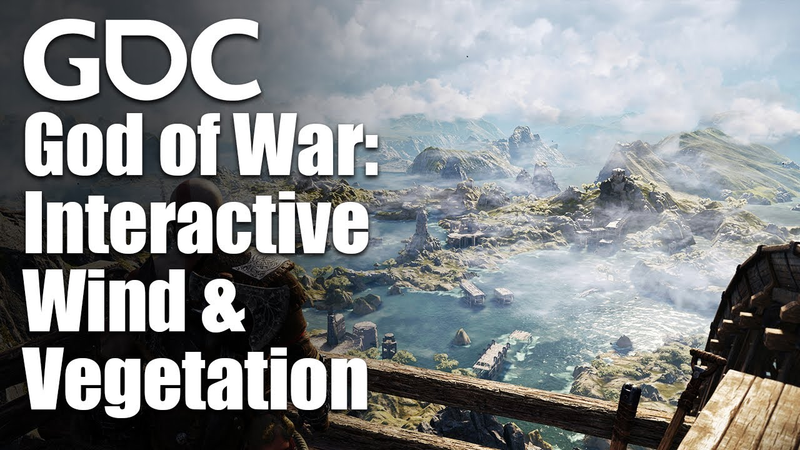
Interactive Wind and Vegetation in 'God of War'
The development of God of War prioritized deep environmental immersion through a sophisticated, interactive wind and vegetation system.
- Sony Santa Monica implemented a spatial wind system for God of War that uses a 3D noise texture filled with random vectors, allowing wind to vary dynamically across both time and space rather than relying on a single global vector.
- To prevent visual popping when resetting noise textures, the team utilized a flow-map approach that fades between two textures phased out of sync, using logarithmic binning based on powers of two to keep wind speeds synchronized.
- The studio adopted the Beaufort scale, reducing its 12 wind categories to five standardized settings to ensure consistent environmental behavior and provide artists with a reliable reference for authoring vegetation models.

Visual Effects Bootcamp: Bringing Feature Film Effects to Real Time VR: Part 2
This presentation explores technical strategies for achieving high-fidelity, feature-film-quality visual effects within real-time virtual reality (VR) environments.
- Achieving feature-film visual fidelity in VR at 90 frames per second requires shifting from geometry-heavy assets to mathematical optimization through advanced shader programming.
- Complex visual effects like hyperspace travel and CRT-style glitching can be simulated using layered shader parameters and noise functions rather than traditional high-poly assets.
- Binary world transitions and scene changes can be executed seamlessly by using cell noise as a threshold to drive object transformation, eliminating the need for traditional camera cuts.

Panel: War Stories on the Business of Multiplayer Games
The evolution of multiplayer gaming reveals that while technical infrastructure has transitioned from proprietary hardware to cloud-based solutions, the foundational challenges of community management and player behavior remain constant.
- Prioritize human-centric design and transparent community communication over technological novelty, as these remain the primary drivers of long-term player retention and viability.
- Mitigate development risk by launching core systems at 20 percent polish to validate design assumptions before committing full resources to feature development.
- Integrate monetization models directly into the initial design phase rather than retrofitting them onto existing frameworks to ensure sustainable server liquidity and growth.
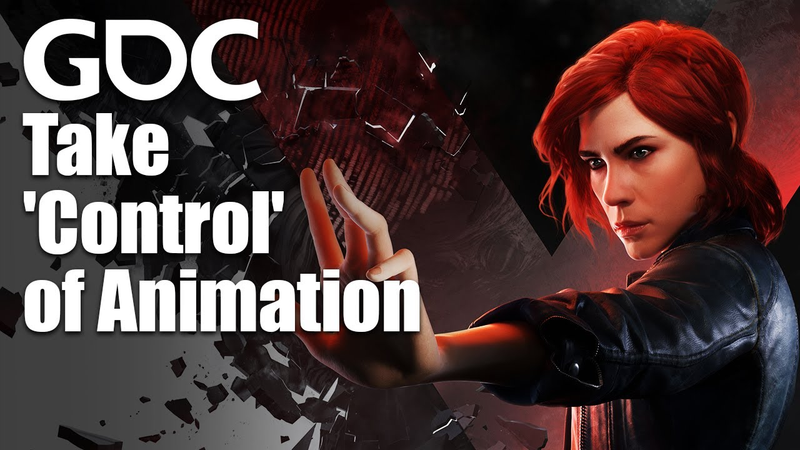
Take 'Control' of Animation
The development of the animation system for Control centered on the necessity of replacing discontinued middleware with a custom, high-performance engine capable of supporting fluid, gameplay-driven movement.
- The development team replaced discontinued middleware with a custom, data-driven animation engine based on motion matching to support fluid, gameplay-responsive movement.
- Implementing an 'ignore tags' system optimized performance by reducing the animation frame search space by 80 percent.
- The team mitigated common motion-matching artifacts like foot sliding by using a curated data approach featuring precise acceleration curves and a strategic category-tagging system.
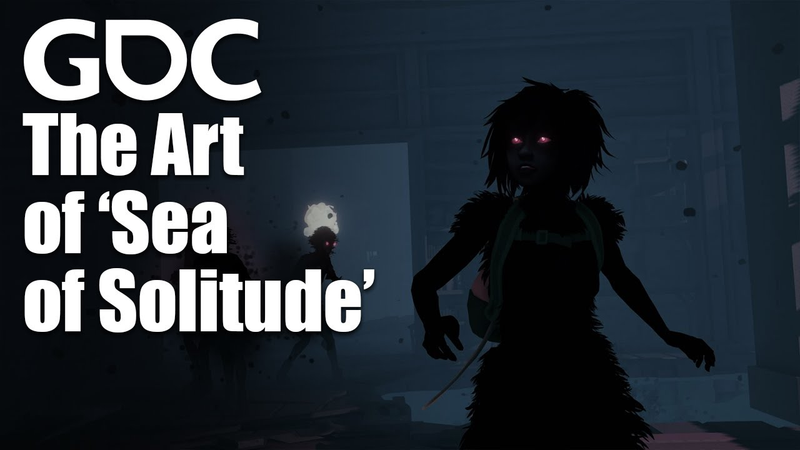
Paint It Black: The Art of 'Sea of Solitude'
Sea of Solitude functions as a deeply personal exploration of human loneliness and mental health, utilizing a surreal, metaphorical landscape to externalize the protagonist’s internal struggles.
- The game's core design philosophy centers on 'turning the inside out,' where the protagonist's internal emotional state directly dictates environmental factors like water levels and weather patterns.
- To achieve a unique visual style, the team implemented custom Unity tools that allowed for precise control over shadow and ambient occlusion coloring, preventing the environment from appearing blunt or flat.
- The developers manipulated the specular component of materials by applying subtle color gradients, creating a dynamic, living world that reacts to player movement without being overtly noticeable.

Real-Time Cloth Solutions on 'Marvel's Spider-Man'
Real-time cloth simulation in Marvel’s Spider-Man serves as a critical component for achieving dynamic, responsive character movement within an open-world environment.
- Insomniac Games used a hybrid cloth solution for 'Marvel's Spider-Man' that combined real-time Havok physics simulation with corrective blend shapes to achieve high-fidelity movement while maintaining performance.
- The team addressed the lack of cloth-to-cloth collision in the engine by using strategically placed collision capsules and limiting cloth complexity to prevent clipping issues.
- To achieve specific visual targets, the team used a three-tier approach: simulated blend shapes for initial poses, real-time cloth for dynamic follow-through, and additional corrective blend shapes for final polish.