Game Development reports and market data
Documents
The Challenges of Finishing a Game with Drew Smith | 364
The modern game development landscape is currently defined by a profound tension between creative ambition and the structural realities of production.
- The shift to remote-first operations has eroded organic mentorship and cross-departmental collaboration, creating a significant barrier to professional development and cultural cohesion.
- A persistent disconnect between corporate leadership and development teams leads to the consistent underestimation of the labor required for technical and creative tasks, resulting in operational inefficiencies.
- The industry's reliance on safe, trend-chasing design patterns and live-service models often fails to match the player engagement achieved by titles focused on polished, intentional design.

Webinar: Make Your Game Art Look 10X Better With This Trick!
Achieving professional-grade game art requires a disciplined application of the Fabulous Six framework, which centers on composition, depth, scale, color theory, edge detailing, and lighting.
- Professional-grade game art relies on the 'Fabulous Six' framework: composition, depth, scale, color theory, edge detailing, and lighting.
- Artists should validate compositions in simplified, abstract forms before adding intricate details to ensure structural integrity and visual clarity.
- Depth and spatial awareness are achieved by grouping elements rather than uniform distribution, utilizing atmospheric fog, and incorporating size variation.
What A $1,000,000 Game Looks Like In Unity (w/ Tom Francis)
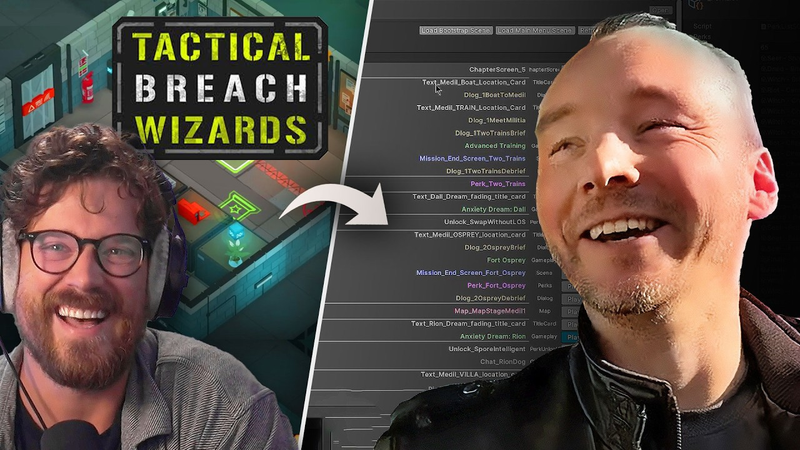
The development of the indie title Tactical Breach Wizards serves as a case study for managing complex, long-form game projects within the Unity engine.
- Tactical Breach Wizards utilizes a custom-built, data-driven architecture where game stages are managed via ScriptableObjects that pair gameplay data with specific Unity scenes.
- The development team built a custom level editor that allows for rapid iteration, enabling designers to modify level geometry and enemy placement without needing to manually adjust art assets or scene-specific clutter.
- The project avoids procedural generation in favor of hand-designed levels to ensure that gameplay mechanics align with specific narrative beats and character progression requirements.

The Indiana Jones game developer has a fight club in its basement
MachineGames, the Swedish developer behind the Wolfenstein series and Indiana Jones and the Great Circle, operates with a distinct studio culture defined by a commitment to immersive, first-person storytelling and a collaborative, hobbyist-driven environment.
- MachineGames is developing 'Indiana Jones and the Great Circle' using a hybrid perspective model that blends first-person immersion with third-person transitions to maintain character visibility.
- The studio’s strategic development for the 'Indiana Jones' title is shaped by the Game Pass ecosystem, prioritizing strong onboarding and accessibility to serve a broad, diverse player base.
- MachineGames utilizes DLC as a core operational tool to manage production workflows, allowing teams to maintain momentum and refine mechanics after the primary project concludes.

From Struggling Startup to Gaming Giant: Bing Gordon's EA Odyssey
Electronic Arts emerged in 1982 with the ambitious thesis that video games would eventually eclipse the music and film industries in cultural and economic scale.
- Electronic Arts reached an IPO in 1989, seven years after its 1982 founding, achieving $70 million in annual revenue during a period of rapid industry growth.
- Founders must prioritize mission-driven hiring, as employees who are not aligned with the core mission are likely to leave when the company faces inevitable scaling challenges.
- Product-market fit is the primary responsibility of a founder, and it should be defined by a computer-falsifiable metric rather than anecdotal evidence.
Game Dev Recap: Should You Make an MMO?
Developing a Massively Multiplayer Online (MMO) game as an independent developer is a high-risk, high-reward endeavor that requires a fundamental shift in design philosophy.
- MMOs offer a path to consistent, predictable cash flow that breaks the cycle of constant funding rounds, as evidenced by CipSoft’s 'Tibia,' which has been operating since 1997 and currently generates $25 million in revenue with $10 million in profit.
- Persistent worlds are more resilient than session-based multiplayer games because they do not suffer from a 'death spiral' when player counts drop; the game remains playable for individuals even with a smaller active population.
- Developing an MMO requires a 'funnel-based' design mindset, where developers continuously test and optimize user acquisition, retention, and progression metrics—often through early advertising—long before the game is fully released.
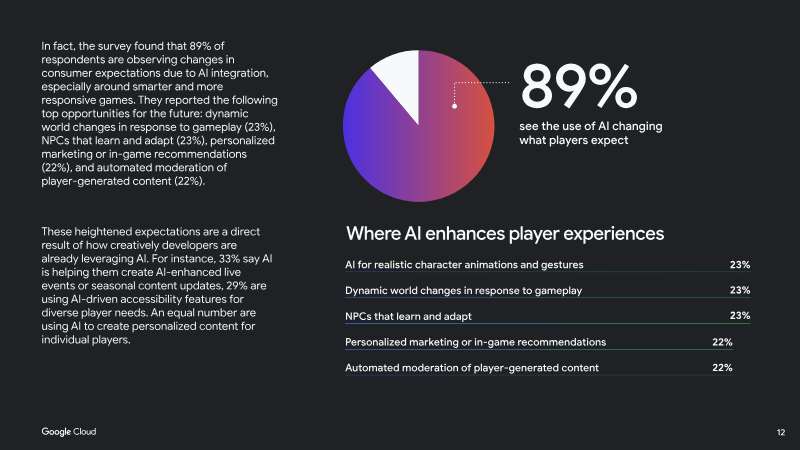

AI Meets the Games Industry: How Developers Are Using Generative AI to Create a New Generation of Games
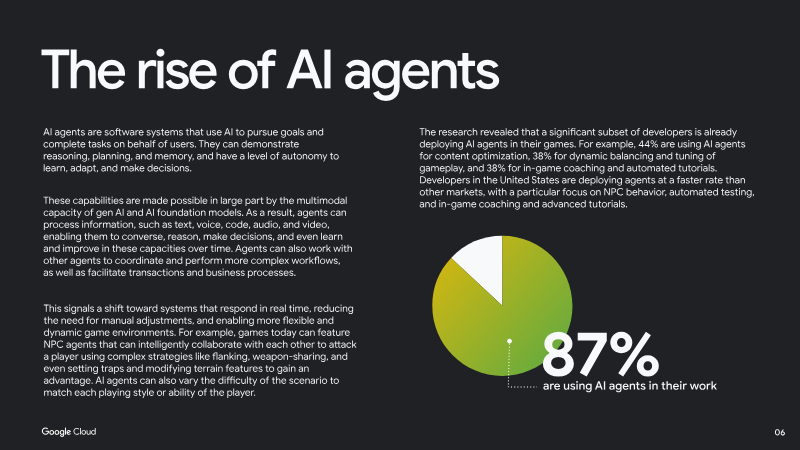
Generative artificial intelligence is fundamentally reshaping the video game industry, serving as a catalyst for innovation, workflow efficiency, and the democratization of game development.
- 97% of industry professionals believe generative AI is fundamentally transforming the video game sector, with 90% of developers already integrating these tools into their professional workflows.
- Generative AI is primarily utilized to automate repetitive tasks—including code generation, localization, and playtesting—to reduce development cycles and prioritize creative iteration.
- 94% of developers expect the adoption of AI to lower long-term production costs, though studios are currently prioritizing staff upskilling and small-scale pilot programs to manage the transition.

Tom Francis: How He Sold 1,000,000 Copies Of His Games | Ep. #052
Successful game development relies on an iterative, experimental process that prioritizes human-led design over rigid planning or data-driven optimization.
- Achieve financial and operational stability by utilizing self-funded business models and small, agile teams rather than chasing speculative market trends.
- Prioritize an iterative, experimental design process that establishes a solid core structure early to facilitate effective testing.
- Utilize large-scale public beta testing with thousands of participants to gather reliable quantitative and qualitative data, avoiding the risks associated with small, anomalous sample sizes.
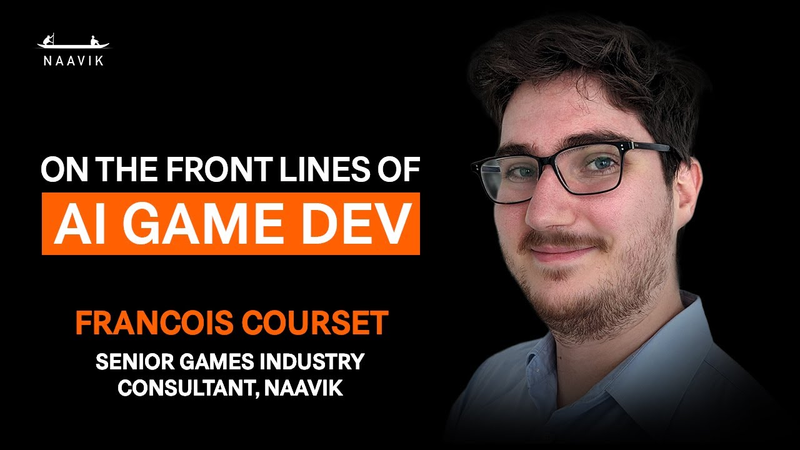
On the Front Lines of AI Game Dev
The integration of artificial intelligence into game development has transitioned from speculative experimentation to a critical operational necessity.
- Studios face significant pressure to adopt AI to optimize production costs and remain competitive, as rivals are already leveraging these tools to deliver high-quality content at a fraction of traditional costs.
- Localization and voice generation are currently the most mature AI applications in game development, with companies like Alconost and tools like 11Labs already providing production-ready solutions.
- The industry is shifting from experimental 'novelty' use cases toward integrating AI into specific pipeline tasks, such as automated testing and workflow efficiency, to allow teams to focus on complex, non-automatable creative work.
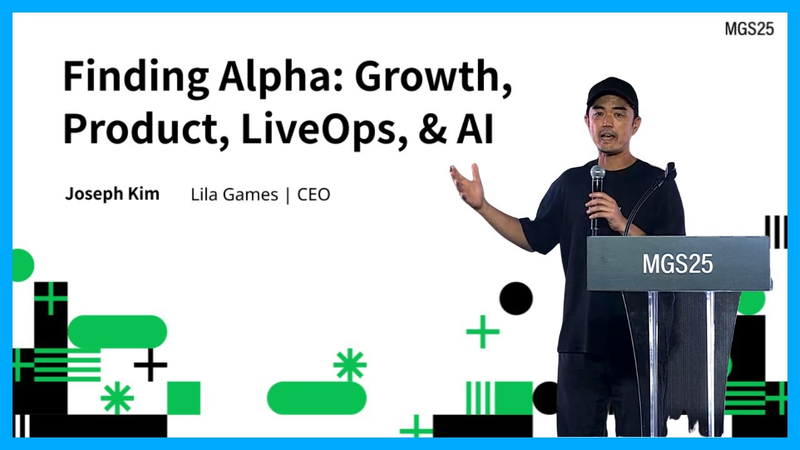
Finding Alpha: How to Find Your Company's Secret Advantage!
In an era of increasing market uncertainty and intense competition, companies must move beyond mere tactical execution to identify and leverage "alpha"—the specific, company-level excess returns that differentiate a business from its industry peers.
- Companies must transition from micro-level operational tasks to macro-level strategic adaptation to generate 'alpha,' defined as company-level excess returns that differentiate a business from its peers.
- Success in the current mobile gaming market requires aligning internal structures and product philosophies with macro shifts, including the end of zero-interest-rate-fueled excess and the rise of the attention economy.
- Generating competitive advantage requires identifying and fully committing to high-leverage opportunities rather than hedging or pursuing half-measures.

TWIG #346: EU Wants to Ban Free-to-Play as Supercell Introduces a New Boss
The global gaming industry is currently navigating a period of intense regulatory and structural transformation.
- Proposed EU consumer protection regulations, including mandatory real-world currency displays and transaction warnings, threaten the free-to-play business model with potential revenue losses of up to 25% for major publishers.
- Industry leaders are actively mobilizing legal and lobbying efforts to counter the economic impact of these impending European regulatory changes on the market and its labor force.
- Gamescom 2024 highlighted a significant decline in venture capital for large-scale PC and console projects, signaling a shift toward more cautious spending and fiscal discipline.
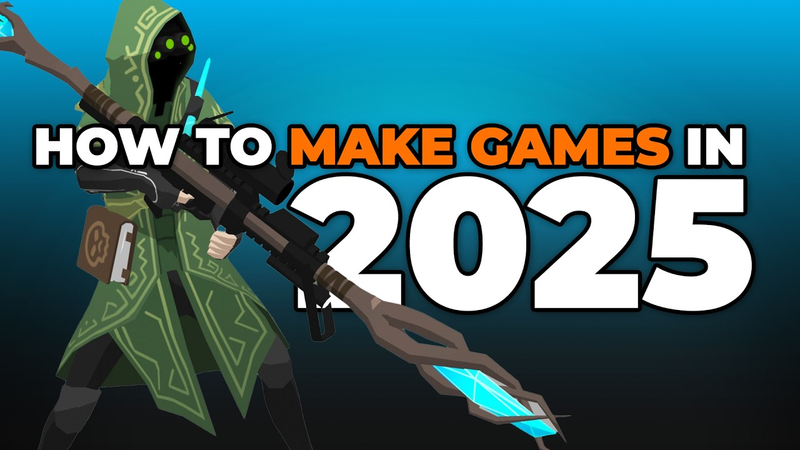
Want To Make Games? Listen To Advice From A 10 Year Veteran...
The primary objective for aspiring game developers in 2025 is to prioritize the completion of small, tangible projects to validate their skills and market interest.
- Aspiring developers should prioritize finishing a small, complete project to prove their capability, as studios and collaborators value the practical experience of navigating a game from start to finish.
- Testing a game concept with friends or a local circle is a vital validation step; if the idea fails to generate genuine enthusiasm, it is often better to pivot rather than continue development.
- While a clear, high-concept pitch is helpful, execution, atmosphere, and 'vibes' can be more important for commercial success than a unique mechanical loop, as seen in games like Inscription and Gone Home.