Game Development reports and market data
Documents
The Future of MMOs - Why Are There So Many WoW Clones? - Extra Credits
The modern massively multiplayer online (MMO) market suffers from a cycle of failure driven by high development costs and a misguided reliance on cloning the industry leader, World of Warcraft.
- The $60 million to $100 million development costs for modern MMOs force studios to prioritize risk-averse, proven formulas over innovation to satisfy investors.
- The market is saturated because MMOs are time-intensive, perpetual experiences that lock players into established social bonds, making it difficult for new titles to displace incumbents like World of Warcraft.
- Developers should decouple the 'MMO' label from the RPG genre to create lower-budget, genre-specific titles like racing or strategy games that utilize shared hub spaces instead of massive 3D worlds.

Bad Writing - Why Most Games Tell Bad Stories - Extra Credits
The primary thesis regarding the perceived poor quality of video game writing is that the industry conflates narrative with dialogue.
- The industry's primary failure in storytelling stems from conflating narrative with dialogue, ignoring that true game narrative is an integration of mechanics, art, level design, and UI.
- Narrative must be treated as a core architectural component from the start of development rather than an afterthought used to bridge gaps between gameplay segments.
- Developmental constraints, such as bringing writers in late to reconcile scripts with pre-existing mechanics or technical limitations, frequently undermine narrative cohesion.
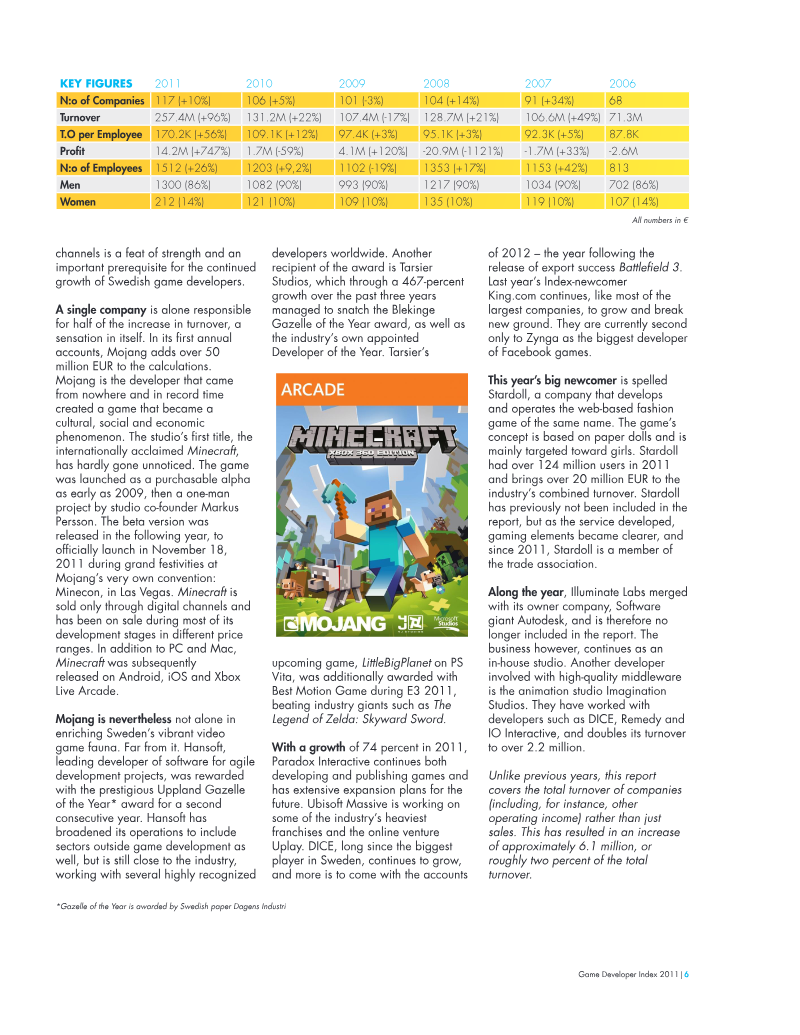
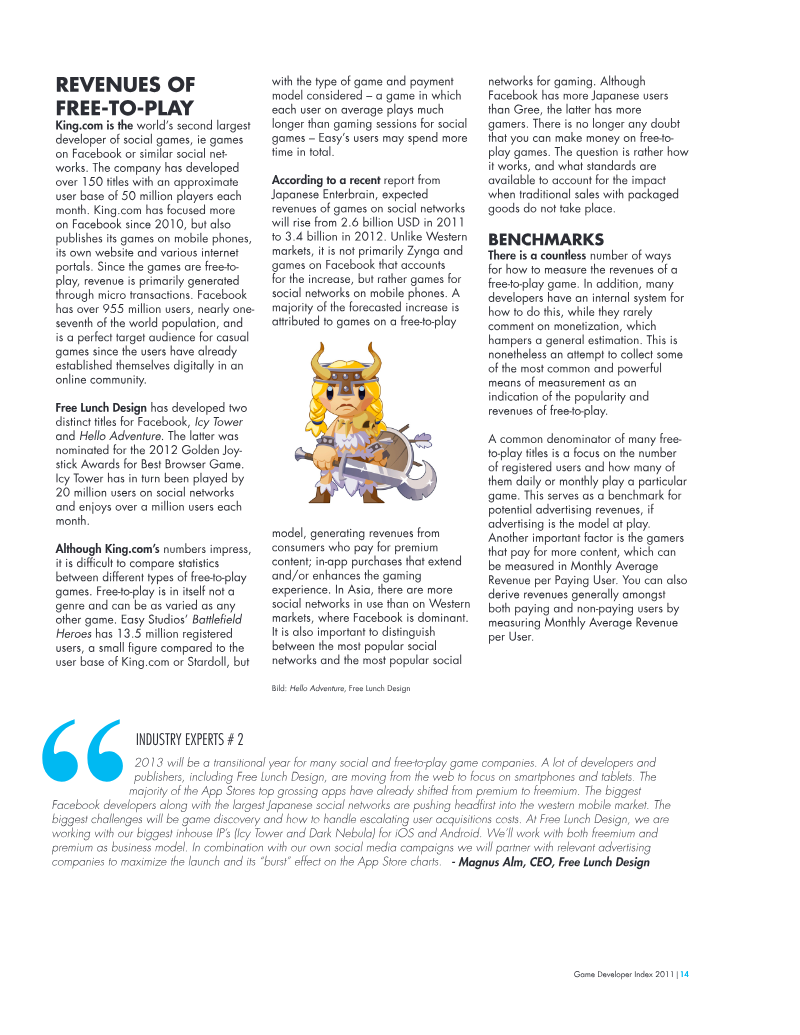
Game Developer Index: Sweden 2011
The Swedish game industry reached a pivotal milestone in 2011, characterized by record-breaking financial performance and a fundamental transition in business models.
- The Swedish game industry reached a turnover of 257 million EUR in 2011, reflecting a nearly 30 percent compound annual growth rate over the previous five years.
- The workforce grew by 26 percent to 1,512 employees across 257 active companies, anchored by major players like DICE and Mojang.
- Market concentration remains high, with the five largest firms generating 60 percent of the industry's total turnover.
Högskolepoäng som XP: Synlig och osynlig kunskap inom spelutveckling hos akademi och industri
The Swedish game industry faces a persistent misalignment between academic curricula and the rapidly evolving technical and creative requirements of professional game development.
- The Swedish game industry suffers from a persistent misalignment between formal academic curricula and the practical, project-based skill sets required by professional studios.
- Industry stakeholders prioritize portfolio quality and the proven ability to ship products over formal degree structures, leading to the perception that academic training is secondary to workplace experience.
- A proposed solution involves conceptualizing academic credits as 'XP' to validate both formal education and informal, on-the-job knowledge through gamified, flexible assessment platforms.
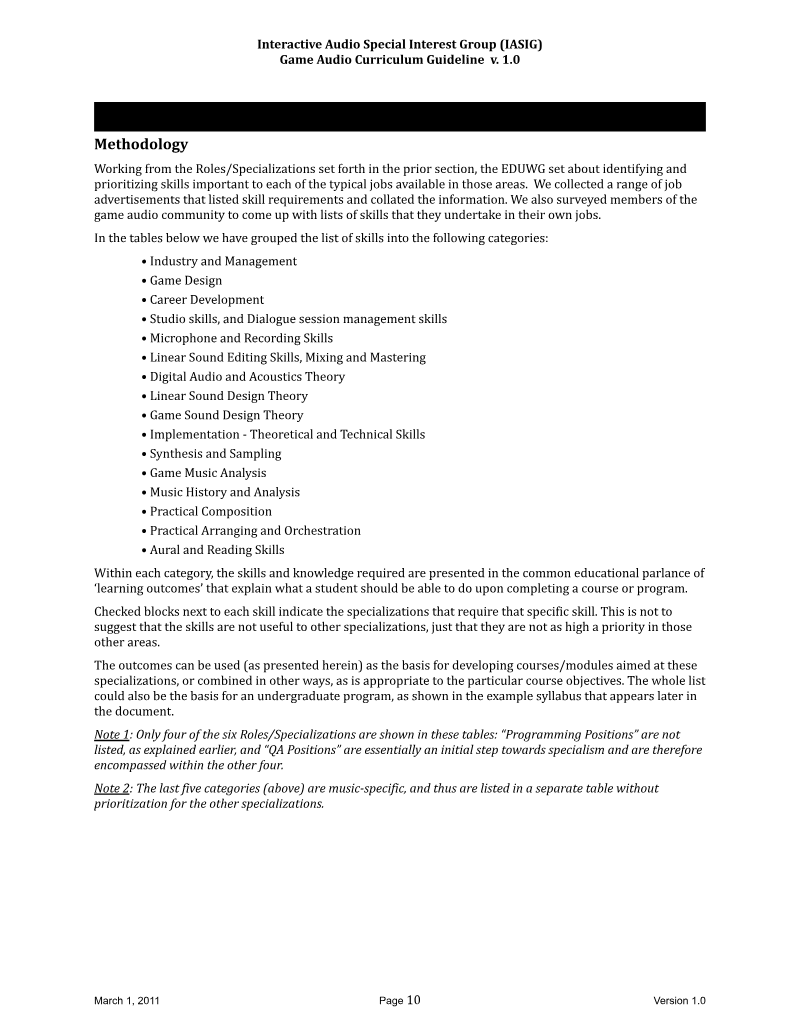
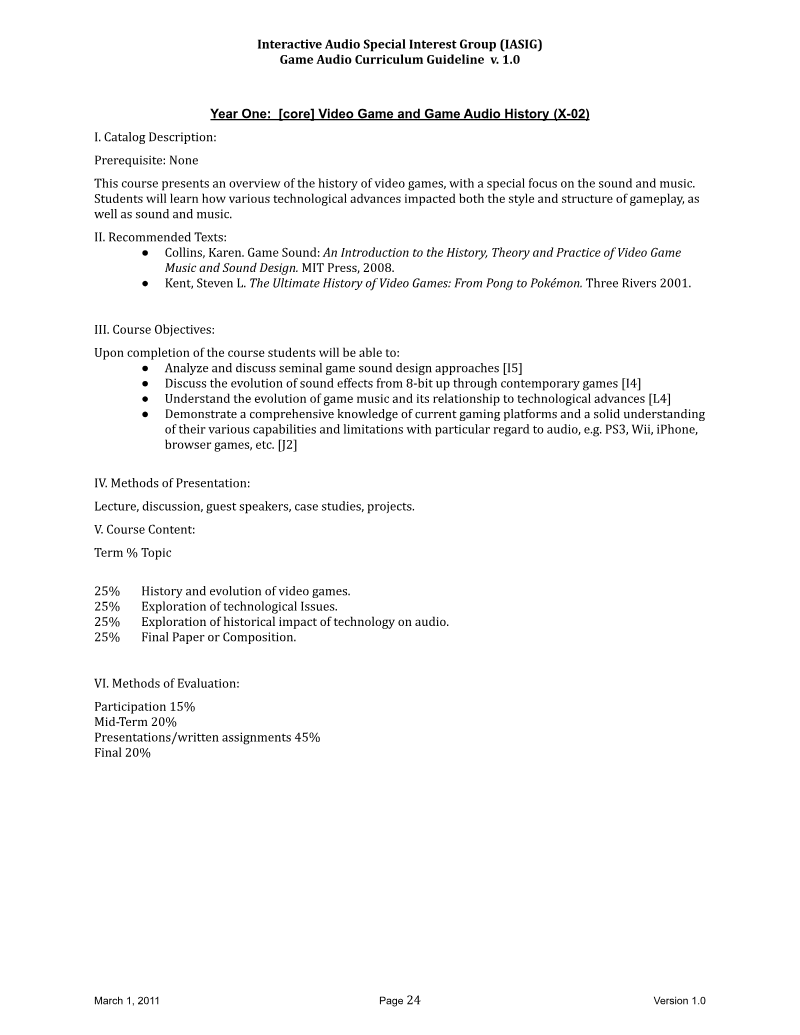

Game Audio Curriculum Guideline
The game audio industry faces a persistent talent gap caused by the unique intersection of traditional linear media production and complex, non-linear technical implementation.
- The game audio industry suffers from a persistent talent gap caused by the difficulty of bridging traditional linear media production with complex, non-linear technical implementation.
- A standardized 120-credit, four-year undergraduate curriculum framework has been proposed to provide a consistent roadmap for higher education institutions in the United States.
- The curriculum prioritizes a constructivist pedagogical approach that emphasizes core principles and adaptability over software-specific training to ensure graduates can navigate evolving technologies.
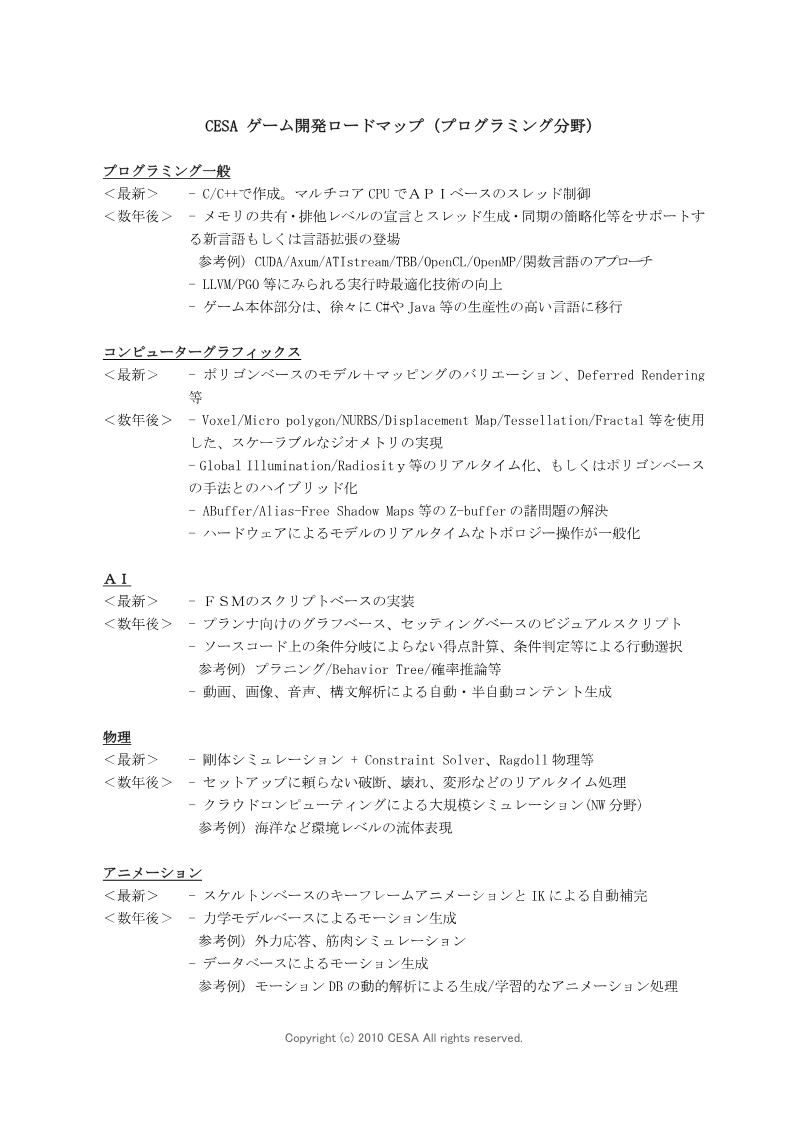
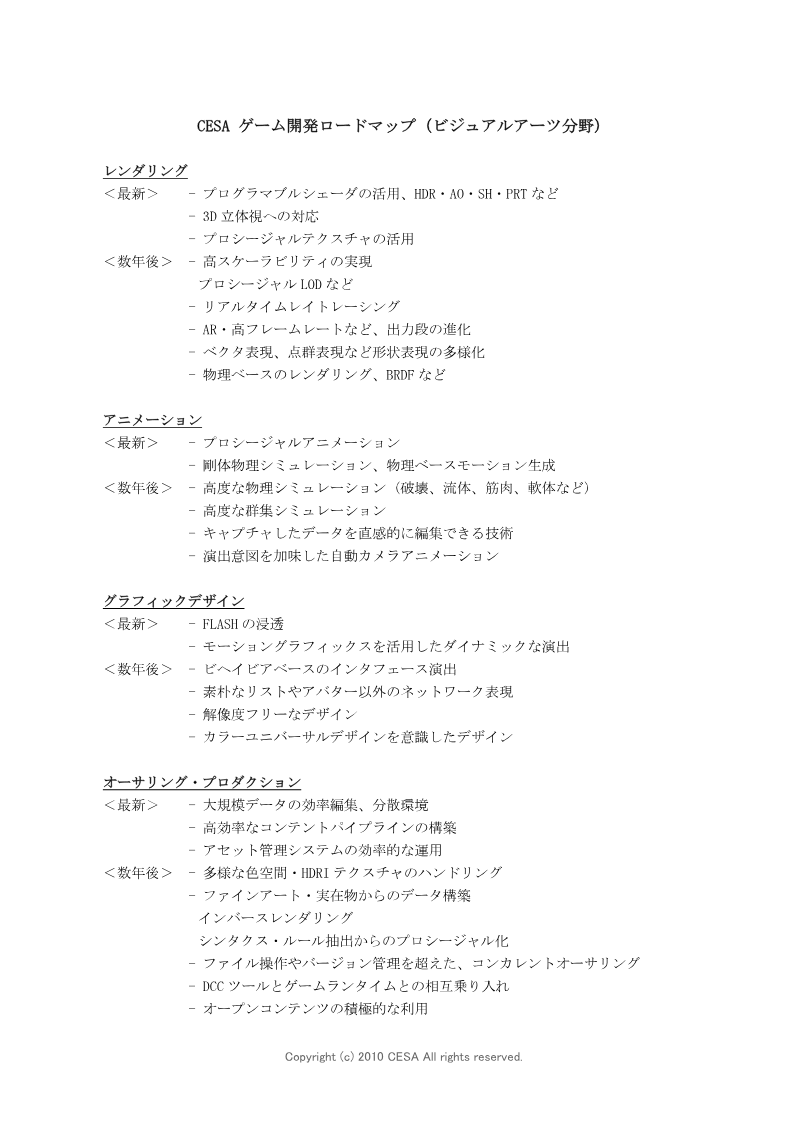
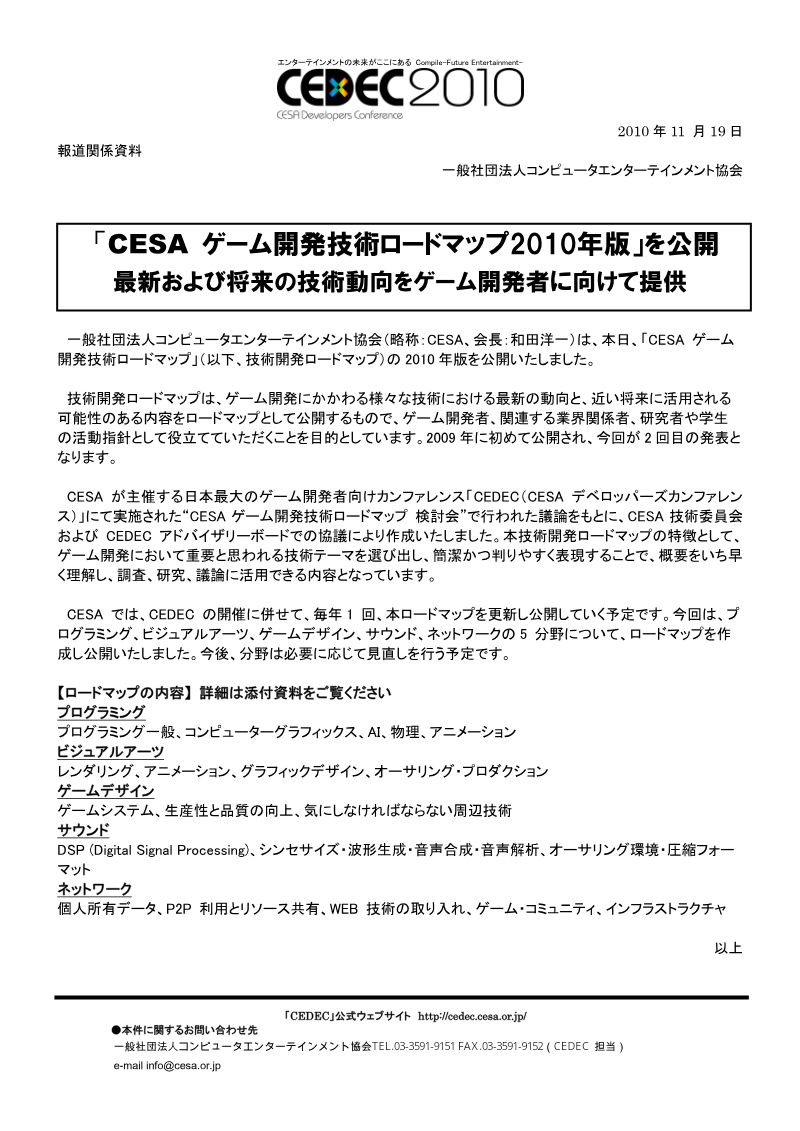
CESA Game Development Technology Roadmap: 2010 Edition
The CESA Game Development Technology Roadmap 2010 serves as a strategic guide for game developers, researchers, and industry stakeholders to navigate current and emerging technical trends.
- The industry is shifting toward increased automation, cloud integration, and cross-platform scalability to support device-agnostic gaming environments.
- Programming and visual arts workflows are transitioning from traditional C/C++ toward higher-level languages and the integration of real-time physics, global illumination, and procedural generation.
- Game design is increasingly utilizing data-driven insights, psychological modeling, and the standardization of motion-control interfaces.
Game Developer Index 2010: Sweden
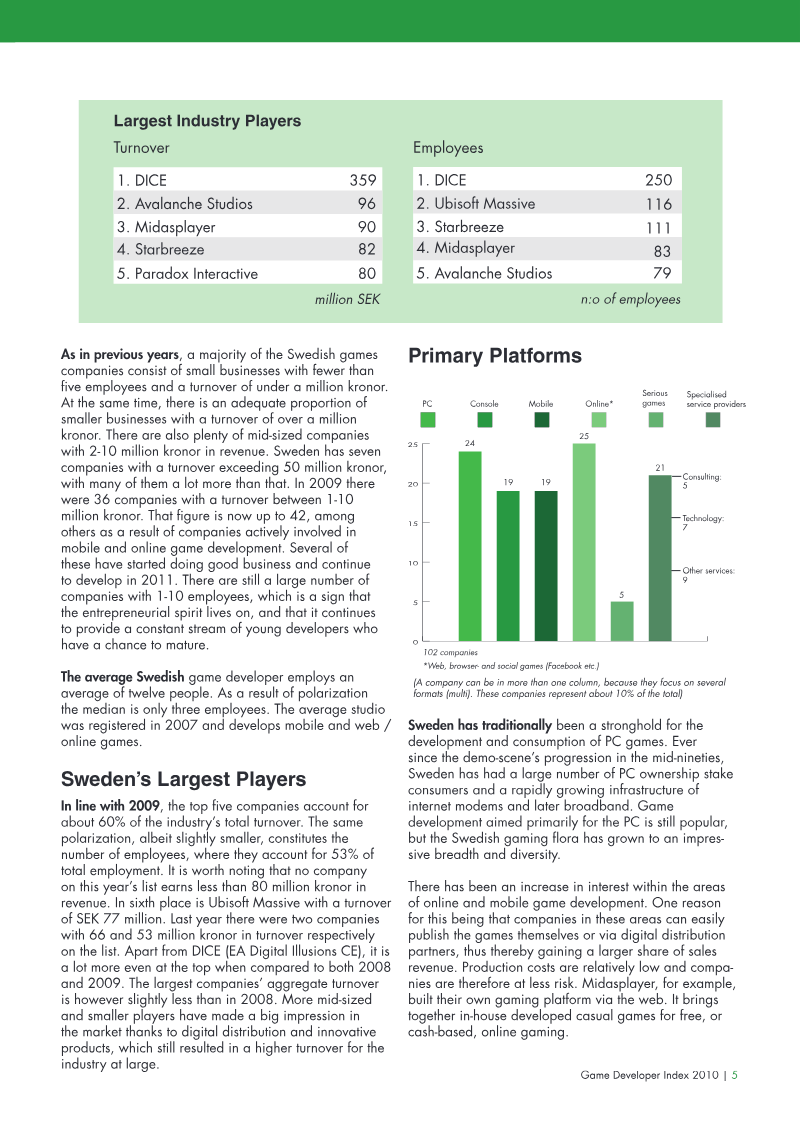
The Swedish game industry entered a period of significant expansion in 2010, characterized by a record turnover of 1.181 billion SEK and a 9.2 percent increase in total employment.
- The Swedish game industry reached a record turnover of 1.181 billion SEK in 2010, supported by a 9.2 percent increase in total employment.
- Market concentration remains high, with the five largest companies accounting for 60 percent of the industry's total revenue.
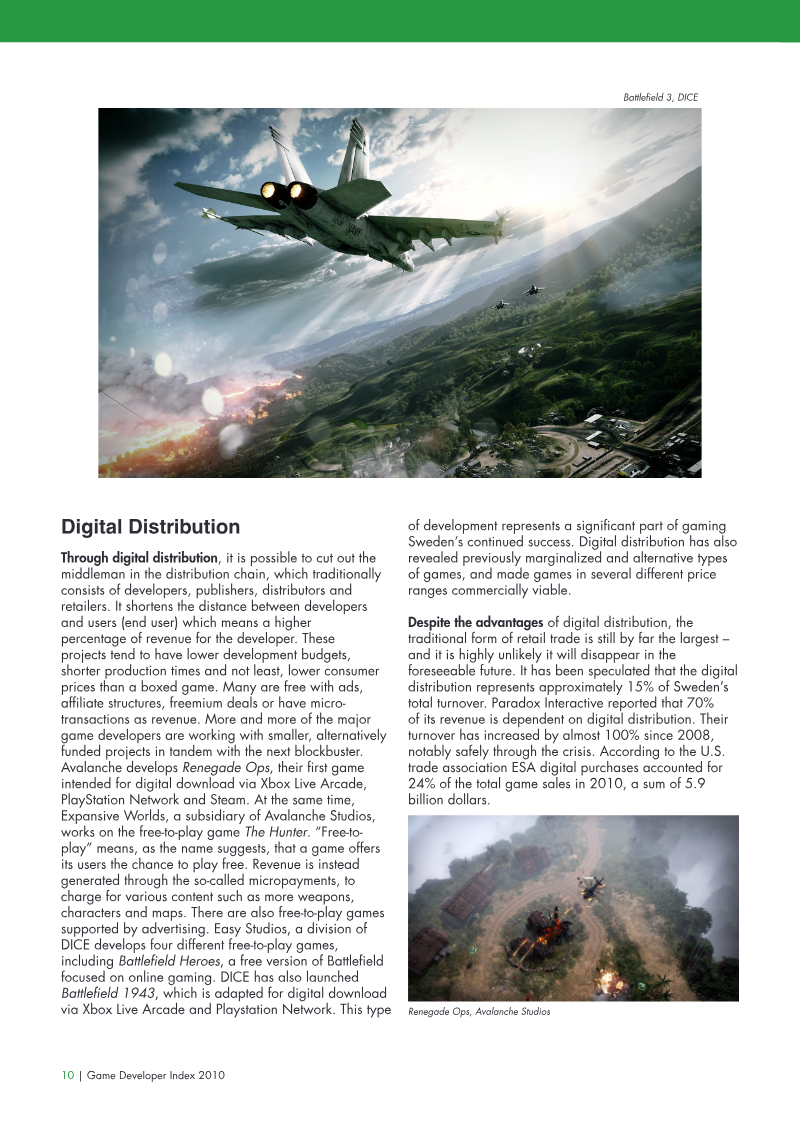
- The sector is successfully pivoting toward digital distribution and mobile platforms, utilizing diverse monetization strategies like free-to-play, freemium, and ad-funded models.


Capcom Annual Report 2010
The 2010 fiscal year represented a period of significant financial contraction and strategic realignment for Capcom.
- Capcom experienced a significant financial downturn in fiscal year 2010, with net sales dropping 27.3% to 66.8 billion yen and net income falling by 73.1%.
- The company is pivoting to a 'Single Content, Multiple Usage' strategy to leverage core IPs like Resident Evil, Street Fighter, and Monster Hunter across consoles, mobile, and online platforms.
- Management implemented a new matrix management structure and separated CEO and COO roles to improve operational accountability and decision-making speed.

Ubisoft Annual Report 2009
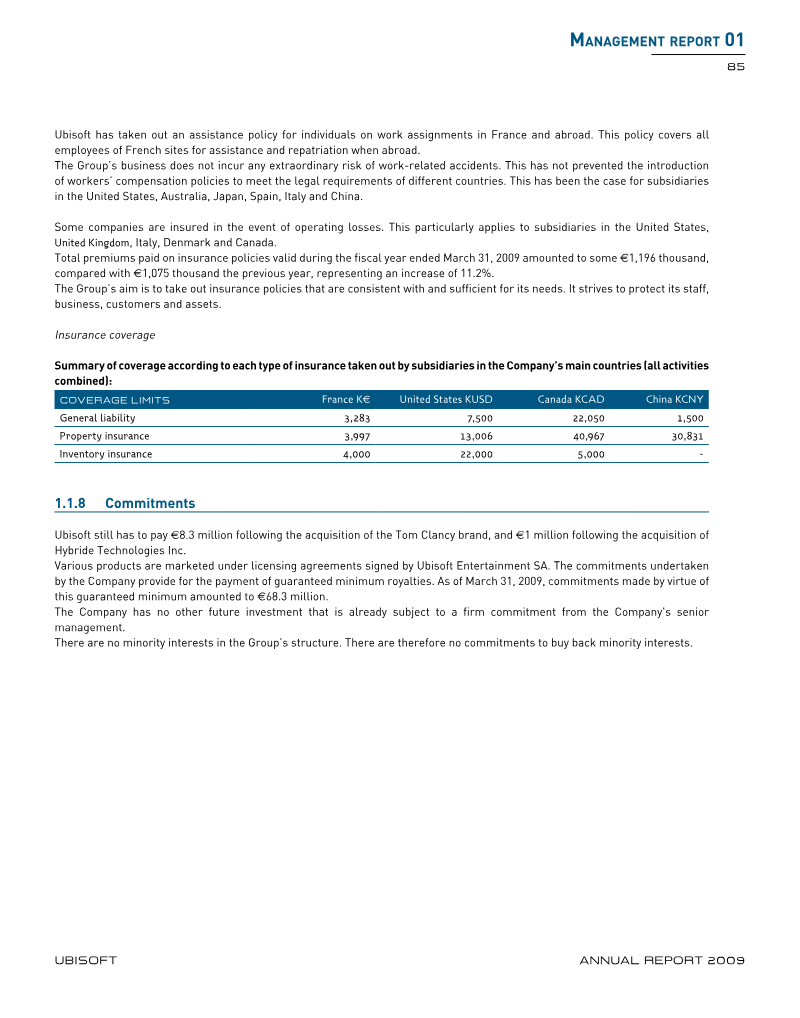
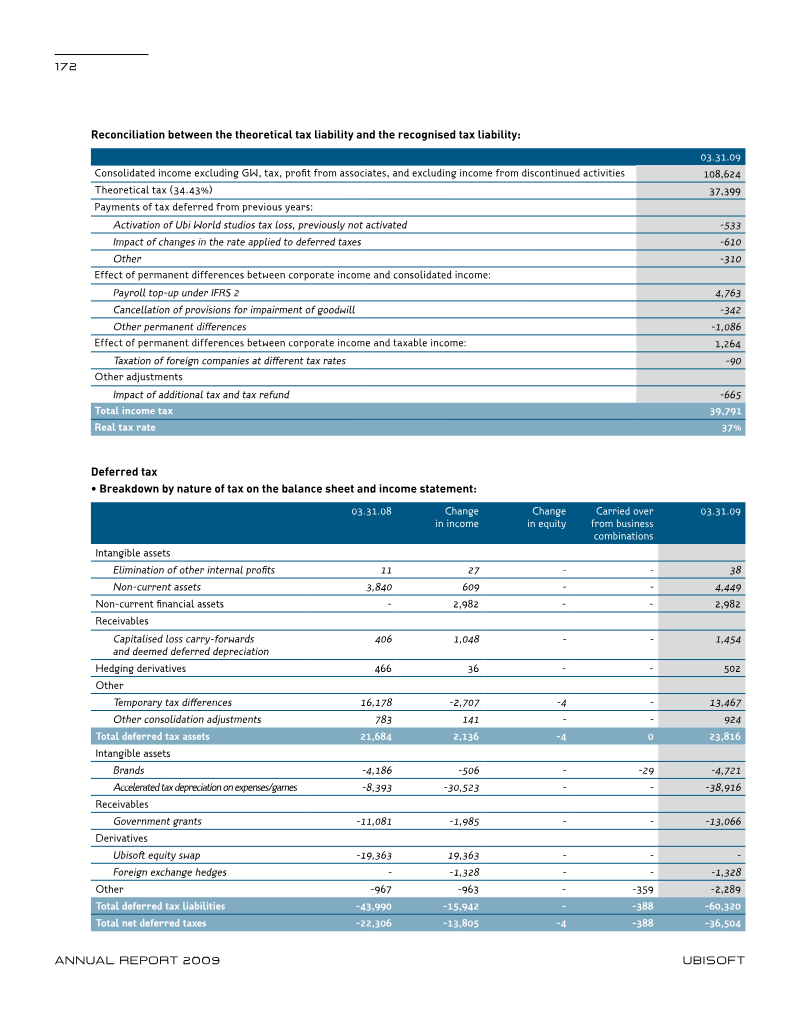
The 2009 Ubisoft Annual Report details a period of significant expansion and strategic transformation for the company during the 2008-2009 fiscal year.
- Ubisoft surpassed €1 billion in annual revenue for the first time in the 2008-2009 fiscal year, achieving €1.06 billion in sales, a 14% increase over the previous period.
- Net income declined significantly to €68.8 million from €109.8 million, driven by a strategic shift toward lower-margin casual titles and increased marketing expenditures.
- The company expanded its global workforce to 5,765 employees across 28 countries, supported by the strategic acquisitions of Massive Entertainment and Hybride Technologies.
Game Developer Index 2009: Sweden
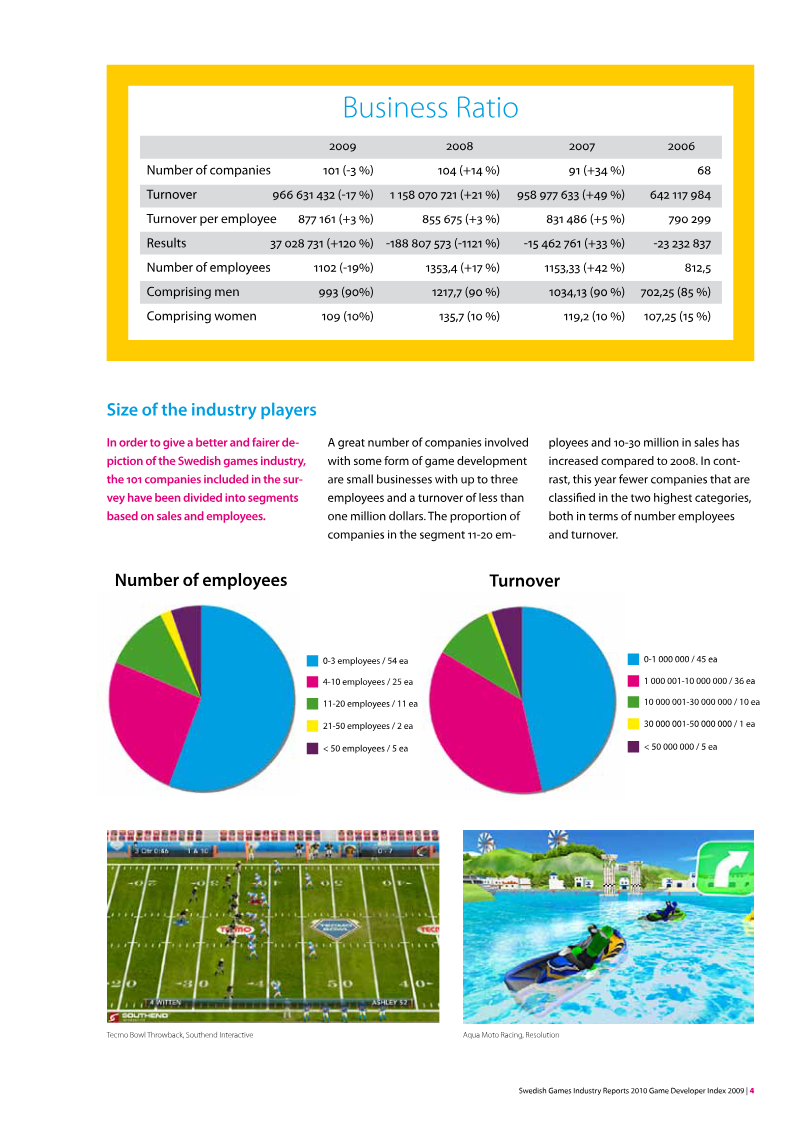
The Game Developer Index 2009 provides a comprehensive financial and operational overview of the Swedish game development industry.
- The Swedish game industry experienced a 19 percent decline in employment and a 17 percent decrease in total turnover during 2009 due to the broader economic downturn.
- The sector is highly concentrated, with the five largest companies accounting for over 60 percent of both total industry employment and total turnover.
- Despite the overall revenue decline, the industry improved its operational efficiency, marking the third consecutive year of rising turnover per employee.
CESA Game Development Technology Roadmap: 2009
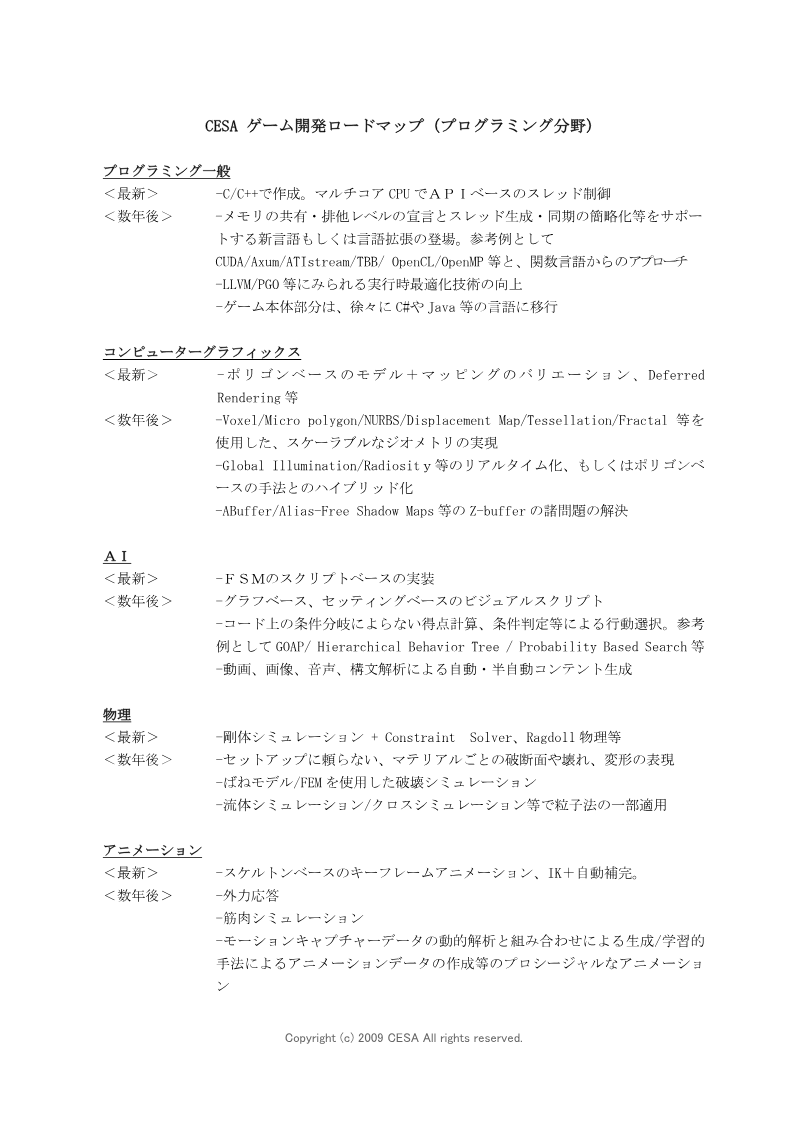
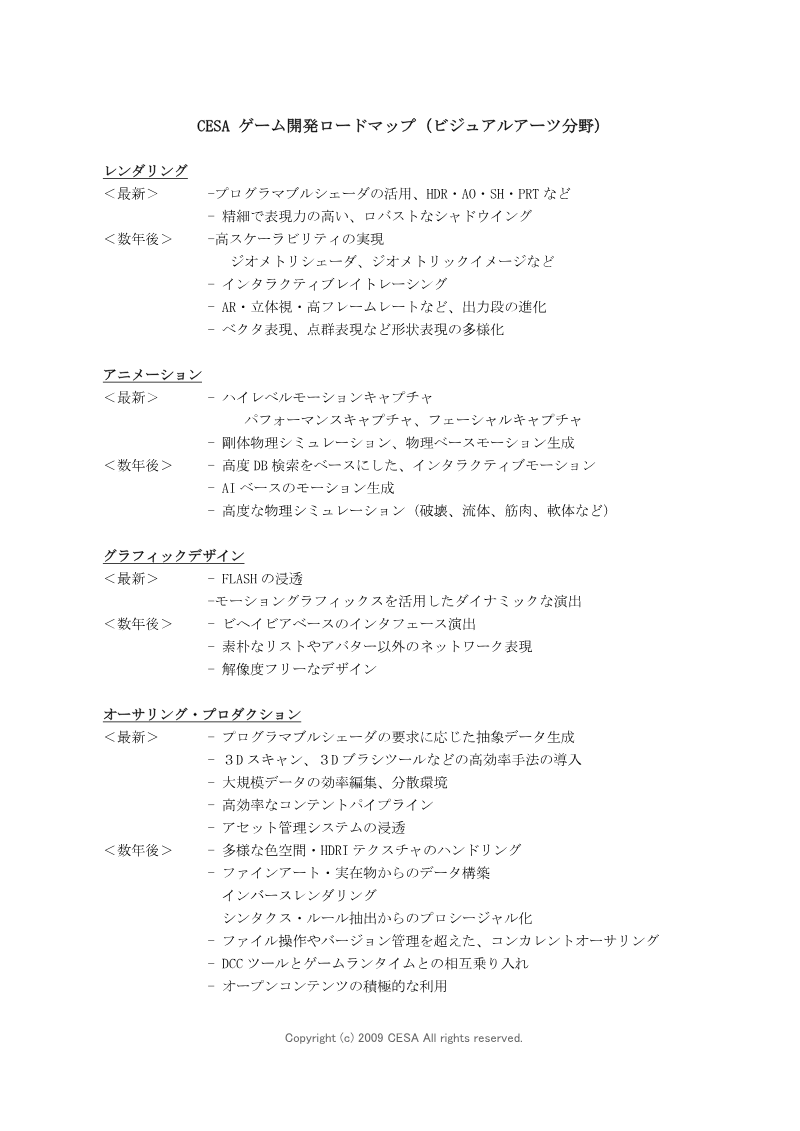
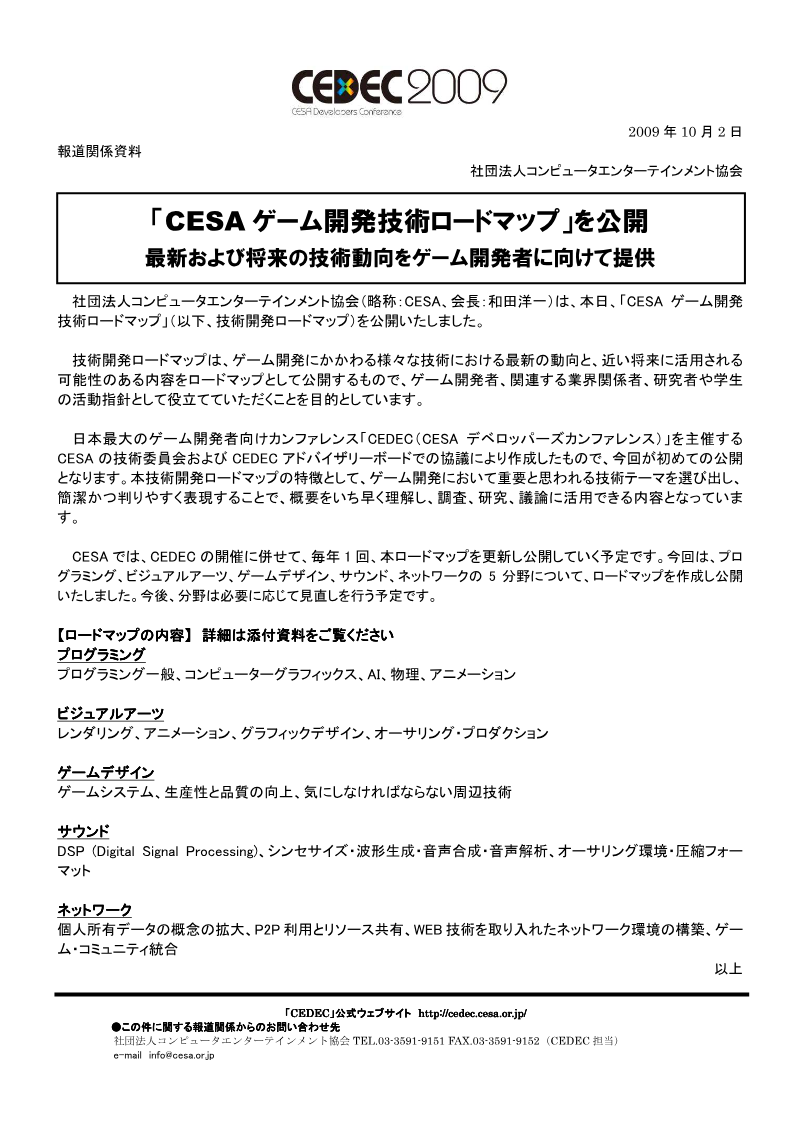
The 2009 CESA Game Development Technology Roadmap serves as a strategic guide for industry professionals, researchers, and students to navigate the evolving landscape of game production.
- The industry is shifting toward automated, scalable development systems, emphasizing the integration of sophisticated asset management and automated testing to increase productivity.
- Programming efforts are prioritizing multi-core optimization and the adoption of higher-level languages to handle increasing technical complexity.
- Visual arts production is transitioning toward procedural generation, physical simulation, and real-time rendering techniques.
Game Developer Index: Sweden 2008
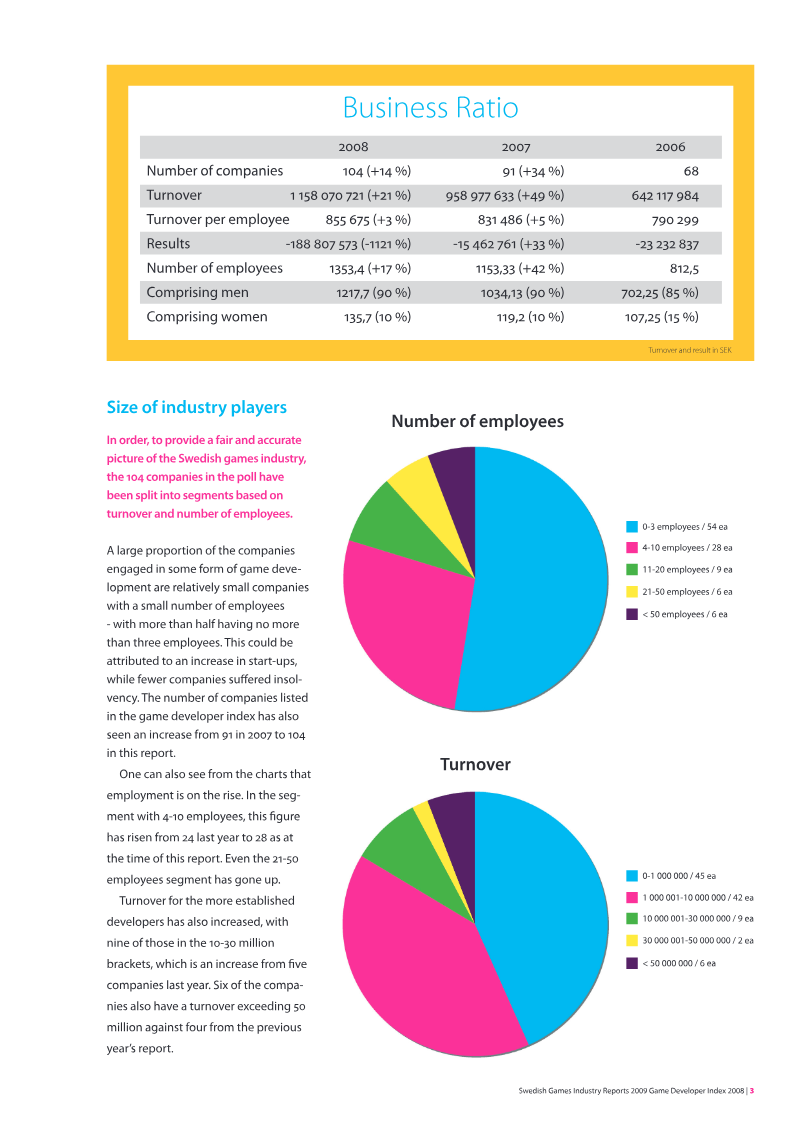
The Game Developer Index 2008 provides a comprehensive financial and operational overview of the Swedish computer game development industry.
- The Swedish game industry experienced significant growth in 2008, recording a 21 percent increase in turnover and a 17 percent rise in employment.
- Industry activity is highly polarized, with the five largest companies generating 64.2 percent of total turnover and accounting for 52.2 percent of total employment.
- Despite individual successes, the industry reported an aggregate negative financial outcome in 2008, driven by high costs for large-scale console development and the presence of many pre-revenue startups.