Game Development reports and market data
Documents
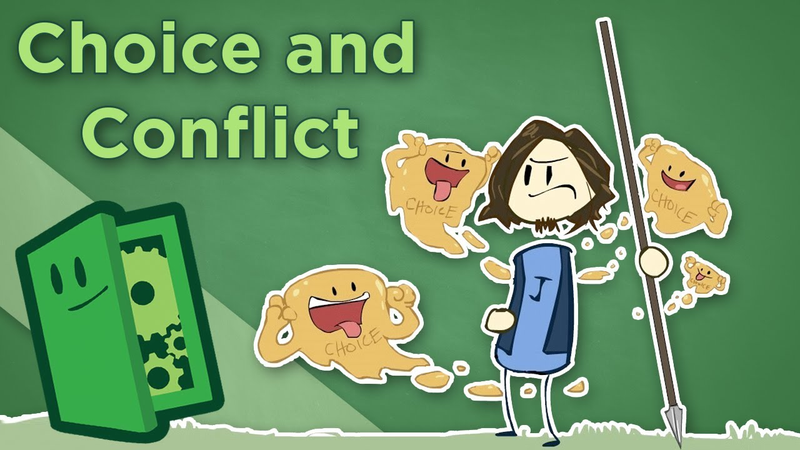
Choice and Conflict - What Does Choice Mean in Games? - Extra Credits
The core thesis of this analysis is that meaningful choice in game design is defined by the presence of internal conflict, rather than simple decision-making or logical calculation.
- Meaningful choice in game design is defined by internal conflict between competing objectives, rather than simple logical decision-making.
- Decisions based on clear, optimal outcomes—such as choosing the cheapest price or avoiding damage—are categorized as problem-solving calculations rather than genuine choices.
- Effective design forces players to weigh incomparable options, such as balancing immediate survival against long-term progress, where no single path is objectively superior.
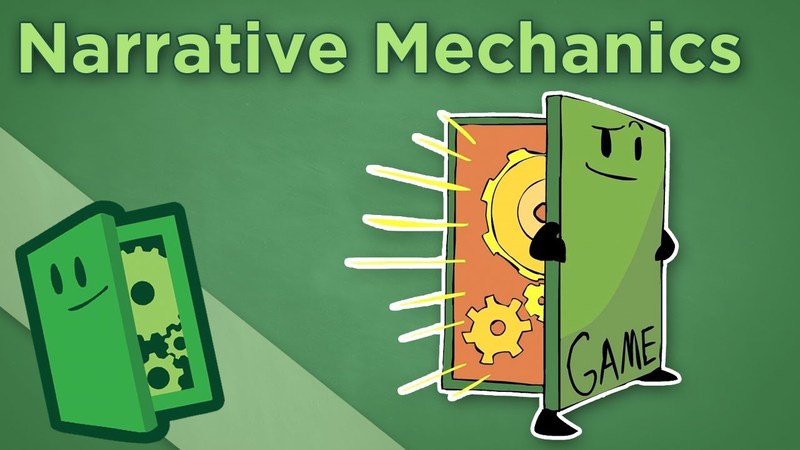
Narrative Mechanics - How Missile Command Tells a Story - Extra Credits
The arcade game Missile Command serves as a primary case study for how game mechanics can function as a sophisticated narrative tool, moving beyond traditional storytelling to evoke complex moral and emotional responses.
- Game mechanics can function as a primary narrative tool to evoke complex moral and emotional responses, proving that play itself can serve as an independent art form.
- Missile Command forces players into a reactionary role, shifting the focus from traditional gaming tropes of power and conquest to themes of vulnerability and duty.
- The game’s design uses resource scarcity to compel players to make high-stakes, real-time moral calculations, such as choosing which of the six cities to protect.
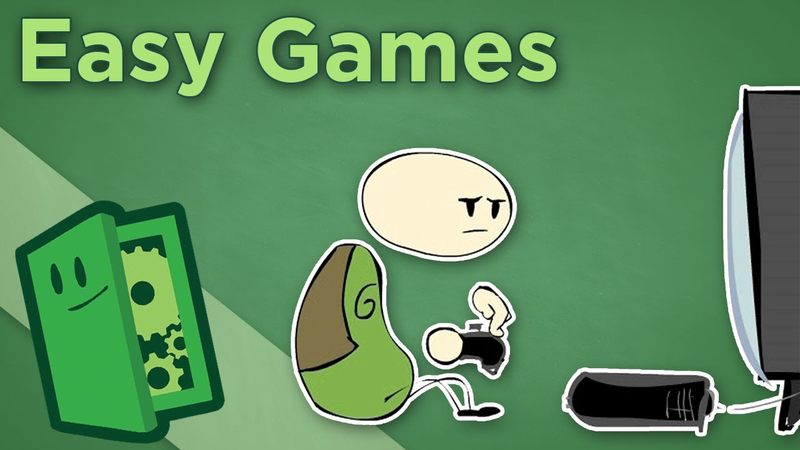
Easy Games - What Happened to Hardcore Games? - Extra Credits
The industry-wide perception that modern games have become too easy is a misinterpretation of player desires. Players are not necessarily seeking increased difficulty in execution, but rather greater mechanical depth.
- Players do not inherently desire increased difficulty in execution, but rather seek greater mechanical depth that allows them to transform challenging scenarios into manageable tasks through system mastery.
- Developers often conflate simplicity with approachability, mistakenly lowering difficulty ceilings when the actual goal should be effective player education.
- Depth is not limited to complex statistics, but includes real-time decision-making and the mastery of mechanics, such as the timing required for counterattacks in fighting games.
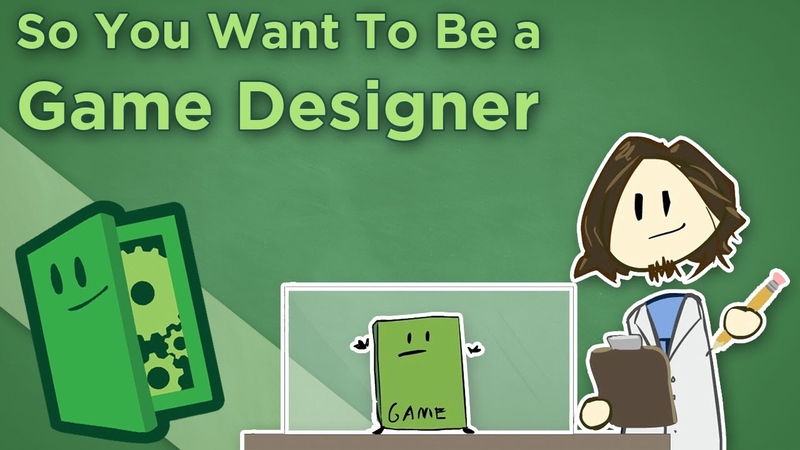
So You Want To Be a Game Designer - Career Advice for Making Games - Extra Credits
Effective game design requires a multifaceted skill set that extends far beyond the ability to conceive of creative concepts.
- Game design is primarily a role of facilitation and communication, requiring the designer to bridge the gap between the distinct technical and artistic perspectives of team members.
- Effective designers must move beyond high-level conceptualization to focus on the practical execution of systems, mechanics, and level design.
- Project failure is most frequently caused by poor scope management, necessitating that designers evaluate the time and financial cost of every decision to ensure maximum value.
Facing Controversy - How to Stand Up for Games as a Medium - Extra Credits
The video game industry faces a recurring cycle of public controversy, often characterized by external criticism regarding themes of violence, social corruption, and historical sensitivity.
- The video game industry undermines its own legitimacy as an art form by frequently canceling projects or bowing to public pressure in response to external criticism.
- Prioritizing short-term brand safety over artistic integrity reinforces the public perception that games are trivial toys rather than serious cultural contributions.
- The cancellation of projects like the combat simulation 'Six Days in Fallujah' and the market exclusion of titles like 'Imagination is the Only Escape' serve as primary examples of this industry-wide pattern of retreat.

Mailbag 1 - Questions About the Game Industry - Extra Credits
This overview addresses common inquiries regarding the state of the video game industry as of late 2010.
- The dominance of first-person shooters in 2010 is driven by the commercial success of the genre and the availability of standardized development engines like Unreal, which lower entry barriers for mid-tier studios.
- The perceived decline of the JRPG genre is not a lack of innovation, but rather an over-reliance on a small number of major publishers like Square Enix.
- PC gaming remains a robust market segment when accounting for the growth of MMOs, social gaming, and indie titles, despite challenges related to high technical requirements and costs compared to consoles.

Diversity - Why Do Games Lack Diverse Characters? - Extra Credits
The video game industry faces a significant challenge regarding the representation of diverse characters, frequently relying on tired tropes and narrow archetypes rather than creating relatable, multifaceted individuals.
- The industry's reliance on a default white, straight, male protagonist is a form of lazy design that restricts narrative potential and prevents the medium from maturing.
- Lack of intentionality in character creation, rather than just team composition, is the primary driver behind the stagnation of diverse representation.
- Current gender representation often suffers from adolescent pandering and objectification, with many female characters lacking genuine narrative agency or failing to pass the Bechdel test.

Kinect and Move - Can Motion Control Ever Succeed? - Extra Credits
The introduction of motion control peripherals like Microsoft’s Kinect and Sony’s Move represents a strategic attempt by major console manufacturers to extend the life cycles of the Xbox 360 and PlayStation 3.
- Microsoft and Sony introduced Kinect and Move as strategic hardware upgrades to extend the life cycles of the Xbox 360 and PlayStation 3, aiming to avoid the high manufacturing costs of launching new console generations.
- The industry's push into motion control was primarily inspired by the Nintendo Wii, which proved the commercial viability of motion-based input and its ability to attract new demographics.
- A major barrier to adoption is the reliance on derivative software, as many Kinect and Move titles are perceived as clones of existing Wii games rather than unique experiences.

Video Game Music - How to Create a Timeless Theme - Extra Credits
The evolution of video game music from the 8-bit era to the modern age reflects a shift from technical limitation to sophisticated, multi-layered production.
- The memorability of 8-bit era game music stems from hardware constraints that forced composers to prioritize simple, hummable, single-line melodies.
- Modern game music successfully integrates complex symphonic arrangements and dynamic, adaptive audio with the foundational principle of melodic simplicity.
- Effective musical identity for new franchises relies on a strong, central theme that remains recognizable while utilizing modern production depth for immersion.

No Redeeming Value - Why the God of War Sequels Failed at Storytelling - Extra Credits
The God of War trilogy serves as a primary case study for the evolution and eventual decline of narrative depth in action-oriented video games.
- The original God of War succeeded by mirroring the structure of a Greek tragedy, using Kratos’s arc to explore themes of guilt and redemption.
- The sequels failed to maintain narrative depth, transitioning from a character-driven study of remorse to a spectacle of one-dimensional, unmitigated violence.
- The series’ attempt to introduce themes of hope and forgiveness in the final installment was undermined by immature dialogue and a total lack of character growth.
Where Did Survival Horror Go? - How Franchises Kill Mystery - Extra Credits
Survival horror has experienced a significant decline as a distinct genre, increasingly being supplanted by action-adventure titles that prioritize combat over psychological dread.
- The survival horror genre is declining as developers prioritize action-adventure mechanics to ensure the broad market appeal required to recoup high AAA production budgets.
- Technological advancements in high-fidelity graphics have inadvertently eroded horror by replacing the ambiguity of early hardware limitations with excessive visual clarity, which diminishes player imagination and tension.
- Long-running franchises suffer from narrative predictability, as players become overly familiar with established lore and monster designs, naturally shifting gameplay toward action rather than psychological dread.

Innovation - How AAA and Indie Games Can Learn From Each Other - Extra Credits
The video game industry currently faces a structural divide between independent developers and AAA studios, which hinders the medium's creative potential.
- AAA studios and indie developers operate in a structural divide where AAA prioritizes risk-averse, iterative formulas, while indie teams are constrained by limited funding and marketing despite their capacity for innovation.
- Publishers should establish dedicated indie-publishing divisions to provide smaller teams with essential distribution, funding, and technical infrastructure.
- This symbiotic model allows publishers to test innovative concepts in a low-risk environment, identifying successful prototypes that can be scaled into larger, mainstream projects.