1 free read left. Create a free account for unlimited reading + AI research.
Create free account
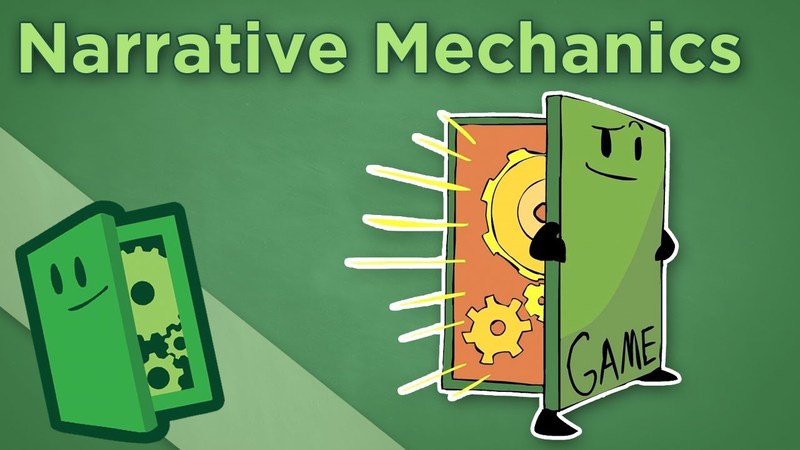
Narrative Mechanics - How Missile Command Tells a Story - Extra Credits
Key insights
6 takeaways- 01Game mechanics can function as a primary narrative tool to evoke complex moral and emotional responses, proving that play itself can serve as an independent art form.
- 02Intentional alignment between mechanics and narrative goals can convey sobering themes more effectively than traditional cinematic sequences or dialogue.
- 03Missile Command forces players into a reactionary role, shifting the focus from traditional gaming tropes of power and conquest to themes of vulnerability and duty.
- 04The game’s design uses resource scarcity to compel players to make high-stakes, real-time moral calculations, such as choosing which of the six cities to protect.
- 05By ensuring that victory is impossible, the game’s structure reinforces the theme that nuclear conflict offers no winners.
- 06The game concludes with a stark, simple message rather than a standard game-over screen to leave a lasting, meaningful impression on the player.
Ask AI about this video
Transcript
Can games express an idea simply through their mechanics alone? Can they tell a story or raise a question using only their most basic element, play? These are fundamental questions which we'll have to answer as this medium grows. How we answer them will help us to understand how to break away from merely emulating traditional media and evolve as our own art. Incidentally, James was challenged by another designer at a recent game convention to show an example of this. This is sort of a grand slam for us. It gives us an excuse to discuss a great topic. It lets James ramble about one of his favorite old games. It allows us to provide an example for all of you to use if this topic ever happens to come up in your conversations, and it gives James the chance to win a bet. Well then, onto the game. Some of you may be eager for us to talk about the latest Fallout or Call of Duty, but I think it's important to learn from our past. Too many old games are being forgotten, which is a shame because they're often the best to learn from. They tend to be simpler. Their mechanics aren't obscured by flashy
graphics or the complex physics happening under the hood. So today we're going to be talking about Missile Command. For those of you who never played it, Missile Command was an arcade game developed in 1980. In this game, you used a trackball to fire rockets from three different missile defense platforms in order to protect six cities from an unending rain of ICBMs. Given that this game was built over a quarter century ago, it doesn't have much going for it in the way of graphics or sound. The missiles are single pixel glowing dots, the cities are bichromatic skyscraper silhouettes, and the explosions were found in that great old Atari rumble. And yet, it manages to express one of the most compelling narratives about nuclear war that we've ever experienced. How does it do so? Through play. This is a very carefully crafted game. Almost no element was haphazardly added. So let's look at them one by one. First, the game is non-violent. The player never launches a nuclear missile. They never fire at an enemy. In this game, the villain is unknown and unimportant. The game is entirely about trying desperately to save lives. Rather than losing its narrative in aggression and dominance, the game does something very rare for a video game. It puts the
player in a position of completely reactionary weakness. It does this to set the boundaries of the experience which the player is exploring. The player can't get lost in the awesome power of nuclear weapons or revel in gratuitous destruction. That isn't what this experience is about. This is a story about being on the receiving end of a nuclear strike. Let's take a look at this narrative choice for a moment. This is a much more human, a much more relatable story than one of mass destruction and conquest. By choosing this narrative to focus on, the creator, David Theurer, has presented the player with a role they can understand, a role they can emotionally assume as they experience the game. That of an individual who not only doesn't have limitless power, as is the video game norm, but in fact has very little power to fulfill a task of dire responsibility. So, let's look at this role and how it's reinforced by play. When the player steps up to the machine, they take on the role of a regional commander of three small missile defense bases. This choice of scope is important. It's human in scale. We can understand six cities. We can imagine six real towns in our home state and project ourselves onto the experience. We can all emotionally
invest in those few bases and that handful of towns in a way that we simply couldn't if the game had tasked us with defending an entire country. Now, before we even begin to talk about play, think about being the commander of these few small, poorly stocked facilities. You probably never expected them to be used. You probably think of yourself as part of a deterrent for a war that could never possibly come. But now, as soon as you put that coin in that slot, the war is upon you. So, let's look at how this is reinforced mechanically. Missile Command, a 30-year-old game, comes with what is perhaps the best and most difficult set of moral choices any video game has ever presented. Inevitably, as you play Missile Command, you'll come to a point where you have to make a choice. Who do you defend? You have limited resources and a seemingly endless onslaught to repel. Do you try and defend everyone? Do you go out of your way and try to save that one distant town? Or do you let it and everyone in it vanish in an instant of cataclysmic fire so you have a better chance of saving the rest of the lives you're responsible for. Do you let the soldiers under your command, men who know their duty but at the same time trust you to keep them alive, die when it comes down to protecting them or your civilians? Do you let a million lives
get turned to ash so that you can defend one of your military installations, vital for protecting the other 5 million for whom you're responsible? Do you jeopardize the many for the few or sacrifice the few for the many? The game reinforces all of these choices mechanically. You start the game with six cities, but as cities die, it becomes easier and easier to protect those that remain. So, do you let five vanish so that you can at least ensure the survival of the sixth? After all, you only lose when all six cities are gone. Also, each of your missile bases has their own supply of ammo and their own strategic location. Losing any one of them early in a stage severely hampers your ability to defend your cities. Thus, weighing the value of your bases against the value of your cities becomes a tricky question. Moreover, the player has to make all of these judgments lightning fast. They have to make them in real time, just as the character they're playing would. The player can feel that tension and that paralyzing indecision that accompanies choices of that gravity. And in the end, walks away with a new respect for anyone who has to make choices of that magnitude with the speed and confidence they need to be made. And what's it all for? What's the bluntest point made by this game?
That you can't win. No matter how many stages you survive or how much time you spend playing, you can't beat Missile Command. Nuclear war has no winners. Your job is futile, but you do it anyway because you can buy people a few more minutes of hope. And what happens when you inevitably lose? The game eschews the typical game over screen found in almost every arcade game of its day for something a lot darker. With two symbols, it reinforces the horror of what's occurred in a way that most modern games fail to do with pages of script. It simply says, "The End" across the flash of an incoming explosion. This is a game that tells a narrative about nuclear war and the human struggles to be found therein, and it does so solely with its mechanics, balancing and incentivizing each side of impossibly difficult moral choices. It's dark and sobering in a way that few films or even books have managed to convey. But hey, that's enough from us. We'll just leave you with the effect this game had on its creator. This is taken from an interview with Yure years after the game launched. He said, "I'd wake up in the middle of the night from a nightmare where I'd see these streaks coming in and I'd be up in the Santa Cruz Mountains and I'd see it hit Sunnyvale and I'd know I had about 45
seconds until the blast reached me. I had those nightmares once a month for a year after I finished Missile Command." Yure always thought of the six cities in Missile Command as the coastal cities of his home state of California. Yeah. So, not only can games tell stories and convey ideas through their mechanics alone, they've been doing so for longer than most of us have been alive. Pretty cool, huh? See you next week.
Summary
The arcade game Missile Command serves as a primary case study for how game mechanics can function as a sophisticated narrative tool, moving beyond traditional storytelling to evoke complex moral and emotional responses. By stripping away flashy graphics and complex physics, the game demonstrates that fundamental design choices—such as player role, resource scarcity, and the inevitability of failure—can effectively communicate profound themes regarding nuclear war and human responsibility.
The core thesis posits that games can evolve as an independent art form by utilizing play itself to raise questions and tell stories. In Missile Command, the player is cast in a reactionary role, tasked with defending six cities against an unending barrage of missiles. This design choice shifts the focus from typical gaming tropes of power and conquest to a human-scale experience of vulnerability and duty. Because resources are limited, the game forces players to make rapid, high-stakes moral calculations in real time, such as choosing which cities to protect or sacrificing military assets to preserve civilian life.
These mechanics create a sense of futility and tension that mirrors the gravity of the subject matter. The game’s structure ensures that victory is impossible, reinforcing the grim reality that nuclear conflict offers no winners. By concluding with a stark, simple message rather than a traditional game-over screen, the experience leaves a lasting, sobering impression. Ultimately, the game illustrates that when mechanics are intentionally crafted to align with a narrative goal, they can convey deep, sobering themes more effectively than extensive dialogue or cinematic sequences, proving that the medium has possessed the capacity for meaningful, mechanical storytelling for decades.

















Comments