Game Development reports and market data
Documents
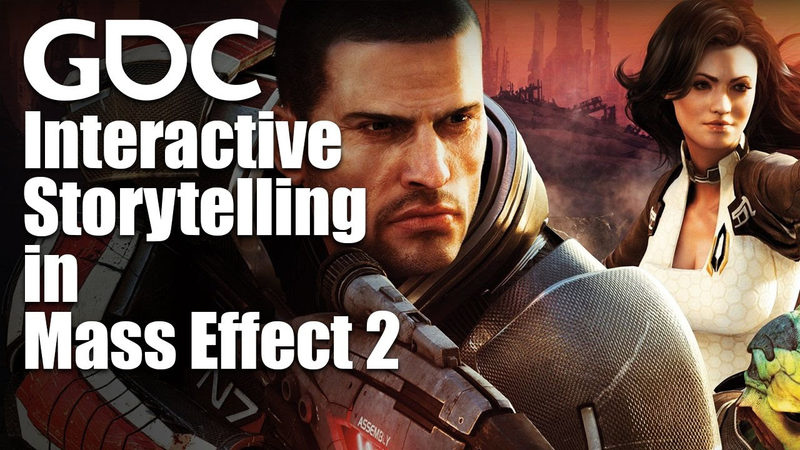
Interactive Storytelling in Mass Effect 2
Interactive storytelling in Mass Effect 2 centers on the successful integration of cinematic design with player agency, shifting the traditional role-playing paradigm from a purely subjective avatar experience to an objective character-driven model.
- BioWare treats game design and narrative as symbiotic, refusing to differentiate between the two by starting with story and building gameplay around it.
- The 'conversation wheel' interface uses 32-character paraphrases to provide players with a condensed, predictable preview of dialogue options, ensuring they understand the intent behind their choices.
- Mass Effect 2 shifted from a purely subjective role-playing model to an objective one, where the player controls a pre-defined character (Shepard) rather than a blank-slate avatar.
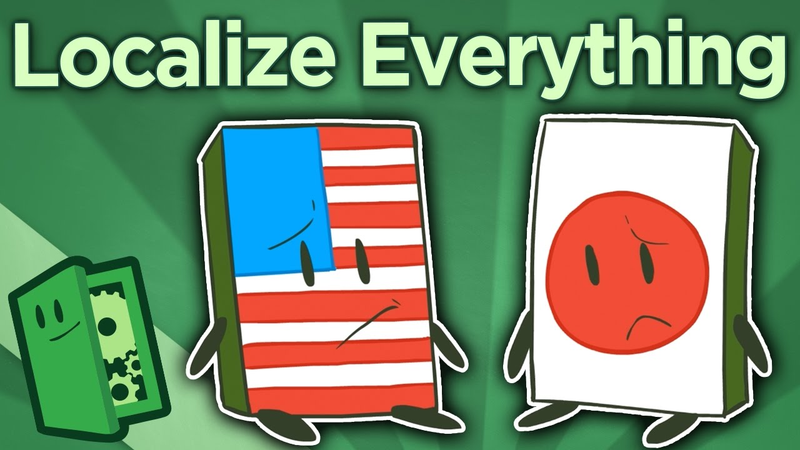
Localize Everything - Finding Hardcore Fans Worldwide - Extra Credits
The primary argument presented is that console platform holders—specifically Microsoft, Sony, and Nintendo—should adopt a strategy of aggressive, widespread localization for niche international titles to drive hardware sales and cultivate a loyal, vocal user base.
- Console platform holders like Microsoft, Sony, and Nintendo should fund the localization of niche international titles in exchange for regional exclusivity to drive hardware sales.
- Investing in niche localization is a cost-effective alternative to securing expensive AAA exclusives, as it requires significantly lower capital while still providing high-value content.
- Digital distribution has eliminated traditional barriers like physical retail space and inventory management, making it easier to bring specialized international games to global markets.
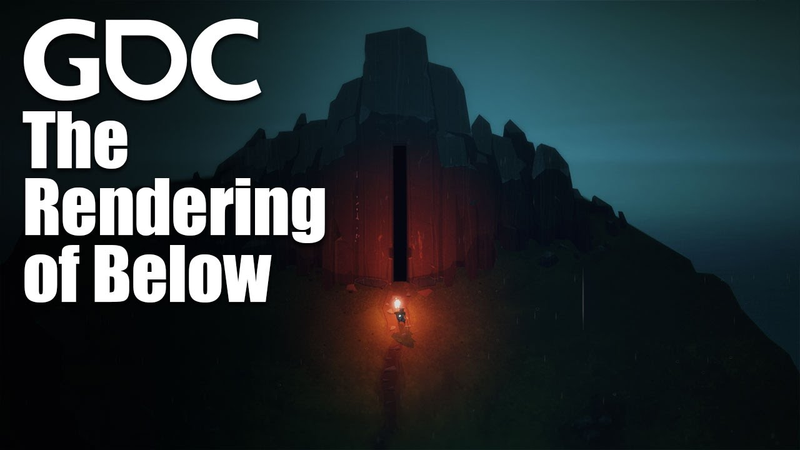
The Rendering of Below
The development of the rogue-like action-adventure game Below required a specialized rendering pipeline to balance high-density visual detail with a moody, intentionally dark aesthetic.
- The development team implemented a tiled forward lighting system using compute shaders to overcome the performance inefficiencies of standard deferred lighting on Xbox hardware.
- A gamma-correct pipeline was utilized to perform all lighting, post-processing, and color grading in linear space, effectively mitigating color banding and visual artifacts.
- The engine leveraged binary arithmetic and bit-masking to manage numerous light sources simultaneously, enabling complex light-based gameplay mechanics while maintaining compatibility with multi-sample anti-aliasing (MSAA).

Game Accessibility: Practical Visual Fixes from EA's Madden NFL Franchise
The integration of accessibility features into the Madden NFL franchise demonstrates that significant improvements for players with visual impairments can be achieved through cost-effective, software-based solutions.
- Accessibility features can be integrated into AAA titles with minimal resources, as demonstrated by a single developer implementing these changes for Madden NFL 17 within a one-month timeframe.
- High-impact visual improvements for low-vision players include enlarging pass icons, standardizing UI placement, and providing user-adjustable brightness and contrast controls.
- Modified color-shifting algorithms are superior to standard color-blind filters, which often compress color ranges and negatively impact gameplay clarity.
Localization Shenanigans in the Chinese Speaking World
High-quality localization is a fundamental requirement for successfully entering the Chinese-speaking gaming market, which stands as a massive and rapidly expanding segment of the global industry.
- Localization must be integrated into the core development process rather than treated as a secondary task to prevent narrative degradation and cultural alienation in the Chinese market.
- Automated conversion between simplified and traditional Chinese is unreliable due to many-to-many character mappings, necessitating the use of professional, dedicated translators for each specific regional variant.
- Developers must navigate a complex regulatory landscape by securing local partnerships to manage mandatory approvals for game titles, music, and credits.
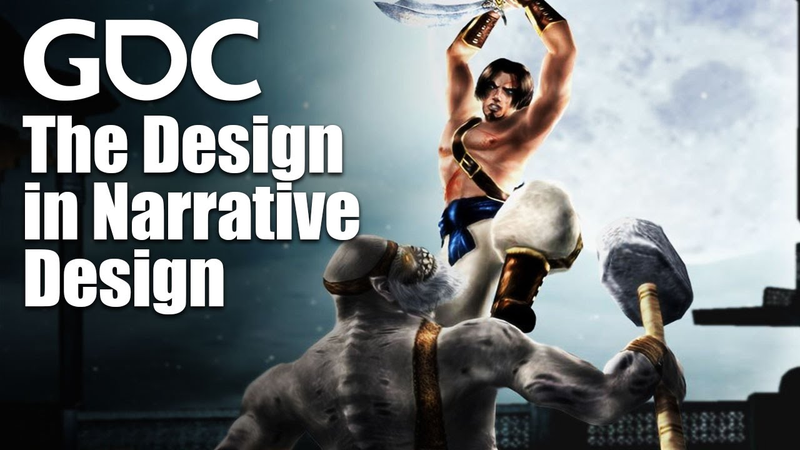
The Design in Narrative Design
The core thesis of this analysis is that game design consists of two inseparable, interdependent dimensions: the mechanical (rules) and the fictional (the world and its justification).
- Game design is defined by the inseparable interdependence of mechanical rules and fictional context, where every game element—even in non-narrative titles—possesses a fictional dimension that requires design attention.
- Achieving diegesis requires that game mechanics are justified within the internal logic of the world, such as Half-Life’s diegetic UI or Ico’s use of environmental cues instead of traditional hit points.
- The design process should function as an iterative dialogue where mechanical requirements inspire fictional justifications, which in turn unlock new mechanical possibilities.

Character Balance in Skylanders: More than the Numbers
Character balance in the Skylanders franchise prioritizes the subjective player experience and accessibility for a demographic aged six to ten over traditional competitive metrics.
- Character balance is driven by player perception rather than raw numerical data; if a player perceives a move as powerful due to visual effects or sound design, it functions as powerful regardless of its underlying math.
- In Skylanders: Swap Force, developers managed difficulty by scaling enemy damage output rather than hit points, implementing a 'fair fight' mechanic that grants players a one-second window of immunity after taking lethal damage to prevent frustration.
- The development team prioritized creating characters that players either loved or hated over those that were merely 'okay,' as strong emotional reactions drive engagement and playground discussion among the target demographic.

Put a Face on It: The Aesthetics of Cute
The aesthetic of cuteness functions as a sophisticated design strategy rather than a superficial stylistic choice.
- Cuteness functions as a strategic design tool that uses rounded forms and exaggerated features to simplify complex information and lower barriers to entry for diverse player demographics.
- Designers utilize a 'cute' aesthetic as a mask to juxtapose playful visuals with darker, sensitive themes like trauma or societal constraints, making difficult narratives more approachable.
- The aesthetic creates a unique tension by framing profound or uncomfortable subject matter within a nostalgic, safe visual environment, which subverts player expectations for greater narrative impact.
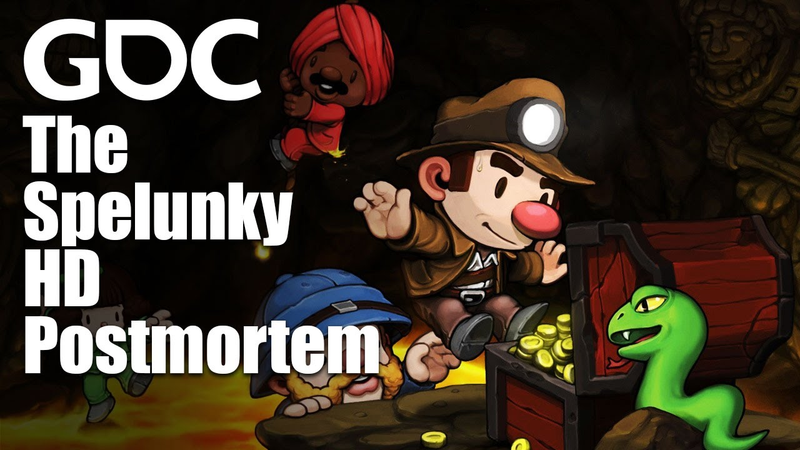
The Spelunky HD Postmortem
The development of the platformer-roguelike hybrid Spelunky illustrates the strategic value of iterative prototyping and the transition from freeware projects to commercial console releases.
- The freeware version of Spelunky served as a refined prototype that provided the foundation and confidence to develop the larger Xbox Live Arcade (XLA) version.
- Spelunky's level generation utilizes a 4x4 grid system where a path is drawn from the top entrance to the bottom exit, with individual rooms populated by templates based on the game area and path requirements.
- The transition to the XLA version involved moving away from the Braid engine after a month and a half of development due to code complexity and unnecessary features like time-rewinding.
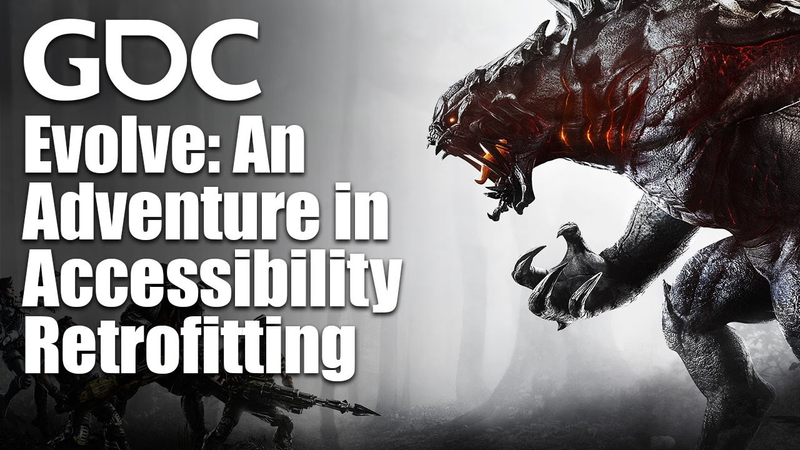
Evolve: An Adventure in Accessibility Retrofitting
Retrofitting accessibility into existing game titles requires a systematic evaluation process that prioritizes features based on their reach, impact, and implementation effort.
- Retrofitting accessibility is most cost-effective when integrated during pre-production, but when applied to existing titles, success requires a systematic scorecard approach to prioritize features based on reach, impact, and implementation effort.
- Accessibility features provide universal benefits that raise the skill floor for all players without negatively impacting the experience for high-skill users.
- Key technical strategies for retrofitting include implementing customizable control schemes, centralizing accessibility settings into dedicated menus, and replacing subtle UI cues with prominent, icon-based notifications.
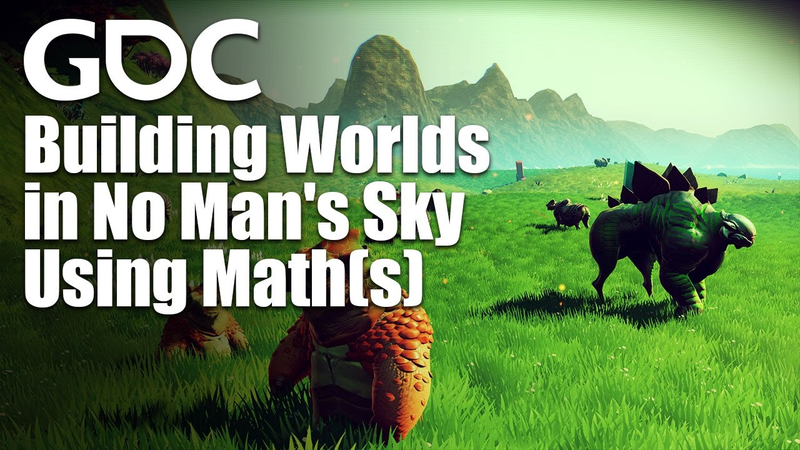
Building Worlds in No Man's Sky Using Math(s)
Procedural generation serves as the foundational architecture for No Man’s Sky, enabling the creation of a vast, diverse universe within a remarkably compact 300MB footprint.
- No Man’s Sky achieves a vast, diverse universe within a 300MB footprint by utilizing a custom engine driven by mathematical functions rather than pre-baked assets.
- The engine employs 'Uber noise'—a synthesis of layered 2D and 3D noise—to generate organic, non-repeating terrain features like erosion and overhangs without needing context from neighboring voxels.
- The procedural framework successfully handled a launch load of 500,000 concurrent players while maintaining a stable 1% crash rate.
The Benefits and Challenges of Supporting Third-Party Developers in Eve Online
CCP Games maintains a highly successful third-party developer ecosystem for Eve Online by providing open access to static data, image servers, and web APIs.
- CCP Games offloads the development of niche, complex utilities—such as financial tracking and asset management—to the player base to preserve internal resources for core game development.
- The studio maintains control over the third-party ecosystem by retaining the authority to modify or revoke APIs that threaten game balance or facilitate market automation.
- Community-built tools like killboards serve as critical intelligence and marketing assets, often acting as prototypes for future official client features.