Game Development reports and market data
Documents
Small Teams, Big Dreams: How to Build a Small Team to Do Great Things
Building a high-performance game development studio requires a strategic balance between a stable core team and a flexible network of specialized contractors.
- Build a high-performance studio by combining a stable core team with a flexible network of specialized contractors to maintain agility.
- Implement a T-shaped personnel model to balance deep individual expertise with the cross-disciplinary empathy required for effective collaboration.
- Prioritize early prototyping and iterative user testing to identify design flaws before committing resources to full-scale production.

Liminal Space - Incorporating Real Life into Games - Extra Credits
Modern gaming platforms have evolved from simple, isolated hardware into connected systems that aggregate significant amounts of personal user data, including contact information, social connections, and behavioral habits.
- Integrating real-world personal data into games creates opportunities for deeper emotional resonance and immersion, but it carries significant risks of causing real-life distress or social friction.
- Developers must prioritize player agency by adopting an opt-in model for data access, requiring explicit authorization for specific features rather than relying on complex opt-out menus.
- The use of personal data, such as social connections or contact information, must be managed carefully to avoid the accidental inclusion of sensitive individuals, such as deceased friends or estranged contacts.
Making Night in the Woods Better with Open Source
The integration of open-source tools into game development serves as a powerful mechanism for managing complex narrative structures while simultaneously offloading technical maintenance to a broader community.
- Open-source narrative tools like Yarn Spinner allow studios to manage massive dialogue requirements, such as the 139,000 words and 130 characters featured in Night in the Woods.
- Releasing proprietary tools under permissive licenses like MIT or Apache 2 offloads technical maintenance and bug fixing to the broader developer community.
- Successful community management requires lowering barriers to entry by breaking development tasks into small, manageable issues and automating routine administrative workflows.
Building Non-Linear Narratives in Horizon: Zero Dawn
The development of Horizon: Zero Dawn centered on establishing a robust quest architecture capable of supporting a vast open-world environment without sacrificing narrative coherence.
- Horizon: Zero Dawn utilized a graph-based narrative framework that treated quest progression as a probability space rather than a fixed sequence to balance player agency with structural integrity.
- The system relied on nodes representing plot points connected by cause-and-effect relationships, using a defined set of core verbs to dynamically manage the locking and unlocking of narrative beats.
- This architecture successfully supported the production of nearly 150 distinct quests and enabled automated features such as the player job system.
Storytelling is a Team Sport
Effective game development requires treating storytelling as a collaborative team sport rather than a siloed task.
- Treat storytelling as a collaborative, cross-disciplinary effort rather than a siloed task to prevent fragmented project vision.
- Appoint designated 'gatekeepers' to defend the core narrative vision while facilitating communication between art, sound, and engineering departments.
- Utilize concise, searchable documentation featuring visual aids and bullet points to ensure narrative guidelines remain functional and accessible to all staff.
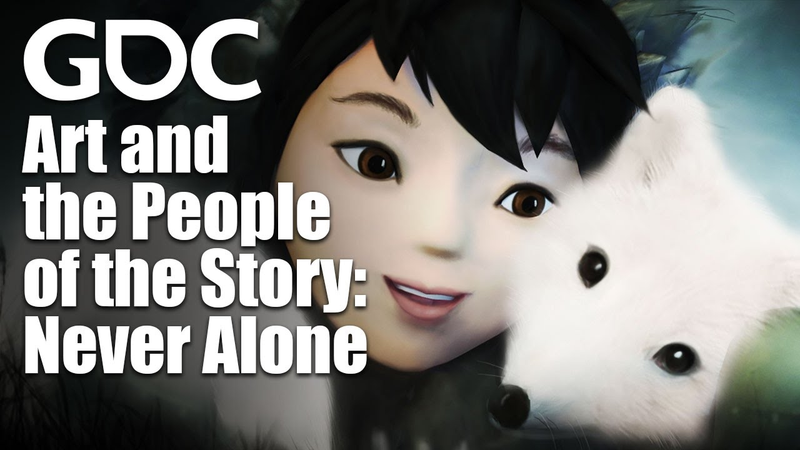
Never Alone: The Art and the People of the Story
The development of Never Alone represents a pioneering effort to integrate indigenous storytelling into interactive media through a collaborative partnership between E-Line Media, Upper One Games, and the Cook Inlet Tribal Council.
- The development of Never Alone was a collaborative partnership between E-Line Media, Upper One Games, and the Cook Inlet Tribal Council to integrate indigenous storytelling into interactive media.
- The project team engaged over 40 Alaska Native elders, artists, and storytellers to ensure the authentic preservation of the Iñupiat worldview and the legend of Kanak Sayaka.
- Developers replaced conventional combat mechanics with gameplay systems centered on the indigenous value of interdependence between humans, animals, and the environment.
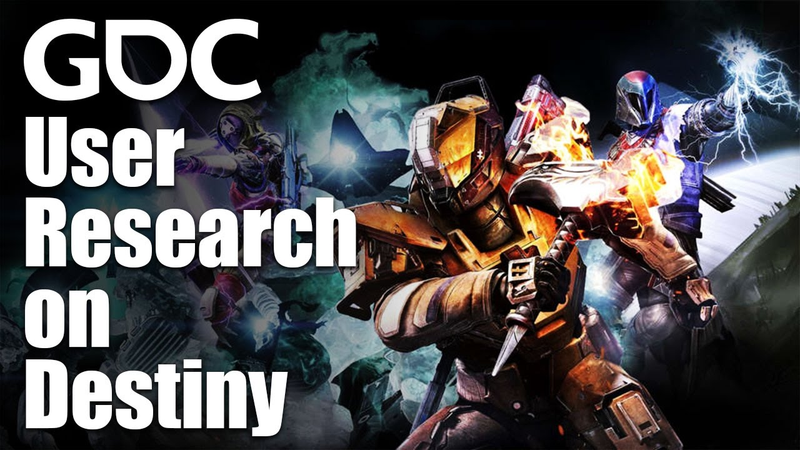
User Research on Destiny
The development of Destiny necessitated a fundamental shift in user research methodology, moving away from traditional testing frameworks toward a highly integrated, automated system.
- Bungie implemented strict security measures—including metal detectors and locked-down testing platforms—to allow for playtesting six months earlier than would have been possible otherwise.
- To ensure data accuracy, Bungie used post-stratification weighting to align their lab sample with the general player population, confirming that internal playtest data yielded the same directional results as external agency-recruited participants.
- The development team utilized a 'frustration button' feature during playtests, allowing players to log specific moments of difficulty that were then mapped against XYZ coordinates and video footage to identify pain points and highlight 'awesome moments.'
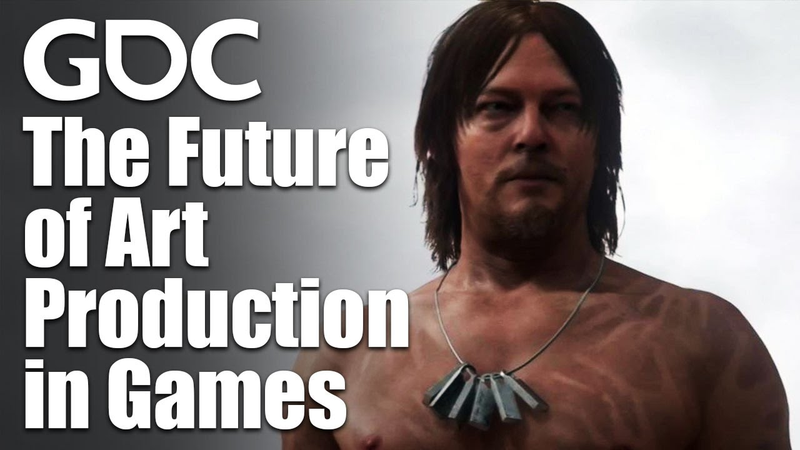
The Future of Art Production in Games
The future of game art production is defined by a shift from labor-intensive technical execution toward a focus on artistic intent and storytelling.
- Art production is shifting from manual, labor-intensive technical execution toward a focus on artistic intent and storytelling as automation replaces reductive tasks like UV unwrapping and collision mesh creation.
- The integration of photogrammetry, procedural generation, and simulation allows studios to treat virtual environments as sets to be dressed and lit, significantly increasing production efficiency and visual fidelity.
- Deep learning and neural networks are poised to automate animation and asset creation, enabling software to execute artistic intent with minimal manual intervention.
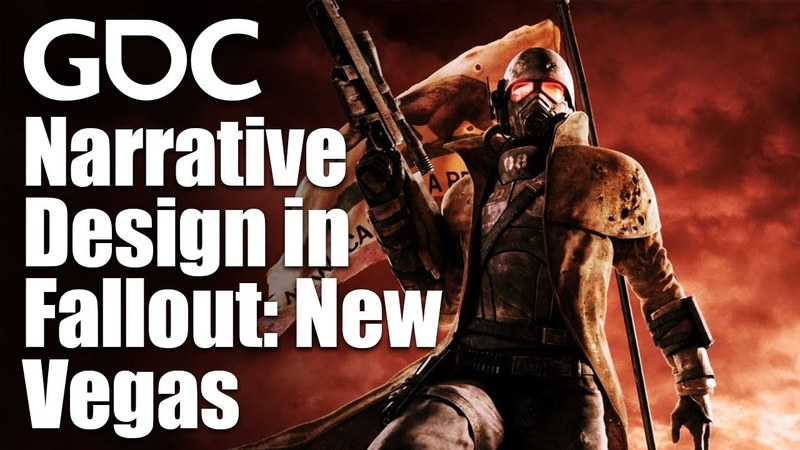
Choice Architecture, Player Expression, and Narrative Design in Fallout: New Vegas
Modern role-playing game design often struggles to reconcile linear cinematic storytelling with the need for authentic player agency.
- Modern RPG design suffers from 'choice conflict,' where gameplay mechanics force players into roles that contradict their intended character expression, undermining narrative weight.
- Narrative architecture should move away from binary moral extremes and high-stakes dilemmas in favor of tactical dialogue systems that offer clear forecasting and validated consequences.
- Developers should define specific, supported character archetypes to ensure that player choices are balanced with meaningful trade-offs rather than arbitrary win-loss outcomes.
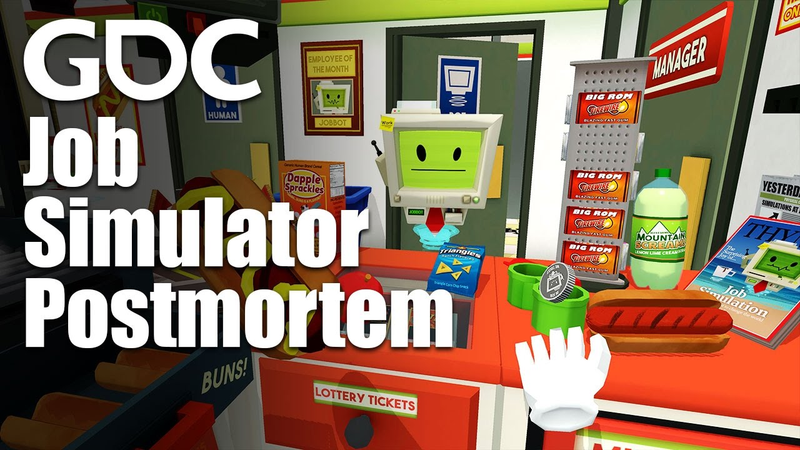
The Job Simulator Postmortem
The development of Job Simulator represents a pivotal case study in early virtual reality design, demonstrating that success in the medium requires prioritizing intuitive hand-based physics and strict adherence to user expectations over traditional PC gaming conventions.
- Success in VR design requires prioritizing intuitive, hand-based physics and near-field interactions over traditional PC gaming conventions.
- Immersion is best achieved through diegetic design, where functional elements like menus and tutorials are seamlessly integrated into the physical environment.
- The 'tomato presence' technique—replacing hand models with held objects—effectively mitigates visual discomfort caused by clipping while reinforcing player agency.
The Auteur Myth - Lone Visionaries... and Their Teams - Extra Credits
The gaming industry frequently suffers from the auteur myth, a persistent misconception that complex video games are the product of a single, visionary creator.
- Modern game development is an inherently collaborative process that relies on the specialized contributions of dozens or hundreds of professionals, including programmers, artists, designers, and sound engineers.
- The 'auteur myth'—the misconception that games are the product of a single visionary—obscures the reality of team-based production and creates unrealistic expectations for aspiring developers.
- Attributing success to a single individual often ignores the essential contributions of contractors and part-time specialists who are frequently necessary to achieve high-quality output in both indie and AAA sectors.
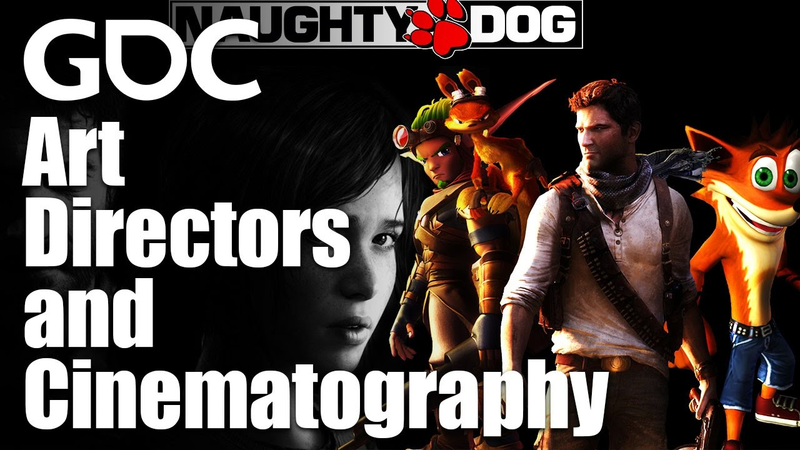
Cinematography for Art Directors
In this 2015 presentation, Naughty Dog’s Robh Ruppel explores the intersection of cinematography and game art, arguing that game developers must move beyond mere technical replication of reality to embrace deliberate, artistic visual storytelling.
- Art directors must treat the game screen as a curated canvas for intentional design rather than a passive recording of 3D space to achieve high-level visual storytelling.
- Game developers should map lighting and color palettes directly to the emotional beats of the script to ensure visual cohesion.
- Cinematographic techniques such as high-contrast lighting, silhouettes, and framing devices are essential tools for isolating characters and guiding player focus.