VideoThe Game Business
We interview the man who signed Arc Raiders: "The AAA industry is at its end"
2 Dec 202559 min video
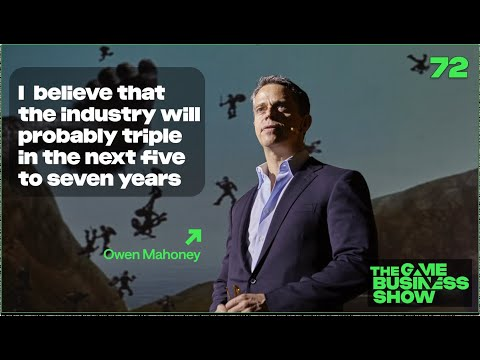
I think structurally the industry is in in really really bad shape. We're sort of at the end of days. We're sort of hitting a real cul-de-sac in terms of how it's structured. Focus is not about saying yes to a couple things. It's about saying no to a whole lot of things. How come it was so unobvious that Embark was a great deal for Nexon until about 3 weeks ago? What does it say about the industry?
[music]
Hello and welcome to the Game Business Show. Today I'm joined by a real video games industry veteran. He led corporate development at EA for nearly a decade before becoming CFO at Nexon leading that company's IPO. He was then named the CEO and president of Nexon. A role he held for nearly a decade before stepping down last year. Lately he's been sharing his views, expertise, and insights into the future of the video game industry via his blog. And his opinions and perspectives are influencing C-suite leaders and analysts the world over. So what a perfect person for us to speak to on our show. I am of course talking about Owen Mahoney. Hello Owen. Welcome to the show. Yeah, thank
you very much for having me.
As I was just saying, you've been sharing a lot of opinions and expertise on where the industry is heading, which I find really refreshing. You don't often see that from people who held the sort of positions that you've you've held in the past. What sort of inspired you to do that? Well, um I used to do it at at Nexon a lot. I I sort of had this view that um So one of the jobs you have as a CFO, especially as you're taking a company public, is to articulate a strategy to investors that they can easily understand. So that process really started at the at pre-IPO. This is way back in 2010 is when we were preparing for the you know, in 2011. Uh then as a public company as CFO, you know, you're communicating with investors a lot. Um I I had also felt very strongly that a mistake that is often made by CEOs of public companies or management teams of public companies and um particularly in the games business is that they will sometimes or in those days often times have a different sort of set of talking
points for investors than they have for customers or employees. And I didn't think that that was very healthy or necessarily or or actually very good. So, you know, we had to have one one viewpoint on what we were building and how we were building it. And if we articulated thought if we were thoughtful about it and articulating it well, then um you know, then everybody would understand it and we'd be able to have a um a much cleaner and a better ability to build our company and to get people on board with what we were doing. So that was a habit that I started as CFO, part of the IPO. It continued after the IPO. And then it continued certainly and really ramped up when I was CEO. Um and in the time when I became CEO, it's 2014, you know, we were still not very well known as a company at least in the West. We our brand was enormously well known in Korea. Uh I think by some measures of, you know, brand awareness, we were the second most recognizable brand in Korea and in parts of Asia after Samsung. But but in the West we
were not well known at all and we had a large in- investor base in the West and other companies were, you know, sort of is setting the agenda or setting what was known about the games industry. And much of those ideas about how games work and how game companies make money, in our view, was incorrect. It certainly was not consistent with Nexon. So it was a habit I got into a long time ago. And then after Nexon, you know, I had chance to reflect and think and talk to a lot of really good friends. And so rather than just doing it in private conversations over lunches or breakfasts or in meetings with people I know and like, um I thought about opening up a little bit more and um and sharing those thoughts and seeing what sort of ping you know, ping something out and see what sort of feedback I get back. Yeah. I've learned a lot from reading those those posts. And also yeah, it just feels incredibly refreshing. But also what I find quite I think it's quite nice and you must be quite delighted to see how Embark is right now is turning heads, but not just amongst gamers, which obviously is
the big headline, 5 million players, whatever. But it's the whole business at the moment seems to have turned and looked at what Patrick and the and the team have been doing at Embark over Arc Raiders. Yeah. You must be feeling pretty delighted about that. It's like a great example of of the strategy and and the your your belief in where the industry is headed. Yeah, I mean Embark is a really good example of um So first of all, to answer your question, yeah, I'm I'm thrilled by what they're doing.
Mhm. But I will tell you that the history of that deal is very interesting and it it probably says um a lot more about where the industry is at than the than anything that we did. But but but the brief history of it is when I invested in that company originally and then bought the company um years several years ago, you know, I kind of joke around with friends who were there at the time that, you know, that was the deal that I I probably took more I'm not sure what the right word is, but I I raised a lot of eyebrows, I guess I would say.
Oh, really?
I mean, a nice way to say it is I got a lot of pushback. And it was pushback
from investors and then board members who were representing investors, you know, who were the owners of the company. Um certainly the sell-side analysts um and a lot of buy-side analysts I talked to. And they were like, "What the hell are you doing?" I mean, that's that's crazy. But I will tell you at the same time it was the easiest yes I've ever said. I mean, I I worked really hard or in the the whole team worked really hard to make that happen. It was the easiest decision I ever made in I is as long as I can remember. But in the defense of the people who were skeptical, I'd say there were a couple things. Number one, at one level, the mental models that are represented by what Embark did are completely different than most of the mental models operating in AAA online game development today. Another uh is that remember at that time they didn't have any profit as a company. And usually when you're buying a company, especially large numbers, you're looking at a company you want to buy a company that's profitable. Not only did they not have any profit, they didn't have any revenue. Not only did they have any revenue, they didn't have a product. And they were 3 years away by our you know,
now clearly optimistic estimates of when they were going to come out with a product. And then beyond that, we all agreed that they were going to spend the first 9 months developing technology to enable them to make the types of products that they wanted to make and we wanted them to make. And so when we talked about and articulated to our investors, okay, here's what we're doing. We think there's a real yin and yang here of this fabulous group of developers who are operating at a level that people don't really operate in our industry for the most part. They're very very rare in terms of the level that they're operating. So we're lucky to have them. Um at the same time one of the things that they were in the market for was understanding how we at Nexon made games like MapleStory and Dungeon Fighter grow for 20 years. And how is that possible? That was not in their, you know, theories of what they could pull off. So it was a real yin and yang where their strengths were things that we wanted and our strengths were things that they wanted. And that's what you look for in M&A. So it was a it was a easy easy decision for me and the management team to make, but it was very very hard for the outside to understand
it. So from my perspective, yeah, it's really gratifying. And I I'm just thrilled for what they've done. I I want to say it's exceeded my expectations, but my expectations were very high because I think they're just such a wonderful team on so many levels. We had Patrick on the show a couple of weeks ago.
I thought yeah, it was great. And he was saying I mean, I think probably speaking to you about how when they launched The Finals in 2021, 2021 I think it was 21. And um and how excited they got when all the numbers came in, but then everything came crashing down. And it seemed to be it was Nexon that sort of created a sort of like a panic. Um let's just that yes, there's we've got a journey here. And he doesn't think that, you know, at most other companies that would have even they would have got that far. They got to the point now where the game's profitable after like and and and it's like a it's a taken quite a while to get to that point. Yeah. Well, I think one of the things that that Patrick's pointing to um is something that I'm probably going to write my next blog about over over the holiday, but you know, a game you see this over and over in the games business. We experienced it when I was at Nexon numerous times. I've seen it
around the industry numerous times, which is a a new game launches, it pops. A there's a lot of excitement, ton of downloads. And then the numbers drop. So when it pops, everybody says, "Oh, this is the greatest game ever. You guys congratulations, it's a hit." And then it drops and everybody says, "Oh my god, it's a terrible failure. It is nowhere near what its peak number was, which is a which is not the right anchor." Um and then what you see over time is it builds up over time. And we saw this, for example, with MapleStory mobile. It did exactly that. It popped, it dropped. Everybody said, "Up, it's fizzled out. You know, it's never coming back. It'll be like FarmVille or something like that." And it'll never come back. And guess what? It's much bigger now. Or at least when I was last at Nexon, it's much bigger than it ever was when it launched. You see that as I recall, and I don't I can't remember the exact numbers, but I think Apex Legends certainly went through that period.
Mhm. They had a you know, they had sort of a rough launch. It generated a ton of excitement and then became bigger than it ever was. Uh and then these waves happen over very long periods of time.
Like No Man's Sky, right? Like like when that came out, people said, "Oh, they're they're so excited about it." And then it became, you know, kind of a laughingstock, I think very unfairly. And you know, it is come roaring back, you know, slowly roaring back. So I really have a lot of respect for companies that understand that. I think it creates it's a seriously misunderstood aspect of the games business, especially online games. And for investors, it creates enormous opportunity, of course, because the broader market misunderstands what a game can do. So there's a set of questions you can do to figure out that. When we were talking about The Finals, I mean, it's a real if you play it, it's a really really fun game to play. It had some issues. They could identify what those issues were. And then we know that if you fix them, you know, it usually works out really well. And when you're talking about a team that's that talented and Yeah. you know, that thoughtful, do that. How do you know when not to be patient with it? Is it when it's not fun? Well, I you know, at the risk of oversimplifying it, I think I think that that that is the answer. Mhm. And if you
can't see where it's fun, and if you can't really see where the team is going to get it fun, then you're going to have problems ever making it be successful. It sounds glib to say, but in fact, I think it's much more profound, and it's a problem that our industry doesn't spend a lot more time thinking about that exact point, or say that exact thing that you just said, which is wait a minute. Okay, is this fun to play? No, I'm not having a great time. I I think Patrick mentioned in the interview that you had, certainly he and I spent hundreds of hours talking about this over the course of the development was, are we having a good time playing our creators right now? Well, yeah, we have these incredible moments. This is years ago, right? When they were in the earlier in development. Yeah, we have these incredibly high, interesting moments, but then we'll have periods where it's just not fun to play. Okay, well, what do we got to do about it? And so, for you can talk to a developer and and see if they've got their head around it, if they can kind of light up the dark room and see where the parts are that aren't working, and then evaluate pretty quickly if they've got their head around it. Um,
but so much of the especially around AAA, so much of the game development process is no longer like that. And I think that's that goes to part of what are the problems that It's interesting because I was after power play interview with Patrick, I got a bunch of people in the industry saying, look, oh, I need another one. I need to know how they've done this. I beg your pardon? Yeah, I got a bunch of people asking me, I need to know how they've done this, how they've managed to, you know, I guess it's it's a 300 person studio, but they're working on four projects, right? And you know, they used AI to do things differently. They're doing things so much more heck out, they're doing things really fast. Oh, yeah. It's all the things that you're talking about in in your blogs, which is around that um process of just if rethinking how you're making games, basically. Honestly, I think one of the things that Embark really understands that I have at times been very frustrated about in talking to people around the industry is they understand that at the core, reasonable people can disagree about what I about what I'm about to say. And some people really disagree with me. So, I'll give that caveat up front. But at
the end of the day, what is a game? I I, you know, I wrote a blog post on this, like, what is a game? And people are like, why are you writing that? That's obvious. And I was like, no, it's not. We get in these arguments all the time, or we get in arguments about other things that that actually require this argument to happen first, which is what is a game. Okay, so if you're playing you and I are playing tennis, um, what is tennis? Well, it's a rule set, essentially defined by the court and how we can bounce the ball and hit the ball, in which in in that rule set, you and I make decisions and we hustle to the other side of the court to hit the ball. Um, from those decisions that we make, you know, actions happen. From those actions, we have emotions. And what gets us so involved is the emotions, like anticipation. Can I hit it past Christopher? And, you know, you know, this excitement that I did hit it past you. And then but then at the last minute, you whap it back at me, and then I lose the point. Those are the types of things that happen in games. Okay, so that's a game, and whether it's chess or tennis or rock climbing or surfing or
StarCraft, those are the types of things that happen. We are making decisions, we are doing things within a rule set. We are the ones, through those decisions, who write the story of what that game becomes, and the games that at least in the games that I love. And, you know, you could probably make a a pretty nifty continuum of games that, you know, are more story driven versus not story driven, but at the core, that is when you're saying, what is a game versus what is a story? That's what you're talking about. They're systems. And Embark, what I loved about how they approach things is they understood that at their core. So, they could say, okay, well, this is a really fun system. Okay, this system is broken, this isn't quite working for me. And then once you have that in your mind, then you start making decisions very quickly about things. You don't have to spend tons and tons of time up front, for example, filling out really expensive graphics and character art and things like that. Those things are secondary to the core gameplay that you're trying to get to. The second thing is, if you decide you're going to make a big um
environment like they decided that they were going to build, um, you make some technology question decisions pretty quickly, and they made very good technology questions. I mean, that that the world you're running around in is not designed by a um a an artist. I mean, it it is modified by an artist, but it's laser scan data from satellites. And then they modify they bring it into their tools and they modify and so on. So, they didn't spend all that time and effort, you know, painting a lot of leaves on a lot of virtual trees, they spent it really putting their time and effort into the game. So, it's a whole different way of thinking about what game development is all about, that is that is much more core than any hack or trick that someone can go and emulate. I I I I I've part of the reason why I've I've been writing more is because I think we need to, as an industry, we'd all be a lot healthier if we thought about these things a lot more. Uh, the whole industry would be a lot healthier than it is. So, sorry, I should stop there, but this is a really interesting topic. It is an interesting topic, and I guess one of the things that you're you're pointing to is that perhaps the old ways of doing things,
the ones ways that's popularized by certainly Western AAA um publishers, they don't seem to be working at all. And you you when you think about something cuz some of the big games, I don't want to call anyone out, but some of the big games that you would think were bankable hits, whether it's a Star Wars game, or you know, even a game like Assassin's Creed Shadows, which has been a hit, but Ubisoft's relatively low expectations, but when you compare it to what the industry's doing, um, it doesn't seem to be and some of these games just don't seem to be resonating in the way with players as they used to. And it's and I guess there's an element of perhaps we've been spending a lot of time and a lot of money and a lot of man hours and people on the sort of wrong things. And so, I I sort of agree with you. Do the old ways just not work at all anymore, or is it is it just a is it a case of modifying it, or is it a case of, you know, to quote Miyamoto, you know, turning over the tea table and Well, I don't I mean, I think the old ways that you're referring to are the industrial processes that AAA has has come to. Yeah. And I sort of half-jokingly call it, you know, Sympathy for the
Devil, but let's play game company CEO for a second. Or game company tycoon. You're me of 3 years ago. You're sitting in the CEO seat, you're running a $23 billion company, and then you have to make a decision in a very short period of time to greenlight a project. And you know, if that new project, that new game development project doesn't do well, you're going to be explaining to your board um, why you burnt $300 million in ca- in company cash, hard-earned cash. And you're going to be explaining to investors why you're taking this gigantic impairment. And whether you are mature enough to be the caretaker of the company's money. I can tell you from experience, those are very difficult meetings when you're doing a greenlight then, because that's what's going through your mind when you're talking to a team who's pitching you a new game. And so, you're assessing whether these guys have it, whether they can deliver what they say they can deliver. So, that's at a basic level, that's a problem. By the way, if you if you do make that mistake and you do have to take you know, a hit because
of a game you produced, and it's $300 million, um, you kind of get one of those with your board of a company roughly that size. If you do it again, they're going to be calling openly for your head, and by the third time you'll have an activist investor. And every game company CEO who runs a public company is in that exact situation. Now, the form may be slightly different, but that's the situation that they're in. So, what are you going to do? You're going to think about how to lower risk. And I think the industry has made the mistake of thinking they could lower risk while still spending more money. They that that sort of um, thought process has never really been questioned. And that the way that we make games has changed little in the last 25 years since I joined the industry. You know, when I joined the industry, a big budget game was $30 million, like a really big budget game. So, that's 1/10 of what of what it the table stakes are today. Um, and I remember board members going, my god, I I had no idea it cost this much in those days, right? Like, they
like, flabbergasted that it would cost that much. So, you used to be able to take risks and make mistakes and do things over, and and and that's what innovation is all about. You can't do that anymore. And, I mean, we did it. We navigated a way around it, but we had to think long and hard about how to do that. I think that the industry, for the reasons that I just said, is structurally at its end in AAA, and without a serious rewrite of the ways we go about making games, it's going to end up in more disaster than it has been already. Um, but having said that, I think what Em- Embark proves, and there's other proof points for this, is Embark and Nexon are not the only proof points, there's several others around, that the industry could get a lot bigger, and and fans are ready to have better and differentiated products. And that's if you focus on that and how you're going to deliver that, then the the future could be very, very bright. I do sometimes find an industry that, you know, it's an artistic industry, right? It's it is about it's about creating things that people may not have experienced before, trying to create
emotions in people and and and enjoyment in people. And it's always been a bit of a of a challenge between sort of doing something that is naturally artistic with with business, because business wants, you know, reliability. It wants it wants to know, it wants to be able to it's something that's a bit more bankable. Whereas actually, we live in an industry where you can do you you could do everything right. You could have the right IP, the right type of game, um, that we perceived everything right, you know, everything that's worked before, and have still have a failure. And it's and it and it I guess it's um Well, I I mean, I'm not sure I I fully agree with that. Look, the games industry is the industry is an industry of innovation. And there are other industries of innovation. And so, um what do you have to do when you're innovating? If you're the CEO of a company that is an innovation company, it could be a drug discovery company, like a a big pharmaceutical company, and technology company, and it's your economic growth is based off your innovation. And you know, there's been a couple books that have been very very good on this topic. I've talked to other people and what I I
sort of realized in my mind is that many organization there's kind of two groups. One is let's call it the army. Mhm. And what does the army do? The army invades the beach. And they deliver the quarter, right? Like they're about logistics and about doing things in an industrial process to make sure you deliver today's business. And you have to have the army. You know, the the great electronics companies of the '90s in Japan were all army, right? Like they they Canon and Toshiba and these and Sony, they could put out new products extremely well. And they outmaneuvered a lot of Western companies. They had all the way from like the design office down to the manufacturing floor and then into distribution just nailed. And they could do these sort of incremental innovations. Okay, so you need them because if you don't have people who are really good at that, your business falls apart and you're all out and the company gets destroyed. Okay, so then then there's the artists. And what do the artists do? They think about the business 5 years from now. The ultimate artist example in a technology company was Xerox Park and you know, people who grew up in
my area of the world, which is Northern California, all in have had anything to do with technology know that at Xerox, you know, which was this monopolist copier company from the '70s, they knew that the world of office automation was going to change radically in the next 10 years. They sort of funded and enabled these incredible people who gave us object-oriented programming and the mouse and the graphical user interface and Ethernet and laser printing. I mean, like you go down the list pretty much everything today that we use on a regular basis was built at Xerox Park and then famously stolen or borrowed or from at you know, by Steve Jobs followed by Bill Gates and you know, a few others. Okay, so those people don't know how to deliver today's business, those types of people. They think in longer arcs. Sometimes M&A and strategy people are are in this category. As a CEO of a company, you have to keep both these things in in in in balance. You have to figure out how to deliver today's business and then you have to figure out how to fund the you know, uh the loonshots and that's the name of the book one of the books that I'm referring to of tomorrow. And you
have to find room for both. Now, of course, the army resents the artists because they say those guys haven't you know, delivered anything for us today. They're I'm bringing in the money for the company. What are we doing funding these these people? And the artists say, well, our business is about to die. And so they they oftentimes don't talk to each other. They're in huge conflict. You have to manage that conflict. And that's a dynamic balance that you have and any innovation company has to deal with that, I think. And the companies that do that well like Apple in its heyday or um you know, Amazon over the years or any companies in the middle of technology and innovation is going to the successful ones are usually ones who have figured that out. And over time Mhm. that balance. Yeah. It's a challenging balance today. What one of the I would say change the subject a little bit cuz one of the things I loved about one of your blogs I read is how you you said the video game industry isn't one industry, it's multiple many industries. So I had a similar theory where actually I don't think there is a single there isn't a
video game industry. I had my theory was there's actually games fit into different industries. And you know, where things like perhaps Resident Evil has more in common with TV and film than Candy Crush and Candy Crush has more in common with TikTok than Call of Duty and Call of Duty has more in common with sports maybe than it does with Resident Evil. And and for me it's like if you're really good at making amazing narrative single player games, focus on the challenges and opportunities in those worlds. You don't have to spend too much time worrying about what Fortnite's doing. I get it's sucking time out of the market. You shouldn't be too caught up on it may be a video game, but they're not they're not your video game. They're not they're not they're not doing what you're doing. Yeah. And I I really liked that because I do think I'm I think it's perhaps the latest analyst articles are going up about talking about the industry as a whole. I do sometimes think that we which is important, I think having that bird's eye view is really important, but I do think sometimes we can get lost in that. Yeah. Uh I didn't have a question until I liked that blog. No, I think it's a really important topic. It was again, that was um that one maybe more than the others, you
know, that came from a conversation. We were doing a reorg at Nexon. It wasn't a reorg that required layoffs, thank goodness. Um and we were very we very much were focused on not creating layoffs and but but it was okay, what was about what businesses do we really want to be in? What products do we want to support? What are we trying to do? And and I think like everybody we had spent some money on mobile or casual mobile games. We had followed you know, the world uh especially early on in my tenure there, you know, we followed the world into Facebook games and this would have been about right before I came and then right after I was there. I started um you know, Facebook games, mobile games, casual games, all sorts of things. And fortunately we didn't spend much money in those areas, especially compared to a lot of other companies, but we weren't happy with the results and so we said, okay, well, what are we really doing? And also we were all working too hard and kind of strung out and you know, felt that we weren't doing a great job and we really need to focus. And focus is not about saying yes to a couple things, it's about saying no to a
whole lot of things. So we just that just popped out of my head or someone else's head. We just started writing on the whiteboard about what we want to be in. You know, one of the things is if you start thinking and and for anybody who hasn't seen that, it's basically a very simple it it's looks like a McKinsey graphic, which I don't like, but it was you know, uh hardcore games, let's call it or deeply immersive games on the top, casual games on the bottom. On the left-hand side of the graphic is um you know, offline games and then on the right-hand side is online games. And it it's not scientific. You know, people can argue about whether Call of Duty is an offline game or an online game. So there's a lot that ends up in the center because they're kind of hybrids above. GTA V is another example. Um EVE Online is clearly an online game. Uh you know, Battlefield 1942 originally started as a purely online game. It had no offline capability. Okay, so the finals would be a purely online game. The point of it is, okay, what do we want to be in? Well, um if you start to say, well, these games work very different. Their economics are very different. So for
example, in a in a hardcore online game like a MapleStory or an EVE Online, your expectation when you go and acquire customers that it you're they're going to stay with you for a long time. So you will have as a result a high lifetime value. Um if you have a casual game, your expectation is that they stay typically they stay with you for a very very short time. Uh there's exceptions to that like Candy Crush. They have these incredible LTVs, lifetime values, but but usually they stay very short and that was the history of early Zynga. So we were saying, okay, well, we don't actually really know how to acquire customers that inexpensively when we compare ourselves to a company like Zynga, which has to be trained like, you know, ninjas or Navy SEALs about how to acquire customers at low effective cost per install or ECPI. So are we really going to beat them? And if we do, are we going to we meaningfully going to be able to keep them around for longer? Um have we done that so far? The answer is no. Okay, that's that that's an easy no. We got to get out of that business. And so we did that. And so by thinking
about the way the economics of various of those four sectors worked, uh we could we could we could understand the economics. We could understand what types of people we wanted to hire. We could understand the risk we were taking on a little bit better and that's why it was very useful to us. And then the more I talked about it externally, cuz again, we decided that unless it's a company secret, we want to be very open with people inside and outside the company and customers and so on. You know, other people sort of resonated that resonated with other people as well. It's one way to look at the industry. I like it. Well, like you said, focus is about um saying no to certain things. So I thought it was my answer cuz it's a trend in the industry um and not just in the game development publishing across the whole media as well, which is, you know, is all about focus on what you do, what you're good at, your expertise. And we are seeing companies going, well, we're not going to we're going to focus maybe on our core brands and the type of games we make and that kind of thing. But we talk about the fact the industry is needing that innovation, that transformation. For me, those two things don't seem to be able to match up. How
can you focus and also try and be transformative and innovative within whilst in in doing so? And um but I think you might have answered that within that in that answer in that which is it's it's not about not being innovative. It's just about picking your battles, right? Um Yeah, I mean, broadly that's right, but but that could mean a lot of different things. I I um whatever business you're in, you need to know a lot about it and you have to have a theory about why it's going to work and why it's not going to work. So if I were to take that to the Nexon example, you know, we knew we were really good at making a game last and grow for a really long time. You know, to say it sort of in a cludgy way, but you know, we call them for we call them forever franchises. Um and and we meant that very sincerely. Like you may play MapleStory for the rest of your life. We had you know, my our one of our guys in our FP&A team, our financial planning and analysis team had you know, his son was six or seven years old. They played tons
of MapleStory together and he played MapleStory when he was young. You know, so he so we're we we're really good at that. Okay, but we're not good at these other things. So we're going to innovate around making that world get better and better. And there's so much innovation you can do in deeply immersive virtual worlds that hasn't been done. I mean, the whole topic of the metaverse assumes away all sorts of things that still need to be built and thought about innovated on to the extent that you think about deeper virtual worlds. And nobody's talked about those and there's tons of innovation and when the innovation happens, it works really well. And um I mean, again, just because it's topical and timely, in many different ways, there's a lot of innovation that was sort of assumed that you couldn't do in what Arc Raiders is. There was certainly a lot of innovation that was assumed you couldn't do so uh in in the finals. So let's say actually let's take the finals. Um, you know, people talked about um, server-side destruction, which is online you could destroy any building and bring it down and that becomes part of the
gameplay. Okay, well, here's some innovation on a an area it looks like focus on the outside they're making an FPS. Uh, under the hood they're doing server-side destruction, true server-side destruction. So not BS server-side destruction where like they're like LEGO blocks and I blow out this thing over here with a cannon and then like this part over here falls apart in order to make the server-side network technology work. But like really if you blow a hole here, it's going to actually be here and then I can jump through that hole. Okay. That's really hard to do technically. That requires a lot of innovation to do. Um, and and it requires a lot of hard technology to do. That's a part of innovation around a part that is a first-person shooter. That that's what I mean by that that would be an example of sort of the words you put to this, which is being innovative around your area focus. Um, you know, an analogy outside games would be something like Pixar who you know, in their heyday long time ago they they did enormous amounts of innovation around their
area of making, you know, feature-length films. Um, so Yeah. Well, yeah. Well, yeah. So yeah, I think that's the I think when it comes to outside I'm obviously Nexon's doing it, but one of the things you mentioned in your blog I don't think you came up with it you had an answer to it, which is where's the funding for some of this innovation going to come from if it's not if the publishers are being conservative and particularly Western publishers are stuck in this sort of way of doing things and VCs have been, you know, they don't seem to be around very much anymore. Um, where do you think the money's going to come from? Is this is that Is that a Is that a problem that still needs to solve? Well, that is a absolutely fabulous question. One way to answer is to say it's dried up and um and there's not really much funding. Another way to say it is it's an enormous opportunity and this is the arbitrage opportunity of a lifetime.
Um, but to dive a little deeper into it I'd say look that so if he if your theory is and I don't think it's completely fair to say this about big AAA publishers I I Of course. But but if you say that the innovation has dried up at these big AAA publishers the only but the only companies that are doing much innovation other than, you know, present company let's call it Nexon Embark. Uh, you know, if you paint that if you try to paint that picture, which you could probably do a pretty good job of. You say the others who are indie game developers where the development costs are so low and people just don't care about stuff. So they just do it anyway. Yeah. And certainly you could be forgiven for coming to that conclusion after you've played a few hours of Mega Bonk or Repo or Schedule One or all these one or Lethal Company or all these wonderful games that are coming out of that world where they just do this you know, I mean Lethal Company is just overflowing as you know with this wonderful I don't know, sense of snarky adventure that I find awesome and
and that's why people fall in love with it. Um, but outside that usually what happens is the VCs come in and they say, "Okay, we're all about innovation and disruption." Um and and they especially love it when an industry is structurally incapable of fixing its own problems, right? Because that means that even if the even if the incumbents got smart in whatever industry you're talking about or like I don't want to say smart as if they're dumb, but like they focused on this issue, they wouldn't be able to compete with the new funded companies that they're coming up with. Um, after, you know, Bing Gordon retired from Kleiner and Mitch Lasky retired from Benchmark, uh, I think there there are very few if any Well, there's David Gardner at London London Venture Partners, but there are not that many VCs who have actually been around a video game business development. Um, and there were several funds who you know, tried it and it so far it had you know, these are long-tail
businesses. So that you know, they may have great success later, but so far it hasn't shown itself to work very well. So the VCs have sort of such as they are right now have not had much success in this area. Um, and I think there's a couple reasons for that. One is uh, with the exception of a couple that I mentioned or a few that I mentioned there there's not that much understanding of how video game development really works. There's a lot of sort of cargo culting or oh, this is how the games work industry works and okay, this is the new Hollywood and that sort of stuff. Um, but it but you know, that so there's that problem. Second, you've got the VC funding problem. So what is a VC funding problem? Mitch Lasky calls this the naked B. You've funded a seed round to get a little thing going. Then you funded the A round to build the product and then the B round is usually around that a venture capital is where you've established that you've got product market fit as evidenced by revenue. Well, guess what? It doesn't work that way in video games at all. You could go several years. I mean, as we as we see
over and over again, you'll fire years, spend a hundred million dollars the very minimum or maybe even if it's something smaller, fifty million dollars and not have any indication of product market fit. As a matter of fact, you might not even have product market fit as I said for the reason before for a year after it it launches, right? It launches it launches up and then it doesn't do well, but then you got to fix it and then you can fix it and then you've got No Man's Sky, right? So um so the the crew that usually picks up the slack in something like this is is really not there and it's there's there's both execution reasons and there's structural reasons is my point. Um, and that's a problem and that's one of the reasons that creates enormous opportunity for you know, companies like or certainly Roblox, although they have their own issues and it creates enormous opportunity for indie game developers. I think what what this is part of a larger discussion about why there's so so much frustration about game developers. Game developers
are getting kind of a raw deal right now. You know, they they're very talented. They could have gone and worked for many different industries with the talent they have. They come to the games business because they're so inspired by games and then they get then they get this sort of Sophie's choice. I can either go try to build something as an indie game developer without much experience or what have you or I could go work in a factory, which is essentially what working for these big AAA developers looks like and it's a terrible choice. And then you go work in a factory and you work on one tiny little piece of a company of a game and it's not fun. So now I think structurally the the industry is in in really really bad shape. We're sort of the end of days. We're sort of hitting a real cul-de-sac in terms of how it's structured. Mhm. Mhm. Still I still don't know the answer to that. Um, here's the but I mean but you are start we are starting to see these middle level because because people we're finding ways to make games faster and we're finding ways to
which obviously is where most of the cost is. Um, um, exploring new technologies and stuff that could make that make create that third choice maybe. I mean, we people keep using examples like Embark and like Claire Obscur, which is a different it's a more of an indie thing, but it's certainly not indie the level that what you were talking about there. Um Yeah. Um Well, put yourself in the shoes of a poor corporate development person who's got to go buy companies. 20 years ago when I was doing it at EA let's just say it was a target-rich environment. There were a lot of really good developers. We could buy them. We could bring them in. I mean, EA had its own issues in those days, but you know, we could buy DICE like I did in 2003 and uh, and um, and they were out there and they were, you know, great game developers like Creative Assembly and so on. There were a lot of them. Um, again because the numbers were so much smaller. Those companies are still out there today. Um, to your point, but I'm not sure that
I think that there is many of them. Um, you know, I I I've joked around with Patrick over the years where I've said, "Boy, we'd all be a lot richer if there were 10 Patrick Soderlunds running around." Um, but sadly there's only one and you know, there's I'm exaggerating to make a joke, but but but I think that is the issue. So the question that I would pose is how do we make more of that? Um, another way to phrase the question is how come it was so unobvious that Embark was a great deal for Nexon until about three weeks ago. What does it say about the industry? I think that's a really interesting question. It reminds me of when you know, Minecraft came out of nowhere and every single belief and bromide and cliché that we had in the games industry about high-fidelity graphics was blown out of the water once again. Uh, or when Clash Royale came out and
suddenly everybody realized that you could have synchronous online PvP play, whereas literally the day before people said, "Oh, mobile is not about that. Nobody wants that on mobile." And and so these are the types of things that the industry grapples with. They believe one thing until someone shows them different and shows them the way and everything changes. And I think that that is an indication of where the industry's head is at right now, which is everybody's so busy trying to execute on today's business. They're having a real hard time thinking about tomorrow's business. Well, I just think though I mean, obviously it's different for me. I'm slightly on the outside. So I'm not going into studios like Embark and you know, I know I've interviewed Patrick many times in his in over his career, but I I don't I don't know I don't I don't know who worked for him. I've never seen him work. But you see I've seen big triple A companies quite a lot of them over the last years invest in you know, this is a studio from the creators of Call of Duty or Bungie. There's some really talented people here that clearly have made hit games. You work maybe they maybe they weren't a Patrick Soderlund, but I don't know if that can
be hard to tell, I guess. And then and then and then they go and create Concord, right? Or or one of the ones I like was Immortals of Aveum. I always think that was more of an interesting one because it was an EA EA supported that game through its partner scheme. It was a really interesting title. It was made by some of the people behind Call of Duty and it just did nothing at all. And um and I obviously on the outside I'm I'm not you know, as close to the project products as you are. I'm looking at it going actually I can't tell you why Immortals of Aveum didn't work and Arc Raiders did. I I I couldn't tell you that and I don't know how I so I always feel maybe those are the mistakes you're talking about in terms of why So so this is one of the advantages of now being outside of big companies I don't have to speak for the company and I never speak for another company, you know. Um but but the example that you just gave was oh, I you know, we bought this company because 5 years ago they made some game. Mhm.
[clears throat]
It's what you just talked about. So therefore they're good. Okay. It doesn't
work that way at all. Buying game companies, I mean there is IP value, but it's tricky. Um there's technology value, but that's also tricky. Um game companies one of the reasons why game companies cannot be successfully rolled up as Embracer found out to the horror of its investors is that game companies are really just collections of people. It's like it's like a law firm. If you've ever worked with a law firm or PR firm Yes. it's people, right? And the firm could be awesome and the person you're dealing with could be terrible or vice versa. The person you you only work with that bank or that law firm or that PR company because the one person you're working with is great and everybody else you could you could do away with. Well, game companies are like that as well. And so there's some great game companies you know, they have these august brands and they built these things over time, but all the founders have left and they're off, you know, on their boats somewhere or maybe they're still there because they want a place to hang their hat, but they don't actually or they're not really doing anything. They don't really have their head in the game.
Um you know, one of the things I if we use Patrick as an example, but again there should there need to be a lot more examples of this, but but I'll just use that just to raise it. You know, I had known him for a long time. I had brought him into EA when we bought DICE. I had we kept in touch and I also knew that he really wanted to do something different. So his head was in the right place. I knew his team was very sick of making Battlefield. They didn't they were very clear that they didn't ever want to do that again. They wanted to do something different. So they had something to prove. So one of the things that I could see very easily was a that the the creative brilliance that John Lasseter wanted to make more games or you know, the the the Chris Fernlund had a lot of good ideas and they were very very emphatic about seeing those ideas come. So they were asking me hard questions about what could we provide and help them do that. So those are the types of things that you do. Um I think the industry sometimes gets
that wrong and they go oh, well they get so excited about the banking deck, right? Like you look at it and you go okay, well it's going to be a creative by this amount and we'll have this much revenue by this amount. People start counting up the money. They talk about the integration of the phone systems and the database systems and all that. And all this stuff that really matters it's really where the value is created is just completely forgotten. And it doesn't happen everywhere, but it happens a lot. And I think in the M&A that I've seen that's gone sideways has been about those sorts of mistakes and and not focusing on where the real value is created, which is the developers. It's interesting Nintendo years and years ago I'm a big fan of Nintendo, a big fan of Rare, the game developer Rare. And I could a few years and I never understood why Nintendo didn't buy them when they had the chance because Nintendo had a 49% stake in the business. Rare wanted to sell. Nintendo went no. And so they ended up having they ended up selling to Microsoft. And it's always and as I've got into the business side of media and and I and I and I learned about Nintendo don't like buying companies because ultimately they just buy people and people can leave. Right?
And and and it was and I and I thought I was really and and that's why they've always partnered with companies. Some of the biggest and most established games are not made they're not made internally at all. They're made by companies they might have a stake in the game. They might have owned the IP, but they they they don't own the company and I think that's um that speaks to what you're saying. Um um well Nintendo I mean Nintendo's a great example of exactly that. So by the way, how many times has Nintendo been seriously criticized for not following the trends of the industry? Yeah. And you know, for all sorts of reasons maybe not following what or if you remember a few years ago it was about mobile and how they're going to get crushed and because of mobile and they didn't understand it and so on and they were like no, we're really focused you know, we're really focused on customer experience. We're really focused on how to make a great interface. We're really focused about how to deliver it at the price point we need to get to, that fun that we need to get to. You know, these things compound over the years and like all compounding it's tiny when it starts and then over 10 years and 20 years it ends up
being really big. Yeah. You talked about I'm conscious of the time, but you talked about hype cycles in in your in your blog, which I thought was quite interesting and in certain bits I could get on board with why is e-sports and and VR areas that got over hyped and why we should not have fallen for it in the first place and things like that. But you you you you believe AI is not the same. It's not part of that. It's it it it passes your hype tests, I believe. Yeah. I'm not so sure. What what what makes you think that? Well, AI is such a is such a hard thing to talk about and it gets people emotional and I think um if I were to make let's start with the bear case or the um let's start with this the the case where people are skeptical and emotionally dissatisfied with what is being said about AI right now. And I'll just throw out three. You can tell me if you think this is a reasonable list of three. Um
number one, there's a lot of slop. Number two, um it's being talked about in game companies like it's going to replace jobs. Um or it's being talked about primarily as a cost saver. Um what would be another? Uh that oh, it's just the amount of hype is so high it must be a bubble, right? Like like I'm just sick of hearing about AI. It's like the new metaverse. Um those are three. Is it Would you say that's a reasonable Yeah. I yeah, I feel the same there's an element of it. Yeah, it's the slop it it some of it crosses over slop and and and um uh costing jobs. One of the things I've always had with AI is that um uh I think it makes the learning process harder for people coming in sometimes. Um uh but um although I contradict myself with this uh quite a lot. I I I think to the um my time when I started off in the media and I was doing things that you could definitely train an AI to do now, but it's what taught me. It's what how I learned. And I guess that means people
coming for education has to have a completely different things. But that's quite a very specific um AI concern. So yeah, I'd say I go with a lot. Sure. Sure. I think all those things are are are basically true. There's an enormous amount of hype. Um I'm annoyed when I see executives talk about it as a massive cost saver and isn't that great? And I'm especially annoyed with them as a customer when I see slop in games. Um especially AI generated slop and everybody's worried about the the vast multiplication of AI generated slop. So I I think that all these things are you know, are are very I I wouldn't disagree with those. I wouldn't you know, fight those in any way. Um I think there's a couple things. Let's just say uh that AI is a tool and it goes in my view it goes way beyond being a tool. It's in other words it's not a it's not a game engine per se, but let's just treat it as a tool for a second. Um you can one of the things that
is problematic about the games industry that you and I have just been talking about for the last 45 minutes is um the massive industrial managerial process that is um that goes towards getting a game out the door. I mean it's massive. I can tell you as a as a person who has employed thousands of people it like is really really tough. And it does not scale. Um there are massive dis-economies of scale in the video for video game companies. In other words, if you take a game company from 5,000 to 10,000 people you put an exponent on top of the you know, the managerial complexity to do that. And that managerial complexity has essentially squeezed out all the creativity in the games business. And we all know that this is happening. And what I would like to see happen is we have more and better software tools driving us so that more people who are creative can give us more creative content. I think that that would be
really really cool. And there are some tools that do that but our industry is sort of notoriously bad at using software. Um a lot of time you know, they uh the industry uses a lot of software, but it's not necessarily very good at it. And so one of the answers of your question before is how come Embark is doing so well? What we can what can we emulate? Um you know, they they consider themselves software people. And so what do software people do? They'll say I'm too lazy to do all this work myself or hire a big team to do it. Can I can I hack up some Python code that would do this solve this problem for me? And then they go hack it up and now they don't have to worry about it anymore. And so all their time they're managing they don't have to spend time managing other people. They could just use their code and fix their code or get someone else to use their code and fix their code. And then as a result they can focus on making great product. Wouldn't be cool if a lot more companies were doing that at scale AAA. AI has that opportunity. It also has an unbelievable ability to create a lot of slop, you know, and um and so but so
does Photoshop. I mean if I were to draw try to draw your picture of a horse and a person you get a stick figure but I can copy and paste it in many different ways and that would be slop. Um so I I think AI is this it has the ability to focus. It's one of the many software tools that has the ability to focus and um and create a lot more um for to focus us on creating better creative. And I think the market will do what it's already been doing which is rejecting slop and bad products and only only in demanding good product. And if you if you provide the market with good product that is fun and good it rewards those companies. And um you know, we're all we all want better products. Hm. So that's one think about it. I think there's a much bigger way to think about it which is um to me AI is kind of like the internet and I think it will change the nature of the types of games that we are even able to conceive of.
And I started my career at the beginning of the internet and everybody knew that you know, the internet was super hyped up and everybody's sick of reading about it and hearing about it on TV and things like that. In those days you know, you used to read about the internet and and watch it on TV. Um today what we've uh found is that all those things everything did change as a result of the internet but also the very nature of the medium changed. And media today the media business much bigger than it ever was in those times. And I I I continue to believe that the industry will probably triple in the next 3 years or excuse me next few years. Um let's call it 5 to 7 years. It'll do it again like every major wave has had a major impact positive impact on the video games industry. So and it will come from this aspect of um the nature of the medium itself is changing and that's very very good for us. It's very hard to sit where we are today and and make a prediction about what that will look like but it's all there and that's why I don't think that that's that's why I think it's pretty profound. Yeah, I look at some moments in the industry. I look at
Pokémon Go, right? Which is a thing suddenly everyone was playing games. It was all this innovative concept and idea location based. AR was in there as well but that wasn't really the point of it. And then I think even motion controls and they have these big moments and then mobile obviously and you had these games and experiences that unlocked these people and brought brought billions of people many or some cases loads and loads of people into it which is really transformative. And I guess AI could do that. I've yet to but whenever I say that they go give us an example. I gave you an example. I knew if I knew what that was I wouldn't be doing this job. But the but but it's um but I do think yeah I was I just at a Ubisoft event recently and there was um they showed off this teammates thing which I thought was cool but I still felt it was innovating within what they already do which is this idea of having um AI based teammates who can be more reactive and responsive to what you're doing what sort of player which is cool but I don't think that's a necessary new I think that's just additive to what we're already doing. I don't think that's transformative. Let's
go let's go very quickly through the history of the games industry. When I when I was a kid the industry exited the CPU era of games uh at about $8 billion. Then the CD-ROM and the GPU came aboard and it tripled the size of the industry. Right? Why? Because you could make different types of games than were ever possible under the CPU. So the industry tripled. Then the internet happened in the let's call it the mid-90s. The industry tripled again. Suddenly the online game was possible and companies that could not have existed before and if you I mean I was at EA not long after that and even in the year 2000 people couldn't tell you what a really cool online game really was. It took you know, this new generation of people like Jake Ham and TJ Kim in Korea and then followed by the Chinese to you know, and then some and then some of the people over at you know, the people who created StarCraft and all that to to to answer that question for you but at the beginning they weren't able to answer the the type of question you just got asked. And then
we had mobile and it took us years to to get a Pokémon Go. And yet the industry tripled again. And again it was a new generation of people. It wasn't the different companies yeah different people You know, if you think about the internet in general nobody saw uh Craigslist coming at the beginning of the internet. They were like, "Oh, we're going to put our homepage up, right? We're going to take the Wall Street Journal and we're going to pixelate it and put it on the on a screen." They they barely understood what hypertext was where you this that's what they called the idea of clicking on a link and having it take you somewhere else. They they they were just struggling with a metaphor. So that's where we are today. And it's not hopium and it's not hand-wavy to say actually we've got a whole different set of things that we are talking about that we barely understand at this point. This happens throughout history and the answer has always been for the companies that embrace the new technology and are able to think about them and be creative. It it's it's enormously rewarding to them. Oh and I'm fairly conscious of the time. I haven't got to I was going to ask you about metaverse. I was going to talk to you about companies like Amazon and Netflix getting into games. We could be
here all day but I'll ask you all those questions. Um but I'm interested to see what do you what do you who do you see I mean you talked about Embark quite a lot but who do you see as sort of the big disruptors in games today that some of us should be watching or maybe I should be interviewing? Um that is a very good question. Um and the fact that I'm pausing so much um is maybe maybe a little worrisome um because I I think about this question a lot. So you've already you've already interviewed Patrick. Um I think I'm very fascinated by what um Valve is doing right now and um one of the things I like about them is um you know, obviously Epic is is really got its hands in a number of different areas that is um that are very interesting. And I had also but a a more quiet company or at least recently a company has been
typically more quiet is is Valve. And um they are doing they're doing lots of interesting I I mean very interested in how their new announcements of last week are are going to play out in the industry over time and what that really means for distribution. And of course, you know, Tim Sweeney who is incredibly thoughtful guy is um has has been has been innovating so much for so long and has been so thoughtful. So he they are they're an incredibly interesting company. I think the other one that though is where I'd think about is to So uh you probably know Tynan Sylvester who created RimWorld. And Tynan is not only an amazingly nice person he's an incredibly brilliant person. He wrote one of the greatest games in video game develop about video game development called Designing Games when he was all of 28 or whatever. It's still one of the best books and very influential among game developers. Um but there is a generation of people who remind me a little bit more of Tynan. You know, Tynan as I understand
the story left uh his job working for a big triple A publisher had saved up a little bit of money and and coded RimWorld and blogged about it while he was doing it. Um that's a real game maker right there and a person who really in in his process of iteration around finding a great game is just a a real great template uh for the industry and we need a lot more of it in the industry. It's very hard to do and very hard to pull off. So that that crew of people I think is is where the future lies. Well, we'll keep an eye on it. Thank you Owen. It's uh we've we've we've talked for ages. I could have I I'd love to have you back on if you if you ever if you ever want to chat some more you can join us on our news show and and give us your views. That's been absolutely insightful. Where can people read your work if they want more from from you? Uh let's see. Well, I'm on I'm on X and uh Owen Mahoney data AI. Yeah. Those are the places to find me. Well, thank you so much for your time. I really do um appreciate it. And thank to everyone who is watching or listening at
home. We'll be back later in the week with our news and analysis show of course so please do look forward to that. We've also just released a new report on the games market in October. That's available to paid subscribers. So if you're interested you check out that at the gamebusiness.com. That's it for today. Until next time. Thank you for tuning in.
Auto-generated captions from YouTube — names and numbers may be misheard.
The traditional AAA game industry has reached a structural dead end, characterized by unsustainable development costs, industrial-scale managerial complexity, and a reliance on legacy intellectual property that stifles genuine innovation. By treating game studios like factories and prioritizing risk mitigation over creative risk-taking, large publishers have created a model that is increasingly disconnected from the core requirement of game development: building fundamentally fun, engaging systems. This systemic failure is exacerbated by a misunderstanding of value, where financial projections are prioritized over the creative talent and technical expertise that actually drive long-term success.
To navigate this transition, the industry must shift toward more agile, system-oriented development models. Successful studios, such as Embark, demonstrate that prioritizing core gameplay mechanics over front-loaded production budgets allows for greater flexibility and resilience during the volatile post-launch periods typical of modern online games. By clearly categorizing titles into distinct economic models—ranging from long-term "forever franchises" to specialized mobile experiences—developers can better align their operational strategies with their specific market segments, ensuring that resources are dedicated to innovation rather than administrative overhead.
Looking ahead, the integration of artificial intelligence represents a pivotal shift that will likely redefine the industry over the next five to seven years. Rather than viewing AI as a threat to creative labor, it should be leveraged as a transformative tool that empowers smaller, more agile teams to bypass traditional dis-economies of scale. By reducing the burden of manual production, AI enables developers to focus on high-level design and creative experimentation. This technological evolution is expected to catalyze a significant expansion of the gaming sector, potentially tripling its overall size by fostering a new era of efficiency and innovation that moves beyond the limitations of the current AAA paradigm.

The Game Business · 2026

The Game Business · 2026

The Game Business · 2026

The Game Business · 2026

The Game Business · 2026

The Game Business · 2026

The Game Business · 2026

The Game Business · 2026

The Game Business · 2026

The Game Business · 2026

The Game Business · 2026

The Game Business · 2026

The Game Business · 2026

Deconstructor of Fun · 2026

InvestGame · 2025
Deconstructor of Fun · 2025

Deconstructor of Fun · 2025
Deconstructor of Fun · 2025
Game Developer Collective · 2024

Deconstructor of Fun · 2024

Deconstructor of Fun · 2024
Deconstructor of Fun · 2022
Frontier Developments

Frontier Developments
Comments