Key insights
6 slides
Economic Impact
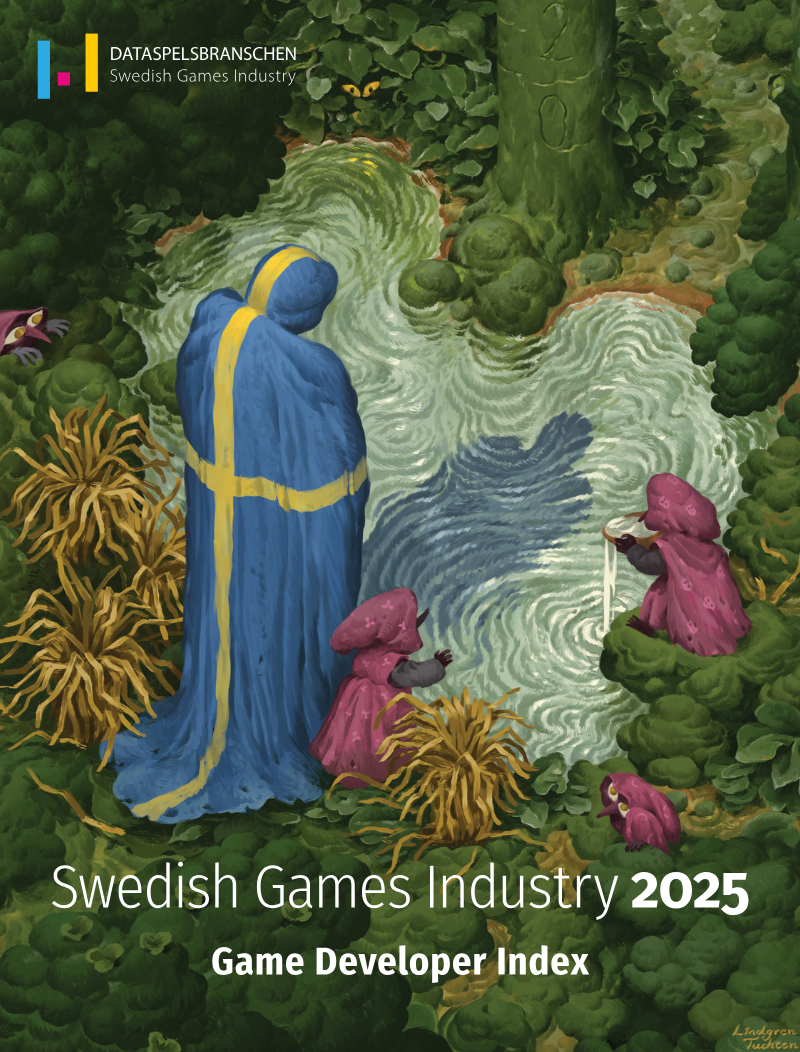
The Swedish games industry is a significant economic force.
It generates SEK 37 billion domestically and SEK 73 billion globally. The sector accounts for 3% of Sweden's total service exports.
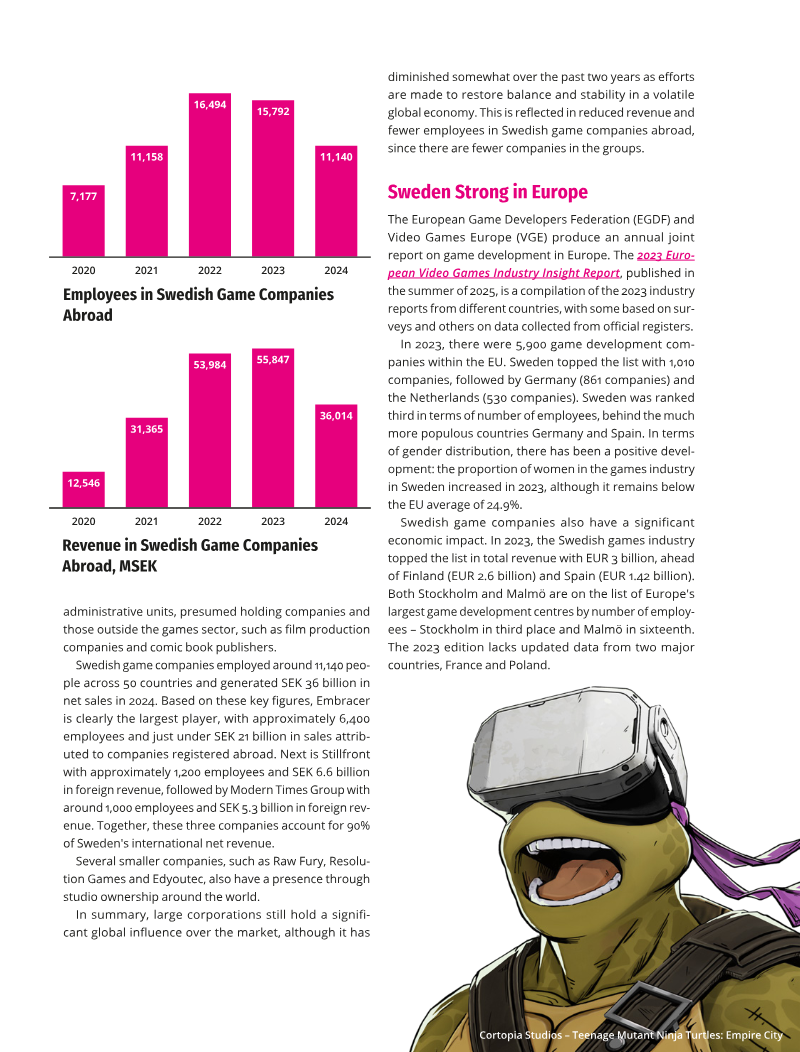
Global Reach
Swedish-developed titles reach an estimated one in four people globally.
This maintains a dominant international position despite recent challenges. These challenges include corporate divestments, studio closures, and 400-500 redundancies.
Page 8 of the reportone in four
Estimated global reach of Swedish-developed titles.
Entrepreneurial Core
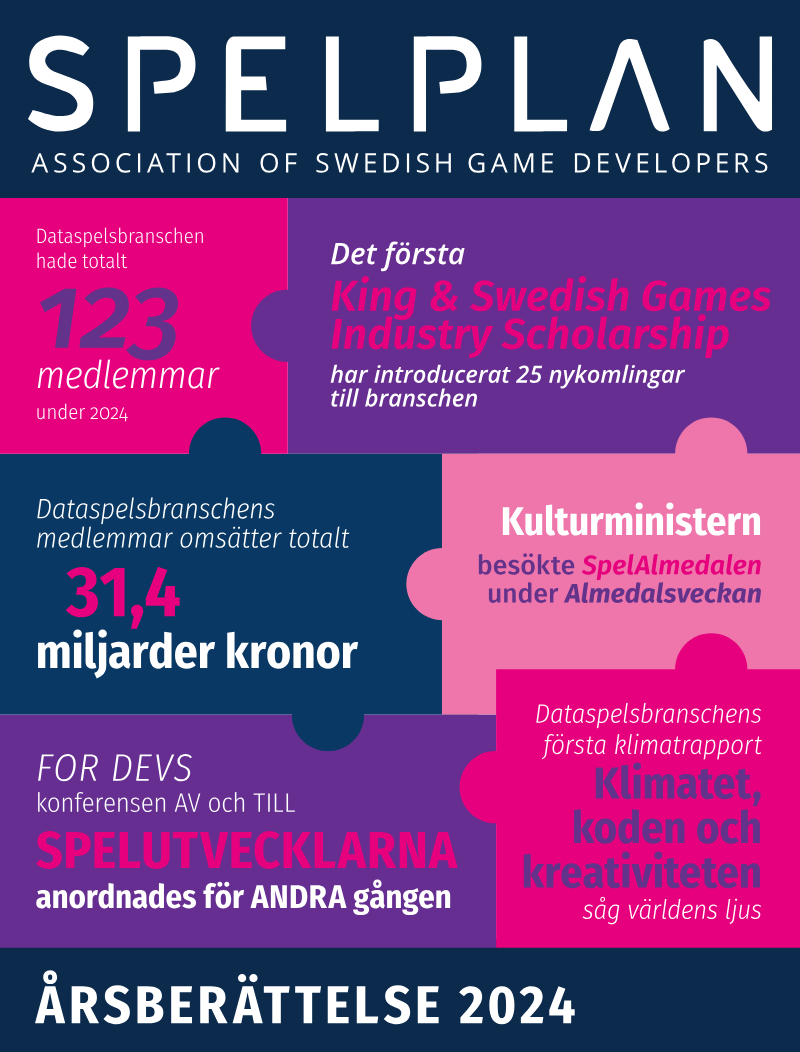
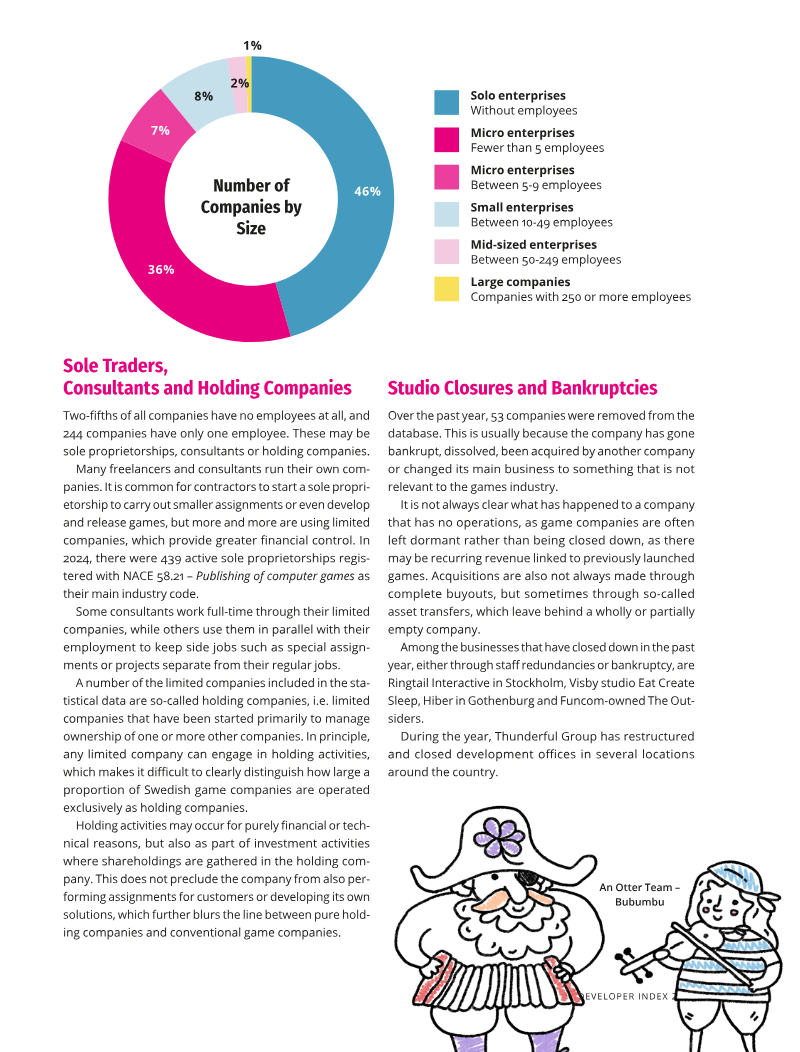
The industry is highly entrepreneurial, with 93% of firms having fewer than ten employees.
Large corporations like Embracer Group, Stillfront, and Modern Times Group drive 90% of international net sales. The ecosystem is fundamentally entrepreneurial.
Think of it like a forest where most trees are small, but a few giant trees provide most of the fruit.
Key Hurdles
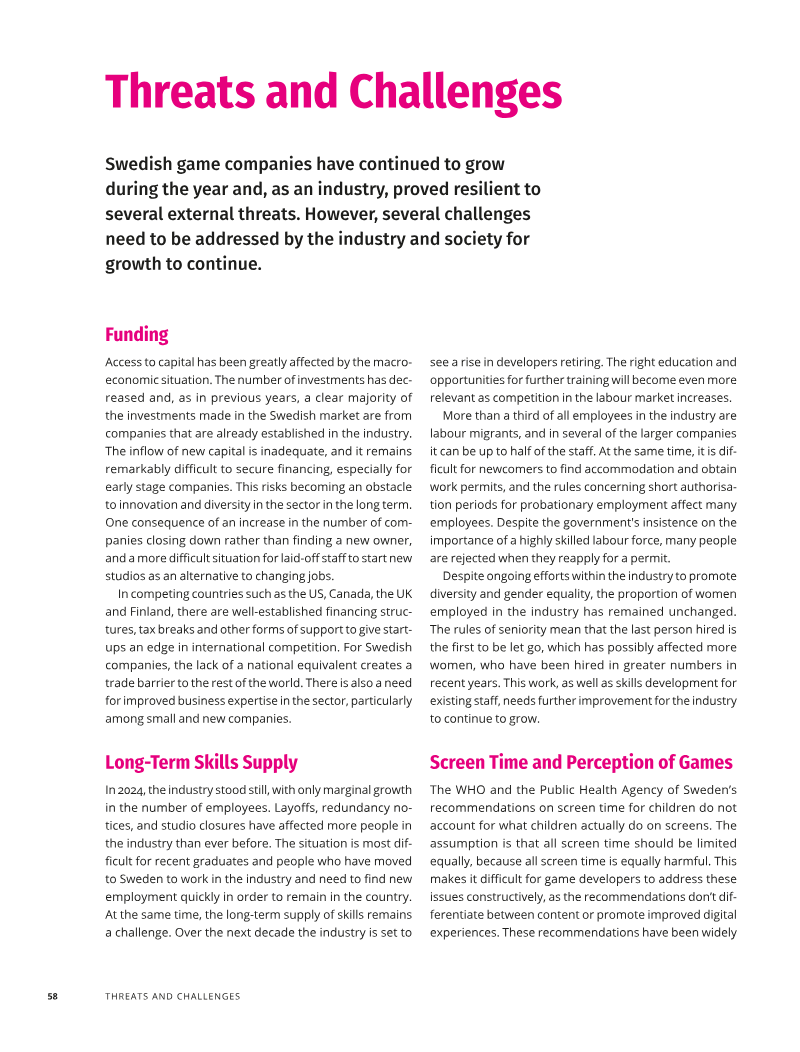
Key challenges include restricted access to capital and regulatory uncertainty regarding AI.
Stagnation in gender diversity is also a challenge. Women represent only 23.5% of the workforce.
Sustainability Efforts
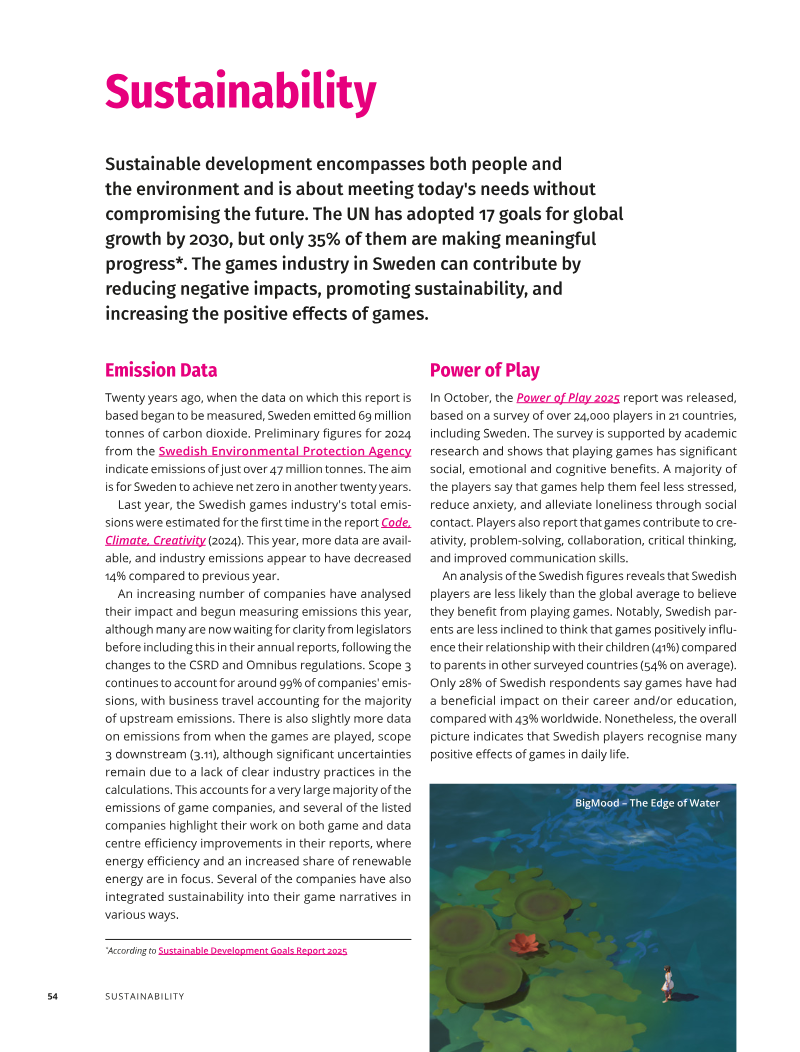
The sector is actively addressing sustainability, reporting a 14% reduction in emissions.
Incubators, academic partnerships, and vocational programs support the sector.
Strategic Priorities
The industry is prioritizing sustainability and digital safety.
It is also researching the social benefits of gaming. Operations are professionalized using data from official Swedish sources.
1 / 6
Ask AI about this report