Game Development reports and market data
Documents

Let's Review Your Games — Ep. 042
Indie game development success relies heavily on balancing creative vision with rigorous technical polish and user-centric design.
- Streamability is a critical development priority because streamers and YouTubers are essential channels for game revenue; technical issues that prevent a game from being streamed represent a major red flag.
- Onboarding should be integrated into the gameplay experience rather than presented as a wall of text, as players are unlikely to retain complex instructions provided outside of active play.
- Combat feedback is essential for player satisfaction; developers should implement clear indicators such as knockback, sound effects, particle effects, or reticle flashes to confirm successful hits.
How To Actually FINISH & SELL Your Indie Games (Webinar & Q&A)
The successful completion and commercialization of indie games depend on a strategic synthesis of personal creative passion and objective market viability.
- To ensure a game is viable and marketable, developers should release a demo early to track key performance metrics like wishlists, streamer interest, and audience engagement.
- Developers should scale down project scope by focusing on a single core mechanic and aesthetic to increase the likelihood of actually finishing the product.
- Before fully fleshing out a game, conduct private beta testing with a small group of users to gather critical feedback and identify technical issues early in the development cycle.
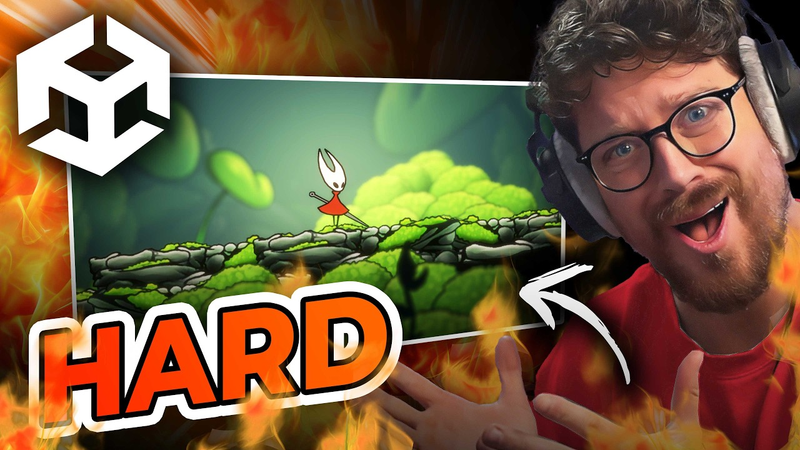
I Tried To Remake Silksong In 10 Hours (Hint: It Was Brutal)
Recreating the visual aesthetic of a high-fidelity 2D platformer like Silksong within a ten-hour timeframe presents significant technical and artistic challenges.
- Achieving the Hollow Knight visual style requires a perspective camera rather than a standard orthographic camera to accommodate complex, multi-layered parallaxing.
- To maintain visual consistency across varying depths, a custom sprite shader is necessary to integrate Z-buffer depth for post-processing blur, depth-based darkening, and interaction with Unity's global 3D fog.
- Importing artwork as PSB files into Unity allows for the automatic breakdown of Photoshop layers into individual sprites, which can then be organized into prefabs for efficient reuse and animation.
How To Make Your Game 10X Funner (Workshop Day 3)
Enhancing the core experience of a first-person shooter relies heavily on the concept of game feel, which is achieved through iterative visual polish and immediate player feedback.
- Game feel and 'juice'—such as particle effects, lighting, and screen feedback—can transform a boring, basic prototype into an engaging experience without changing the core mechanics.
- Developers should avoid multi-year gambles on a first project, instead opting for small, simple games that can be completed in approximately three months.
- A viable strategy for indie developers is to create a small-scale, hour-long game with limited scope, such as five enemy types and five weapons, priced at $5.

TWiG #375: GDC 2026 Post-Mortem, Epic’s Surrender & Google Play’s Legal Rebirth
The global gaming industry is currently navigating a period of significant structural recalibration, marked by declining event attendance and shifting platform economics.
- GDC 2026 attendance has declined by 30% compared to 2011 levels, signaling a structural shift away from mass-market conventions toward exclusive, executive-focused events.
- Google Play’s recent 5% reduction in service fees is considered insufficient to offset the rising costs of user acquisition, despite improvements in user friction through the removal of installation scare screens.
- Epic Games is pivoting away from protracted legal battles toward internal platform growth, focusing on self-publishing and cross-platform social features rather than alternative mobile app stores.
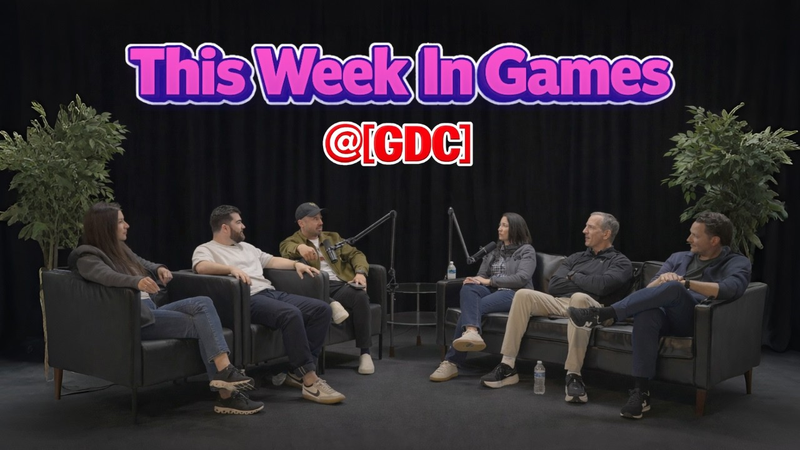
TWIG #374 GDC 2025: The Honest Debrief
The gaming industry is currently navigating a period of profound structural transition, characterized by a cautious atmosphere and a growing disconnect between traditional development models and emerging consumer preferences.
- Investors are shifting capital away from traditional PC and console development, viewing these sectors as low-growth publishing models and instead prioritizing gaming-adjacent AI tools and emerging markets like Turkey.
- The gaming industry faces a structural crisis defined by rising customer acquisition costs, declining download volumes, and a significant contraction in venture capital investment.
- Gen Alpha is abandoning traditional high-fidelity narrative titles in favor of low-fidelity, social-first experiences on platforms like Roblox, rendering established development playbooks increasingly obsolete.
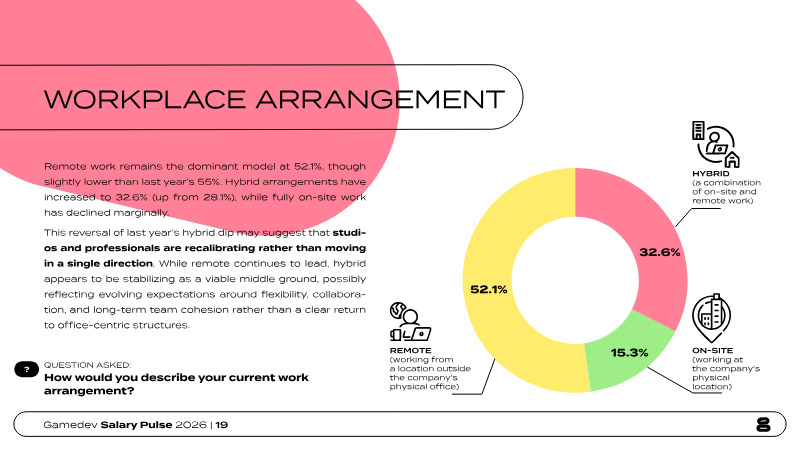

Gamedev Salary Pulse 2026: North America, Western Europe, Nordics, Central and Eastern Europe
The Gamedev Salary Pulse 2026, the fourth edition of a report from game-industry recruiter 8Bit, aims to increase pay transparency and capture sentiment in a game industry still shaped by layoffs, restructuring, and AI uncertainty.
- Nearly 40 percent of game industry professionals anticipate further market decline, driving a shift in worker priorities toward time-based benefits like the four-day workweek over traditional office perks.
- Workforce reductions and studio restructuring remain the primary drivers of career displacement, significantly outpacing job losses attributed to artificial intelligence integration.
- North America maintains the highest global salary tiers for all seniority levels, while Central and Eastern Europe remain the most cost-effective regions for talent acquisition.
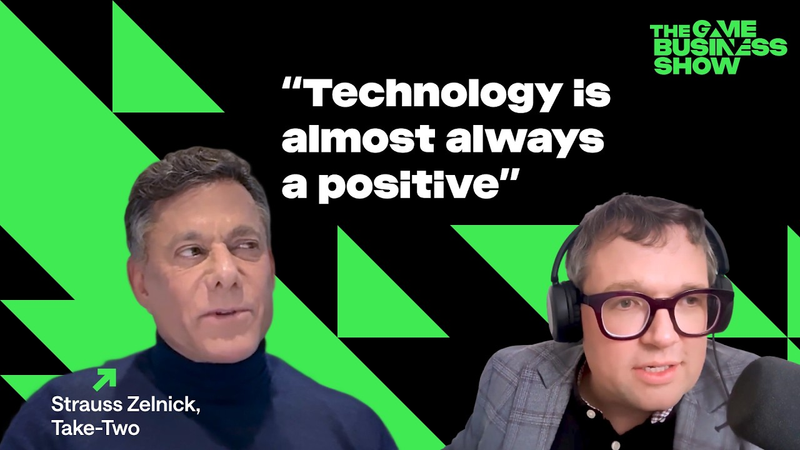
Take-Two CEO Interview: ‘The notion that AI can make GTA is laughable’
Take-Two Interactive CEO Strauss Zelnick asserts that while artificial intelligence offers significant potential for operational efficiency and creative support, it does not pose a threat to the traditional model of high-end interactive entertainment.
- Take-Two Interactive projects a major shift in revenue distribution over the next decade, with the U.S. share expected to drop from approximately 65% to 20–25% as the company expands into India, Africa, the Middle East, and Latin America.
- CEO Strauss Zelnick maintains that AI is a tool for operational efficiency and asset creation rather than a replacement for human creativity, explicitly dismissing the idea that AI can generate blockbuster titles like Grand Theft Auto.
- Take-Two currently utilizes hundreds of AI implementations across its labels to streamline workflows and support the company's core strategy of creativity, innovation, and efficiency.

GDC 2026: AI, UGC, and the New Reality of Game Funding
The gaming industry is currently navigating a pivotal transition characterized by the integration of artificial intelligence and user-generated content as foundational pillars of development and business strategy.
- Investor expectations have shifted from funding based on team pedigree or prototypes to requiring proven traction and established community engagement.
- Gaming companies are adopting AI tools to accelerate development but are keeping these implementations quiet due to negative sentiment from a vocal segment of their player base.
- User-generated content (UGC) platforms like Roblox and Fortnite UEFN are becoming critical for traditional studios to extend game lifespans and maintain player retention as development cycles lengthen.
Mobile Dev Memo Podcast, Season 7, Episode 8: Games and AI (with Joost van Dreunen)
The gaming industry currently faces a critical miscalculation regarding the role of generative AI, as public markets erroneously view the technology as a disruptive force destined to replace human labor.
- The video game industry experienced significant workforce reductions, with 15,000 layoffs in 2024 and approximately 9,500 in 2025, a trend accelerated by both economic decline and the promise of AI-driven efficiency.
- AI currently excels at productivity and cost-cutting but fails to generate new consumer demand, a critical gap that industry leaders must address to avoid a surplus of mediocre, derivative content.
- The massive infrastructure investment by AI companies, such as the competition for high-end Nvidia chipsets, is driving up hardware costs and creating a supply-side barrier for consumers and smaller developers.

26th Annual Game Developers Choice Awards
The 26th Annual Game Developers Choice Awards served as both a celebration of creative excellence and a critical forum for addressing the current instability within the global gaming industry.
- Death Stranding 2 won the Game of the Year award at the 2026 Game Developers Choice Awards.
- Nominees for the 2026 Game of the Year included Donkey Kong Bonanza (Nintendo EPD), Claire Obscure: Expedition 33 (Sandfall Interactive), Ghost of Yote (Sucker Punch Productions), and Split Fiction (Hazelight Studios).
- The Innovation Award nominees featured Baby Steps (Devolver Digital), Ball Pit (Devolver Digital), Blueprints (Raw Fury), Panic Dispatch (Ad Hoc Studio), Ghost of Yote (Sony Interactive Entertainment), and Split Fiction (Electronic Arts).
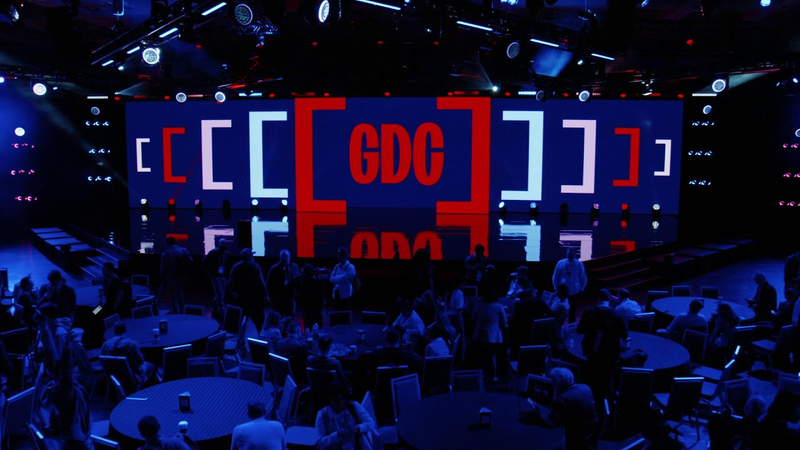
GDC 2026 Keynote - An Odyssey in Building Games That Last
Enduring success in the modern gaming industry is not a product of rigid top-down mandates or formulaic pitch decks, but rather the result of an iterative, non-linear odyssey.
- The most reliable indicator of a game's potential for success is when the development team becomes so obsessed with the core experience that they must be forced to stop playing to return to work.
- Game development is rarely a linear process; teams must be prepared to pivot, cancel, or fundamentally restructure projects—such as the transition from the failed 'Titan' project to the development of 'Overwatch'—when the core vision fails to resonate.
- At Bonfire Studios, the team identifies viable projects by having staff from all disciplines pitch 'seeds' (early concepts), which are then evaluated through mood boards and stack-ranked by the entire team to ensure collective buy-in.