Game Development reports and market data
Documents
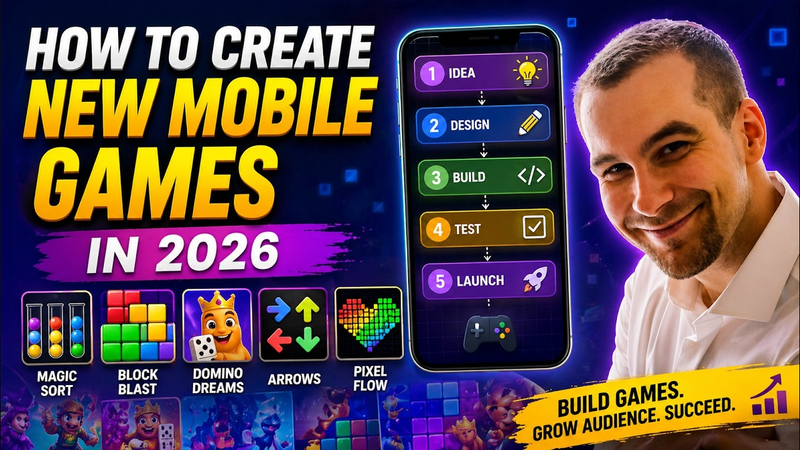
💡 How to create new mobile games 101, 2026 edition 😎
The current mobile puzzle game market favors a methodical, template-driven approach over the invention of original core mechanics.
- Successful studios like Grand Games and Spyke prioritize a template-driven approach by pairing proven, high-download puzzle mechanics with robust metagame engines rather than inventing original core gameplay.
- The strategy focuses on converting ad-driven audiences into IAP players by applying sophisticated level design, blockers, and live-ops to familiar mechanics.
- Developers should iterate on existing cores by approximately 20% to differentiate their product while maintaining the core appeal that already demonstrates high market demand.

The story of Samson: The buggy GTA-style game that just had to launch this month
The global gaming industry is currently navigating a period of significant structural recalibration, characterized by shifting subscription models and volatile market performance.
- The gaming industry is undergoing structural recalibration, evidenced by a 5% increase in U.S. consumer spending and a 69% surge in U.K. hardware sales driven by anticipation for the Nintendo Switch 2.
- Major industry players are adjusting strategies, such as Xbox reducing Game Pass pricing by 23% and delaying the inclusion of flagship titles like Call of Duty.
- The open-world title Samson highlights the risks of independent production, as Liquid Swords was forced to pivot to a self-publishing model in 2025 due to a lack of publisher funding.

Apple's undercooked games efforts, Google's big AI claims, Ilkka's BAFTA speech, data, jobs, more
The mobile games industry is currently navigating a period of significant transition, marked by shifting leadership at major platform holders, the pervasive yet often clandestine integration of artificial intelligence, and the ongoing evolution of indie development.
- Google Cloud's games division reports that approximately 90% of game studios are currently using AI tools in development, though many studios underreport this usage to avoid public backlash.
- Apple's leadership under Tim Cook has historically shown disinterest in the gaming sector, exemplified by the perfunctory nature of the Apple Games app and Cook's own admission of not being a gamer during the Epic trial.
- Leadership changes at Apple, including the promotion of John Ternus and new App Store management under Carson Oliver and Anne Thai, may signal a shift toward better developer relations and increased focus on gaming hardware.
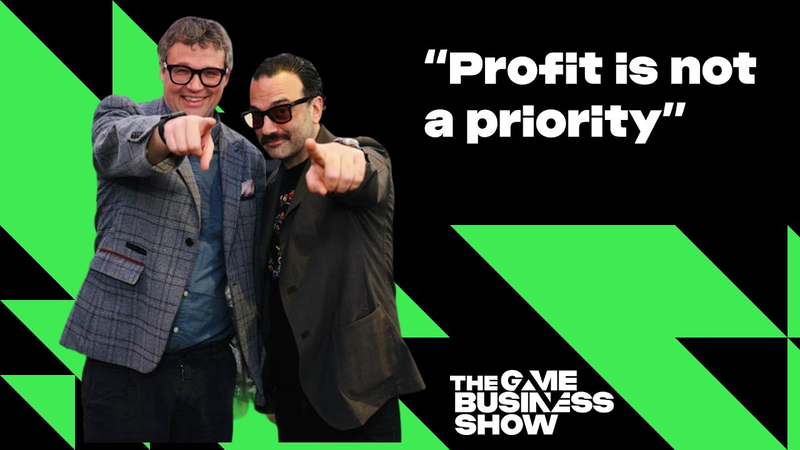
The Vampire Survivors developer is opening studios and making over 15 projects
Poncle, the developer behind the hit title Vampire Survivors, is currently undergoing a significant strategic expansion.
- Poncle is scaling from a solo-developer origin into a decentralized federation of small, agile teams currently managing over 15 active development projects.
- The studio is expanding its physical footprint beyond the United Kingdom by establishing new offices in Italy and Japan to facilitate better collaboration with local stakeholders.
- Vampire Survivors has reached a global player base of over 27 million, providing the resources to fund a diverse portfolio of new genre experiments, including card games.

The state of the UK games industry with UKIE CEO Nick Poole
The United Kingdom games industry stands as a global creative powerhouse, yet its long-term stability is currently hindered by a lack of coordinated political advocacy and structural support comparable to the film and television sectors.
- The UK games industry contributes approximately £6 billion in Gross Value Added (GVA) to the economy and generates an additional £1.3 billion for other sectors through game technology.
- UK tax relief for games is currently 5 percentage points lower than the rates provided to the film and TV industries, creating a competitive disadvantage for domestic studios.
- The UK risks becoming an 'incubator economy' where talent and innovation are developed but not retained, necessitating a shift toward building sustainable, long-term companies rather than just individual games.

Building AI Tools for Roblox Creators
Lemonade functions as a specialized AI-powered coding agent designed to democratize game development within the Roblox ecosystem.
- The platform utilizes a complex layer of agents and routers to deconstruct user intent, addressing the challenge that young creators often struggle to articulate technical requirements through traditional prompting.
- Lemonade prioritizes a robust evaluation (evals) framework over post-training, allowing the company to rapidly swap underlying AI models as technology improves without sacrificing the quality of the user experience.
- Beyond basic coding, Lemonade is expanding into UI generation, noting that approximately 50% of Roblox game development is dedicated to 2D interface elements like inventories and leaderboards.

UK minister: It’s not a problem that Grand Theft Auto isn’t UK-owned
The United Kingdom is positioning its domestic video game industry as a cornerstone of national economic growth and global soft power.
- The UK government is launching a £30 million investment package to support the domestic video game industry across talent development, prototype creation, and commercialization.
- The government prioritizes the economic benefits of job creation and skills development over the necessity of domestic intellectual property ownership for major titles like Grand Theft Auto and Fable.
- The UK's strategic focus is on enhancing export capabilities and establishing a unified industry voice to maintain its status as a global hub for high-profile game development.

7 Tools Every Indie Game Developer Needs in 2026 (And ONE That Actually Matters Most)
This analysis outlines a streamlined toolkit for independent game developers in 2026, aiming to reduce the analysis paralysis that often leads to project abandonment.
- Success in the 2026 indie market depends less on tool variety and more on aligning a technical stack with a developer's unique creative 'gifting' to establish a distinct voice.
- The recommended core technical stack for 2026 consists of Unity for engine development, paired with Visual Studio and C# for programming.
- Visual production workflows should prioritize Blender for 3D modeling, Photoshop for 2D assets and texturing, and Substance for advanced material creation.

The Blood of the Dawnwalker developer: Everyone we spoke to wanted to invest
Rebel Wolves operates on the principle that high-quality, AAA dark fantasy role-playing games are best produced within smaller, boutique environments that prioritize team culture and creative ownership.
- Rebel Wolves maintains a boutique studio model of approximately 160 employees to minimize bureaucratic inefficiency and ensure leadership remains directly involved in creative production.
- The studio secured major financial and operational backing through partnerships with NetEase for funding and Bandai Namco for global publishing.
- Development of the upcoming title, The Blood of the Dawnwalker, utilizes AI-generated voice placeholders to iterate on complex narrative branches before committing to final production costs.

The Role of Co-Development in Modern Game Development
Modern game development is undergoing a structural shift, moving away from the traditional outsourcing model toward integrated co-development partnerships.
- The game industry is shifting from traditional outsourcing to integrated co-development, where external teams are embedded into the core creative vision rather than functioning as task-based vendors.
- Successful co-development partnerships prioritize shared decision-making, transparency, and end-to-end project ownership to optimize production pipelines more effectively than fragmented service models.
- Direct compensation models are preferred over revenue-sharing in co-development to avoid complex accounting challenges and misaligned financial incentives between studios.
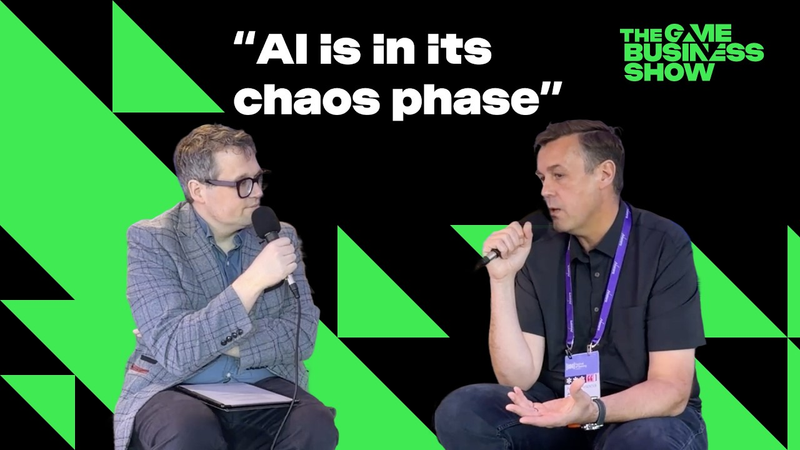
One of the world’s biggest game makers reveals ‘the uncomfortable truth’ about AI
The game development industry is currently navigating a volatile transitional period characterized by widespread AI adoption alongside significant professional skepticism.
- Approximately 90 percent of game developers currently utilize AI tools, yet over 50 percent of the workforce remains skeptical regarding job security and creative quality.
- The industry is currently transitioning from a phase of novelty-driven AI demos to the development of governed, legally secure, and reliable production pipelines.
- Sustainable AI integration requires studios to pivot away from flashy, single-prompt generation and instead focus on automating repetitive, mundane production tasks.

How Game Devs Use AI Today
Artificial intelligence is currently transforming the global game development landscape by prioritizing operational efficiency, cost reduction, and workflow optimization.
- Game studios are increasingly using AI to optimize Live Ops, such as the case where a studio reduced the team required to maintain 'Sunrise Village' from approximately 25 people to two by implementing AI-assisted content production.
- Large publishers like Nexon and Embark are leveraging AI to reduce internal 'blindness' by integrating company-specific data into models, aiming to improve decision-making and development efficiency.
- AI is currently being deployed across the entire game development pipeline, starting with pre-production ideation at companies like Capcom and extending to rapid prototyping that allows teams to test new game modes in hours rather than weeks.