VideoThe Game Business
One of the world’s biggest game makers reveals ‘the uncomfortable truth’ about AI
9 Apr 202637 min video
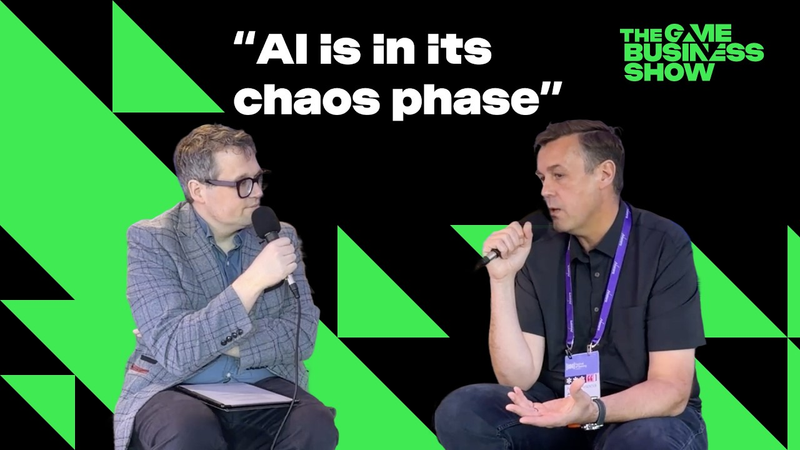
This week we speak to Keywords Studios about the uncomfortable truth around AI. Netflix launches a familiar sounding app for kids and the Super Mario Galaxy movie delivers a huge payday Universal Illumination and Nintendo. Hello and welcome to the Game Business Show. We were hoping today to announce our big keynote speakers for the Game Business Live. That's the event that we have going on on June 8th in Los Angeles. The Game Business Live is effectively a series of episodes of the Game Business Show that we record in front of a live audience. We've got some amazing speakers but we just can't announce them yet. You might have to wait until next week for that. Now, as a reminder paid subscribers to the game business get early access to tickets and they don't have to pay. So if you're interested in our Summer Game Fest event, why not become a paid subscriber? We'll have a lot more details to share next week. Now, today we have a fun episode for you. Last month at GDC I caught up with John Gibson at Keywords. It was a really fun conversation all about AI and we're not really done a full AI episode yet. So we just we have
that for you in just a few moments. I think I think you'll all like it. I thought it was good. But first, let's go over some of the recent video game industry stories. And the one that jumped out to me the most was the news of this new app from Netflix called Netflix Playground. Not to be confused with Next Playground. What is Netflix Playground? So it's this app you download onto a phone or tablet. You stick in your Netflix details and you're in. And inside is a series of video games without any ads or in-app purchases or extra fees. Parents will love it. It's just a selection of games featuring lots of Peppa Pig, Sesame Street, Doc McStuffins, dinosaurs, things like that. It's all available offline so you don't need an internet connection. So great for flights and things like that. And it's aimed at kids under eight. Now Netflix has made kids a major part of its video game strategy. It's also a big part of their TV business too. They've just announced a new preschool series called Young McDonald which my youngest might might be interested in. A press release statement from Netflix's VP of Animation and Kids and Family TV John Derderian said, "We're building a world where kids can not only watch
their favorite stories, they can step inside them and interact with their favorite characters by creating a seamless destination for discovery, learning, and play." This is something very targeted kids concerned about the internet and and what their kids are watching and doing. It isn't too dissimilar to the strategy of the other playground, the Next Playground, which is also looking to entice parents with its camera-based games. That they have this machine basically you see we talked about it on the show before. It also features well-known kids IP such as Sesame Street, Peppa Pig, and Bluey. You just sort of jump around in front of a camera. My kids love it. It also has no in-app purchases to the Next Playground. It is primarily an offline experience as well. They do have a subscription service which is how you get the games, but that's sort of how it's funded. Which is how Netflix is funded. It's not the only thing going on. Jackbox Games, which is they're the ones that create those party packs, those family party games where you sort of play with the room with your mobile phone. They're also about to launch a standalone subscription service for its titles. It's all getting quite tasty in the kids and family space at the moment with a lot of different services designed to appeal to an audience that might be priced out by those big video game
consoles, particularly now those prices continue to rise. It's a big market as well, kids. According to App Annie analysis, in the US there are 14 and a half million gamers under the age of nine and 4 million under the age of five which some of these games will be speaking to. The question is whether parents are not already well served by the products that are out there. I'm thinking specifically the Nintendo Switch. Switch 2 maybe not but Switch 1 is is in 150 million homes now. It's actually a more powerful device than the Next Playground and it's got a lot of great games on it. Ultimately though, it's great to see various players tackle the living room and kids experiences and potentially offers up more opportunities for the industry. Jackbox Games have just started publishing third-party games which is interesting. We've got Netflix signing more kids titles all the time and Next is working with a wide number of developers to expand its games library, too. That's a nice fun positive development for the industry, isn't it? Now, sticking with kids. It's now been over a week since the Super Mario Galaxy movie came out. I've already seen it twice. The fans seem to have enjoyed it if not so much the critics. It delivered $372.6 million in revenue for the five-day
opening weekend. Basically but not quite matching the $375 million that the original Mario movie managed. Mario is now the only animated movie franchise to have two movies that have made more than 350 million in its opening weekend. It's the biggest film of the year. Well, it's the biggest film opening film launch of the year. At the time of recording it's actually already on 414 million. The budget was 110 million so that's a nice chunk of change for Nintendo, Universal, and Illumination and indeed the cinemas. The film didn't do great with critics. It's at a 42 on Rotten Tomatoes. Although the fans were happy, Rotten Tomatoes fan rating is 89. It'll be interesting to see if there's any lasting impact on the video games. The Galaxy 1 and 2 collection for Nintendo Switch have bumped up the charts in the UK. Sales up 107% week on week although it missed out on the top 10. There are some more games to come that feature characters from the film. Most notably there's a new Starfox game coming. Starfox Fox McCloud from Starfox was a surprise character in the film and was a much-loved character in the film as well. The Starfox game may or may not
have been announced yet. It will be announced very very soon. And there's a Yoshi game coming out in May as well. Both for Nintendo Switch 2 and so great results for Nintendo and an opportunity for them to capitalize on that further coming up. Those are sort of the the the biggest stories I think of the week. There were lots of smaller stories that I'm going to go through now. Um let's run through them. This is one I like cuz I'm really excited because it's one of my video game heroes. Stellar Blade developer Shift Up has acquired Unbound. That's the new studio by Shinji Mikami. Shinji Mikami is best known for creating the Resident Evil series at Capcom. He also did Resident Evil 4 which is my one of my favorite games of all time. He formed Tango Gameworks in 2010 and developed a bunch of hit titles. Well, a bunch of good titles anyway. They weren't all hits. The Evil Within and Hi-Fi RUSH in particular were great. They were for Bethesda. He left the studio in 2023. Tango Gameworks still exists actually. Bethesda got bought by Microsoft. Tango Gameworks got closed down by Microsoft briefly but then Krafton bought them back out again. So it's now part of Krafton. I'm excited to see what Mikami does next. He's certainly an interesting
game developer and I love the fact that he's, you know, continuing to open and and develop studios. I think this is an interesting story. Ilkka, the CEO and co-founder of Supercell, is the latest games industry leader who's going to receive the prestigious BAFTA Fellowship. That's a rare treat cuz it's a mobile developer getting honored in this way. Supercell is of course best known for Clash of Clans. It's pretty cool. It's pretty cool. Another story that's just that was from yesterday actually is around the upcoming game 007 First Light, one of the bigger games coming out this year. The Switch 2 version has been delayed until later in the summer. Developer IO Interactive said that the other versions of the game for PC and console are still set for the May 27th release date. It seems to be a bit of a trend this for Switch 2 games. Hopefully this one doesn't go the way of Borderlands 4 and just disappear entirely. I would love to play a James Bond game on a Nintendo console. It feels just feels right for fans of GoldenEye. Anyway, sticking with sort of PC and console, Xbox is celebrating its 25th anniversary with the return of its Fan Fest community events. The first event take place in June in Los Angeles. That's
alongside Summer Game Fest. And then we'll travel around the world so it's going to be in Germany, UK, Mexico, another one in the US that's in Seattle, Japan, Canada, and Australia. So a little tour there for Xbox. The Fan Fest events will be quite different I imagine in each location. Um no dates and stuff have been announced yet. Now, another Nintendo story here. The United States Patent and Trademark Office has rejected Nintendo's patent around in-game characters summoning a sub character to aid it in combat so that as seen with Pokémon. Nintendo has two months to respond with the option to extend if necessary. It is all part of Nintendo's ongoing case against the 2024 game Power which it believes infringes on multiple patent rights. That's quite a different game Power would I think. This is actually fantastic news for Hello Games. The No Man's Sky developer just announced a new No Man's Sky expansion which appears to be, well, a bit like Pokémon. It's called Xeno Arena, a new feature where players explore the universe to collect a team of creature companions and use them to fight other creatures in turn-based battles. Where have we heard that before? And it looks quite cool actually. And so good luck to that. No Man's Sky has been an incredible story. I'd love to have um Hello Games on the
show at some point. A couple more stories before we move into our main subject. Social VR gaming platform Rec Room will close on June 1st. The company also called Rec Room was founded in April 2016 in Seattle. Raised $145 million in 2021 and was once valued at $3.5 billion and now it's no more. Tough times for the VR sector. Embracer's Idos has had some layoffs. That's almost normal now. Embracer's Idos Montreal has laid off 124 employees with studio head David Anfossi also leaving the developer. The reductions are reportedly the result of the cancellation of a long in development new open world IP. There's also been job losses at Goat Simulator developer Coffee Stain. It's closing its mobile game development arm in Malmo, Sweden. The studio was formed in 2021 and reportedly had around 17 staff. Its closure was announced by the company's mobile VP Daniel Persson via LinkedIn. And I you know, I'll throw in one last story. Death Stranding 2 on the Beach has now surpassed 2 million sales following the game's release on PC. The title was initially a PlayStation 5 exclusive. I love the fact that people let Hideo Kojima make games like that.
It's incredibly high-end. It's incredibly bonkers and really good. So well done to the Kojima Productions team. That's our news roundup. I actually do something similar every Monday with a bit more analysis called the Game Business Micro. It's only for paid subscribers though. So if you like that and found it useful, why not become a paid subscriber? Paid subscribers not only get that, they also get a monthly report from us. We also give away tickets to our live events as I said earlier including the Game Business Live in Los Angeles. But also it helps us fund all of this. It really does. And for those who have backed us already, I truly can't tell you how grateful I am. Anyway, on to our main topic. At GDC last month I met with John Gibson. He's someone I've known for for a while. He's currently the head global head of transformations at Keywords Studios which is the big service and outsourcing specialist that works with pretty much every major video game company. Gibson used to run Electric Square which is a studio that's worked on some major AAA games including Diablo, Mafia, Battlefield, Need for Speed. That studio is now also owned by Keywords. Now, John was doing a talk at GDC called The
Uncomfortable Truth About AI in Game Production, which caught my eye and I thought I'd love to chat with him about that and I found it was a really good conversation. I learned a lot from it. Keywords work to pretty much every company from all around the world and they're all different, you know, whether it's China or the US and that kind of stuff. So, you know, John has a really nuanced perspective on the subject and so I wanted to share with you our conversation. And so here it is. Hello, John. Welcome to the show. Hello, Chris. Thank you. Your job is transformations. You were just telling me all about that. There's a lot of transformation going on in the games industry at the moment. Is it mostly AI? I think um everyone's talking about AI, mhm, but I think um you know, and I think a lot of people point to AI as the reason for much of the transformation in the games industry, but there's definitely the other factors involved. Yeah. Well, you're here at GDC doing a talk on AI. It's actually quite a great title, The Uncomfortable Truth About AI in Game Production. Well, I was going to ask what is uncomfortable about it, but I guess that's what the talk's around. Yeah. People going wrong then, what
truth do they need to hear? Well, the uncomfortable truth about AI in the games industry is that everyone's focusing on building better AI. And no one's really focusing on how to use it in a live production environment or very few people are. So, um it's kind of I guess AI sort of to me feels like it's in the chaos phase right now. Wow. And we need to kind of move from that to the kind of the usable phase, you know, how do how do we use AI in live production environments? How do we use AI in a way where it complements teams rather than, you know, potentially threatens teams or or there's the perceived threat of Yeah. AI to those teams. And also, how do we use it in a context where it's governed, it's controlled, it's IP safe, it's legally safe, it's ethically, morally safe. And I think the gulf between cool AI demos where you put in a prompt and you get something amazing to actually um AI in production where you get consistent high-quality results Mhm. steered and directed by humans is um you
know, it's quite a big leap. So, that's that's really what the talk's about. Yeah, cuz a lot of the time when people talked about AI, there's a lot of excitement and buzz and there's a lot of uh this is cool, this cool. Oh, but my brain always goes to what does that actually mean in reality? What does it mean when it comes to actually my day-to-day and everyone's day-to-day? It does feel sometimes when you see the headlines, that's being missed. I use AI in my I not on purpose. I didn't realize it, but I we put these videos up on Substack and they create AI video clips from the episodes, which I can then edit and tweak and put onto TikTok. That's an actionable thing that has a a benefit that I mean, I still need to use my expertise and all that kind of stuff, but oh, I get that that's something AI clicks in my head cuz there's a practical use that applies to me. Yeah, and I think um you know, there was some statistics that came out a few weeks ago in um I think it was a a GDC state of the industry report and 90% of developers are using AI. Now, that might be they're using Gemini to complete emails at work or it might be they're using, you know, Midjourney to create concept art. I mean, it's difficult to know exactly where that AI usage is, but
in the same report, it stated that 52% of developers don't approve of the use of AI. So, you know, those two statistics sit quite uncomfortably together. 90% of developers use AI, 52% think it's a bad thing. So, there's something missing there and I think um and I think not having, you know, controls and governance around AI is part of that issue. Mhm. Um I think a lot of companies rather than really explaining to their teams and their people why they're using AI, why it's a good thing and, you know, what the strategy is behind that, they're sort of going into using AI models without really that clarity. Yeah. There's a big lack of knowledge in how AI can practically be used in game development. And I think when I think back to, you know, I've been in the industry for what, 33 years now? You know, I I started when I was 4 years old. No, I didn't. Um but um yeah, so I've been in the industry 33 years and, you know, I started working on 2D games
and, you know, when when the polygon was invented, Mhm. there was a huge amount of chaos and there was a huge amount of change and the industry had to adapt Mhm. um to learn how to, you know, create development pipelines to support 3D content. And I think the invention of something is one thing, but the practical application in real game development pipelines is something else. I think the same thing happens with motion capture. Yeah. You know, when mocap first came out, it was this amazing thing, but actually the data people were getting out was messy, it was confusing, it was inaccurate. And it took quite a while for the industry to adapt to a point where mocap was actually, you know, a usable piece of technology within game development. And I and we're at that same phase with AI. Okay. I think it's, you know, it it's impressive, it's amazing, it's transformative, it's revolutionary, but going from, you know, single prompt something amazing to something consistent and high quality that can be used in game development is where the gap lies right now. It's
interesting what you were talking about there about governance and understanding what's right and wrong, but all studios currently as they're trying to work their ass out, as we as a collective try to work it out, studios individually, they have their own rules, right? They have their own this is what's okay, this is the AI that we accept to use, this is this is what fits with our company, this is what our staff are comfortable with. How does that work for someone like Keywords who, you know, you have multiple different clients? I imagine they have multiple different rules around AI use and that kind of stuff. Does that make that challenging? How do how do you apply that? We always need to listen to and understand our clients' perspective and our usage of, you know, any tools in game development is is going to be dictated by our clients, but we want to get to a point where we understand the technology, Mhm. where we can help our clients navigate their way through the chaos Mhm. to ensure that the right development pipelines, the right workflows, the right orchestration around the tools that we're using, you know, is put forward and discussed and implemented. Yeah. Okay, so it's so what you do at an ad hoc depends on the by client by client, yeah. You know, what
yeah, absolutely. I mean, I mean, our customers come first and what what what they want is always going to dictate how we approach development of their title. I mean, most of the time we're coming into their pipelines, they're they're well-established pipelines, maybe using proprietary engines that they've that been developing over a period of decades. So, um we have to fit with the way they work rather than, you know, suggesting ways that we should work or asking them to adapt to the way that we work. There's a perception that companies in the East, China, developers in China are a lot more open to the technology than those in the West. Is that something that you've seen or found? The legislation around AI usage is different in in different countries. It's different in North America and in Europe as it is in, you know, in in Asia. Um but also, I think the products that they're working on, you know, might might also be different. So, I think when you're talking about AAA game development, you know, particularly around sort of cherished IP, um I think there's going to be more
concerns and more protections around using generative AI. The Asian market, you know, particularly China, mobile game development is a lot more prevalent in those regions and, you know, generative AI may be more applicable to those kind of titles, but I do think legislation play plays a, you know, a very very big part of it. I just think about that stat you're talking about, 52%, you know, think AI is a bad thing in the West. And I do wonder if that view is shared in other other markets or territories and I was a developer I was talking to yesterday, his his big thing was the West risks being left behind if we're too cautious around it because other competitive, you know, nations in terms of, you know, from their point of view as a US game developer, might be far less, you know, far more open to it culturally, for instance. It's not really a question, but that was that's where that question had come from. Yeah, you know, I think when I say our our clients really dictate our usage of tools that we're using game development pipelines, you know, our clients are definitely becoming more open to the usage of AI, but I think fundamentally, you can have
the best AI tools, you could be using the best AI models, you know, in your development pipelines possible, but if you don't have the culture within your organization to support that, Yeah. that's where I think a lot of these studios fall over. And that culture is really about helping developers understand what they're using, why they're using it and how it affects them and how it affects their roles specifically.
Yeah. I have to imagine there's some resistance from employees at various studios. I I think there's I don't think it's hard resistance. There's very few people I meet who are totally closed off to the idea of using AI in game development, but I think what you find is is people asking questions which a lot of businesses are are currently unable to answer. And I think we're gradually reaching a point where those questions are being answered and people are becoming more comfortable and confident about the usage of AI in game development pipelines, but it's a slow process. I mean, that that statistic
about 52% of developers being concerned about the usage of AI in game development, that's gone up every year for the last 3 years. So, as AI tools and AI models and AI technology in general has become more prevalent, the lack of understanding, um the concern has increased. Oh, that's interesting. And I think until we're able to work out how to meaningfully build this technology into production pipelines in a way that is safe, in a way that adds value, in a way that complements the talent that already exists in this industry and doesn't threaten that talent, I think there's always going to be that level of concern. In your experience of using AI tools in production, what's exciting you? Well, you know, what are the what are the things that is what that seems to be really delivering at this stage? I think there's a lot of garbage out there. Yeah, okay.
Um there's I mean, we do a lot of R&D within keywords and we tested about 500 different AI tools um on some of the
kind of R&D projects we've done. And literally, you know, there's about half a dozen which we feel complement development in in the right sort of way. Mhm. Now, I'm not saying that, you know, that number's, you know, not going to get bigger over time. I'm I'm I'm sure it will. But there's a lot of options out there, but there's There's a lot of garbage, a lot of rubbish.
Yeah. I mean, when people talk about AI, they think about generative AI. I think what Gran Turismo did with what's it called? Project Sophie with machine learning uh I thought it was really exciting. So, their kind of AI driver tile system, which was I think machine learning or reinforcement learning where the AI actually started to find its own racing lines and become better and more competitive than the best human players. I think that stuff really excites me because it makes the player experience better. It makes the consumer experience much, much better. And, you know, I've I've I've I've talked to a number of people at GDC this week already who are looking at using machine learning to improve the player experience. And I think that kind of application of AI and machine learning really does excite me. AI which
makes the player experience better.
Yeah. And we'll see we're seeing a lot more of that. And and I think people lose sight of that. People people think generative AI, it's taking creativity from the developers. It's producing mediocre work or game slop at worst. And and and it's much more to it than that. And I think the advancement in AI and the possibility it has to improve the player experience What that is something that reassures me. It's the better thing that matters. There's AI tools in what I do. This interview that we're doing here, the system that we use will transcribe it for me. Yeah. Transcription won't be great. And I'll have to go in and fix it, but it'll transcribe it for me. This interview that we're doing, I could have gone onto Google and done uh what pressure should I ask John Gibson about AI? And it would come up with maybe it would should come up with a bunch of questions that I could ask you. I could basically automate my job. Yeah. The questions won't be as good as the ones that I came up with myself. The transcript isn't as good as the transcript I do myself. The TikTok videos it'll create at the end of it won't be as good as the TikTok videos I do myself. I'll have to go in and fix it. It does speed up the process for me, but it doesn't make anything better. Not
a single thing there made it better. It'll be faster maybe, but not better. And that's the bit that I I'm looking for when we see the AI. Those are the stories you want to see. It's what did this make the experience better? And I we had Matthew Ball on the show a couple of weeks ago.
I listened to the um to the episode.
Well, at the end, cuz we're both older guys, we got down the habit of like we don't have time to play games anymore. And I sometimes go away from a game for weeks on end and I come back into it and I'm like, "Oh, I forgot how to play this." And I'm halfway through the game and I don't know the controls and that boss is too hard for me to complete cuz I forgot I'm I'm basically a beginner again. And wouldn't it be great if there was an AI AI tool that knew that I'd been away for 2 weeks and it just lowered that difficulty for a little bit or taught me how to play something. A little video comes up, teaches me, reminds me of the things I need to do. Almost gives me a tutorial midway through a game. Oh, wouldn't that be great? Well, you you wouldn't know. Most people wouldn't want that.
Yeah. But but I certainly would like that. I think dynamic competition balancing, you know, in video games has been happening for years, but actually using AI to do that better, to do more of that is something that could dramatically improve player experience. I mean, I was I was listening to your podcast with Matthew and I think you
were talking about how you you've restarted Resident Evil 4, you know, five times over or whatever.
And yeah, um you know, for me it was um the game which I kept having to restart was Spider-Man 2. Which which is Which is that was the other example I could have given you. Yeah, and it's the and it's the it's the combat mechanisms and, you know, and and and I've persevered. I mean, I I love that game. I love everything about it, but um you know, I play a lot of games. I jump around a lot. If I go away from, you know, a game like Spider-Man, which has quite a complex combat system for for a week, I'm I'm relearning those controls again. And maybe it's because I'm, you know, I turn 50 this year. You know, maybe it's, you know, my memory's failing, my um Well, your your brain's full. You've got a billion other things going on, you know. Yeah. So, you know, I agree. I think that could be a a fantastic use of, you know, use of AI. Yeah, it'd make the experience better. That's what we're talking about. I mean, ultimately, I think that there's so many aspects of AI that are going to make games better for consumers. If we look at generative AI
doing a lot of the I I I guess the lower skilled repetitive tasks that game developers currently have to do, you know, moving those roles up the value chain, allowing those developers to spend more time on the cool creative stuff. That is ultimately going to make games better. If it allows publishers to make high-quality games for less money, it means there's going to be more games. It means there's going to be more creative risks. So, I feel very positive as as someone who's still passionate about games and plays games regularly, I feel that AI is going to broaden the creativity um that we see coming through. I think there's going to be more games. There's going to be more creative games. That that's the aim. I guess my worry, and it's the only worry I have I think I've probably said this on the uh you if you listen to the show, you've heard me say this before. It's always the next generation cuz I learned how to use job by doing those bottom rung roles Yeah. that AI in theory can sort of replace. And I think that puts a lot of pressure on studios. It'll put a lot of pressure on education to make sure that people young people coming in are well equipped
to be able to go, "I can skip those stages in a way. I can skip the cuz I don't need to do them." And look, a lot of the jobs I used to do on MCV magazine back in the day, I'm pretty sure 50% of them AI could do them now. But I needed that that's how I met people and that's how I learned the job. And that's my that's my one concern. I was I was out with Epic recently and they were saying to me around AI's really cool, but it's great at the moment cuz we've got experienced people that can go, "AI's done this and we can see it's not quite good enough and we can make it better." That's just giving an example of all the things that I do. I can say I can make like the TikTok video's okay, but I can do better. Those questions are okay, but I can do better. Then the next generation won't necessarily have had that experience to know what is good or not. And I think that's the that's my one challenge, but I think it's just on us really.
know. So, I I I I don't necessarily agree with that in the sense that I mean, you know, when I when I started in the industry, the first game I was working on was Batman Forever on the Super Nintendo. And the first job I was given was to basically um it it was they'd kind of used I've I've forgotten what it was
called, rotoscoping, but the same kind of technology [clears throat] that they'd used in Mortal Kombat to take those kind of I I guess still photographs of people in different poses and stitch them together as a 2D animation. My role was to kind of go through and delete all the pixels around them. Yeah. So, you know, that was a rite of passage at the time and I had to do that before I got onto the cool stuff, which was level design and puzzle design and all that other thing. But, you know, if I look back at that, did I really benefit from all that pixel pushing? I'm not sure I did. And I think if you look at the industry now, a lot of those lower skilled jobs which are given to juniors, do they really need to do that to prove their chops? I'm not sure they do. I mean, most people who join our industry are graduates or they're indie developers or bedroom developers, people who are passionate about games. They can do more than we allow them to do on day one. And I think if those roles move up the value chain and do more higher value work, I think it's going to make games better rather than create limitations to entering the
industry. You questioned me there. I liked it. Um Where where isn't it working though? I think you talked about there's a lot of out there. There's a lot of a lot of stuff that's like
Game slop. Is it is it
You know, it's um all of the kind of, you know, you need to get good outputs from AI models, you need humans at every decision point. Mhm. And one of those decision points is quality. You know, you need you need people reviewing the output, ensure it meets the quality expectations required, and directing the models accordingly. Now, I think we we sort of saw on Steam a couple of years ago a huge amount of, you know, mediocre AI-generated content coming out. And the market responded. It adjusted. Suddenly there were quality controls in place. Suddenly you need to declare AI usage in games. People responded. No one accepted that drop in quality. And I think that will continue. A lot of people think that because we're
using more AI, the quality's going to go down. But, you know, gamers are a pretty vocal community. They're not going to stand by and let the the quality of products just drop because of the usage of AI. Whenever I get and I can I used to think I sort of get it when someone says to me, "Look at this amazing video that AI's done." I'm like, "It kind of is incredible that you put in a prompt and you got that video." It doesn't look right. I can't tell you why it doesn't look good. It looks It looks like it's slop, right? And it's the same with somebody gives me a tool and they say, "Here's a way of creating a lovely image for your show." And I sort of put it in. And it is incredible that they managed to do that based on just some text prompts or even just reviewing a podcast. They got they spoke in my podcast and created an image. That's fantastic, but I'm not going to use that. I I doesn't it I don't really
I mean, there's so much stuff which is like, "Well, that's cool, but are you actually going to use it in real production?" Yeah. You know, are you going to are you going to post that content? Probably not. And I think going from a prompt to, you know, a cool demo is one thing, but using AI in game production requires consistent,
repeatable results. And it's, you know, it's something I call the chocolate box problem. So, if you open a box of chocolates and, you know, you your variety is a feature. You know, you want every chocolate to taste different. But if you've got a client who wants 5,000 caramel nougat dark chocolate dark chocolates by next Thursday, you can't just start opening millions of boxes of chocolates to try and find them. You need you need repeatable outputs. You need repeatable quality. If you're talking about IP as well, you need to be able to ensure consistency. You need to be able to ensure quality. And that's what a lot of these tools don't currently offer. And it's that production layer that I think is is missing right now. And whoever manages to crack that, you know, whoever manages to do that and and and maybe it's people in this room right now. Maybe it's people at GDC. Maybe it's people working on this problem already. But, you know, I think that's the way forward and it goes back to, you know, the invention of
the polygon didn't mean 3D content was automatically Yeah. started appearing in games. There was a lot of work on the production pipelines that needed to happen to enable that. It's like as I said with motion capture, the invention of motion capture happened years before motion capture was, you know, cost-effectively used within game production. And I think it's exactly the same thing with AI. We need to crack that production problem before we can effectively start seeing the benefits in the outputs of all the amazing technology that's been built. But, yeah, I mean, I guess fundamentally everyone's focusing on building better AI and not many people are focusing on building better production. I was going to ask that you might have asked my question is what do you find studios underestimate when it comes to incorporating AI into their workflows? But, is it that that they underestimate that they I think a lot of people focus on on what's cool. They focus on the tool itself or the model itself. rather than, you know, what what they're trying to do. Yeah. So, it's almost
like, you know, a company will use a tool or build a tool without a specific use case and try and cram it into their production pipelines rather than flipping that problem around and saying, "What are our pain points? What what what are we trying to solve? What are you trying to fix here?" And then building a tool against that. So, I'm not sure that answers your question, but it sort of it sort of feels like that that the cool tech, the stuff everyone's getting excited about is is driving implementation rather than flipping things around and looking at the problems we're facing and the problems we want to try and solve. Again, I was walking and talking with another person yesterday and AI AI's all being talked about here, right? It's I mean, it always has been, but it's more so this year than I ever heard it. Um and one of the conversations that he was saying to me was there's a lot of people that says, "Oh, look what this AI has done for me. It looks really cool." And he still always asks them, "Is that what you imagined when you put it in?" And he went, "Well, not exactly as I imagined it." So, why then why are you
happy with that? And it's like it's like you the tool did something that it was really easy and incredible and it's done a good job, but it isn't what you wanted necessarily. And if you if you worked a way around this is what I want and how can I help you get what I want rather than AI can get me almost what I want. I don't know if that Makes sense.
No, absolutely. I mean, it's you know, it's a one prompt sort of um Yeah.
you know, gamble as to what you're going to get out of it. But, as these tools become more advanced, I think controllability and being able to kind of get consistent results and creatively direct the results is is what's going to be important. I think when we look at when we look at Genie, Genie 3 looks amazing, right? You get 60 seconds of something which looks like a game and there's some kind of limited physics interactions. I think walking along and jumping's all all that Genie's doing right now, but you still need people to kind of creatively direct those experiences. You still need people to kind of consider the characters, the characters development, the narrative, the systems, you know, creative directing those, you know, that those
experiences which you're not going to get from those models alone. You're not going to get from a single prompt. What you're going to get is something which looks really cool, but you're not going to get a curated experience with 50 hours of amazing game play that keeps you engaged and um
Certainly not innovative game play either. What's what's that?
saying not innovative game play either. A lot of the time I find AI goes to the to the middle and it also looks back rather than looking forward a lot of the time. So, it's like Well, well, that's it. I mean, and I think you know, it's like the invention of the mobile phone, you know, we were we were talking earlier about how effective they are at Yeah. as video cameras. I mean, that didn't that didn't destroy Hollywood. You know, it meant that there was more content with YouTube and, you know, it means that it changes the landscape a little bit, but um things readjust. And I think the same thing will happen with AI.
I it's interesting cuz obviously one of the other topics of this show, but I do think it connects together with like UGC and Roblox and sandbox games. And somebody said to me ages that Roblox is effectively the games industry's YouTube. And I suddenly went, that sort
of clicked tickled me. And I thought it's almost like a different segment of the industry then. And that's where, you know, you might get a little bit more of that AI sort of driven content where people get to people with without that skill set can, but it's never going to replace It's not going to replace Stranger Things, is it? Is It will exist alongside it. It will exist alongside it and the industry will probably need to adjust because they might be competing for people's time, but it will coexist. Things will balance.
It's what Todd Todd Howard said Troy Baker said on the show the other day if you ever watched that episode. And he said I think actually the rise of AI will cause a desire for more authenticity and more art in a in many ways. So, that's his that's his hope.
No, I agree absolutely, wholeheartedly. Uh this last question I'll ask one more question, but I I suspect it's you kind of answered it in all your other answers, but for studios that aren't sort of properly on their AI journey yet or are sort of don't even know where to start, what do you recommend to them? What do you what do you what do you say to those ones? I think it's worth investing in R&D. I think it's worth having you know, people within your
organization who are looking at everything and understanding what can be used, what can't be used, what's good, what's rubbish. But, I think fundamentally, rather than looking at a cool piece of tech and trying to crowbar that into your development pipelines, I think fundamentally you've got to flip things around. You've got to look at where your current pain points are. You've got to look at where AI can potentially add value. You've got to look at your workforce and think, "How can we take these boring repetitive tasks off people off our talented staff so that they can focus on the things they're really good at." The creative stuff, the creative direction, all the stuff that AI isn't currently good at. rather than letting the tech drive the, you know, the the adoption. Yeah. John, pleasure to have you on the show. Thank you so much for your time. Um good luck with your talk. It would have been done by the time this has gone out, but uh Thanks, Chris.
Um but, yeah, thank you for your time.
being on the show. Thank you very much.
Thank you. That's it for today's episode of the Game Business Show. Thank you for joining us. We've got a lot going on next week including a live appearance at London Games Festival. We're interviewing Vampire Survivors developer Poncle on stage. It's being recorded and we'll make that available for you to watch or listen to when it's ready. But, that's kind of it for me for today. I would like to thank my producer Richard Wilcox for being consistently amazing. And until next time, thank you for tuning in.
Auto-generated captions from YouTube — names and numbers may be misheard.
The game development industry is currently navigating a volatile transitional period characterized by widespread AI adoption alongside significant professional skepticism. While approximately 90 percent of developers utilize AI tools, over half of the workforce remains wary of the technology’s implications for creative quality and job security. The primary challenge facing studios is moving beyond the initial novelty of single-prompt generation to establish governed, legally secure, and reliable production pipelines. The industry is currently trapped in a phase where the focus on impressive technological demos often obscures the practical necessity of integrating AI in a way that maintains consistent, high-quality output.
To achieve sustainable integration, studios must pivot from prioritizing flashy AI capabilities toward solving specific, repetitive production pain points. By automating mundane tasks, AI can serve as a force multiplier that allows human creators to dedicate more time to high-level creative direction and the development of authentic, curated player experiences. Successful implementation requires a shift in organizational culture that emphasizes human oversight, ensuring that technology complements rather than replaces the creative workforce.
Ultimately, the long-term value of AI in gaming lies in its ability to enhance player engagement through features like dynamic difficulty adjustment while simultaneously elevating the role of the developer. As the industry matures, AI is expected to coexist with traditional development methodologies, likely increasing the market premium on human-led, authentic artistry. The future of game production depends on a strategic, disciplined approach that prioritizes tangible value and quality control over the mere pursuit of technological novelty.

The Game Business · 2026

The Game Business · 2026

The Game Business · 2026

The Game Business · 2026

The Game Business · 2026

The Game Business · 2026

The Game Business · 2026

The Game Business · 2026

The Game Business · 2026

The Game Business · 2026

The Game Business · 2026

The Game Business · 2026

Deconstructor of Fun · 2026

Naavik · 2026

The Game Business · 2026

Naavik · 2026

Deconstructor of Fun · 2026

The Game Business · 2026

Deconstructor of Fun · 2026

Deconstructor of Fun · 2026

Naavik · 2026

Naavik · 2026

Deconstructor of Fun · 2026

Deconstructor of Fun · 2026
Comments