VideoThe Game Business
UK minister: It’s not a problem that Grand Theft Auto isn’t UK-owned
16 Apr 202638 min video
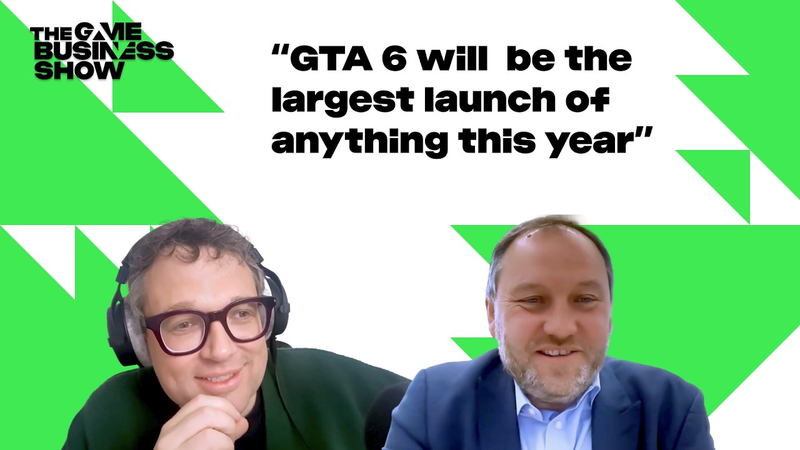
This week we speak to British MP Ian Murray about support for video game developers. Xbox is facing tricky Game Pass questions and the game [music] business is going to LA. Hello and welcome to the Game Business Show. Let's begin with our news this week. The Game Business Live is coming to Los Angeles on June 8th. It's a morning conference at the Grammy Museum in downtown LA. We did it last year and we had a whale of a time and we're bringing it back. It's part of Summer Game Fest. Now the event is a series of live versions of this show. So we have interviews, we have data. I can confirm our two big speakers are EA Entertainment president Laura Miele, who oversees games such as Apex Legends, Skate, The Sims, Battlefield, basically everything but the sports games. Um she is our keynote interview and I'm really excited to welcome Laura. I've not spoken to her for a very long time. And we also have Jason Rubin. He's going to be our legend interview. Jason is the co-founder of Naughty Dog. He was the director of Crash Bandicoot. He He also
ran THQ as president for a short while and spent most of his recent years at Meta, but you know, working on the firm's VR and metaverse initiatives. He's going to be sharing stories from his incredible career in video games. We do have a third speaker, who is also brilliant. I'm really excited, but at the time of recording I'm not 100% sure if we're announcing him today or if we're announcing him um next week. Uh so he may be in the newsletter, he may not. I can't tell you about it just yet. But those are our two big speakers, Jason Rubin and Laura. I'm really excited. Um tickets are on sale now. Um if you are a paid subscriber to the Game Business, you can come to the event as part of your subscription. So that's basically no extra cost. You've already subscribed, you can come along. You do still need to register. You should have received an email already with a link on where you can register. You can of course become a paid subscriber if you've not already and you'll receive a link to register as well. Details on subscription can be found at the gamebusiness.com or in the newsletter version of this um the this podcast. Tickets are also available separately,
although it's the same price as subscription, so I would get a subscription, but you can buy tickets separately if you don't want to. There is a third way to come, which is by buying an industry pass to the Summer Game Fest Play Days event. That um Play Days is where people can go hands-on with some of the really studio games that are sort of shown during the week. I love Play Days. It's a great media event. They have an industry day on a Monday. The industry pass gets you access to that, but it also gets you access to the Game Business Live as well. But you do also need to register. You can read all about that on our website. It's all there. I will be hosting the event and conducting the interviews. Jeff Keighley will be joining me. He'll be greeting people and doing a welcome. There's networking and all sorts. It would be lovely to see you there. Anyway, that's our news. Let's move on to actually the other stories out there, but I'm going to start with a really significant one, I think. Xbox is looking at changing Game Pass again. It's barely 6 months since it last did it. They've come to the conclusion that it's become too expensive. That's according to a leaked memo from Microsoft Gaming CEO Asha Sharma. The firm is looking at lowering the cost of the service, potentially by
not having the brand new Call of Duty games launch in the service on the day they come out. That's proving to be the big reason behind the the the price increases. Now Xbox raised that price of Game Pass in October last year by 50%. It's now $30 a month for its ultimate tier, which is the tier that has all the new games in it. And all the other tiers went up as well. They did make it a better service, I will say that. They included loads of other subscription elements to it, including the promise of having 75 day one titles in Game Pass Ultimate every year. That's a 50% increase on previous years. But these reports about them lowering the price again suggest gamers uh didn't really care about more games. It was inevitable that raising the price would result in some lost users, of course, but the fact that Microsoft is saying the service has become too expensive suggests that the revenue from the higher pricing hasn't offset the lost player base. There are a couple of challenges here. First, will lowering the price and removing Call of Duty bring that lost audience back? I think that's a challenge. Xbox will have to make sure their messaging and their upcoming slate
as a means to entice users alongside any price drop. So a 12-month period with Forza, Fable, Gears, and Halo, you know, that's what's coming out this year. Those are the four killer Xbox brands. That's quite compelling. So they need to match that messaging with the price drop and maybe that could bring audiences back in. But they've certainly made things harder themselves by doing this. Ultimately, this is a short-term solution. Longer term, there are real questions around what Game Pass should be. Um regular readers and listeners will have heard me talk about this at length before. I've never truly believed in the Game Pass concept as a business. There are clearly hardcore gamers who will subscribe to a service filled with excellent games, right? My initial concern with it was that these gamers, they spend on games anyway. So doesn't Game Pass just reducing what they spend if they can get access to loads of games within a subscription service, will they not just spend less on games? Now that concern proved to be unfounded, at least according to Xbox. Gamers are spending more on average as a result of Game Pass, not less. That's what they say. So that's good. But if Game Pass is going to deliver on
its initial vision, it needs beyond those hardcore players. It needs to hit a wider audience. Otherwise, Xbox is just taking a margin hit on its first-party games business, which by the way is exactly what's happening and it's why Xbox is trying to grow those margins by putting their games on other platforms. Now the reason why I've always been a doubter about this is that most gamers don't play that many games. According to Sacca, they put out some data recently around this. 63% of US gamers buy two or fewer video games every year. 22% say they buy a game every quarter. Now let's say that 22% are buying full price premium games, $70 games. Now it comes to $280 a year. Game Pass Ultimate's annual subscription cost is $360 a year. That means for 85% of US gamers, the math on Game Pass just doesn't add up. A game subscription service simply doesn't have the same appeal as one for TV like Netflix or music like Spotify. The consumption habits are different. We don't play as many games as we watch TV
shows and we listen to music. Perhaps Game Pass could adopt a more flexible model. That's what's being suggested in these in these reports. Perhaps gamers can subscribe, this is what I see as my takeaway from it. Perhaps gamers can subscribe for a lower fee and access perhaps five AAA games a year or maybe they have a set number of credits that they can spend on games where Call of Duty is a lot of credits and a and a cool little indie game is a lot less credits. And if someone happens to use all their credits, maybe they can buy more credits or maybe simply acquire the games at a discounted price if they're a subscriber. And there's logic to that model. It's basically there's still a full buffet, but it's not all you can eat. But it's a bit messy and it's a bit complicated. A simpler model would be to suggest us a new releases entirely from the subscription packages and adopt the PlayStation model where you get a wide selection of back catalog games, but not the brand new ones. I think there's a genuine argument around that. But longer term, the question is and the question that I don't know the answer to is what is Xbox? Is it a platform? Is it
a third-party publisher? I can't help but feel Asha Sharma has walked into an organization that just seems a bit lost. Caught between being a game publisher and a platform and also between being a video game company and a division of Microsoft. That last bit actually is the hardest one to figure out. It's easy for all of us, easy for me sitting here behind a laptop, to say that Xbox needs to get back to basics. It needs to make some hit games and make them exclusive to its platforms and services and drive users to it. It needs to stop trying to disrupt everything for a moment and just focus on getting the fundamental right. That is the advice you'd give to any video game business normally, but Xbox isn't any video game business. It's a Microsoft company. Microsoft doesn't want Xbox to be a second or third place competitor in the PC and console market, which is by the way what it would be. That cannot be the ambition for Xbox. It's unacceptable. I can't help but look at that in the context of what's happened at Amazon and before that Google. They're also two major tech companies that saw games as a big growth opportunity, but found it too complicated, too unpredictable and it wasn't worth the continued investment,
which is seeing Amazon pull away so much from games. Now Microsoft isn't Google or Amazon. I'm not suggesting they're about to close Xbox. It's hard to imagine them doing that considering the history of Xbox and the presence, you know. Microsoft have been far more committed to games than any of its sort of tech rivals, I guess. But the challenge is the same. Subscription is stalling, streaming growth is is happening, but it's not happening very fast. Console sales are fading, game sales are inconsistent, and the expectations are enormous. That's what Asha Sharma has to navigate. Even with all that said, I can't help but feel the solution is the same as it would be for any video game business, which is keep it simple. Set a goal and point all of your resources, and in Microsoft's case quite considerable resources, at achieving that goal. And remember and of course they and everyone needs to remember this is an art form. None of it works without delivering hit games. You can have the best business strategy, but it's it counts for nothing if you don't have the, you know, hit games. And I just can't help but feel that Xbox
Game Pass, growing that subscription service, it isn't the right goal. I think there are other things that Microsoft should be doing. Anyway, that's not for me to work out. Um it's a very complicated scenario and uh we've talked a lot about Xbox. They are a very big company doing lots of interesting things and they're certainly fun to talk about, but good luck to them. Good luck to Asha Sharma and um I look forward to seeing what games they've got to show in June. Um I'll run through some smaller stories, stories that are a little bit less uh I've got less opinions on, I guess. Um Roblox is launching a new subscription service, uh Roblox Plus. It begins April 30th and it will cost $5 a month and offers discounts on in-game items and avatars and other exclusive benefits. I don't know what those exclusive benefits are. It just says it right here. Um Roblox is going to cover the cost of the discounts, so it won't impact the revenue for creators. Creators can also benefit from subscribers who use a game's private paid service and from implementing an API that enables users to sign up to Roblox Plus in game. That's that's
pretty That's pretty nice. It's nice that it's not going to be the creators that take the hit. This is the thing I find more interesting. Roblox is also adding two new accounts for minors. Roblox Kids for children aged 5 to 8 and Roblox Select for users aged 9 to 15. New parental controls are also on the way. These new accounts will launch in June. They will align content, communication options, and parental controls with an age bracket. Roblox is also adding parental controls including the ability to block specific games, manage direct chat, and approve games that are not otherwise available to the age bracket. So, if a game you think actually this is all right for my kid aged eight, but it's for age nine or above, you can approve that. And there's also going to be additional controls around screen time and spending limits. Roblox has come under criticism for not doing enough to protect young people online. I think it's the biggest challenge they have is this sort of reputation they might be getting around being an unsafe place for kids to play. So, this is part of their ongoing efforts to solve that. They've been quite proactive and quite noisy around all of these things, but they are facing some challenges in places like Australia.
So, that's the Roblox news. UK news and we're going to come back to UK news again in a moment. But, the UK games market reached £8.7 billion in 2025 according to UK. That's their market valuation project. The market valuation project actually started by myself and Michael French at Games London. He was at MCV at the time years and years and years ago. UK helped with it and UK now seem to do it themselves, which is lovely. Glad it's continuing. Software sales grew 7% to just over £6 billion. Hardware sales increased 3% to just under £2.2 billion pounds, sorry. Boosted by Nintendo Switch 2, obviously. The mobile segment grew 7.9% to £2 billion. This is where things get fun. Sales of game-related film, TV shows, and soundtracks increased 70% to £159 million. Toys and merchandise rose 43% £333 million. Films were boosted by the Sonic the Hedgehog 3 movie and a Minecraft movie. I always love those bits of stats. They don't get talked about as often. Over to US data, this is interesting. According to Circana's retail tracking service, sales of PS5 hardware jumped
for the week ending April 4th, just ahead of the console's price rise. This is Mat Piscatella, senior director, says US spending on video game hardware for the week nearly doubled when compared to the same week a year ago. Now, in March, Sony announced that PS5 prices would rise by at least $100 in April. The PS5 Pro is jumping by $150 to $900. Really big price jump. And players are clearly trying to get out ahead of that by picking up console. At least they're now ready for GTA 6. And speaking of GTA, according to data leaked by a hacking group, Grand Theft Auto Online is generating around $1.3 million a day. Actually, we sort of knew this. The leak ultimately confirms previous estimates that the GTA 5 online mode generates around half a billion dollars a year in revenue. So, all that talk about how much money Rockstar is spending on GTA 6, I think it's probably worth it. Right. Now, onto our guest for this week. And it's a little different today. We've had analysts on plenty of journalists, the occasional specialist in AI or age ratings or what have you. Today, we have a politician. He is called Ian Murray.
He's the Minister of State for Media, Tourism, and Creative Industries here in the UK. He's also the MP for Edinburgh South. So, he's not too far from Rockstar Games, which I think is in Edinburgh East. Now, the UK government has just made an announcement around its games growth package, which is a £30 million fund to help early stage developers and studio growth. £1.5 million pounds of that is being allocated to London Games Festival over the next three years. So, the available funds for studios is £28.5 million. And they've just shared all sorts of details on how to apply for it. It was one of the key announcements as part of London Games Festival, which is on this week. So, it's on right now if you're listening to this on Thursday. Now, to talk us through this fund, to discuss how video games can potentially get more support like our friends in film and TV do, and also discuss what is shaping up to be a massive year for UK-made video games. We've got GTA 6, Forza Horizon 6, Fable, LEGO Batman Stars Galactic Racer, 007 First Light a little bit as well. There are so many games coming out this year that are being made in the UK. Anyway, to talk us through all this, I'm delighted to welcome Ian Murray. Hi, Ian. Welcome to the show. Pleasure to
be. Have you been to London Games Festival? Have you seen any of it? How have you found it? Yeah, I I was at the launch event at Coutts on Monday night. Um really enjoyed it. The The place was buzzing. And in fact, the great thing about London Games Festival, of course, is they always bring some great games and great stuff along. So, everyone was desperate to play the the racing games with the 4G chair and everything else and get that massive experience. So, it was brilliant, really good. Um I also met a company who've just built a zombie game where it's driven by generative AI. So, it creates a character. So, you type in who you are, what you do, what you like, what you wear, your secret power, uh etc. and it builds you a character that you can then use to kill zombies. So, I played that for a little while and it was it was fascinating how the AI was sort of generating the characters and that. It was really good. I think I know the game. Is it The Outbound, yeah? Yeah, yeah, yeah. The 10:6 Games. Yeah, oh, that's cool. And actually, she tells a not to go for tangent. And she tells a really strong story about I asked her essentially how she managed to fund it. And that the thing that strikes me,
which is why I essentially was there on Monday, was that she had 26 separate gaming angel investors in at the start. And that to me just seems an incredible A, number of people, and B, for the for the relatively small amount of money she was looking for in that funding round, a huge amount of work Mhm. to try and get number of people together to fund something. I think that's probably leads us into part of the problem in the industry. Yeah, well, the funding is a challenge, which is why the the fund that I know it was announced earlier, but you've sort of given some more details on this week is so appreciated. What prompted the expansion of the fund? Well, look, we've got we've got the creative industries sector plan, which I'm responsible for in the DCMS sector as part of one of our eight sector plans that forms our overall industrial strategy. And really, the whole thing about the sector plan is that we have the best creative industries in the world. I mean, there's not another country in the world that wouldn't give the right arm for just a small fraction of the kind of creative industries we've got in the UK, and of which gaming is a growing and
huge part of it. And something that we're very, very good at. In fact, if we're not the best in the world, we're certainly up there as as one of the best in the world in game development and creative industries in terms of the ecosystem around that. So, that's what prompts what we want to try and do with the sector because it's a growing sector. And you know, the figures that came out as part of London Games Festival this week shows that the the sector has grown by 7.5% up to 8.8 billion. And employs people that aren't necessarily employed in other sectors. You know, if you think about the other big sectors in the economy, financial sector or manufacturing, you know, this is a a young sector. It's all part of the big ecosystem of our creative industries in terms of film, TV. You know, the great games become great films and TV series, and the great films and TV series have become great games. So, that ecosystem feeds each other. So, it's a really exciting time. But, the key thing here is for us to not just make sure the gaming industry in the UK survives, but it thrives. And it's it's thriving on its its own two feet. But, we want as a government to back it and help it along the way. Well, yeah, certainly been There's been a lot of support, a lot more support than that. I mean, I've been doing this for a
long, long time. And as you compare to how it used to be, there's tons of support now for the video game industry. But, I mean, I know that the expenditure credit, for instance, is slightly below that of the the sort of high-end TV and film sector. What needs to happen to sort of the industry to get that parity? Do you need more from the industry? Well, I mean, this is a challenge that I speak to the industry about a lot. We've done a few round tables with the gaming industry facilitated by UK. And I think it's because the gaming industry is a bit more fragmented. I mean, the TV and film industry have been around for a long time. It tends to as a sector speak as one voice regardless of who you speak to. Um it it does come together under its umbrella organizations as well. So, I think it's a combination of a lot of things. First of the fragmented nature of the gaming system. The fact that it's very it's relatively new. You know, when I was a teenager, I was loading up Out Run on two cassettes on my ZX Spectrum and waiting 45 minutes for it to then crash. So, you know, things that is a
relatively fledgling and new industry. And but it's doing really well. And in actual fact, the story that I always tell little anecdote is that The Scotsman Publications is obviously 150 years old. In fact, maybe even older than that. It's based in Edinburgh. They built They moved out of their old traditional building in the center of Edinburgh, but a brand new building next to Scottish Parliament, which they were for a number of years. And that when when Scotsman decided that they could no longer afford to even have a building, they sold it to Rockstar. And so, you see this old traditional media moving aside for for new media coming in. And I think that one story just shows that it's it's relatively new, but it's growing very quickly. And I think I think things will will certainly catch up. Yeah. Bit of patience then, maybe, is the answer. Yeah. We need a bit of a stronger voice. And I would encourage everybody in the industry to to try and come together under UK otherwise to bring that stronger voice together. I think one of the problems is this industry is it's almost like multiple different industries with in it. It's fragmented. Yeah. You mentioned Rockstar, so this is a good good segue. This year is shaping
up to be a banner year for British-made games cuz obviously there's Grand Theft Auto 6 from from your neck of the woods. But, there's also Forza Horizon 6, which is from Leamington Spa, Fable as well, same location. That's coming this year. LEGO Batman, massive game that. Looks exciting. Even the new James Bond game is being partially made here in the UK. Some massive titles coming out this year. And the UK's fingerprints are all over it. But, all of those games are internationally owned, most of them owned by US companies. Is that a problem? Um only partially, if I can maybe suggest it that way, because I mean, I've I've been to see Take-Two in Manhattan when they're head office. And all they talk about is Grand Theft Auto 6 and it being built in Scotland, essentially. So, you you you gain from the jobs, you gain from the skills, you gain from the economic activity, you gain from the prestige. Um I suspect when you talk about other titles like Fable and LEGO Batman, etc., etc., etc. I wonder whether or not they would be as successful or be as made in the UK as if if Grand Theft Auto wasn't the title
that it is and and people know that it's made here. So, yes, you know, you want your you want to keep the IP, you want the IP to stay in the UK, you want the IP to be valuable here, but actually I think for for us in terms of the sector plan and terms of of a government, the jobs and growth and the skills and having them made here is a big big part of that and the economic activity that that generates. So, and the prestige, of course, that that comes. So, so ideally, of course, you would want all your IP. It's the same in a lot of other sectors that are creative that are made here but not necessarily owned here. And I think that's probably I mean we'll we'll obviously talk about the funding a little bit later, but I suppose that's part of the the reason the growth package was put together because it's about making sure that UK ideas can be seeded here, they can be generated here, and then UK ideas can then grow at scale and scale here. And and critically, it's how you keep that IP here. And it's it's always been a whichever industry you're in in the UK, it's always been a difficulty because there's always an exit strategy. And that exit strategy for the owners, for the creators, for
the ones that are behind the big ideas, you know, part of that exit strategy is often selling out to one of the bigger companies, of which some of them, as you mentioned, like Take-Two are not based here. So, so yes, it is a challenge, but we shouldn't look the gift horse in the mouth of of being the creators here and having the skills and the reputation here to make great games. Yeah, and there are some. I mean, Peter Molyneux, one of the video game legends behind, you know, Theme Park and Black & White, he's got a new game out in a couple of weeks. And that's, you know, British made, British published, and British owned. There's a new Star Wars game this year, the racing game, that's being made by an independent UK studio, being published by an independent UK publisher. Obviously, it's Star Wars, but it's but it's like there are stories like that that are that are there out there as well. And it's not it's not unique to the gaming industry. I mean, if you think about I mean, the biggest successes in the last few years that would be seen as being British. Look at Paddington, Paddington the musical, the Paddington franchise, it's owned by Studio Canal in France. Yeah. You know, so so so the the the refugee bear from Peru that came into Paddington Station
and eats marmalade sandwiches is owned by the French, but, you know, a lot of the economic activity around that is is benefiting people here in the UK. So, you know, not ideal, we'd obviously prefer the perfect, but let's not let the perfect get in the way of the economic activity that these games have. And of course, just just sitting across to other industries, um the Grand Theft Auto 6 will probably be the largest launch of anything visual in gaming of anything this year, film or otherwise. It's going to be the biggest thing ever. Yeah, well, that's going to be the biggest launch of all time. I think it's be be something for it not to be. But uh I'm going to go back to something you said there. In France last year, they had a hit. You mentioned Paddington. And they had a hit in Claire Obscure exhibition 33, and it became like a proud cultural moment for them and the way they celebrated it. The UK often has games like that, too. We do do those. Um but the UK doesn't seem to make as much noise around it. And I know part of that might be the nature of British, you know. But um do you think do you think we should be doing more to sort of
pretty pretty pretty basic question there, but to celebrate these little moments that we have? Yeah, 100% and this is something we're trying very hard to do. I mean, if you think about the soft power of the UK in terms of our creative industries, whether it be gaming, film and TV, sport. I mean, the Premier League is probably the largest soft power thing that the UK has. Whenever you go in the world, somebody has a Manchester United, Man City, or Chelsea, or Arsenal top on, whichever top you like, you know, they're they're they're they're peppered along India, China, wherever you go in the world. And I remember going on a trade mission to Malaysia and one of the late Malaysian ministers said to me, you know, Britain's one of the best place in the world for doing uh pretty much anything. And there's historic relationships between countries like Malaysia and the UK. And but if we were the US, we'd be puffing out our chest, putting up the flags, and marching up and down the main street, um championing what we do. We just we just have traditionally not done that from a cultural perspective. And you I suppose part of the reason
that we have our industrial strategy and the creative industries being a key part of one of those eight sectors is to say you know, the government's backing the sector. Let's go and puff our chests out and try and be a little bit more bombastic about how good we are at this stuff and sell ourselves a bit better. Yeah, my business partners in the US, I do find that we're often a little bit more self-deprecating. And I worked with an American company before this one, and they would say to me, "How did this event go?" And I would go, "Yeah, yeah, it went well." And I might as well have just told them it'd been a disaster. That was the We We have a habit of perhaps underselling. But um Well, if you think about it in the context of Grand Theft Auto 6, now I know that's not it's not a British owned thing, but it's certainly British built, and and everyone knows that. And I suppose when it's launched, if it is the biggest launch of all time in any sector or genre, um we'll probably go, "How did it go?" "Oh, it was fine." Yeah, yeah, it went all right. Yeah, it's [laughter] all right. It seemed to go well. Yeah, we went to the pub, had a beer, it was good.
[laughter]
Yeah. But I think it is a cultural thing
and it's it is a self-deprecation thing, but it's also a case of us It's not a lack of confidence, it's just a lack of, you know, it's just a a desire [clears throat] to be humble, I think. Yeah. I know the industry reacted well to seeing games in the industrial strategy. I know that that was that went down very well. However, so we're changing the subject slightly for a second. The investment for games is still funneled through the BFI, I think, um which is obviously a film organization. Do you think we could look ahead to a time when video games has a sort of development agency of its own? Well, I mean, I think that could be a a great thing for the industry to suggest and come forward with, to be honest. I mean, the cross-contamination across all sectors in the creative industries is is clear, you know. I spoke to a musical composer at the London Games Festival launch on Monday who does music for games, but he also does music for musicals, theater, and TV, and films. So, you know, you see that cross-contamination. Yes, it's for gaming, but there is a there's a clear read across into other parts of creative industries. But yes, I mean, UK uh are
are obviously developing the industry, they're pulling it together, and I think it'd be something that you could bring forward. Yeah, well, well. Hopefully they're listening. And Nick will be listening. I know that in the the creative industry sector plan that you put together, I think you talked about boosting the trading capability of the industry. Video games is a big export industry, we know that. 95% of games are exported overseas. So, how how are you boosting How are you going to boost the trading capability of the industry? How do you do that? Well, there's a number of things. I mean, firstly, it's just about posture, really. It goes back to what we talked about before in terms of celebrating what we do here. So, the government are very much keen on getting out about into new international markets. You know, there was there was gaming people on the flight to China with the Prime Minister in terms of his um trade mission there a few months ago. Um the department here is very much out looking in terms of its international posture. We want to increase exports, so we're trying to make sure that there's a there's a sort of narrative around it in
terms of us selling the industries that we do well on and telling those stories. But also, there's the sort of practicalities around it. The British Business Bank are looking at how they can find better packages and and and and and services for IP-backed businesses like gaming. Um we're obviously trying to find how we can get more trading capability through export insurance and those kinds of finance capabilities and products. So, there's a whole there's a whole list of things all the way from telling the good case all the way to the practical things of how you can And the and DBT, the Department for Business and Trade, you know, I would just encourage anyone who's thinking about trying to export into international markets. And of course, gaming's a really good one to try because it's it's digital, it's virtual, it's it's, you know, it's not necessarily physical. Um it's to take as much advice as you can to see how you can get into the action and access the markets you need to be in. So, government are well behind this. Uh and I I think I hope I hope the
industry have seen that the way in which we talk about gaming in particular when we're on international trade missions and with international colleagues is a step change because we're very keen for people to be able to export more. Hm. I mean, obviously, you've got these policy changes that you've had recently, which are beneficial in many ways, but also they do add cost to businesses and labor costs in the UK. Um I don't know what question I'm trying to ask here. I guess it's how can the DCMS sort of work and maybe the Treasury to sort of use some of these tax reliefs and other offers that you've got to sort of take the edge of some of those rising costs cuz I I think ultimately, from an industry point of view, they want to remain competitive globally, and that's where their concerns are. Yeah, and look, Chris, I don't want to talk I don't want to go into a sort of, you know, pre-prepared stump speech of the economy of the UK and the Treasury, but but I think it's really quite important to stress to the people who listen and watch this podcast that the government had to balance up a whole host of competing difficulties. Um underlined by the fact that whether you are a gamer or
whether you sell muffins from a coffee shop, you require a sustainable and sustainable and stable economy. And when we came into power in 2024, we didn't have that. Um and that is what was creating the economic shocks in this country that were unsustainable. So, the Chancellor had to find money from somewhere, and there was no easy choices in that cuz nobody wants to pay more tax, and nobody wants to pay more money into the Treasury. Um or everyone does want to pay more tax, but they want their neighbors to pay it, not them. Well, you know, that was the that was where the Chancellor had to be under the under the proviso that we didn't create a stable and secure and sustainable economy, then none of this was going to happen, including the things we were trying to put into the sector. So, yes, it puts costs up. Yes, it there's always challenges around the cost of of of labor, etc. Um and the lots of sectors when you say that that's that's going to be a chance cuz we do have to stay both internally and internationally competitive. But the bottom line here is that setting
aside some of the geopolitical difficulties we've got at the moment, we now have a much more stable economy where we can see the future and see the pathway to the future. And that is due to the changes that have been made rightly or wrongly in some sectors. We'll we'll argue about that. So everyone wants us to spend more, but nobody wants us to raise more money and the Chancellor and the Treasury don't have a choice. Yeah. They have to make the choice and they have to make the decision. So that's really where we are and I don't think anybody can argue with the principles of that. Yes, you could argue with the individual decisions and policies, but without a stable and sustainable economy, none of these conversations would be happening. Mhm. Well, yeah, right. That's a probably a bigger conversation
[laughter]
than than for the for this one. I'm worried about time, actually. I was going to ask a little bit about the video game business. Globally, it's sort of facing a lot of legislative measures around digital protections and digital safety, around how it monetizes audience, how it protects young people online, and so on. Important issues. But do these issues does it make it difficult to unlock more finance, particularly for video games from government? Does it does that do that do
that come into the conversation at all? Not at all, actually. It probably helps because if you think about the all of these issues that you've raised are concerns not just for government and for the public, but they're concerns for industry. Mhm. I mean, there's nobody the gaming industry that wants to harm children. There's nobody in the gaming industry that wants loot boxes to be ripping people off. There's nobody in the industry that wants games that are influencing young people to do bad things. You know, nobody wants that in the industry. Nobody wants that in government. So it's important to have a partnership about how we resolve some of those issues. And of course, as always is the case in any industry or any sector, when you're talking about these issues, you always go to the lowest common denominator and the most extreme examples and case studies to make the point and and that's actually the good guys do the always do the right things and the bad guys always do the bad things and it's up to government to try and find that balance of how you regulate properly to protect both consumers and audiences, but you regulate properly to make sure there's a level playing field for the good guys. Mhm. Mhm, good. Well, I mean, I'm aware I've
gone over time, but I want to ask you a little bit more about the fund. Same here. What's what's What what's your What do you What do you hope the fund will achieve? What do you hope the outcome of it? Well, actually, it probably goes back to your your very first challenge about, you know, IP being in different countries, etc. and using some of those examples of the big games that have come out or coming out this year. And and the driver of the fund is to say, "Look, we're good at this stuff in this country. So how do we grow it and how do we unlock some of that?" And one of the key challenges has always been how we unlock the finance. I used the example of Susan and her 26 gaming angel investors to even get the thing off the ground. So that's why we've introduced this 28 and 1/2 million pound fund. Opened yesterday, actually. So for us, anybody who wants to apply can get onto the website and look at how they can apply. But it's in three chat tranches and it's in three tranches for a reason and when I explain what the three tranches are, you'll see what the reasons are. But the first tranche is sort of an entry track. So you get up to 20,000 pounds as a grant to get your
idea into some kind of shape that you could maybe take forward. There's then a sort of emergent track, which is about getting up to 100,000 pounds to get something from that idea to prototype, to get it to some shape that you can show people that it works and that you you can start developing it. And then there's an expansion track, which is the one that relates to keeping IP in this country, which is up to a quarter of a million pounds to get something to a commercialization stage. So those three tracks then they're specifically looking at the three big challenges that people have of getting ideas off the ground, getting ideas to prototype, and then getting prototype to that commercialization stage. And that's what the So hopefully, we'll get some really good people who want to enter the industry as the game developers and the ideas of the future. Some good people who've got some idea that they've never really been able to push them on. And then some people who've got the idea and the prototype, but they want to get it out to the next stage. If you put those three things together, I think it means that there's going to be great opportunities for people out there who just want to be great game developers and great producers and get stuff done. Yeah. I also like the fact there's a little bit of money going to London Game
Festival. Cuz the event scene in the UK has sort of collapsed over the last few years. Go back far enough. It used to be the major trade show of Europe. It used to be in the UK and now it's in Cologne. Um and that's not coming back, but we we really don't have any big consumer events anymore. We had a big show called EGX, but COVID and pandemic kind of um just defeated that. And so I you know, I get I think London Game Festival is great. I like the fact it's all in one week this year. And so seeing a bit of support for that.
Yeah, it does a lot of business. Yeah, there's there's there's half a million pounds per year for the next two years. Yeah. million for the London Games Festival as part of this package of funding as well. And it is about that cuz it's hugely successful. The number of deals that are done and the value of those deals in this week alone, it just become the center of the gaming world this week, which is fantastic. Yeah. Um Ian, I've taken up too much of your time. I really do appreciate it. Excited I'm good new great news about the fund. And my show is is global now. It's an international thing, but I he started off as a UK business journalist for video games and it's something that
means a lot to me to see this industry flourish. I think it's I think it's had a bit of a quiet few years. This year's going to be quite noisy, I think, video game releases. So it's great to hear the noise and hopefully we can make a bit of a splash over the next 12 months. Well, we're all we're all desperate to play Grand Theft Auto 6. And I'm desperate just to get out of this snow. Red [laughter] Dead Redemption 2. If you could email me some cheats about how to do that, I could maybe work on the next level. You know they've been paying Edinburgh. Can't you just pop in, knock on the door, say Sam Houser, can you help me with this uh with my PS5 and a Tesco carrier bag. Yeah. I'll try my best. I'll take that as your advice and I'll go and do that. I'm looking forward to Fable cuz Fable's very British. If you've ever seen that game, it is it couldn't be made in any other country, I don't think. It is got it's got a certain very sort of British self-deprecating humor to it. Richard Ayoade is in it. My brother's working on it, so I'm slightly biased. But um but it's I'm really looking forward to that one. And Lego Batman Lego games always great and Forza
Forza always great. And Star Wars as well. I'm a Star Wars geek generation, so any Star Wars game is something that Star Wars Galactic Racer being made in Guildford by a new studio called Fuse. They made They were the people who were at Criterion. They made Need for Speed and Burnout and then making this racing game. It looks looks amazing. I'm very excited for that as well. Lots of cool stuff coming up. Great. Well, if you could just get in touch with my private office to clarify some time for me to play some games. I've got a huge telly here. Yeah.
[laughter]
Maybe we can get get some get some PlayStations on the taxpayer. The end. Absolutely. I'm going to take that as a a spending request.
[laughter]
All right, Ian. Well, thank you so much for your time. Actually, ended that Yeah, thank you. That's great. Really nice to meet you. Hope to see you again soon. Yeah. That's all we have time for today. Thank you to Ian for joining us. Really fascinating. Quite open chat there. I quite enjoyed that. We'll be back next week with our game business micro. That's on a Monday. That's just for paying subscribers. If you want to become a paying subscriber, please do. It helps support us. It helps us keep doing these these podcasts. Our
big interview next week, which is for everybody, is with Vampire Survivors developer Poncle, who I interviewed just a few days ago at the Game Finance Market. And it was a very surprising chat. Shared all sorts of information about what they're doing. I loved it. So look forward to that. Make sure you don't miss it. Make sure you don't miss anything that we put out. Head to the gamebusiness.com, put in your email address and you'll get an email every time we have a new episode out. But until then, thank you for tuning in.
Auto-generated captions from YouTube — names and numbers may be misheard.
The United Kingdom is positioning its domestic video game industry as a cornerstone of national economic growth and global soft power. By launching a comprehensive £30 million investment package, the government aims to bolster the sector across three critical stages: entry-level talent development, prototype creation, and commercialization. This strategic financial support is designed to foster studio expansion and help local developers retain intellectual property, ensuring that the UK remains a competitive hub for high-profile titles like the upcoming entries in the Grand Theft Auto and Fable franchises.
While the government recognizes that many major games developed within the UK are owned by international entities, it prioritizes the tangible economic benefits—such as job creation, skills development, and global prestige—over the necessity of domestic IP ownership. This pragmatic approach focuses on enhancing export capabilities and providing a unified industry voice, viewing regulatory challenges like digital safety and monetization as shared hurdles rather than impediments to state-backed investment.
Simultaneously, the broader gaming landscape faces structural challenges regarding monetization models. Subscription services, such as Microsoft’s Game Pass, are encountering difficulties in achieving sustainable growth, leading to potential shifts in pricing and release strategies. Industry data indicates that the traditional all-you-can-eat subscription model struggles to gain traction with the average consumer, who typically purchases fewer than two games per year. Consequently, the industry is navigating a transition period where the tension between high-cost development and consumer spending habits necessitates a reevaluation of how games are delivered and valued in the current market.

The Game Business · 2026

The Game Business · 2026

The Game Business · 2026

The Game Business · 2026

The Game Business · 2026

The Game Business · 2026

The Game Business · 2026

The Game Business · 2026

The Game Business · 2026

The Game Business · 2026

The Game Business · 2026

The Game Business · 2026
Naavik · 2023
Frontier Developments

The Game Business · 2026

Deconstructor of Fun · 2026

The Game Business · 2026
The Game Business · 2026

The Game Business · 2026

The Game Business · 2026

The Game Business · 2026

The Game Business · 2026

The Game Business · 2026
The Game Business · 2026
Comments