Transcript
Welcome to the Navit Gaming Podcast, where it is our mission to explore the business and future of video games. We bring together the industry's brightest builders, investors, and thinkers to keep a pulse on current events, dissect emerging trends and games, share lessons learned, and have a great time. This podcast is also part of Navik's growing ecosystem which ranges from free and premium research to consulting and advisory services. For more information, visit www.navic.co. This episode is brought to you by Overwolf. With over 1,500 games supported, 178,000 creators, and 113 million monthly active users, Overwolf is the guild for in-game creators. Whether you're a gamer, creator, or game studio, Overwolf is the ultimate destination for integrating UGC into
games. For game studios, Overwolf offers Curse Forge for studios, a white label solution that lets game makers and publishers easily integrate mods safely and seamlessly into their games, both existing and new, at zero cost. It's battle tested by AAA studios and games including Craftton with Enzo, Studio Wildcard with Ark, Take Interactive, and others. Alongside this, Overwolf is the all-in-one platform that enables creators to build, distribute, and monetize in-game apps, mods, and game servers. In 2024, Overwolf paid over $240 million to in-game creators, proving that they truly value the talents and contributions of the gaming community. You can check out all Overwolf has to offer at overwolf.com or simply check out the link in the show notes. Now, let's jump into the episode. All right, what's up everyone and welcome to the Noviet Gaming podcast. I'm your host, Alex, and this is the interview and insight segment. It seems
these days there's a competition to ship the best game with the smallest team. We often hear Claire Obscure was made by less than 30 people. Hell Divers was made with under 100. This indie game was made by three people, maybe even one. But the reality is that behind almost every small development team of full-time FTEES, there is an outsourcing powerhouse of code development arrangements, offshore teams, or external support functions for QA, CS and localization, and more. The word fractional is all in vogue. And this is because as games have become ever more competitive, no one wants to staff up resources for a game they aren't sure is going to land in the market. Today, we are riskaverse. And in a riskaverse environment, the thing we care about is optionality. But who are these co-development studios? Who works at studios like this? And what do the economics look like? And what is the line between codev and outsourcing? It seems a little fuzzy to me at least. And what is materially different actually about running a studio that works on multiple projects all over the world on
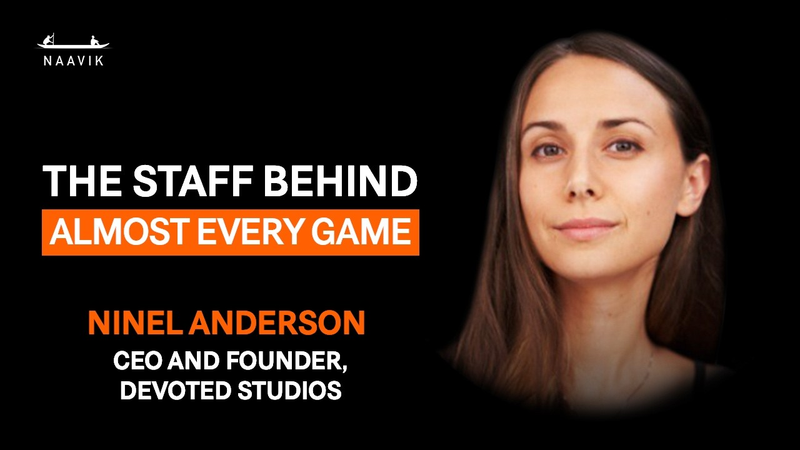
all sorts of platforms all at once? And so today we're going to go under the hood of how games of those kind get made and the people that help make those games happen. My guest today is going to answer some of those questions. And so I'm so stoked to welcome Nell Anderson, founder and CEO of Devoted Studios. Devoted started in 2018 and now currently employs I think over 250 people across multiple projects. I think Devoted's most recent win, but you let me know is been uh Embark's title, Arc Raiders. Um she's been doing this for eight years, which is freaking awesome. And I am very excited to have her unique perspective today. So Nanell, welcome to the show.
Thank you so much for having me. I'm so so excited. I feel like the um the win of Arc Raiders was Embark's win. We're only here to support Embark in the first place to get the win themselves
and we're going to power of code development, right?
Yeah. And we're going to talk about that actually um in one of our one that's one of my questions is going to be, you know, who's wins?
How do how do you feel about how winning together in that capacity? But we'll get there in a second. But before we dive into the show, I actually want to hear a little bit about what motivates you. and you said something really interesting to me during our kickoff call and something that's actually very different from I think what most people say when they start video game studios. Um, and so I just want you to kind of share that. You know, you started this industry building games and then you moved into codev and and why.
Um, I might be a very weird person. Um, I love video games, but what I'm obsessed about is efficiency. Like I live and breathe efficiency. That that's the sexiest thing for me. like how do like I sometimes I like go to bed and wake up with the same thought. How would I optimize this process? How do how do I make sure that we deliver? And I'm not as obsessed about the games themselves. I'm more obsessed about the puzzles and the the Rubik's cubes that it takes to deliver a game. Um and especially
especially when it requires multiple studios and multiple teams and limited amount of of information that gets to a codev partner then kind of mastermind a plan and be be a partner. So that what drives me personally and you know I started devoted studios in 2018 with an idea of building a company that supports the talent no matter where they are in the world to work on games of their dreams. So I'm passionate about creating an opportunity for talent but not necessarily the games themselves. and maybe makes me a weird CEO. Um, but that's where I feel that's where I feel like my gift is.
And for me, in 2018, the idea was to do all of that, but from home in your PJs. And I thought that we could build a company where we can hire the talent based on their passions, their skills,
and not necessarily where they're located geographically. in 2018. That sounded like a logistical nightmare. But the logistical nightmare I was excited about. I was like, I'm more excited was what we can produce when we're not confined in one location, but then get the people with the best possible skills and passions. Um, especially since, you know, you look at Ukraine that is super talented when it comes to realistic art or very very skilled optimization engineers. But then we have Malaysia who's amazing at animation like how can we instead of being confined in one territory and that usually is driven by education of that country. Um then Chur picked the talent everywhere and build the team and in 2018 people thought I'm crazy. You can't build video games from home. I was committed and then in 2020
all of a sudden my phone was a hotline. So yeah. Yeah, that makes a lot of sense. And I think like I mean well we'll talk a little bit about that like journey from you know the physicality of what it means to be a studio but I think I really respected your response there because I actually don't think that that makes you that abnormal of a CEO. I actually think it makes you more common of a CEO but rare in games. Um I think it's actually a very common thing for many people who are just running businesses and some of the one of the most important skills is just efficiency and capital allocation right and trying to build a place where people want to show up to work every day. But in games, I find that to be rare because I think most people have some sort of creative mission that they want to go on. So, I find it really beautiful that you had said something like that to me. Um, and I kind of wanted the audience to to hear it. Can you describe Devoted Studios? Um, what's a 30 seconds of version of what Devoted does.
Wow. It's probably hard to squeeze it in a 30 secondond elevator pitch, but I will try. Devoted Studios is a co-development partner in the games
industry. What we're passionate about is supporting our partners of building an amazing games whether that's an indie title to trip AAA titles from Epic Games and Riot working on League and supporting super fun very beloved titles of our clients. I think our specialty is uh co-development on the engineering side. of building up the teams was engineers, designers, art support and on the art side end to end production which I feel we really mastered. So building pipelines and supporting our partners from concept through modeling through integration in the engine and optimizing the overhead on their end.
Yeah.
Awesome. Okay. Um and I know that you had a comment about um capital allocation. So what were your thoughts there? Yeah, I think you I think you brought up a very interesting uh question with capital allocation. I feel a lot of times when people think about outsourcing is like oh let's bring an
outsourcing partner somewhere cheaper because we need to optimize the budget and I and I feel like there is this notion like let's just bring cheaper resources to fill the gap and that's the way to optimize it. But I feel the real creativity when it comes to optimizing production budget is actually optimizing the processes and the way that you can deliver and finding the best talent and maybe that talent is a little more expensive than the cheapest version of something. But when you build a pipeline that allows you not to lose money in the process, that's where the biggest magic happens where you have something that is very efficient and also with the talent that is the best fit and I think that unlocks
the best opportunity for any for any project.
Got it. Yeah. Well, you answered one of my questions about like what's a misnomer about outsourcing. Uh so we'll
kind of pull pin that one back and maybe that's uh you'll have another one later on. Um but I think that's a great intro and so understanding your background, understanding what devoted is, but I want to kind of peel back to like the to the opening and I want to talk about what actually might seem like a conclusionary topic, but I want to talk about it first. Um and that's kind of like codev's history and what it means for games today. Um and I meant it when I said I feel like every new game announced today is something like tiny team ships insane game with five people. Wo. Um, and the internet machine and the truth seekers are all like, "No, not really. They actually had this team at their publishing, three outsourcing studios, this shop in Ukraine." Like, and I think you're probably one of those studios more often than not. And so, my first question is not actually going to be centered around economics, but how your organization feels when those things are said. Um, I get the sense that studios try to hide how much support they really had for hype purposes. And I bet that maybe teams that have supported them like Devoted might feel maybe hurt a little given how much love and time that staff gave the
project and that might be true to devoted but I feel like it's probably goes across all outsourcing studios in general. Um, and how do you think about that as a leader?
That's a that's a really really good question. What do I start? I think there's there's multiple aspects to it, right? Um, I think quite often we we run into a situation where we work on a project and we have a team of 20 people that poured their love, soul, soul, tears for like two years trying to ship something and then we're prohibited to put it in our portfolio, advertise it in any shape or form. And those things really hurt. and that we have multiple clients like that that we love and respect but would love for them to change their opinion around how we can credit ourselves in those productions and and you know there's I I respect some have specific requirements
and pipelines and whatever but it's also tricky because we get hired on a project because of the portfolio that we are providing right so it limits our opportunity especially when we put something like into something two three years of our time and then we have nothing to show and we only have a project that was like three years old and our new clients come in, they're like, "Well, can you show us something that you've done in the last?" And we're like, "Yeah, we have like a bunch of really cool things, but they're all under NDA." And you just feel
like I don't know, like you're bullshitting and but it's like it's true. There's so many amazing things that we've done, but I can't show or say anything. which you know is a part of um
which is a part of how the unfortunately some of the parts of how the industry works. But there's also a bunch of other projects that do not only fully allow uh but also endors like our favorite one of our favorite partners Obsidian um even allowed us to say that we work we were
working on a vow even before the game launched when the like tra the first trailers came out. wrote a little note that allow us to bring more of the partners and more of the clients. So there's there's a mi mix of both. So I try not to think about it too much.
Yeah. But I figured it would be something that would be relevant. I think I find that to be a bit disingenuous at times cuz I know that like you know even from being on the studio side myself, you know, like sometimes it takes a village and you know, even if it's one person, you know, you you outsource one VFX artist somewhere. Um, I think that there's that would be a question. And I I actually didn't think about the um the other end the other NDA um not being able to share the work is obviously being detractive from your ability to get a secondary client. Like you could have worked on a huge AAA game and they're just like, "Nope, you didn't do that. You're erased from the history of having supported this and that's actually negative for your own business." Um, and I just consider like I guess the question is like the emotional concernation and sadness of developers as most people obviously really care about the games
that they work on and and whatever they've produced.
That's very true. I had actually a very special moment literally last week with one of our clients where they reached out to me and asked whether knowing how much we're pushing for individual talent to be highlighted. um they came to us and they were like, "Hey, I just want to make sure on these and these things. Do you want us to not only say devoted studios, but also the names of the artists?" Because the other studios said, "No, but I know that you're always pushing for that." And I was like, "Let me let me send you a spreadsheet with all of the artists and who worked on what because for us um we want to have artists credited first and foremost." like we, you know, when we put together um especially for like very specialized art projects that the volume is not what's in question but more like you know we need like a three or four assassin concept artists. We actually instead of setting a studio deck put
together portfolios of individual artists showcasing their work to make sure that our potential partners sees who exactly they're choosing and participating in the process with us because obviously we're going off from the information that they're sharing with us about the project. But that's usually like a little increment of it. and us together choosing the best talent for a particular production I feel creates just a much higher chance for success cuz sometimes we get notes and like oh this person is amazing but we need somebody who is more focused on shapes and forms rather than x y and z because of what we're trying to achieve here. So I feel like the more transparency there there is the more we can set the project for success.
For success. Okay. Awesome. Um you said codev is actually somewhere in between quote traditional outsourcing whatever that means and staff augmentation whatever that means. Um is
this a stable position to occupy? And so like what is for you the line between outsourcing and codev? Um because I the way that I actually draw the line is codev is you your name gets to be on it. Like when we did when Blizzard did co did codev on Diablo Immortal with Netis it was like publicly like NIS and Blizzard that's codev and then if you're in the shadows you're outsourcing. I don't know that I made that rule up in my mind. So what do you think about what's the rule for that?
Well I I cannot define a rule for industry because I feel like everybody uses terminology the way they want to use it. For me, outsourcing is more when deliverables are very clearly defined, scoped out, planned, and need to be executed. Here's here's the map of what needs to be executed. Here's how follow
this guidelines and bring us back the
result. And co-development is more or staffing. Staff agumentation is more of like we need five people. We gonna manage those people and we are responsible making sure these people deliver the results that we want. We mean being the client, right?
And co-development is here's our vision. Here's what broadly needs to be delivered, but we don't really know the details of how this would be delivered and we need to together figure out how it needs to be delivered or we don't want to handhold you and you have an ability to make creative decisions or production decisions or technical decisions and we're figuring it out together. And that's for me co-development is a lot of ownership of um ownership of the over their result and a lot of creativity. So
yeah.
Yeah.
No, that was that was actually very succinctly put. That makes a lot of
sense and that's what I'm going to now adopt as my which I think is why I think in a code development capacity because it's usually so much ownership the name comes out there, right? Like and then that's why like the name is usually publicly that's why I guess I I took that from that. I was like, "Oh, if you're if you're publicly being announced on the game, it means that you must have had some significant ownership over the vision or the creative process to help in some sort of way." Which is I guess where maybe I derive that my definition.
Well, I think what with the example of Blizzard and Netis, I think that co-development is probably is probably like probably requires joint financing. That's what I think when when I hear Blizzard and Netis did something. U I feel like core development partners are named but named more in the credits rather than there is a press release with all of the code development partners out there. So I wish
Yeah.
Yeah.
Okay. Cool. Um and we're going to get a
little bit to the code development philosophies and actually like how it works in terms of the economic structure. But um my last question before we move on to the next section is um do you think most co-development studios have aspirations to build their own games and maybe even more specifically is there a difference in the talent you look for because of this perhaps um knowing that you'll knowing that devoted doesn't make its own games is there a different kind of t person and talent that wants to work at something like at a co-development studio versus a studio that's you know building its own IP I'll I'll give you a broader answer because there's like a little bit of my philosophy about that approach in general. Devoted doesn't have aspirations of building its own games even though we have a concept that we're floating right now but more of a a publish like a publishing deal and it's just really really fun but it's not the nature of what we're doing at Devoted and I feel like earlier in the days in
my career in video game development a different company we we had a vision that we would build we would take some codev deals or some full dev RFP deals and with the money that we're making, we're going to put into and build the game that we want. And what it ends up being is that because your salary of your entire company or specific people is dependent on you meeting the milestones with the publisher or um any you know whatever the structure of the client is. you consistently end up taking people from your own game and putting them on the project that you're co-developing or you know working with a publisher on which creates that every time they're pulled in and out they lose context
and every time it's like three step forward two steps back two three steps forward two steps and eventually we actually in my previous company we
stopped building our own games because that it was just
too hard to just imposs it just yeah it's just impossible to do those things at one time and there's other companies that are successful I actually looked uh and I might be wrong but I read this recently that Gearbox was originally doing co-development like full development deals with publishers as well
they were they were they were definitely co doing co-development at the very beginning
right and then you know and then look at the success and Yeah,
as far as I remember, Epic also was involved in that. And then, you know, Fortnite. Didn't Epic sell Gears Gears of War to Microsoft because they were the original developers of it, right? So,
there there there are success stories of people who were doing full development, co-development for others and then branched into uh delivering their own titles. So,
yeah. Absolutely. Yeah. And I was just,
you know,
it's not what I want to do.
My obsession was my obsession over efficiency. For me, it's very inefficient. So, it's like you got you got to you got to choose what you want to do,
which lane you want to run in. Yeah. Okay. And so, then maybe like that takes us off to some co-development philosophies. And you also said this to me is that you can outsource work, but you can't outsource vision. And so, how do you work alongside studios to ensure that your devoted employees understand and are plugged in to the heart of the game vision, which as you said, sometimes they receive so little context? Um, how do you make sure they understand what the vision of the game is, especially when they're not physically there or they're not actually part of the the studio,
right? Um, there's there's two parts to it, right? So when I'm talking about you can't really outsource vision sometimes I we have clients that come in and they're like oh we have an idea and maybe like a very small company especially like I would say two three years ago and
there's a lot of money floating in and a lot of people wanted to come in and build video games because it was hot and there was investor money and all of that stuff and they would come in and be like oh I have an idea but I want to hire you as a company to fully develop this game and I would actually not take those projects because I truly believe you can't outsource vision and you can't outsource like it's it's a business building a game is building a business you can't have an idea for the business but then somebody else building that business for you and then running that business for you that's I think that that vision and that strategic and operational part needs to be within your company and then you can bring in a partner that could you know do the production of it, but you still need to run and operate that business, especially if we're talking about building a live ops game. I I just don't think that that's
there is a successful case that I've seen that somebody did that because of
it. And when we're talking about project vision in general and making sure that that project vision is is communicated, it's foundational for any code development. Like for outsourcing might not be as important when you have clear specs, clear definition what needs to be done and you just need like I don't know a hundred of assets to be developed. You don't really need to know the vision. But if you're trying to co-develop a map or co-develop a portion of the game or a mode, you need to share that larger vision so people can make decisions on their own without being like, "Hey, hey Paul. Hey Paul, hey Paul, how about this? I have another question." And then they were like in Slack 20,000 times a day asking you questions because they feel not empowered to make decisions because they're blind. They don't know where they're going. So outsourcing probably not as important to like know the entirety of the vision but is a good
thing to know because then people can suggest better ways of achieving something not just doing exactly what what's in front of them but for co code co-development is it is foundational and I think it I think the most important part on the co-development partner side is asking questions and being like no but you know what I do want to I do want to know the vision can you you guys have a project that can you walk me through so that we can support was the best decisions.
Mhm. Yeah. Okay. Okay. So then maybe more concretely like if I'm a studio and I ask a carve off a piece of the game to devoted like say build me this level right which is you know much more big than draw me this you know make a 3D polyacet trash can um build me this level and it comes back technically perfect but it doesn't actually serve the purpose that I the studio is trying to achieve in that relationship like whose fault is that in your opinion? I had actually a conversation with someone a couple years ago that I left and I was
so puzzled and this person shared with me that um of their bad experience with outsourcing and I was like he's like I don't want that experience to happen again. And I'm like, well, tell me more. What was your experience? And they shared with me that they hired a team and they sent them the specs of what needs to be delivered. And what they got back was wrong. And then they looked at the specs and what they put in the specs was wrong, but it was clearly wrong. And so in their vision, the outsourcing partner didn't ask the right questions about like they should have seen that it's wrong.
And I'm like,
but didn't you write the specs like when you were sending it? Like obviously I didn't ask. I was like, I just I'm I might not even want to work with them after that conversation because the level of just selfacountability
and awareness of how you set your partner for success is just it was was just not present. And I think I think a it is it is equally important for an outsourcing partner to ask questions. But even like when we ask questions, there's certain decisions that our clients might be making that we actually might disagree with and we still saw that those decision end up being super successful for a project in the market. But traditionally something that we would disagree and we haven't seen anyone doing that and video games are just so creative and so different. So something that sometimes could be a bug or like a limitation of an engine could be the most fun experience for um for the client. So it is important to bring things up but it's also you know it is the client's decision of how they want to execute it.
Yeah. You guys are in a very different seat like you guys if the client wants
it this way you make it this way. You're not, it's not your business to fight the creative vision or advocate for the client. I I'm have a reputation that I will and I tell it to all of my clients when they come in and I'm like, I'm going to tell you when I'm when I will disagree and I'm going to bring it up and I'm going to flag it, but I will ultimately surrender to your decision because it's like, you know, our partner's project, right? So going back to what you shared. I think the questions for me and actually what you shared in the example that what I shared is like where were the weekly meetings?
Where was the kickoff call where we all aligned the the vision?
How did we report on the progress that we had to figure out that something was completely off when there was the final delivery? And I think that intermediate
is the key to make sure that both parties are accountable to that vision because I'm sure a lot of people who
develop video games, what they wanted in the very beginning, what the game actually ended up being is a very different thing, but that that's not a bad thing, right? As long as it's
it's the same sort of at least vision for the direction.
Right. Right. Okay. Um Yeah. Yeah. And I guess that was actually going to already going to my towards my next question which was like if you could ask for one thing from a studio sideholder to be a better partner like what would that be? And it sounds like well one is just to like include you in the process have a weekly meeting have a kickoff actually tell you the vision right so that you can give the team the context to make the right decisions. Um you know and I think like and on the other hand I think what that so that's we talked a little bit about like what the partner can do the the studio the the IP owner the um can do. what are the components to you that make a good codev partner? Um, and so like in that regard, you know, like how perhaps does devoted win a bid over some other code-development studio? Uh, how do you think that you guys show up
to make the partnership work? Well,
it's a broad question because I feel like every project requires, you know, their own special sauce and how you prep for it because I think it starts with identifying what's the pain point, right? And and for somebody somebody that when they're coming going out to bring in on a partner, they just need volume, right? For somebody um they have a very very very tight deadline and they need that to be met or previously they had an issue with consistency. So how do you ensure that consistency is happening? And so usually identifying what's the what's the thing that drove them first and foremost place to bring in a codev partner or an outsourcing partner will depend on how we will structure um our team and for some projects you need like very very tight deadline very high proficiency you need to bring like
just all stars there's no room for mistake there's like we had a project that we were bidding out
um end of last Here the timelines were so aggressive. There's no handholding possible. So you can only bring people that not only are great executors but also have enough confidence to go figure it out. Ask questions. Um ask questions 10 times until you get the answer. Not like, "Oh, I sent you a message on Slack and you didn't respond so I didn't do it." You know?
Right. Right. Right. So, but you don't some on some projects where the timelines are not as aggressive, you can staff differently, right? And that that affects your budget and all the all the components associated with that.
So, I think
I think that's a foundational question there.
Yeah. And I mean, I think that's the answer, right? Like I think the component of a good co-dev partnership is that you understand what your client needs and you pitch and you mold
yourself to fit them. Um, and I think that's probably how you win um over over others. Um, I'm curious though, like can you tell me about a partnership between, and you don't have to mention the other partner, but can you tell me about a partnership that didn't go so well? Um, and perhaps on both sides, why? And sort of what did you guys learn from it and took take forward from it? Um, this year we because I mean as a as a studio you can't be amazing in every service possible, right? Mhm.
And we last year decided that we're not taking standalone animation projects and we're not t taking standalone VFX projects because every time when we are doing those disciplines as a codev initiative everything is great. When we're doing those initiatives as just standalone items, it becomes the thing that and animation and VFX is just very very very
very subjective like it needs to like
convey the emotions and if you're not if you don't know what the emotions the designer wanted and they're not really great in conveying them and you're on the outsourcing side like I tell my partners when they come in for me to like Handel, can you take a VFX project? I'm like, no. Because what I advise them, and I always send them actually to um Jason Kaiser's school because they have a bunch of really good visual effects artists. I'm like, bring an internally if you can hire or the visual effects artists are very expensive. Or just hire somebody internally, but don't outsource visual effects because it becomes this neverending loop of iterations. And especially if you're if you're budgeting it as a fixed budget that's ends up being a loss and a lot of frustration for codef partners. So what we found is we don't do and we tried multiple times
and my BD team came in crying like please please please we really want this client let's take this visual effects standalone project and we get absolutely like
not even going to go in the details. So
but that's a lesson right like
yeah that's a big that's a big lesson for us. it's just too subjective. Um, but on the codev projects where we're in charge of let's say a a whole location or a map and we do concept and modeling and technical and we do VFX on top of it, it always ends up being
a great thing. So we actually had a had to have a whole decision internally that we don't and know no more crying
and I feel like it has been painful enough of times where my team is like okay we understand why we're not doing it. So
that makes sense. That makes sense. And I love that example. That was beautiful. Um, and that's actually, I think, something that I found from my own development experience as well. Uh, we outsourced VFX and then we brought that stuff inhouse ASAP. Um, so cuz you're just like not living and breathing the
art team if you're just the only you're like the one artist that's outside of it. And so I think it's also a cultural thing and it's a vibe thing and it's it's hard to it's hard to get.
Um,
okay. So I want to start moving over to the economics of codev and sort of running devoted in general. Um you just mentioned this one topic VFX and animation but what do people mostly if you had to bin it in a couple categories what do what are the top two things that people come to you for in terms of services I'd say that there's an evolution of of servicing this that's that people has been coming to us I think in the last year has been more and more codev engineering and design together and historically there was always a lot like separate services art in the last year and a half it's mostly like most of the project that we do are endto-end art. So from concept through modeling through integration and we have beautiful examples working on League of Legends where we're in charge of
delivering maps in partnership with League and we do from concept through model links through integrating and having the whole thing together which is gives my team so much joy of feeling that
they supported to birth the whole thing. So
yeah. Yeah, that's amazing. Okay. Um, yeah, especially like the full I think that's probably also really satisfying because you also have a little bit more of the creative freedom to kind of execute it the way that you would execute it. Um, and and it's obviously in line with the bigger vision.
Yeah. I mean, I would say creative freedom as a part of creative partnership because we have amazing art directors and leads on Riot side that support us and we're we're just with their soldiers and creative soldiers of building it together which is really fun.
Nice. Um, how far in advance, cuz I'm curious, like do you guys need to get integrated with the studio to like start being effective? Um, and I'm sure that that kind of varies, but I guess I'm kind of asking like how what's like the timeline to like get get rolling on some
of this sort of stuff.
It varies so much. It's It's an amazing question. I think like sometimes sometimes the project allows you to like integrate and sometimes like the the first delivery really needs to happen in the next two weeks and there's no no time and it's it's so fascinating for me because I feel like sometimes you know most of the time when we hire people internally or like our clients hire people internally they give them 3 to six months to onboard figure things out be able to fully find the things that they need in the folder that there is, you know, but when we bring in an outsourcing partner, we're like, chop chop the deliveries in two weeks and you're like,
it's the first time me seeing this project and and I I always tell my clients whenever they're bringing, you know, whenever we're being onboarded on the project, I'm like, it's it's
important for you to share with me what needs to be done, but it's equally important for you to explain to me what should not be done
and that is people think what should not be done is like logical but actually what should not be done is what they have done before it didn't work it became a part of common knowledge and but then it's just like it's logical I'm like that's not logical that's you know
no because you didn't live the history of it it's actually how you it's actually a really good effective way of also like prompting cloud code is you tell cloud what you want but then you also very specifically tell claude what you do not want um so there is that um but I mean the reason I asked that question is because like they you know it seems like it could be just like a lightning storm if like someone's like exactly you said chop chop right and then like you start them you start the contractor relationship they're like you're on the dollar like we obviously only want to pay for this amount so like
we want to max we want to squeeze everything that we can out of this code partner and then you on the other side are constantly managing this very large queue of workers and your goal is that you probably don't want them to be idle, but then you also just probably moving people around. You're like, they show up on Monday, they're like, "By the way, entirely new thing that you're on today, like get going." Um, so like how do you internally manage that like level of um perhaps maybe whiplash from from from talent of kind of being moved left and right onto something really quickly? Um, and sort of then think about kind of the scheduling lines and project staffing to keep like people from burning out and you know because they're even on a worse roller coaster with outsourcing than they or and with codev than they were inside the studio sometime.
You know what comes to mind? And we had we were bidding out this project a couple years ago and we're like looking at and it was huge huge production and my um I'm on the call my head of production there and then one of our
lead producers there's a bunch of other people and some people are like we going to die delivering this and my lead producer was like well it's better to die delivering this than being without a job and I was like yeah but it was just like so cool to see like your team like really truly understanding it that we're in the times where um c certain things might be hard but it's much more fun to die trying building something and it's not obviously what we want um than not have a project. I think what makes us different at devoted studios is um every talent has a choice whether they want to be a part of a project or not. So it's all
So it's all consentbased
and um which I feel like allows for people to be really passionate about something. So not they're not working on things that they don't want to be a part of. I feel
what if I don't want to work on anything though. Do I get do I still get paid?
No. if you want to work on anything that sounds a seat like it sounds like a sbatical please take
I was just I was just imagining someone being like well I don't like any of the projects that I presented so I'm not doing anything today
look I um I look at all of it from a perspective it's we want to create an equal opportunity for every talent but it is it is foundational for people to want to show up for people to want to deliver for like I We don't run a charity organization. Sometimes I look at like LinkedIn and it feels like everybody doesn't matter how much they contribute to anything deserve to be paid. And I'm like, but if you're not showing up and every day you're saying it's going to be delivered tomorrow and tomorrow does happens and it's not delivered, like we're delivering a game. like we have a budget, we have a timeline, and we are always,
you know, there's there's a lot of
sentiment like, oh, game development is really in a shitty place right now.
But I'm like, that's actually how game development was in 2019 and 18 and 17. It was always like very tight budget, no money. Um, but I also feel like that's where a lot of creativity came from because like in in the years if we look at the years of 2020 the the games that were started in 21 to 23
like I haven't seen anything that was like drastically in that got the VC money like the never ending spend how much you want. So far, I haven't seen anything that was like, "Wow." And by the way, our greatest store before that, so I can't
Oh, and they didn't money. They're not They're not in the VC money category. Yeah. Um, but I see I see what you're saying, but I think like that's an interesting question. I was just more
curious how it works for you. And so, okay. So, couple quick questions. How many projects are you guys typically supporting at any one period of time? Um, and then how do you decide who if if it is a optin to the project, right? But then you, you know, I'm sure that you sign the deal at an MSA level and someone's got to work on it, right? So, how do you make sure that, you know, all the projects that you on are actually getting supported in like an efficient, as you said, manner such that none of your workers are bored because they're obviously all there because they care and they want to participate and you're obviously maximizing kind of like your staffing inventory. Um, so how does that actually work and who helps you keep track of it? It seems like a lot to keep track of.
Um, my hat of production has some special sauce of capacity management. I have no idea how she does it and I honestly sometimes don't like cuz sometimes I I go with her on some calls about that management and I'm like that you're doing it great. There's nothing I can
help you here with. But it's it's definitely a lot of combination of work of business development and production and management capacity in advance. So like we have a lighting project that is finishing end of April. So we know that we have usually like 3 months in advance we start looking for different projects. We go to some of our other clients. they might be at that stage of production that they might need lighting support and start doing the show and tell of like look how many amazing people we have. So I think and and then it just magically happens. I don't know. Most of the time, I know obviously in some certain times it doesn't and then you you have to figure out the bench situation, but most of the time if if you're good in knowing when the project ends
and these are resources that are in demand and they're high-skilled professionals, it's usually ends up as equaling out.
Okay. Yeah. Yeah, I mean I'm sure it's
just a lot of like queuing management and assembly line kind of operational like thinking about um sort of like flows and move through and and stuff like that. I think like um because obviously you want to get on as many projects as possible but yet you don't want to burn your talent out um and you want to give people something interesting work. So, I think when you like kind of do it across all the different dimensions of, you know, perhaps there's someone on the someone in the studio that just doesn't want to work on the same type of thing multiple multiple times in a row. They wanted something interesting and creative. Um, that's that's a it's a lot of different like different levers to kind of
it's definitely it's kind of like playing like a you know like a tactical tactical game, right? There's like a lot of Sith. There's like a lot of stuff going on. I've got my archers over here and this pipeline, this factory is going and then in three days I'll have oil and then I'll refresh and so it's kind of you just must have a lot of people that are very good at that.
Uh, correct. That's kind of like a lot of spreadsheets and and and decks together. But when it comes to capacity
management, I think for us, one of the biggest pivots that allowed to be more efficient was switching from focusing on one discipline to be more of an end to end production, especially when it comes to art because that allows us to plan better. So on the projects where we were doing, let's say only modeling, but we were dependent on some other vendor bringing in concept art,
we could we were always late. We were always idle like not we were late. The things that were promised to us to be delivered at a certain would be late and then we would have less time
and it was just like always this giant mess and then it would somebody else would integrate it and then we would receive feedback because it doesn't look in the engine the same as you know it looks in Maya but we can't see it because we don't have access. So when we started switching projects to wording the concepts, we know where we at approximately at finishing those concepts and then we're signaling to 3D
team and also if let's say concepts are being a little late because the clients want to iterate more maybe on the final kind of like colors or the textures of of the concept, our 3D team can already actually even if they're delayed start working on the shapes. and the forms and start modeling the assets. So by the time they will figure out you know what's the final look of it um we will be already 30 or 40% into production of the assets. So on the overall timeline we would not be stressed and delayed even though on the first things they might need a little more time on the creativity which wasn't a possibility for us when we were you know one of the partners and it's obviously not the thing that is happening on every single project for everyone but for us I think that was a major shift for better planning of capacity.
Yeah that makes a lot of sense. Um okay and two more questions in this section.
The first is like do you um because you you just said that like you used to actually there used to be multiple partners like multiple outsourcings and you were dependent on another outsourcer and now you're trying to cover a bit more of it as you said end to end. Do you guys work with other outsourcers to maybe fill the gaps and skills that you are missing? So if someone comes to you devoted do you then work with another outsourcing studio sometimes?
Yeah that that's absolutely is a possibility. We had multiple projects, but we would bring in a partner and oversee it and transparently communicate with the client of like, hey, we can cover this and this and we have a partner that can algment, but we would still do the whole thing and we've and we've recently had it on one of the projects and um there was bit of an expertise that we had a gap and we brought it in. That vendor is also inside of the S. a W that's fully transparent and everybody's happy like a
clown because in the end of the day what the client is looking for is the result.
Right. Right. Right. you know, with the least amount of overhead. And and speaking back on like the example that I shared about like the concepts remodeling, whatever, what it creates is actually more freedom because that takes away the overhead from the client on managing from one one vendor to another, updating the timelines, schedules, delivery dates, and all of that stuff that's absorbed within one studio. And so I it doesn't have to be devoted, but if you're looking to augment your pipeline with a partner, I would suggest highly looking to the one that could do the end to end production.
Right. Makes sense. Yeah. But but the but the macro takeaway is that sometimes even the outsourcers or the codevs also have outsourcers in codev. Um which I think is a interesting thing. Not everybody has everything and so sometimes you have to like work with every with you know you might not
specialize. I think that's
but let's look at keywords as an example right which is one of not one of the it's the biggest company
it's the biggest for sure absolutely
and even virtuous but I think keywords is what 70 studios and what allowed them to dominate the market is their ability to get in one client and be like oh you need concept we have both oh you need like you know whatever we have this other studio like Redhog or whatever And so they would absorb internally that overhead. Oh, you need engineering. We see you need engineering. Let's bring like I don't know like high voltage or not not like blanking on all of the because there's so many of the studios of keywords. But
but I think that's what actually allowed them to be that successful and that was the strategy that they that they built is around being able to like
fully
be that one-stop shop for everything that you possibly could need. Um, and that probably also lets you it's it's
it's a it's a better business, too. It's it's an easier client relationship and it's a better business for for probably for both parties. Um, but before we move on to our conclusion, um, I want to ask a little bit about like the the economics. Um, you probably get paid kind of regardless of the game's success obviously,
but in the upside case and maybe something like, you know, Arc Raiders insanely most of the time, you get paid regardless of success. Well, we hope that you get paid for the work that you do, but in the upside case of something like Arc Raiders, you know, it's possibly you could one could argue that you're a part of making it very successful. And so, I'm curious, are there any kind of like bonus structures that you guys set up with studios? Because I think the way that I would think about it is that I want to ensure that my outsourcer or my code development partner is motivated to do great work and that great work is manifested in like a big game. Um, so does that ever happen for you guys and um, you know, that does that allow you know your team to kind of feel like they were part of the financial success of a
title? I would say earlier there were way more deals where a publisher or a developer who is looking for support would offer revenue share on a project but it always came with the caveat of a discount on the cost of the services.
I see. And so in my career I have never seen the revenues come in because the economics of it is usually even if the game is moderately successful it would be like oh we the economics is we recoup all of the money that we spend in the development and then we recoup all the marketing money that we spend in the develop. If the game is successful, you want to spend all of the money that you're getting into more marketing so you get more players because in the end of the day for what's actually one of the most important thing for the company that created a successful game is their
valuation. So what they're looking for is actually not a lot of times not revenues per se, but the valuation of the company so they can sell it. So the more top line that they're showing is affecting for how much they can sell the company itself, right? So not the bottom line, but the codev partner that gave a discount in exchange of the potential revenue share is dependent on that bottom line. So the the mismatch of the strategy for dev original dev and the mismatch with for the codev partner creates that discrepancy that I personally have never seen any revenues from those deals and I kind of stopped taking them maybe 10 years ago. So I'd rather I'd rather make sure that my team is paid and
yep
you know they can they can go on vacation with their family. They can provide support. Now I can't I can't come to like you know John and be like John
you're gonna get paid less this month
but if so and so is successful
in 3 years maybe there is some could change for
I think that that's interesting like given the fact that they would they they'll discount the original offer with the original price. I was just curious to and I guess it's it's it's a matter of perspective of how big of a role and you contribute to the success, right? Um, but I was just curious if any of those things look like that because I think like some and oftentimes I would find it to be aligned, you know, to in in some in in the more macro way, maybe perhaps not in the P&L way in terms of enterprise value, but you know, I would want my development partner to be motivated to also be want this to be a big game with me. I think that does work mostly for full cycle games because the incentive is how can we create the most in the most efficient way for a very reasonable budget a game that we can roll out in the market and start getting data. They think that aligning that
incentive a lot of times between a publisher and a developer in that kind of context works, but again need to figure out the economics. And we actually just recently posted um a checklist of what to look out for in the contract with a publisher because I also had a podcast for like interviewing one of the top lawyers in the gaming industry just listening to horror stories of what you know you think you're going to get 50% ref share on the project but what you're actually getting is 50% of deducted everything and you actually never see anything. So um
Yep. Yeah.
Cool. All right. Um, so we're running up on time and so I want to talk about our final topic. Um, which is building talent and culture in codev. Um, and so you mentioned that uh, you know, like there's you have some unconventional training programs. And so for me, I think culture is kind of two things and I learned this from a mentor of mine which is habits and norms. And so you're
doing these unconventional training programs which I think you mentioned were nonviolent communication, improv training, five dysfunction of a team for your game studio and sort of what do you help to um create in terms of the devoted culture and I think especially because devoted employees are also meant to understand maybe the culture and the vision of another studio they work alongside. Sort of like where's the line between the devoted culture and the studio that they're supporting's culture? Wow. So, a little bit two different things for me. I'll probably start with the the trainings. I truly believe that communication is key and I'm you know one of your ear earlier questions that you mentioned for me was just reflecting that sometimes you have to design yourself and the relationship with others so much that you don't even remember who you are. Sometimes you have to like for this client it's so funny like for this client we would have they
absolutely want exactly how it's written and their requirements and like god forbid you even like breathe a direction that is a little different right and for the other client it's like oh we want you guys to take more ownership why you're not taking more ownership and for another one it's like
um oh we want you we want the ownership here but here no ownership no ownership and but here and And then you're like, it's not like you don't want to. You're like, I don't even know what you want. But you're also like when you were schooled or like you were given feedback on one project for there's absolutely no way you should be doing this. And then you come on a different project and you're already um you have scars because you were told that's not what you what you're supposed to do. you just you it's it's really really hard like you get feedback all the time. I'm like I train my team to not take the feedback to heart. I'm like we have our
own values, right? And we actually change our values. Um maybe like once every couple years not like fully but I feel like some of the values be I feel like I write our values in the way that it helps our people to be focused and sometimes those values already become such an automated things that there was no point of pointing out that as a value. So one of one of the values that I added this year was one plan. Everybody knows the plan. Everybody knows the plan at all times. And if the plan get updated, everybody should know the plan.
And I just feel like in a remote company.
It doesn't always, you know, it doesn't always become
doesn't always happen.
Yeah. It doesn't always happen. And I
I am at fault. I'm at fault sometimes. So like I feel like I communicated the plan but no I created the plan in my
head and then I gave couple tasks but I never really shared the plan with my team. So it is a little bit of a moment of of redisiplining myself in the first place. But I feel like communication is is key and being able to be confident and then have the tools of asking the question in the way that other person can receive that question instead of getting defensive or really understanding why you need the answer instead of being like oh I don't have the time for you right because it's you a lot of time people people bring codev on things that they already behind or my favorite one they weren't able to figure it out internally how to do it and now they're like oh let's bring codev and just drop it on them and then well you weren't able to figure out it internally like I might need time to figure out how to do it as well so and I
think being able to just be articulate and communicative and also on it sometimes like I have no ego if I need to ask the same question three times five times times, seven times, you name it. Unless like I need to get the answer that persistence is also needs to be trained and be okay to drop your ego when when the result is on the line. I think like the biggest thing that we invest in the company is is communication and as you mentioned the improv trainings, the non-violent communication trainings, the all the different types of communication. It's it's a never- ending thing for us because there's always like I do it personally for myself. I love Chris Voss's trainings, the never split the difference and being able to yeah, in general communicate so other people hear you, but also do fun trainings too, so that it's, you know, competitions, video game competitions and stuff, so people
feel united.
Makes sense. That sounds really fun.
I went I went into rumbling. You should have stopped me. She's very just very passionate.
Yeah. Um and then uh two last questions. Um because we are up on time, but um my my I think this is potentially happen sometimes. Uh you know, you might work with a code studio and maybe some of the development team really like who they're working with. Um, do you find yourself losing talent to the studios that you partner with? And do you try to prevent this with like legal non-solicits or are you kind of the mindset that if they want to go find a permanent home and another studio making their own IP that they should kind of go do that?
People can choose their own adventure, right? If they want to go elsewhere,
like I can't stop anyone. Um, but we do have legal non-solicit with our current clients. I have never really ran into a
situation where somebody left our company to go work directly on the project in for the client internally. But we did have we did have um one of our partner one of our one of our talents that um his contract was up. we didn't renew and then in a few months he actually joined the client and the same project but it was um it was totally fine like we actually were super excited.
Yeah. I I figure it's just like at sometimes I think obviously like you're building your own business and so you might have you know some very talented people who are you know you've you've kind of aggregated and and and collected over the years and obviously that's also part of perhaps like your edge in a way is that you have really good people who do all the things that you say such as communicate well. um the people that you said are exceptional who are able to ask the qu questions to get the right vision who don't let things go and those
sometimes would be people that you know might get poached um and because you're working with so many people um you know they're just like exposing people to potential poachers um so I just curious how you guys think about that
you know what I'm really proud of is actually we have a very high return rate so
we have so many people inside devoted that worked at devoted then went elsewhere and then came back in a year
and then came back
and then came back in a year and
that's amazing. That is a really good metric actually.
Yeah. And when sometimes we're like hey will you if you want to go play elsewhere go play elsewhere but it's actually kind of good here. And sometimes people don't really appreciate how good it is and then they go elsewhere and they're like you know what it's kind of really cool here. I really loved it. You know
so
that's good. We we do have we do have pretty good return rate and it's the funniest thing but it happens on Slack channel when they're like oh my god Louis is back you know it's it's cute
it's probably it's actually probably better than the retention rate it's actually return rate probably means more
yeah um
I truly believe that
okay and so then my final question for today is is there something the code development industry like needs to stop doing? Um, is there a bad habit that holding the whole industry back? And then on the reverse side, what do you think is a belief about code development that most studios hold that you think is just flatout wrong? Well, I can't speak for all of the co-development partners because there's definitely maybe some they're not as good as the others, but I I would say in general in my in my circle of amazing studios that I get to be friends with and I I you know, I feel like if we actually spend more times together, we would probably be a better industry. But I feel like genuinely co-development partners really want their clients to
succeed and really trying to optimize for the best outcomes. But sometimes it's really hard to do that when you're not having the vision like what am I optimizing for? So um when you I a lot of times if I have a very clear road map from my client and I feel secure on the project I can come up with the best ideas of how what they need to be achieved will be achieved. Um but if I don't have that visibility it's really like oh this is your three tasks for this week right instead of like here's what everything that needs to be done then it's hard for me to optimize. So I feel like sometimes they're like oh the outsourcing partners or KODF partners are just doing exactly what I'm being told what they're being told to is actually due to the lack of visibility or what else is there and then that triggers some rework but I also fully understand that giving that visibility requires time and a lot of time we don't
have the time so it's kind of a double-edged sword and I would just love that when people bring on an a a partner, they really approach it from a perspective for setting up that partner for success.
Mhm.
Because a lot of time in IC is like, oh, I'm going to test out eight vendors. Whoever whoever figures it out works on the project. And I'm like that that one fiveday test cannot give you visibility of how your three next years going to look like because you're just testing that maybe they put it on the but let's say we take art as an example, right? They put on their art director to do the test and they whip the test in 5 days and it looks amazing. But it doesn't tell you anything about how they're planning, how they're staffing, what's their communication, how they're
working with feedback, how defensive they are when they receive the feedback versus how quick they are to pick up on all of the details and nuances of the project, how much yes, they might be a little better on this delivery, but how consistent they are across like all of the deliveries. I actually had a project last year where they and I thought that was the coolest way to test partners. They brought in three vendors for 3 months timeline to actually evaluate all of those things and then make a decision of who is the partner that creates the least amount of overhead on their end and then calculate what's the budget ratio because sometimes like oh this is X Y and Z and that's the cost right but you don't really see how much of the overhead cost to get this cheapest resource or the cheapest partner then I think like looking at this holistically across all of the aspects of it, but also really putting time to set your
partner for success is what yields the best results.
That makes sense. Um, well put. Uh, okay. Um, Nell, this was amazing and I think that you guys are playing such an important role in the games industry and in game development. I was very excited for this because I do actually genuinely believe this is like the secret teams behind every big game launch is nowadays. Um so thank you so much for coming on. There's clearly so much opportunity for people who want to work in games in codev and outsourcing. Um and thank you so much for sharing your journey personally to founding the company and um and why you started it. Um so as always friends if you have feedback or ideas please hit me up at alexanderavic.co. Um I am always open. And with that that's our episode. Nanell, thank you for coming on.
Thank you so much for having me.
If you enjoyed today's episode, whether on YouTube or your favorite podcast app, make sure to like, subscribe, comment, or give a fivestar review. And if you
want to reach out or provide feedback, shoot us a note at [email protected] or find us on Twitter and LinkedIn. Plus, if you want to learn more about what Navic has to offer, make sure to check out our website, www.navic.co. There you can sign up for the number one games industry newsletter, Navic Digest, or contact us to learn about our wide-ranging consulting and advisory services. Again, that is www.navic.co. Thanks for listening and we'll catch you in the next episode.
Auto-generated captions from YouTube — names and numbers may be misheard.
























Comments