VideoThe Game Business
The Blood of the Dawnwalker developer: Everyone we spoke to wanted to invest
14 Apr 202638 min video
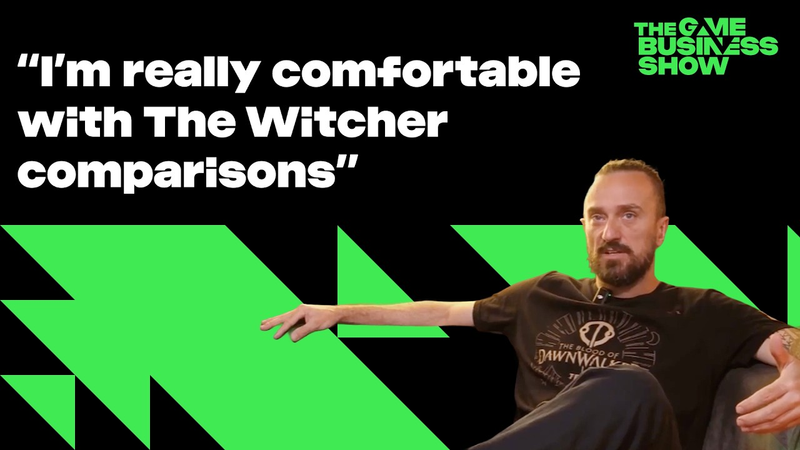
In this case, we were in the situation that we spoke with few companies and all of those companies wanted to invest. Wow. And we were in the situation [music] that we needed to choose one of them. We want to push boundaries of the video RPG AAA games adding some quite risky stuff which give you more immersion, more emotions, a different feel when you play the game. And I think that this trend is quite growing these days because when you [music] look on the killer of score or even on prison desert right now, those games are different.
[music]
Hello and welcome to the game business show with me, Christopher Dring. A game that's been generating a lot of excitement this year is called Blood of the Dorn Walker. It's an open-world dark fantasy RPG set in a 14th century Europe and featuring vampires. If it looks a little like The Witcher, that's because it's being made by some of the people behind the original three Witcher games. They're now part of the new Polish studio called Rebel Wolves. And I saw the game at Gamescom last year. It was
on Bandai Namco's booth. They're the ones publishing the game. And there was actually a lot more to it than it just being The Witcher with vampires, but I didn't so much want to hear about the game. What I wanted to hear about is the studio, the journey they've been on, why leave CD Projekt to start something new, and how they found the business side of running a video game studio. And to tell me all about it, I'm joined by Konrad Tomaszkiewicz, the CEO, co-founder, and game director of Rebel Wolves. Hello Konrad, welcome to the show. Hello, thank you very much for invitation, Chris. I know that you've spoken about this before, but I want to go back to the start because I I I want to I want my my audience to know all about you. You worked on all three Witcher titles. Yeah. What were those early years like? I understand I think that connects to what you sort of recreated at Rebel Wolves, but what was it like in those earlier games? Looking more than experienced to do the RPG game, you know, triple A RPG game. And we laughing that we we invented, you know, the wheel from the beginning, but I think that this wheel in the end is different
because of that and it's quite unique and it was like quite nice process, but I remember that we started to work on the Neverwinter Nights engine uh Aurora and it was challenging because um tools that time wasn't really good and I remember that because, you know, I started as a tester, but few months later I was moved to the design uh department because I was really annoying uh QA tester and I told, "Okay, then if you are so smart, then come and, you know, show what you can do." And I started to work on the scripting the storyline, working with the tools. And on the Aurora, it works like this that you needed to script everything with Neverwinter script and connect those scripts, you know, to the objects in the game like I remember that we connecting some scripts to the torches on the walls or different things. And it was the hell later, you know, to when uh some external companies tried to translate this game for new Xbox consoles and they didn't know when where the scripts are. Quite, you know, funny stuff. But I started to work on the
scripting and it looks like this that we learn from each other and learn on our mistakes when we, you know, done the game and it was quite crazy process. But we released the first Witcher and after the first Witcher, I get the opportunity from uh from Adam Badowski who was a head of the studio that time to help him create second Witcher and I become the quest lead, created the quest department, people who are specialized in scripting the events in the game which are not the writers because before in The Witcher's first, there was only the writers who tried to script in the game, but writers mostly have writing skills and they don't know how to code and the quest department are the people who understand the story, but have more technical skills and can, you know, write the scripts and and put it together to the engine. And I remember that that time we recreated the tools to make it more flexible because I remember that when we work on the Aurora when in the quest was
some problems or we wanted to make it a little different, I needed to delete the whole quest and make it from scratch. Yeah. Which was quite, you know, like we lose the time and it was like really hard process and in the second Witcher, we created the quest system which was quite similar to the blueprints from Unreal, but it was more high level. Which means that in one block, you had many functionalities like play the whole dialogue or start combat or start doing things you didn't have the need to script in everything like, you know, like every opponent separately, but you just, you know, saying that you want to have the combat and it's quite easy to put the story together and this way we created the second Witcher in quite short period of time. And after that, I had another opportunity from Adam Badowski who asked me to lead the whole project uh The Witcher 3 and I became the game director of The Witcher 3 and yeah, it was quite, you know, cool experience.
And and you know how how how this you know, this project ends, you know. So, I mean, you left all that behind. Yeah. You, you know, obviously the company changed quite a bit from from The Witcher 1 to the to Cyberpunk, but what made you sort of feel okay to step away and say goodbye to all that? I think that this company, you know, because company grew a lot and it's different when you work with, let's say, 100 people, 150 and you know, 500. And the difference is that right now in the Rebel Wolves, we have around 160 people including the administration, you know, the publishing department and so on um which will give us around 140 devs probably. And working with this amount of people is different because I'm, you know, among the people all the time. I'm scripting by myself. I'm working with them, you know, side by side and doing stuff and, you know, working with everyone, speaking with everyone. I knew
everyone. When you have 500 people on board, the management is like 100 plus people. In the Cyberpunk, it was 125. And there is no possibility to know ev- everyone, to work with everyone every day and this creative process and the fun which is giving is different, you know. And and I felt that I don't want to work like this anymore. I want to work like we work in the past, you know, with smaller amount of people, with this feeling of creative fire, with, you know, struggling um you know, and sometimes fighting for the solutions, uh you know, in in every area of the game, but to feel that that I'm creating, not that I'm someone who is somewhere on top and I'm just testing the game and I'm disconnected from people. Yeah. And so, I find this interesting cuz I know there were some tensions between you and a few members of the team towards the end of your time at CD Projekt, but so did you find the transition from being like a game maker
to being in the trenches doing the work to being a manager effectively? Did you find that difficult? You know, it's like Right now, no. It's not a huge challenge for me because I can switch between being manager and the dev, but in some point when you are only manager, this taking like, you know, the biggest part of your day, you feel that you're losing something. Hm. Because in the end, you know, the creating the video games is creating an art. And I think about myself that I'm an artist like, you know, the other you know, people in the team and I need to create because without it, I feel that I'm doing something which don't give me, you know, the satisfaction. Yeah. I need the satisfaction. I need this creation process. I need to create to feel that, you know, that I'm doing something cool in my life. Yeah, I love what you said in a Eurogamer interview about being a leader, not a boss. Exactly. I've used a similar term, but I said I've always
described myself you know, not myself, but I've always felt there's a difference in a leader and a manager. Like leader for me is someone who sort of inspires people around them. You go into battle, you expect people you expect your team to follow you into it there and you work together on solving things. And that's not necessarily something that works very well in a large team cuz, you know, and then you have some people there are some people there's always some people that need telling what to do. You can't they won't just necessarily follow you. Um leaders are not always good at being like bosses necessarily. They some of them can be. There's plenty of examples, but they tend to be passionate and sort of strong-minded and and and just want to get on with it really. That's not really a question. I wasn't really asking a question here, but that's my experience. No, no, but I agree with you fully and actually it's it's it's fulfilling this need of creation when, you know, when I'm a leader because when I'm doing, you know, this stuff by myself, I understand the technical aspect or artistic aspect of doing stuff and for example, last few months I work with the lighting artist on lighting the game on some systems, how to, you know,
create the light in the dialogues, in you know, in the cutscenes, the location including our RD and so on. And we together finding the way how to do it proper way, how how to make it look good and my role is not to tell people like exactly how to do stuff. My role is to help them to get to the final solution, you know, to show them, you know, the end goal and to support them to achieve this end goal. You know, and this is something totally different than being only manager or or the boss because, you know, when you try to force people to do something in 90% situations, it will fail. Because, you know, as I said before, in our industry, people are an artist. They need to have the ownership. They need to feel that they create and that they doing stuff. And my role is to help them to ensure them direction where I want to
go, but their role is to achieve these solutions by themselves because then they fulfill their need of create, you know. And when you like stealing it from them and and giving them solution, I want to do it exactly like this, they are not artists anymore. And this is the most important that to create it you needs to have the really good team, which is well motivated and which wants to create the best game on the world, you know, and which are your allies and going with you, you know, to this, let's say, war of creating all this stuff because the game dev is not easy job. Every department doing different stuff. The functional dependencies between them are so complicated that it's really easy to to break the game. And in the end to create something which is really special, it's really hard stuff. And, you know, and to do that, the team is the most important thing you have and you need to do that, you know. Because the vision is important, but vision without the team which will help
to achieve it is nothing, you know. You needs to have first, you know, the really good team and the team who wants to work with you and then, you know, the good vision and the way how you wants to achieve this vision. That's why we here in the in the Rebel Wolves, we saying that we have the rule team first, which means that when we doing any decision about the studio, about, you know, the game or whatever, we first thinking how it impact, you know, the team because the team is the most important value we have here. Yeah. Well, some people do lose sight of that, particularly when they get very big. I mean, you you see, I mean, I read in in one of your interviews that you funded Rebel Wolves yourself for that first year. There was you just came out of your own pocket. I get that I get the company was a bit smaller then, but that Yes. that was quite the gamble. You must have been quite confident and that Yeah. You'd have Um It's always the gamble. It's always the gamble because in the end you don't know if you will secure the funds for
creating the whole game. As you know, you know, the triple A games are quite expensive to do. Yeah. And it's like quite difficult task, but that's was my dream to create the studio, some place where I can create till I will be old with, you know, my team. You know, place where I will feel safe and I will have this, you know, creative freedom and I don't need to ask anyone if I can do this or that because I think that, you know, in art when it have this, you know, censorship or limitation, it's always worse. Yes, and it was a gamble, but in the end, you know, we have succeed and we secured the funds. We built the the team. Right now, we have the game. We are really close, you know, to to certification it to have the gold and to release it and it's really great thing. Sometimes I don't still believe that we are in this place, but but, you know, it it happens and it's really cool. Yeah. The engine did get some, you know, financing from NetEase and place, but how did you find getting that? You know, was it it was a right at the point when
investors started to get a little bit nervous about video games. I mean, Yeah. how was that experience? Actually, you know, our experience, my experience was really good because we were in really different situation than the other companies because first of all, we had on board people with really good track records, you know, people who came, I don't know how to say it, after me or or with me from the previous projects we co-created and really fast we start to work on the Unreal Engine and we had the product implemented and, you know, the whole documentation from the presentation about the vision about, you know, the game and what we wants to achieve and, of course, also all documentation about the cost, how cost will be big and, you know, what we need and how we want to create it and and when you saw all of it, it was like really clear for the investors or the people who wanted to support us that we know what we are doing. And in this case, we were in the situation that
we spoke with few companies and all of those companies wanted to invest. Wow. And we were in the situation that we needed to choose one of them, you know. It was funny because after after first meeting with NetEase, exactly one day after or two day after, we get, you know, the term sheet which we can sign and continue. It is like it's hard to believe, but the team plus really good idea and all documentation which is needed and that it most shows that, you know, we know what we are doing and how to do, you know, Mhm. the game. Yeah, I I I can see it being a relatively safe bet for investors out there. Here's the team behind one of the most successful some of the people behind one of the most successful RPGs of all time. Yeah. I launched the studio in a territory where development isn't as expensive. Yep. But what was what was your vision for the studio from the start? What was the viewpoint? Was it what we did before, but slightly different?
Yeah, yeah. It was like, you know, actually maybe I will start from the from the name of our company, The Rebel
Wolves. Why we call it like this because first of all, the rule team first and the team for me is a pack. I mean, the wolves, you know. This is this this word in the in the name. And second name is the rebels, which means that we wants to do the things differently. And those are not only things according, you know, the the game, but also the things according, you know, the studio life, our values and how we wants to proceed. Because when we starts to speak with guys, we agreed for few rules. First rule is that always, you know, team first, which means that, you know, we care about the people and we wants to be in this developers world in the place where people wants to work with us and people can get older with us. Mhm. Like, you know, they come here, we doing stuff together and and we wants to deliver them the place where they feel good. Place where they wants to back, you know, after, you know, the two days or after the weekend
or after, you know, some vacations or holidays. That was really important for us. The second thing was that we decided that our studio will be the place where in the when we thinking about an art, what we wants to do, not about the money because I spoke with many companies and I observed many companies and I think that the problem in industry sometimes is that people opening the companies and thinking about how to make money, you know, on the business. And this is like really cold approach for the games and I think that you cannot create art like this and the games are the art, you know. You can analyze the games and say, "Okay, in this game, this part is really good, in this those, but when you put them together, it will not work." And I gather around me people who love RPG games, video RPG games and we from the beginning knew that we wants to create the, you know, story driven open open world game with some twists. You can say that some elements from the
indie games in the triple A game, right? And this is something which is not really easy to do. It is the one thing, but it's quite risky probably, but in the end when we put it together, it works and we make the focus test and all of these and people love the game, which I'm really proud and happy. And, you know, when we start to think about the game, we knew from the beginning that we wants to do this crazy stuff because, you know, open the new company to do exactly the same things we make in the in the past is a problem because we will not feel that we evolving, that we develop ourselves and do something fresh, you know. And it was really important for us as an artist that we wants to push boundaries of the video RPG games, like the triple A games, with adding some quite risky stuff which give you more immersion, more emotions, the different feel when you play the game, you know. And I think that this trend is quite growing these days because when you look on the Cloud of Skur or even on Crimson Desert right now, those games are different. They are
not like, you know, the copy of, you know, different triple A's which are on the market, but they are delivering something quite fresh. And I'm really glad of it because I'm start to feeling how I was feeling in the '90s when I played the game on my 286 PC or even on the Atari where the every game was different game. You need to learn the loop, you needs to learn the controls, you need to learn what you need to do, but every game was some unknown, some exploration of new, you know, experience. And I think that it's really great. And what we wanted to do is to deliver a similar experience for the people. You don't even have to do it with a big budget anymore. I think it's hard for triple A to do it where you can just do something that's even if it's in the same genre or something that exists, but you can take a different approach to something that we've seen before and you mentioned Cloud Skur. Dispatch was another one I felt was like um Yeah, Dispatch, I love it too. It's great. It's an interactive narrative game.
Yeah. But it But it it was done in a way that was different. I like it. And it was really successful and in a way that never been
before. So, these things go together, right? This difference taking something that people know and then doing something unique and focused on it. It can pay off business-wise as well, but I think that's the challenge. You talked about, you know, some people have a cold view on it. The truth is it's arts and art and business doesn't always make sense together. And so, um so, you hopefully you're you'll be part of that positive narrative that's going on in the games industry at the moment. Hopefully. Well, let's let's talk about Blood of the Dornwalker cuz I saw you I sat through the Gamescom demo. I read about it quite a bit. But for the sake of the listeners and the viewers, what does make this different? You mentioned the time already and the structure of it, but what makes this game different to The Witcher or any other games that people might be familiar with? Yeah, there are many things which make it different, but I think that I should start from the protagonist, the guy who is the guy who who lived in some village and after some events which we'll play in the product of the game, he became something different because
there wasn't yet this kind of hero in video games or in the movies. He became the Don Walker. And what is a Don Walker? A Don Walker is like is the guy who someone tried to to change him into the vampire, but something went wrong. And actually what went wrong was that the Ekoaren as a you know younger guy, he worked in the mines silver mines and he had this lung illness. He has the silver in his lungs and he's sick. But because of the silver, the transformation to the vampire cannot be fulfilled. And at the night, he's changing into the vampire, but when the sun is up, this change is coming back and he became a normal human. Which means that in our game you have two loops, the day loop and the night loop. And those are different. You have different character development trees for the day and for the night. You have different skills. You have different outcomes or or or you know the quests.
You can play them differently. You meet different people at night and at the day and this is like the first innovation we have in our game. And the second innovation is that you have limited time not to finish the game, but you have limited time to achieve some goal in the game. Which is quite personal and this is you know the saving your family and the time is paused let's say, but when you're doing the narrative actions in the game and all of them are are marked with proper icons, you know when the time will be moved. The time is pushed and it's something similar you you you saw in the personal game for example when when you know the time is time is pushed and you know and time is passing and you know that there is less and less time you know to achieve your goal. In the meantime when you're doing that you can try to sabotage some activities of the antagonist to make it easier to defeat him.
But in the meantime he can recognize what you are doing and after every day there can be like you know the addicts of him which change the gameplay and make it harder for you to achieve your goal. Another thing is that the structure of the game is made in different way like like I remember the structure from these first Fallout games where when you exit from the vault, you can do whatever you want to. Even you can go and try to beat the main boss if you know where he is. And and this kind of game we call it mighty sandbox because we building the sandbox from different stories you have in the game. And it depends on you how you want to achieve your goal. You can try to search for the allies. You can you know roam the world and try to build yourself and stronger like you know learn magic or develop your vampire skill and attack you know the castle by yourself to you
know to release your family. You can do a lot more things in the game and every play through you will do will be a little different. You will you know find some other things in the game from which you can build your own idea how to beat the game. You know, this is like something quite fresh and quite new. As I said, it was used once you know in the Fallout game. And when I remember this experience, it was quite cool because it it's quite similar to the pen and paper games where you know that you have some quests or adventure you want to do, but it depends fully on you how you will achieve it and game master you know adjust what you are going through and what he you know the story to your doings actually. And this what we are doing is I think the closest things which you can do it right now to give the feeling you know to the players that they can do everything and you know go whatever they want to and try to achieve their goals in their own way. In addition, when you look to the gameplay, we have different exploration
modes at the day at at the night and the night you can use the shadow step to move yourself to bigger distances. You can walk on the walls and on the ceilings you know of of the buildings and you know and the objects in the game. The combat is different because we create quite unique combat system which is combination of let's say classic combat from the games like The Witcher or the the Spider-Man or whatever which are connected with the system of the directional combat. You can use and you can have bonuses when you're doing it, but also you don't need to do that. You you have the only block and only attacks which allow you you know to play different way. But like it's really hard to to to to describe because when you will play it, you will understand you know how different it is because you are not the observer, but you are in the loop and you deciding you know what you're doing in this in this in this particular combat. And there's a lot more. But you know I think that
you know you see how how long I'm describing it and it's showing you know there is a lot unique stuff. Yeah, it's it looks familiar I think if anyone just seeing a screenshot or something. Yes. But but from what I mean when I saw the game or actually that you are you are taking this in a different direction. But it is a really competitive genre these days. It's going to get compared to The Witcher 4 and all these upcoming games. Yes. How comfortable are you with that? I'm really comfortable. I I'm I'm I'm really I I feel really confident about our game and and you know as I said on the beginning, we are already after friends and family test after the focus test in the professional companies and so on and the feedback is really good. Great. I'm interested and you've been able to go really hands-on with the development this time. I know that was the whole vision is the ability to be able to become hands-on with it. But you've still got to run a studio. You've still You've still a company you've got to be
managing here. How have you pulled that off? It's it's not really easy, but on the other hand you know when when I you know when I start to thinking about you know paying the company, I made my research and I spoke with friends who had the companies like these or with people who had companies like these which wasn't my friends, but you know I told them that I want to understand how it work, what mistakes they done, what I can do better. And after all of this research you know, I decided that I don't want to do everything by myself in the company, but I put together my friends who had the particular skills not only in the development like and direction or creative direction or the technical direction, but also people who my friends who had the great knowledge about how to you know how to about the finances, about the you know the the
administration law in Poland, about you know how to do proper way the HR processes and so on and I build a group of people who are my um they are co-owners of the company and they help me you know to do it every you know day and I have I I'm I'm I have meetings with them when I I'm when some decision from my side is needed. Let's say it's like this. But in the meantime they they they they they managing these processes by themselves and it's work really well. You had some help with the is the answer. But that's what you should do. One of the things I saw one of your answers you gave to another interview was that you've been using some sort of machine learning and AI tools in the development of the game, but nothing public public sort of facing. How I'm interested cuz so many studios seem to be trying to work this stuff out. How have you found How have you found them? You know I mean we don't [clears throat] not really using AI. I mean we used AI
for the early development process to generate the voices of the game because from our experience the one of the biggest problems when you're doing so complicated games like ours is that when you start to hear the actors in the game, you figure out the problems you have in the game you know because when you're reading stuff, you sometimes don't recognizing the proper you know problems which you which you have in the game and we use AI to generate the first voices for the game to quite early in the process find out all the problems we have before we will record it with the actors. And I think that it was quite good move because because we we were able to iterate the game like few times before we went through the recordings and it's quite important because the recordings are one of the biggest cost when you're doing the storytelling RPG game because we record it you know in many languages not only
in English. It's English, Polish, Spanish, French, German, Japanese you know overall like eight languages and amount of the story lines are They are similar or even more than it was in The Witcher 3. Then you can imagine how big effort is this to you know to to record all of these, later test it and fix it. And if when you record all of it and start to play the game and and thinking okay, I need to change some quests because right now I hear it and I see that there are problems, how costly is this you know to fix those problems. When you fix those problems before because you will use you know generated AI voices, you saving time later. Mhm. And [clears throat] we knew that you know, we had these kind of problems before in the games we co-create with with CD Projekt. We implement this know-how, you know, from early beginning. But it's not only this because, for example, another thing is that
we start to work on the consoles from early beginning when we work, you know, on the game. We had, you know, the, let's say, outsource company, but this company of our friends who from the beginning looking of what we are doing, pointing out, you know, the potential optimization in the assets, optimize the code of our, you know, gameplay, and so on and so on. And right now we're in the situation where consoles are stable, it works really well, and we are going to the certification, you know. And And we are quite confident to go there because we know how the game works, and I already finished the game on the PS5, and it's great, you know. You've got to be careful not to accidentally leave like an AI voice in there, though. You end up getting having to get a a award taken off you or something. I don't think it's not a problem because, you know, we we already have everything recorded from some time, and right now we we're doing only fixes of some lines which were wrong, but there are no any AI. And actually, this is only AI, I think, we have in the game.
But we have one more system which is not AI, but is quite quite smart. The system which checking our implementation of the of the quest and the dialogues if we don't have any in the permutation because, obviously, there is, you know, choices and the consequences, which means that the permutations of states of the games a lot. This system checking if we are not have any blockers, like, you know, we call it facts, you know, because the choices are are marked with the fact which are not covered in some ways what we are doing, you know, to to help, you know, the QA find all of it because, you know, that was also one of our biggest problems before that, you know, there was so many choices and the consequences that sometimes it was hard to test all of it. Yeah. I'm conscious of the time, but you're working with Bandai Namco Yeah. on the publishing the game. What made you want to work with a publisher rather than rather than try it yourself?
You know, because we we we told that it
will be easier for us, especially with the first game, to work with someone who have huge experience, and we work with them quite we were very happy of this cooperation, you know, before in the CDP. And guys know perfectly, you know, how to publish the game, how to go with it through the certification, how to, you know, release the game on every market. And, you know, and it's quite important to to say that we release the game on the whole world, you know, in the same time, which is like for the new company is quite, you know, big effort, especially that we don't have only digital, you know, version, but also we have boxes. And the the game will be in the shops and so on, and it's quite, you know, complicated to do all of it, you know, by yourself. Yeah. That makes sense. And well, I'll wrap up then because, obviously, you've already told us what the vision for the studio is, but Yes. Where do you hope Rebel Wolves will be in, like, I don't know, let's I'll say 10 years. I mean, you're not a huge team, but you want to become quite a big
team. No, no, you know, the vision for our team is that, you know, to stay the size we are. I mean, maybe we will need some some help in some areas after this game, you know, and probably we will grow a a little, but but to be honest, I I I don't want our company to grow more because I'm afraid that if we will grow more, we will lose, you know, this communication and this process we have right now and the way how we work, you know, together. And my vision for for the Rebel Wolves in the 10 years is to be exactly the same size, if it will be possible, of course, to sell the game the way that we can secure, you know, the production of next or maybe, if we're good, you know, next two games, and, you know, in in peace work on another games and create, you know, some unique stuff and see how people will enjoy it. This is my vision, you know, I I don't have vision to create, you know, the big corporation which will do, you know, five games in the same time, and, you know, and we'll be like, you know,
huge and so on. It's my my vision is totally opposite. I want to stay small, I want to have this fun and enjoy doing, you know, making games how I'm doing it right now with my my team, you know. It's like we want to be the boutique studio which creating the great games and and give people, you know, the the the different experience out there. And I think that, you know, it's important for us to have, you know, this opportunity to try to do different things, you know, and different experiences. It seems to have gone really I mean, I know your game's not out yet, so you don't want to get too ahead of yourself, but it it seems to have gone pretty smoothly. Yeah, the setting up the studio, getting the funding, setting things up. Has Has anything been a surprise or or unexpected? It's It's hard to say. I mean, I'm surprised that it went so smooth, to be honest, because, you know, everybody telling that you know, the recruiting the studio, like like the team is really hard thing, and for us it it was quite easy because
people want us to work with us. People saying that, you know, create the tribal game is, you know, really hard thing, and, you know, it's on the consoles is hard, but we secured it on the beginning, as I said, and, you know, and it works quite well. And, you know, and and and even from the focus test and so on, we have really good results, like which make us confident that we have really cool game. I To be honest, I'm surprised that there that we didn't encounter, you know, big problems. Well, that that is my biggest surprise. Yeah. I am I am It's not great for for dramatic story, but I'm I know, I'm sorry. I'm trying, but, you know, but it's like it's really hard for me, you know, to to say something really wrong with you, you know, because, you know, it's coming together really well, you know, and people are happy, and this is the biggest, I think, reward for me that, you know, that I have happy team and, you know, great games. It's great. I'm I'm I'm genuinely very pleased that is the actual story. Konrad, thank you so
much for your time.
Thank you. And good luck with the launch of the game and and everything still to come. Thank you very much. That's it for today's edition of the Game Business Show. Thank you to Konrad for joining us today. We will be back, of course, with more news, analysis, interviews, and opinion in the days and weeks to come. To make sure you don't miss an episode, head to the gamebusiness.com, stick in your email address, and you'll get an email every time a new episode is out. Once again, I want to make sure I thank my producer, Richard Wilcox. But until next time, thank you for tuning in. What is the greatest RPG of all time? I think it it will be Baldur's Gate, the first one. PC or console? PC. If you could make a game based on any IP in the world, what would you make? Oh god. I think that Star Wars. [music] Greatest album of all time? I love Guns N' Roses, you know, but, you know, it's really hard for me to pick the one album. Okay. The entire repertoire. Yeah. All right. In the
fullness of time, will AI prove to be a good or bad thing for video games? I think it will be good thing in the end because I don't believe that AI can do, you know, so creative job as humans do. I hope that, you know, that the AI will be used as the tool which make our life easier, let's say. Okay. And one final question, what one piece of advice would you give someone starting their own studio today? If it will be only one advice, then be sure that you will gather the people who will support you and help you go through the [music] whole process because without it it will be really hard.
Auto-generated captions from YouTube — names and numbers may be misheard.
Rebel Wolves operates on the principle that high-quality, AAA dark fantasy role-playing games are best produced within smaller, boutique environments that prioritize team culture and creative ownership. By maintaining a staff of approximately 160 professionals, the studio seeks to avoid the bureaucratic inefficiencies often found in larger organizations, allowing leadership to remain actively involved in the creative process. This strategic focus on a "team-first" philosophy has proven effective in attracting both top-tier talent and significant financial backing, even amidst a volatile global investment climate.
The studio’s upcoming title, The Blood of the Dawnwalker, emphasizes a non-linear, "mighty sandbox" experience inspired by classic RPGs. To achieve this, the development team utilizes innovative workflows, such as AI-generated voice placeholders, to refine complex narrative branches and scripts before committing to final production costs. Technical infrastructure is equally prioritized, with early console optimization and automated quality assurance systems integrated into the development cycle to manage the game’s intricate branching mechanics and time-sensitive narrative loops.
Securing partnerships with major entities like NetEase for funding and Bandai Namco for global publishing has provided the studio with the necessary resources to execute its vision without compromising its boutique structure. By leveraging a proven track record and a clear technical roadmap using Unreal Engine, the studio has successfully validated its model of sustainable, high-quality development. This approach positions the team to maintain creative autonomy while delivering a polished, expansive experience, setting a blueprint for future projects that balance artistic ambition with disciplined, efficient production practices.

The Game Business · 2026

The Game Business · 2026

The Game Business · 2026

The Game Business · 2026

The Game Business · 2026

The Game Business · 2026

The Game Business · 2026

The Game Business · 2026

The Game Business · 2026

The Game Business · 2026

The Game Business · 2026

The Game Business · 2026

CD Projekt · 2026
Deconstructor of Fun · 2025
Frontier Developments
CD Projekt · 2026
CD Projekt · 2026

The Game Business · 2026
Ubisoft · 2026

The Game Business · 2026
The Game Business · 2026

The Game Business · 2026

The Game Business · 2026
The Game Business · 2026
Comments