Game Development reports and market data
Documents
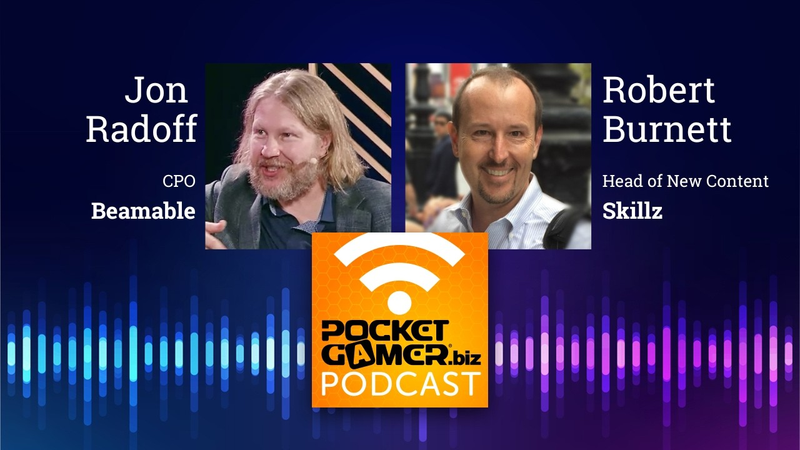
Skillz, Beamable and The LiveOps Shift
The integration of Skillz and Beamable represents a strategic shift toward providing developers with a comprehensive business operating system designed to democratize access to high-end infrastructure.
- Skillz has acquired Beamable to provide developers with a comprehensive 'business operating system' that handles backend infrastructure, allowing studios to focus resources on gameplay rather than technical debt.
- The new Skillz Pro SDK enables developers to maintain 100% control over their game's front-end user experience while integrating advanced live-service layers, virtual economies, and flexible monetization models.
- Beamable’s platform supports over 100 publishers and thousands of developers, maintaining a 99.99% service level agreement (SLA) to ensure the reliability and scalability required for competitive mobile games.

Let's Review Your Games — Ep. 050 (Part 2)
The indie title Time to Wake Up demonstrates significant potential through its strong artistic direction and atmospheric world-building, yet it currently struggles with fundamental design flaws that hinder player engagement.
- The game's core engagement is severely hindered by a five-minute unskippable introductory sequence that delays the introduction of the central time-shifting mechanic.
- The current on-rails structure limits player agency and creates a disconnect between the player and the narrative, necessitating a more immediate emotional through-line.
- Technical issues with the character controller, specifically slippery physics and improper height scaling, must be addressed to improve immersion.
Why aren’t more game developers using Kickstarter?
Kickstarter continues to serve as a vital, evolving mechanism for video game development, functioning less as a primary funding source and more as a sophisticated community-building and marketing instrument.
- Kickstarter is shifting from a primary funding source to a strategic marketing tool, with over 440 successful projects raising $26 million in the most recent annual cycle.
- Developers must treat Kickstarter as a community-building instrument, as the platform typically provides only 30 percent of a project's total backer base.
- Activity on the platform is projected to grow by 10 percent in 2025 as developers increasingly use it to secure final-stage capital and improve project visibility.

Let's Review Your Games — Ep. 049
Successful indie game development relies on a delicate balance between high-fidelity visuals, intuitive user interface design, and immersive audio feedback.
- Game design should prioritize 'wish fulfillment' as a core foundation, as seen in the successful premise of cleaning up a personal island.
- UI and game mechanics must be intuitive; players should not be confused by basic systems like energy bars or resource management.
- Audio design is critical for immersion; developers should use sound effects for repetitive actions like picking up trash and employ EQ filters to make in-game music feel diegetic.

How He Sold 100,000 Copies of His Games… Completely Alone (w/ Michael Cosio) — Ep 65
Solo game development thrives when creators prioritize a distinct, authentic creative voice over the pursuit of technical perfection or industry-standard polish.
- Solo developers can maintain a sustainable career by releasing games consistently, with a typical production cycle of six to eight months per title.
- Building an audience through free game releases before launching paid titles helps establish credibility and trust, reducing the risk of being perceived as an 'asset flip' developer.
- Adopting a low-fidelity aesthetic—such as PSX-style graphics with 512x512 textures and limited color palettes—allows solo developers to cut production corners while creating a distinct, marketable visual identity.
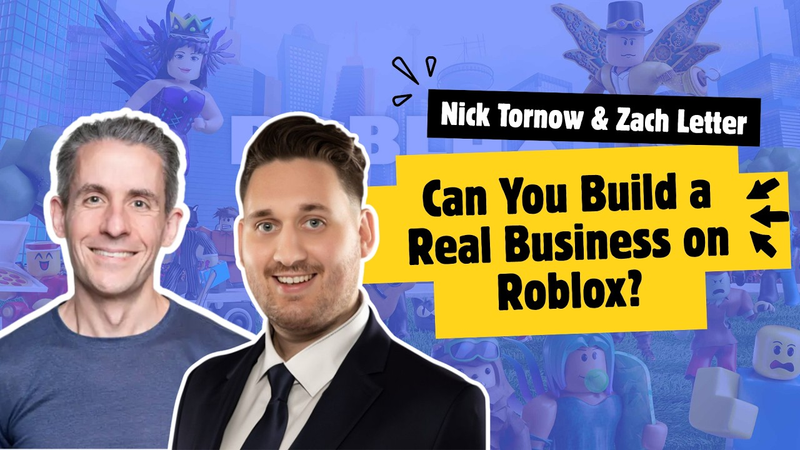
Can You Build a Real Business on Roblox?
Roblox has transitioned from a repository of viral, short-lived experiences into a robust ecosystem capable of supporting sustainable, high-quality businesses.
- Roblox has shifted from a platform for short-lived viral games to an ecosystem supporting sustainable, multi-year franchises by prioritizing long-term retention and social co-play over addictive mechanics.
- The platform’s discovery algorithm now favors deep engagement metrics, incentivizing developers to abandon 'pop-and-drop' release cycles in favor of continuous, long-term development.
- Small, lean teams of fewer than four people are currently achieving the highest success rates by launching minimum viable products and iterating weekly based on direct community feedback.

Let's Review Your Games — Ep. 048
Indie game development requires a delicate balance between atmospheric polish and clear player direction.
- Well-executed, low-budget games with an edgy, mature, or unsettling aesthetic can achieve commercial success with estimated earnings between $700,000 and $1 million.
- Market trends on Steam show a clear preference for darker, grittier, and haunting atmospheres over playful or family-friendly designs.
- Technical polish is mandatory for success, as issues like screen tearing, camera jitter, and missing settings menus actively undermine player engagement and streamer appeal.

Slay the Spire II Early Access Review Bombing | Design Club
The recent backlash against Slay the Spire II highlights a growing friction between iterative development practices and consumer expectations within the modern Early Access model.
- Slay the Spire 2 is currently experiencing review bombing in Early Access, primarily driven by player frustration over balance changes—specifically the removal of 'infinite' deck loops—introduced in the game's opt-in beta branch.
- MegaCrit provides an in-game feedback tool accessible via the F2 key, which was recently expanded to allow up to 8,000 characters per report to facilitate direct communication between players and developers.
- The developers have implemented a voluntary, opt-in beta branch for the Early Access title to test major balance adjustments, including character card changes and complete reworks of end-game bosses, separate from the live build.

Let's Review Your Games — Ep. 047
Indie game development often suffers from a disconnect between mechanical intent and player perception, particularly in puzzle-oriented titles.
- Developers must prioritize clear visual language and structured, grid-aligned environments to reduce player cognitive load and prevent disorientation.
- Ambiguous environmental cues, such as non-functional assets that mimic UI elements like buttons, should be replaced with standardized interaction logic to prevent player frustration.
- To improve player retention, developers should implement consistent systems like color-coding keys to receptacles and using distinct, snap-in-place mechanics.
Unity streamlines, PlayStation cuts, The Division, Elder Scrolls Blades, Coffee Stain, more
The mobile gaming industry is currently undergoing a period of significant structural realignment, characterized by corporate downsizing, the divestment of non-core assets, and a shift in strategic focus toward long-term sustainability.
- Unity is divesting its Supersonic publishing arm and closing the ironSource Ad Network as part of a strategic turnaround, with Q1 2026 revenue projected at $505–$508 million, significantly outperforming previous guidance.
- PlayStation Studios Mobile has undergone workforce reductions affecting approximately 50 staff, signaling a potential shift toward a licensing-focused model rather than internal mobile game development.
- Ubisoft has launched The Division Resurgence, a mobile shooter developed across multiple global studios, entering a highly competitive market dominated by titles like Call of Duty Mobile and PUBG Mobile.

Let's Review Your Games — Ep. 046 (Part 2)
Indie game development requires a delicate balance between technical execution and cohesive artistic direction.
- UI design should prioritize visual consistency by limiting font variety and unifying color palettes to maintain a professional aesthetic.
- Player retention and engagement in early game levels depend on clear visual signposting, as players often feel lost if lighting and environmental cues do not explicitly direct them toward objectives.
- Character design should avoid generic assets that break immersion; developers should use tools like Mixamo to customize character posture, body proportions, and textures to ensure they fit the game's specific art style.

Let's Review Your Games — Ep. 045
Indie game development requires a delicate balance between aesthetic polish and functional player feedback to ensure long-term engagement.
- Developers must prioritize 'juice'—reactive elements like particle effects, dynamic audio, and responsive animations—to ensure game mechanics feel tactile rather than disconnected.
- Successful survival and exploration games require narrative context and sensory feedback to ground the player and provide a necessary sense of urgency.
- Intuitive UI indicators, clear goal tracking, and responsive mechanics are essential to bridge the gap between a functional prototype and a polished, immersive product.