Game Design reports and market data
Documents
Bill Walsh | Don't Make Enemies (Philosophy Friday #9)
Professional success relies on the strategic management of interpersonal conflict and the preservation of organizational energy.
- Prioritize long-term organizational objectives over interpersonal conflict to prevent the significant resource drain caused by harboring professional enemies.
- Treat the gaming industry as an infinite game focused on innovation rather than a zero-sum competition, as collaboration consistently yields superior results compared to aggressive rivalry.
- Maintain professional distance from toxic individuals rather than engaging in retaliatory behavior, as these issues typically resolve themselves without active intervention.

From 'Spyder' to 'Sackboy: A Big Adventure' in Interactive Music
Interactive music design functions as a critical component of player immersion, utilizing sophisticated technical frameworks to ensure that audio remains responsive to gameplay.
- Composer Winifred Phillips utilized four primary dynamic music implementation strategies—horizontal resequencing, vertical layering, hybrid horizontal-vertical systems, and hybrid linear-dynamic structures—to score 'Sackboy: A Big Adventure' and 'Spyder' for Sumo Sheffield.
- Horizontal resequencing involves breaking music into distinct segments that trigger in varying orders, which Phillips used in 'Sackboy' to provide clear, rewarding feedback as players progress through levels.
- Vertical layering allows for the addition or subtraction of musical tracks to create variety and intensity without fragmenting the composition, a technique used in 'Spyder' to keep music fresh while hiding transitions.

5 Secrets For Gorgeous 2D AND 3D Game Art
Creating high-quality game art requires a departure from rigid creative constraints and an embrace of unconventional workflows.
- Prioritize visual uniqueness and memorable silhouettes over hyper-realism to differentiate smaller projects from AAA competitors.
- Maintain visual cohesion across all assets by establishing standardized rules for geometry, beveling, and texture fidelity.
- Utilize reference materials, such as photographs or existing models, to improve efficiency and overcome the difficulty of starting from scratch.

Cozy Games Gone Bad - Classifying Wholesome Games - Extra Credits
The emergence of cozy or wholesome games represents a significant shift in the gaming landscape, characterized by titles that prioritize low-stress mechanics, community-building, and optimistic narratives.
- The 'cozy' genre is defined not by specific mechanics, but by player emotional expectations for low-stress, optimistic, and inclusive experiences.
- Cozy games distinguish themselves from industry standards by replacing traditional power fantasies with mechanics centered on domestic simulation, cooperation, and community-building.
- The genre is characterized by fluid boundaries, often incorporating complex or dark narrative elements—such as depression or stalking—without losing the 'cozy' classification.

Panel: What Techniques Can we Apply from Hypercasual Games & Bring into Living Games?
The gaming industry is currently witnessing a strategic convergence between hypercasual titles and live service models, driven by a mutual desire to optimize player retention and monetization.
- The mobile gaming industry is converging toward a hybrid model that merges the frictionless, low-barrier entry of hypercasual design with the long-term retention and monetization structures of live service ecosystems.
- Hypercasual developers are increasingly integrating live-ops and in-app purchase (IAP) frameworks to extend the traditionally short lifespans of their titles.
- Live service developers are adopting hypercasual design principles to simplify complex social and gameplay systems, making them more intuitive for broader mobile audiences.
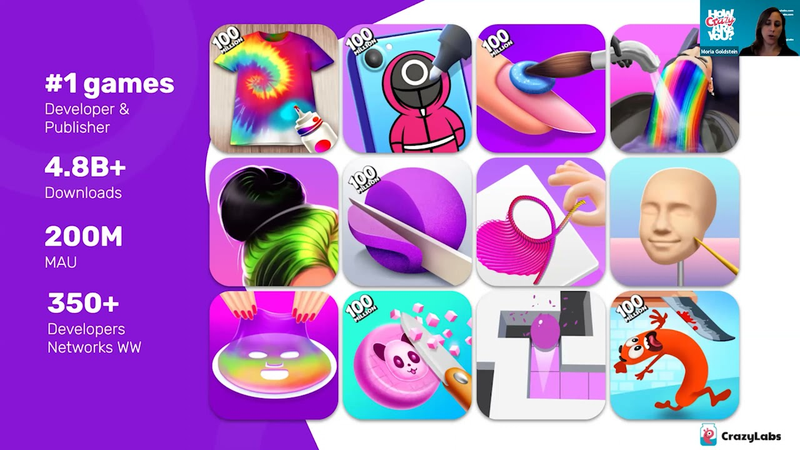
Superstar Session: The Key Elements for a Meaningful Hypercasual Game Review
Hypercasual game development demands a disciplined, iterative approach centered on constant self-correction and data-driven decision-making.
- Success in hypercasual development requires a disciplined, iterative framework that prioritizes data-driven decision-making over linear development paths.
- Development resources should be focused on addressing critical funnel drop-offs rather than superficial aesthetic improvements to maximize efficiency.
- Teams should utilize visual-heavy communication and early testing of multiple variations to minimize development cycles and accelerate pivots.
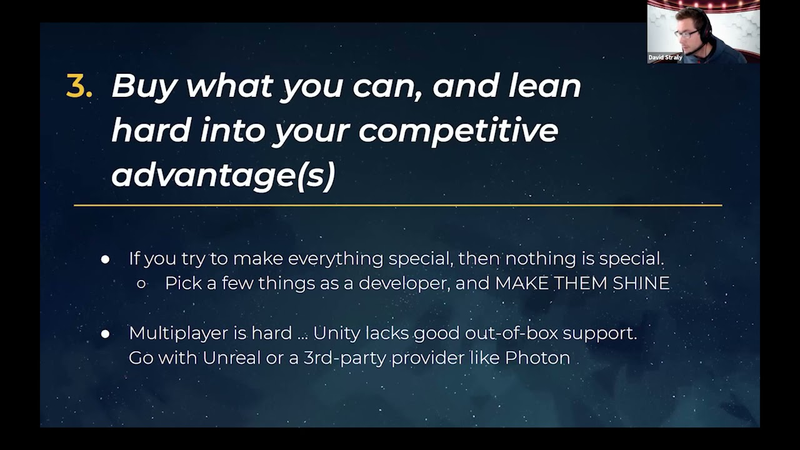
Tentpole Game Design: How to Make a Competitive Multiplayer Experience that Drives Deep Engagement
Creating a successful tentpole competitive multiplayer game requires a strategic alignment between internal team culture and the psychological needs of the player base.
- Sustained player engagement requires a high-contrast design that balances immediate, dopamine-driven action with serotonin-boosting progression and community systems.
- Developers should avoid burnout by implementing matchmaking variety that rotates players between high-performing, average, and supportive roles.
- Teams should prioritize a cyclical engagement model that encourages seasonal breaks rather than relying on purely addictive, high-intensity feedback loops.
Stop Fighting! Systems for Non-Combat AI
The primary objective of this analysis is to provide a framework for developing immersive, non-combat artificial intelligence in video games.
- Utility theory is the most effective foundation for non-combat AI, using weighted utility curves to drive decisions based on NPC needs, personality traits, and environmental context.
- Controlled randomness must be integrated into utility-based decision-making to generate emergent, organic behaviors that avoid repetitive, deterministic loops.
- Relationship systems, where NPCs maintain distinct feelings toward other characters and objects, are essential for creating social depth and driving non-combat conflict.

Lessons from 'Duolingo': How to Make Learning Hard Things Easy
The primary objective of modern educational software design is to bridge the gap between complex skill acquisition and user engagement through rigorous, data-driven experimentation.
- Duolingo increased day-one user retention from 13% to 55% over the past decade by prioritizing rigorous, data-driven experimentation over user intuition.
- Effective educational design relies on scaffolding difficulty through implicit practice and just-in-time assistance to prevent cognitive overload without relying on heavy text-based instruction.
- Gamification mechanics such as streak tracking, health systems, and difficulty-based progression are essential for fostering the daily engagement required to turn learning into a sustainable habit.

I made Call Of Duty... but it's 2D
This analysis outlines a methodology for creating 2D game art by deconstructing complex visual scenes into basic, abstract shapes.
- High-quality 2D art is achieved by prioritizing silhouettes, color gradients, and layered depth over complex sketching or painting skills.
- Visual coherence should be tested by blurring the scene or viewing it from a distance to ensure the abstract foundation is solid before adding fine details.
- Environment construction relies on building structures from simple geometric forms like rectangles and rounded pills using tools such as the polygon lasso.

MORTIS 101: 'FAITH's' Horror Design Toolkit
Effective horror design relies on a cohesive framework built upon three foundational pillars: narrative, mechanics, and affect.
- Effective horror design relies on a cohesive framework of narrative, mechanics, and affect to cultivate persistent dread rather than relying on superficial jump scares.
- Developers should prioritize minimalism and the fear of the unknown to subvert player expectations, turning routine interactions into sources of apprehension.
- High-stakes mechanics, such as one-hit-kill scenarios, must be balanced with generous save points and respawn systems to maintain tension without causing player frustration.
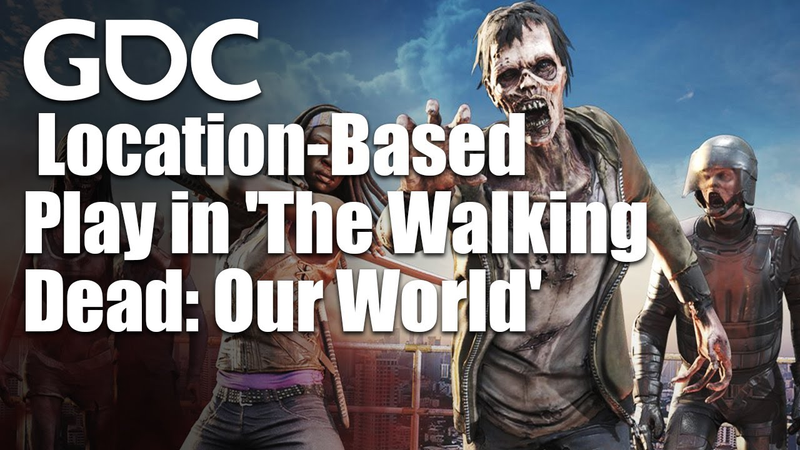
Social Depth of Location-Based Play in 'The Walking Dead: Our World'
The Walking Dead: Our World demonstrates how mobile developers can successfully integrate location-based play with social mechanics by prioritizing accessibility and collaborative engagement.
- Collaborative guild-based challenges drive engagement for 90% of daily active users, serving as the primary engine for both player retention and monetization.
- The game utilizes a 'play-everywhere' design model that ensures consistent gameplay regardless of the user's physical environment, prioritizing accessibility over complex spatial competition.
- The core gameplay loop consists of 15-second, bite-sized combat and scavenging encounters, which prototyping proved more effective than analysis-heavy mechanics for mobile contexts.