Game Design reports and market data
Documents
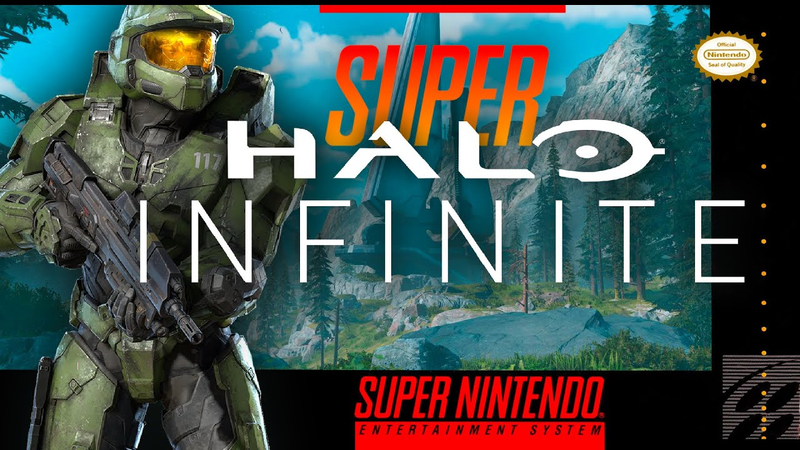
I Made Halo Infinite ... but 2D (PIXEL ART & GAMEPLAY)
The process of translating a high-fidelity 3D title like Halo Infinite into a 2D pixel art format relies on specific technical strategies to maintain visual depth and atmospheric consistency.
- Atmospheric depth in 2D environments is achieved by applying a color gradient that transitions from lighter, desaturated hues in the distance to darker, more saturated tones in the foreground.
- Modular asset design allows for complex level creation by using tiling sprites for backgrounds and reusable components for foreground elements like terrain and debris.
- Real-world references for textures and shapes are essential for enhancing the realism of pixel art and maintaining high visual fidelity.

Accessibility Best Practices: Mobility Considerations
This presentation outlines essential accessibility best practices for game developers, specifically focusing on supporting players with mobility-related impairments.
- Accessibility is a critical design consideration, as CDC data indicates that one in five people have a permanent disability, a figure that rises to one in two by the time individuals reach their mid-seventies.
- Developers should prioritize input flexibility by supporting multiple device types, such as keyboard-only gameplay in Minecraft or allowing remappable controller inputs to accommodate varying dexterity levels.
- Implementing granular control settings, such as adjustable analog stick dead zones and independent horizontal/vertical sensitivity, helps players compensate for motor control issues and controller drift.
Games Can Be Good for the Mind: State of Mobile Games – Cognitive and Psychological Benefits
This empirical report by Skillprint examines the cognitive and psychological benefits of mobile gaming, challenging the narrative that gaming is primarily detrimental to mental health.
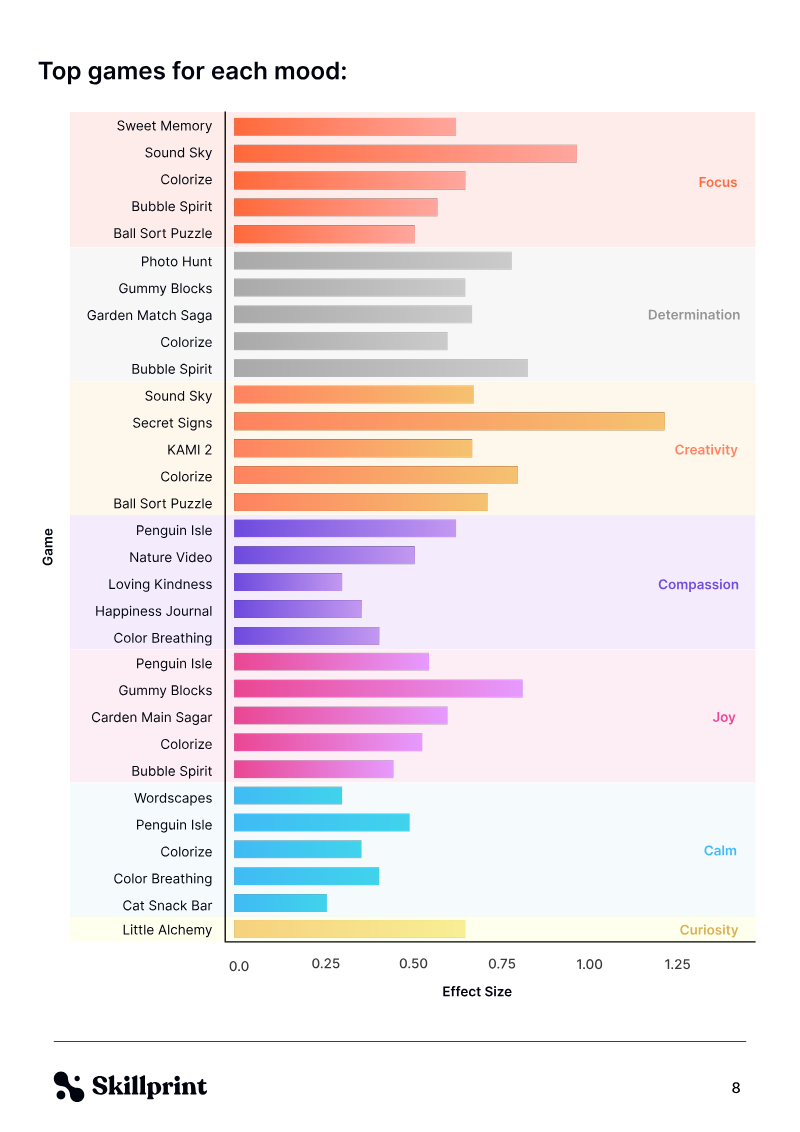
- Mobile games can significantly enhance specific mental states, with some titles demonstrating larger effect sizes for improving focus and creativity than traditional interventions like guided meditation or journaling.
- Rhythm and puzzle games, specifically Sound Sky and Colorize, produced large effect sizes for improving player focus and creativity.
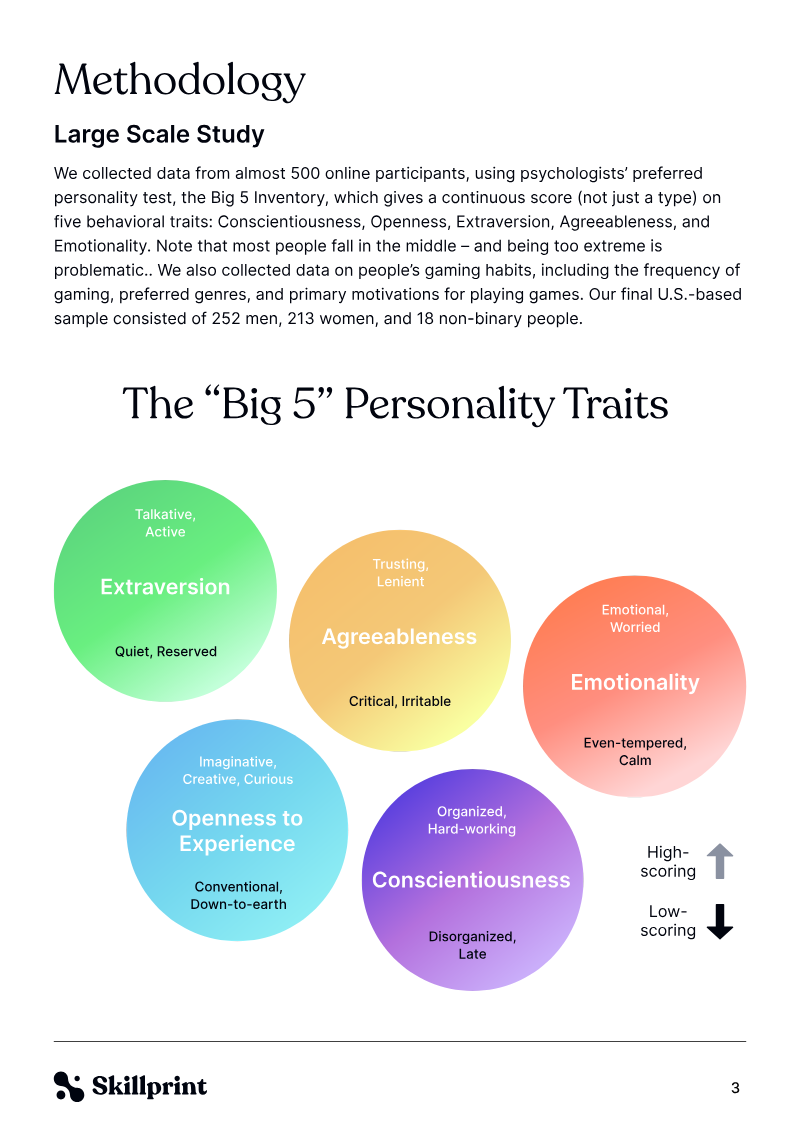
- The study, based on nearly 500 U.S. participants and 28 individual impact studies, confirms that personality traits—measured via the Big 5 Inventory—directly moderate the psychological benefits a player receives from gaming.



Uso de Videojuegos Didácticos en el Aula: Pautas para el Éxito del Aprendizaje
The central aim is to furnish educators with an evidence-based framework for selecting, deploying and assessing video-games that serve pedagogical goals, arguing that, when moderated and integrated with clear learning objectives, digital games can substantially enrich cognition, spatial-motor development, ICT competence and…
- Structured integration of video games into curricula—supported by teacher-led debriefing and clear learning objectives—significantly improves student performance in mathematics, geography, health, ethics, and language.
- National initiatives like 'The Good Gamer' have successfully scaled game-based learning to over 1,000 schools, demonstrating measurable gains in student engagement, competency tracking, and interdisciplinary learning.
- Effective pedagogical deployment relies on selecting age-appropriate titles based on PEGI ratings and utilizing a taxonomy that matches specific genres, such as RPGs or simulations, to targeted cognitive and technical competencies.
Charm Your Communities
Charming a gaming community involves shifting from a traditional top-down marketing funnel to a community-first approach that prioritizes authentic, human-centric connections.
- Charming a community requires moving beyond audience-building to create intentional, warm, and playful experiences that foster mutual connection rather than just passive consumption.
- Community members progress through four distinct stages—new, regular, loyal, and advocate—and developers must provide consistent, positive interactions to move them toward becoming advocates who contribute to the community's health.
- Small, daily, and authentic interactions are more effective at building community than grand, expensive gestures or metric-focused marketing campaigns.

Faking Mixed Reality: Building Reality Simulators
Developing for experimental hardware requires a strategic shift toward virtual simulation to mitigate the high costs and logistical friction associated with physical device dependency.
- Building a custom simulator for experimental hardware like the Magic Leap significantly reduces iteration bottlenecks by allowing developers to work without constant access to limited, specialized devices.
- To ensure high-fidelity simulation, developers should incorporate known hardware quirks—such as controller connection delays or tracking dropouts—directly into the simulator to catch bugs early in the development cycle.
- Using photogrammetry, specifically tools like Reality Capture, allows teams to create accurate 3D representations of physical office spaces to simulate real-world occlusion and environmental interaction.

PIXEL ART is EASIER than I thought! (Lord Of The Rings game art)
The creation of 2D pixel art environments requires a balance between technical experimentation and thematic fidelity to source material.
- Successful 2D pixel art adaptation relies on an iterative 'guess and check' workflow that balances technical experimentation with deep fidelity to the source material's architectural and cultural motifs.
- Atmospheric depth and lighting are achieved through specific technical strategies, including the use of dithering for light simulation and the layering of silhouettes to create perspective.
- Maintaining a small-scale thumbnail view throughout the design process is essential to ensure that character proportions and environmental forms remain readable at low resolutions.
One More Run: The Making of 'Spelunky 2'
Spelunky 2 serves as a deliberate evolution of the roguelike genre, functioning as a framework that prioritizes high interactivity, destructible environments, and emergent gameplay.
- Spelunky 2 was developed with a focus on preserving the core 'spiky' design philosophy of the original, which prioritizes player agency and a world that feels indifferent to the player rather than purely focused on progression.
- The development team utilized custom internal tools to manage complexity, including a system to set game variables, record replays, and manipulate camera and time settings, which served both as a testing suite and a source for marketing assets.
- Level design for the sequel was managed through externalized files edited in text editors with custom flags, a process the developer found more efficient than building a dedicated in-game editor.

Growing Your Code Library with Each New Project
Game development efficiency relies heavily on the systematic accumulation and refinement of reusable code libraries.
- Efficiency in game development is achieved by systematically transforming project-specific scripts into generalized, reusable code libraries.
- Developers should extract core functionalities—such as character controllers, save systems, and UI menus—into modular repositories to eliminate repetitive technical implementation.
- Technical flexibility is maintained by writing decoupled code that utilizes object-oriented principles like virtual methods and base classes to avoid hard-coded assumptions.

Pain Medication Reimagined: VR for Chronic Pain
The Abilities Research Center at Mount Sinai is actively working to bridge the seventeen-year gap between medical innovation and clinical adoption by leveraging advanced technologies to bypass the limitations of traditional pharmaceuticals.
- In a study of patients with chronic spinal cord injury, virtual reality (VR) interventions resulted in an average 40% reduction in neuropathic pain symptoms within 10 minutes of exposure.
- The effectiveness of VR therapy is strongly correlated with a patient's 'presence'—the degree to which they feel immersed in the virtual environment—rather than just their general tendency toward immersion.
- Clinical trials suggest that VR can help 'trick' the nervous system into repairing the motor homunculus, the brain's map of body parts, which often becomes blurred or distorted in patients with chronic limb pain.
I Made DUNE Into 2D Pixel Game Art...
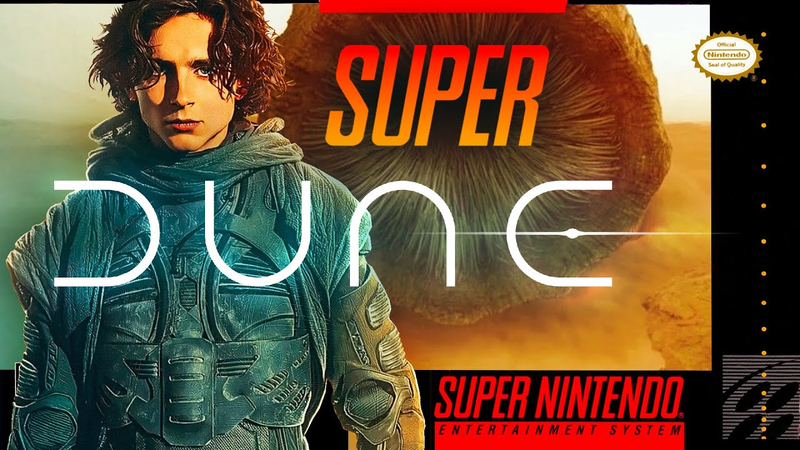
The primary objective of this artistic demonstration is to translate the cinematic scale and atmosphere of the film Dune into a 2D pixel art environment reminiscent of Super Nintendo-era games.
- Achieving a sense of massive scale and atmospheric depth is the primary requirement for successfully translating cinematic source material into a 16-bit pixel art format.
- High-fidelity pixel art can be achieved efficiently by scaling gradients down and back up to create intentional banding, rather than relying on manual, pixel-by-pixel placement.
- Complex dithering effects can be simulated rapidly by applying noise filters to textures, while high-contrast highlights and lowlights are essential for defining surfaces like stone and metal.

Creating Feudal Japan from Across the Pacific
The development of Ghost of Tsushima serves as a case study in navigating the complexities of representing a foreign culture within the interactive medium.
- To ensure cultural authenticity in 'Ghost of Tsushima,' Sucker Punch Productions prioritized hiring and collaborating with cultural consultants throughout the development process, viewing this investment as a necessary cost of entry rather than a production burden.
- The development team adopted a 'student' mindset, which included conducting field research in Tsushima and Japan to move beyond superficial internet-based assumptions and gain a deeper understanding of historical details like sword artistry.
- When game design requirements conflicted with cultural accuracy, the team prioritized authenticity by making significant changes, such as renaming characters to better fit historical naming conventions and removing mindless hunting mechanics that clashed with Japanese cultural values.