Game Design reports and market data
Documents

Don't Talk to Me or My Baby Ever Again: Negotiating Challenging Collaboration
Effective game development hinges on shifting the industry paradigm from viewing external contractors as mere service providers to treating them as integrated, expert partners.
- Shift the industry paradigm by treating external contractors as integrated, expert partners rather than mere service providers to improve creative output.
- Involve contractors early in the development lifecycle to ensure their expertise aligns with the project’s broader vision and technical requirements.
- Maintain transparency regarding scope changes and provide consistent, timely feedback to external partners, acknowledging that development pressures like crunch affect them as severely as internal staff.
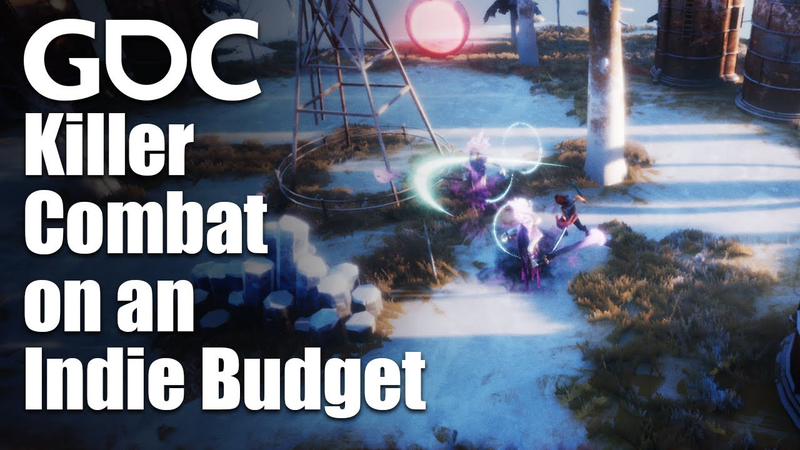
Dreamscaper: Killer Combat on an Indie Budget
Developing a high-quality combat system within the constraints of an indie budget requires a disciplined focus on core design pillars and iterative refinement.
- Define core design pillars early—such as 'purposeful action' and 'tough but fair'—to guide development and ensure combat systems remain focused on player strategy rather than RNG.
- Invest in hit reactions and state machines to add depth without increasing player complexity, as these provide critical feedback that makes combat feel responsive and interactive.
- Implement a 'hit stop' system that freezes the attacker and target for approximately 115 milliseconds (7 frames) upon impact to create a visceral, satisfying sense of weight in combat.
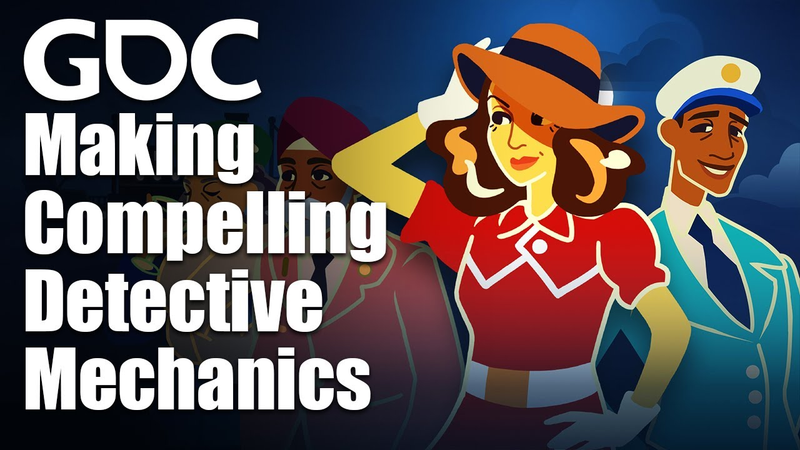
The Burden of Proof: Narrative Deduction Mechanics for Detective Games
Detective games function most effectively when they move beyond rigid, linear narratives to embrace systems where players actively synthesize clues to progress.
- Traditional detective game design often relies on a 'combination lock' mechanic where players match two clues to unlock a new fact, a system that frequently results in cluttered interfaces and repetitive, unengaging gameplay.
- In the game 'Overboard!', inkle moved away from rigid, abstract deduction systems by splitting the experience into a high-agency, low-impact investigation phase followed by a low-agency, high-impact accusation phase.
- To create a more natural detective experience, developers should aim to simulate an 'AI Hercule Poirot' that synthesizes player-gathered evidence into a logical, dramatic conclusion rather than forcing the player to act as a master detective who already knows the answer.

Simulating Tropical Weather in 'Far Cry 6'
The simulation of dynamic tropical weather in Far Cry 6 relies on a centralized Weather Manager that orchestrates transitions, lighting, and atmospheric effects through artist-designed presets and regional curves.
- The Far Cry 6 weather system utilizes a centralized 'weather manager' backend and a 'weather database' frontend, allowing developers to drive visuals, audio, and gameplay through unified parameters like wetness and rain factors.
- To implement wetness across diverse assets without disrupting artist pipelines, the team used a unified porosity-based formula that generated maps for existing PBR shaders, ensuring consistent material behavior without requiring manual asset updates.
- The team managed global illumination by fading out indirect lighting during high cloud coverage, while using a voxel-based system that packs 13 frames of data—11 for time-of-day increments, one for local lights, and one for sky occlusion.

Will Dislyte Be Lilith's Next Big Mobile Gaming Hit? | Deconstruction ft. Game Experts
Lilith Games has established a significant presence in the mobile RPG market with Dislyte, a title that demonstrates the studio’s ability to succeed without relying on established external intellectual property.
- Lilith Games successfully launched Dislyte as an original IP, achieving initial revenue figures that outperformed established competitors like Marvel Strike Force.
- Dislyte has transitioned into a stable performance phase, currently generating approximately $1 million in net weekly revenue.
- The game’s market differentiation is driven by a unique modern aesthetic, high-quality production values, and an innovative user interface that balances monetization with player progression.

How I Recovered From Quitting My Game ($50,000 Spent)
The development of an indie game titled Father, a horror-themed first-person shooter, serves as a case study for the psychological and professional challenges inherent in independent game production.
- A developer abandoned a $50,000, six-month indie horror project due to personal insecurity and imposter syndrome after an initial publisher rejection.
- The developer's attempt to pivot to a 'marketable' project failed to resolve creative dissatisfaction, proving that chasing perceived market trends is not a substitute for authentic creative vision.
- Revisiting the original project after a period of detachment allowed the developer to objectively validate the game's core value and potential.

Ghost in the Empathy Machine: Exploring Player-Character Connection in Life is Strange: True Colors
Narrative storytelling has evolved from ancient oral traditions into a sophisticated medium for exploring human interiority, with modern video games serving as the latest frontier for fostering deep emotional resonance.
- The narrative arc of interactive media is shifting toward interiority and empathy, moving from passive observation to active participation in a character's emotional state.
- In 'Life is Strange: True Colors,' developers maintained player connection to the protagonist, Alex, by capping NPC empathy insights with a brief, reflexive thought from Alex to realign the player's perspective.
- The 'junkyard smash' scene in 'Life is Strange: Before the Storm' demonstrated that player-character alignment does not always require lockstep control; allowing the character to act out of character can deepen the player's connection to their internal struggle.
A New Theory for Game Design Psychology - The Metacast by Naavik
Successful game development hinges on a rigorous culture of iterative prototyping, where teams must be willing to abandon failing projects to uncover the core magic of a title.
- Successful game development requires a rigorous iterative culture where teams prioritize bold, structural changes over incremental adjustments to ensure core mechanics remain compelling.
- A project’s potential is best validated by a three-gate framework: internal team enthusiasm, target audience engagement, and long-term commercial scalability.
- Developers should use their own off-hours engagement with a project as a primary indicator of its potential for success.

Designing Around Rage - Extra Credits Gaming
The primary thesis of this analysis is that player frustration, or "tilt," often stems from a fundamental misunderstanding of the role of failure in game design.
- Failure should be reframed as a neutral data point for testing hypotheses regarding strategy and mechanics rather than a personal judgment of skill.
- Designers can mitigate player frustration by minimizing the time cost of failure through rapid respawn cycles.
- Effective game design ensures players retain progress—such as knowledge, equipment, or unlocked paths—even after a loss to prevent demoralization.

The Dark Side Of Game Development
The pursuit of a full-time career in independent game development often leads to a cycle of psychological distress, characterized by five specific mutations that erode an individual’s well-being and creative passion.
- Independent developers often suffer from identity collapse, where their sense of self becomes dangerously tethered to professional output and commercial success.
- The 'maturation paradox' occurs when rapid skill growth leads developers to perpetually scrap and iterate on previous work, preventing the completion of finished products.
- The 'numbers trap' forces a shift from creative passion to business-centric survival, which frequently transforms independent development into a source of isolation and frustration.
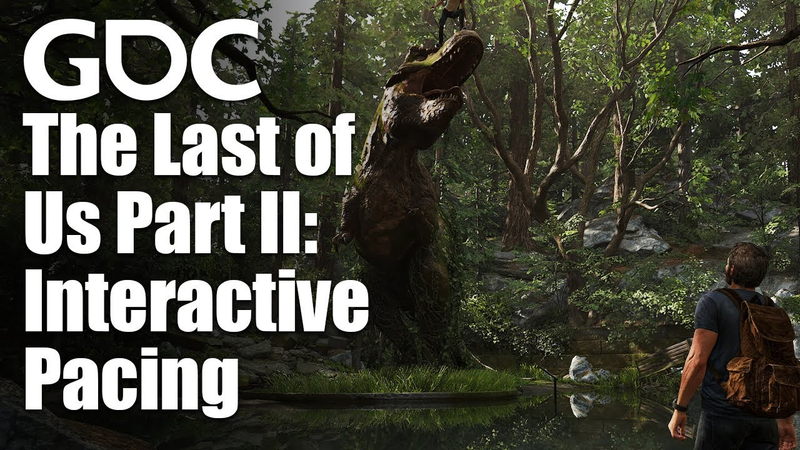
Interactive Pacing from the Museum Flashback in 'The Last of Us Part II'
The Museum Flashback in The Last of Us Part II serves as a masterclass in interactive narrative pacing, prioritizing player agency over rigid, developer-dictated tempo.
- Interactive pacing allows players to set their own tempo by choosing whether to rush through linear narrative beats or linger to engage with optional environmental content.
- The 'Museum Flashback' level in The Last of Us Part II utilizes a three-tiered hierarchy of interactions: focal points (mandatory story beats), prospects (optional, repeatable interactions like quips), and secrets (unexpected, high-effort 'mold-breaking' moments).
- To teach players they can interact with the environment without tutorials, the design introduces two simple, isolated exhibits early on, establishing that interaction is both optional and consistent in scale.

How Web3 Games Work (and Sadly Don't)
The current landscape of Web3 gaming is characterized by a fundamental misalignment between speculative financial incentives and sustainable entertainment.
- Web3 games often function as loss leaders for unregulated financial services, where the primary goal is to capture the lifetime value of players through banking, lending, and trading fees rather than game revenue.
- Many play-to-earn models, such as Axie Infinity, operate as pyramid schemes where the sustainability of the economy relies on a constant influx of new players to fund the earnings of existing ones.
- Blockchain integration in gaming is often technically inefficient compared to centralized databases, offering little value to major publishers unless the intent is to facilitate financialization or bypass traditional regulatory barriers.