1 free read left. Create a free account for unlimited reading + AI research.
Create free account
Designing Around Rage - Extra Credits Gaming
Key insights
6 takeaways- 01Player motivation is driven by the desire for mastery and exploration rather than the simple outcome of winning, as evidenced by the lack of interest in cheat codes.
- 02Failure should be reframed as a neutral data point for testing hypotheses regarding strategy and mechanics rather than a personal judgment of skill.
- 03Designers can mitigate player frustration by minimizing the time cost of failure through rapid respawn cycles.
- 04Effective game design ensures players retain progress—such as knowledge, equipment, or unlocked paths—even after a loss to prevent demoralization.
- 05Loss states function as essential feedback loops that provide granular opportunities for players to refine their execution and tactical understanding.
- 06Decoupling failure from punishment fosters a more engaging environment that encourages iterative learning instead of emotional tilt.
Ask AI about this video
Transcript
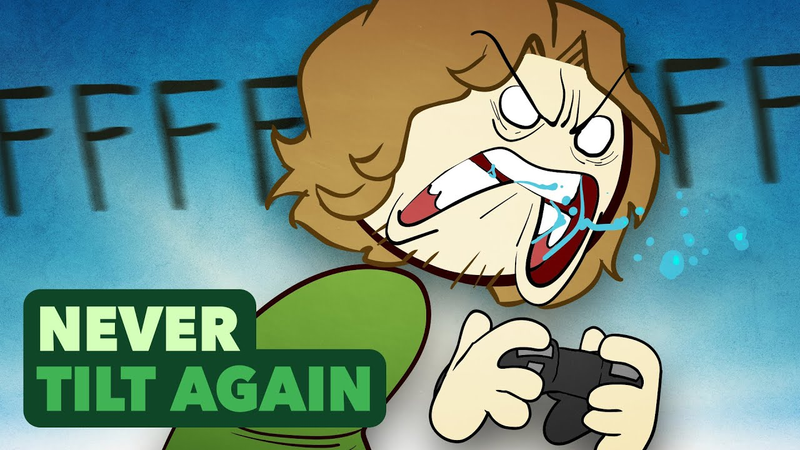
Malenia. Oh, FromSoftware, why do you do this to me? Oh, James? Oh, I thought you were in design land. What's that? Oh, you're using ancient designer techniques to astral project yourself out here because you could sense a disturbance in the design force? I mean, that's what I gathered from the vague hand gestures. Didn't know designers could do that. Oh, you're saying that this might help me never tilt again? Oh, that would be awesome. Hey, you didn't uh happen to bring any snacks from the astral plane, did you? I am starving and he's gone. Thanks so much to Brilliant for continuing to support our passion for lifelong learning. I'm just going to come out and say it. Games are supposed to be something we enjoy, something that challenges us and helps us grow. And I don't think they're supposed to fill us with rage or leave us cursing whoever made them. Heck, if you were being so bold, you could even say they're supposed to leave us in a better state of mind than when we sat down to feed our precious little free
time into them. But, most of us have had a moment where we tilt. I know I have. Where we start to get mad at a game, we play worse, get even more upset, and end up in a spiral that leaves our recreation as the literal worst part of our day. But, what if I told you that that anger and frustration, more often than not, comes from our own mindset? Specifically, how we understand losing. Most of us, on some subconscious level, process losing as an active failure, as the game saying, "You're not good enough." And this hurts, especially if you're having a day. And on some level, you're turning to games to regain some control in a world that feels entirely out of it. But, conversely, that's not how designers think of losing. It's not why we put the ability to lose into games. For us, it's there to serve as a data point for the player, to give them feedback rather than judgment on how they're doing. But, I'll get to that in a minute. First, though, we have to talk about the point of a game because it's easy to fall into the trap of thinking that your goal as a player is simply to win. In fact, on the surface, without
really examining it, that's what most players think of themselves as trying to do. But in literally no game ever is the actual goal simply to win. That's a little absurd. If it were, we'd always use cheat codes to hop right to the end of every single player game or give ourselves infinite power and invulnerability every time just to stomp our way through. But we don't. And in multiplayer games, well, I mean, if you wanted to simply win, you could just smash noobs all day. Punching down at people who were just learning to play. But for most folks, that gets really old really fast. Why? Because we don't actually play for the sake of winning. We play to get better at the game. We play to see the story. We play to experience other worlds. And as designers, we build out elements of the design to encourage players to do all of these sorts of things. And that is why we build in losing. It's a metric for you, the player. It's our way of giving you feedback on whether your hypothesis about how to overcome a challenge is correct. That's all it is. And this is especially true in competitive multiplayer games. Competitive games are all about getting better at them. That's
the reason why we play them. And what separates a good competitive multiplayer game from a bad one is often the breadth and granularity that improvement can occur in. In the best multiplayer competitive games, you always feel like you're getting better or at least like you have some new idea that's going to hopefully give you an edge. And you can keep exploring new ways to improve for months or even years. Now, in most multiplayer games, there are two ways you can improve. In execution or in understanding. To improve in understanding, you formulate a hypothesis about a build or a deck or a loadout that you think is going to give you an advantage, then you test it out to see if you're right. And you know if you're right if you lose less, and you know if you're wrong if you lose more. That's all losing is. A data point for you to check your current hypothesis about a game against. Losing isn't worse than winning. It's just data to help you get better. Feedback that lets you know to cross that hypothesis off your list and dive into the fun of thinking of a new one. This is equally true when trying to improve on execution. Your win rate just helps you identify how much you've mastered an in-game skill. It
lets you know when you're hitting diminishing returns and might want to focus on somewhere else. But, just because losing is simply a metric to give the player feedback about how they're understanding the game, does not mean that designers aren't totally off the hook. Because there's a big thing that affects how frustrating and tilting a game can be that is entirely in the designer's hands. And that's the real-world cost of losing. In some games like poker or God help us all possibly NFT games, the real-world cost of losing is money. But, in most games, that real-world cost is time. However, as designers, we can help mitigate this by making sure losing isn't treated like a punishment. Because again, it really is just a data point after all. So, how do we do that? Well, one option is just to have smaller amounts of progress lost the harder and thus the more in need of loss feedback that your game is. I mean, imagine if Super Meat Boy had hour-long levels instead of ones that were only a few minutes. Yeah, that'd feel pretty terrible. But, by lowering the real-world cost for dying to something trivial, they were able to use death
effectively as a form of feedback. Another way is to make multiple avenues of progression. So, a player doesn't lose all their progress when they lose. For example, even when you lose 30,000 souls in a Souls game or have a less than optimal run in Returnal, you haven't actually lost all of the progress you made during that time. You've unlocked new paths, discovered new strategies, picked up equipment that you haven't lost, etc. Softening the blow and encouraging you to take what you've learned and try again. This is why so many competitive multiplayer games make sure you earn things even when you lose and why those multiplayer competitive games where one loss drops your rank so much that it would take three or four games to earn it back feel so bad. So, if you're a designer watching this, try to focus your design to help people feel losses as feedback and not punishment. And for all of the players out there, the next time you begin to tilt, just remind yourself that hitting that fail state is just feedback to help you figure out if your current thinking on the game will help you move forward in it. Ooh, okay. You know, I think reframing loss in that way will really help me out here. Melania, I hope
you're ready for round 244. Here we go. Oh, actually, I know exactly what to do. What? I'm learning. And whether you're playing Elden Ring or looking to up your STEM stats, we all know that the best way to learn is through doing, which is why we think Brilliant, the interactive learning tool focusing on science, technology, engineering, and mathematics is perfect for learning at your own pace in a fun and interactive way, replacing traditional lectures with hands-on lessons complete with visual examples and a storytelling approach that really helps the information stick. Also, because many of us in the EC community are passionate lifelong learners who are curious about a bunch of different topics. We love that Brilliant's deep catalog gives us lots to learn about, but on our own schedule, at our own pace. For instance, with back to school right around the corner, our studio director Jeff has been recommending some of Brilliant's math courses as quick ways to get caught up on what students might have forgotten over the break. Seriously, it's a lot faster and more fun than summer school. And because I've
been designing more intricate maps and traps for my D&D campaign lately, I wanted to get a better grip on my geometry fundamentals, which actually helped me nail down some pretty complex angles and patterns I'll be using for a tabletop laser pointer and mini mirror dungeon puzzle that is in no way being designed for a TPK. I promise. So, if you're a curious learner just starting out or a seasoned pro, you should check out Brilliant to level up your learning by going to brilliant.org/extracredits and signing up for free. And the first 200 people that go to that link will also get 20% off an annual premium subscription, which added bonus helps our channel make shows like the one you just watched. Huh? Look at you being all smart and kind at the same time. Thanks so much for that. A hearty thanks of legend to Ahmet Z Abdurk, Alicia Bramble, Angelo Valenciana, Art Like Games, Casey Muscha, Dominic Valenciana, Joseph Blain, and Skyler Holmes.
Summary
The primary thesis of this analysis is that player frustration, or "tilt," often stems from a fundamental misunderstanding of the role of failure in game design. Rather than viewing a loss as a personal judgment of skill or a failure of character, players should reframe the experience as a neutral data point. From a design perspective, the loss state serves as essential feedback, allowing players to test hypotheses regarding strategy, execution, and mechanics. By shifting this mindset, players can transform moments of irritation into opportunities for growth and iterative learning.
The discussion highlights that the true objective of gaming is rarely just to win, as evidenced by the lack of player interest in using cheat codes or exclusively targeting weaker opponents. Instead, players are driven by the desire to improve, explore narratives, and master complex systems. Effective game design facilitates this by providing granular opportunities for improvement, whether through refining execution or adjusting tactical understanding. When a player loses, they are simply receiving information that a specific approach is ineffective, which encourages the development of new strategies.
To mitigate negative emotional responses, designers must carefully manage the real-world cost of failure, which is typically measured in time. The analysis suggests that successful games minimize the sting of defeat by keeping the cost of failure low—such as through rapid respawn cycles—or by ensuring that players retain some form of progress, such as knowledge, equipment, or unlocked paths, even after a loss. By decoupling failure from punishment, designers can foster a more engaging and less demoralizing environment, ultimately helping players maintain a healthier relationship with their gaming experiences.























Comments