Game Design reports and market data
Documents
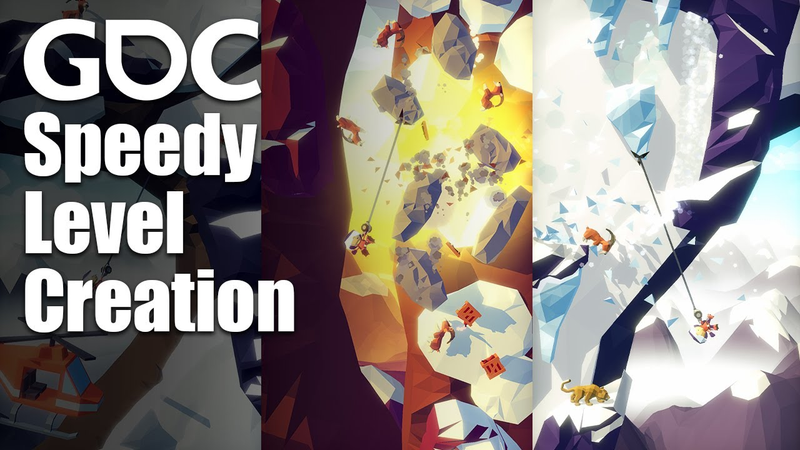
Moving Mountains: Speedy Level Creation as a Desperate Indie Dev
Solo independent development requires a strategic shift from the resource-heavy workflows of AAA studios toward extreme efficiency and persistent iteration.
- Solo developers should use procedural tools, such as noise generation libraries, to deform basic geometric primitives into complex, organic level shapes efficiently.
- Maintain a mechanic-tracking matrix to ensure an even distribution of gameplay features across all levels and to identify gaps where mechanics are underutilized.
- Design levels with a 'main path' for accessibility and 'optional paths' containing collectibles to provide challenge for advanced players without blocking progress for a wide audience.
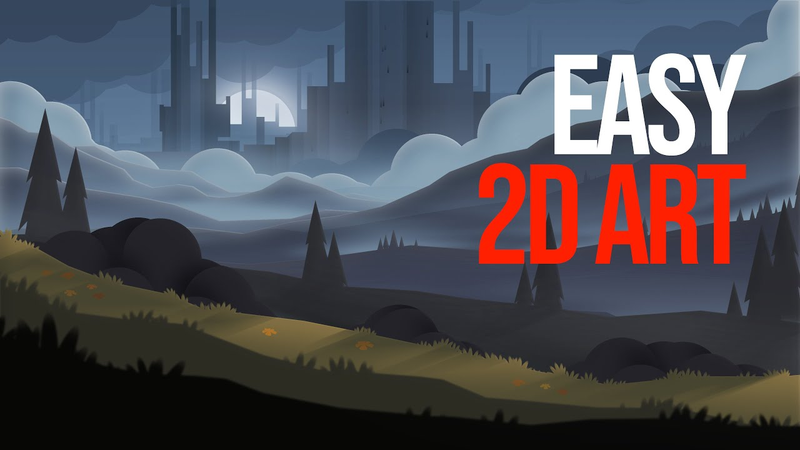
How To Create Breathtaking 2D Art For Dummies
The creation of professional 2D game art relies on a structured approach to color theory, atmospheric perspective, and layered composition.
- Establish visual cohesion by extracting a primary, secondary, and shadow color palette directly from high-quality reference sources like Elden Ring screenshots.
- Implement atmospheric perspective by ensuring foreground elements are highly saturated and dark, while distant objects gradually blend into the sky through atmospheric fog.
- Construct scenes using a layered approach that builds from the background forward to maintain depth and environmental scale.

How To Avoid Development Hell
Development hell is a pervasive issue in game design, often characterized by feature creep and the unnecessary complication of core mechanics.
- Development hell is primarily driven by feature creep and the unnecessary complication of core mechanics, often stemming from a developer's fear that their game is too simple to resonate with audiences.
- Unnecessary features significantly inflate production costs, as evidenced by one developer who wasted approximately $75,000—half of their $150,000 budget—on scrapped content that never made it into the final game.
- The 'trinity hook' framework acts as a rigid filter for decision-making by requiring all features to directly support a mechanical hook, a story hook, or a sensory hook.
Narrative Moments on a Budget: Stretching Storytelling "Dollars" Across the Moments That Matter
Effective narrative design requires a disciplined framework that aligns storytelling investments with a game’s core critical path.
- Establish a '3-2-1' framework to manage narrative budgets: define three tiers of investment (Gold, Silver, Bronze), two methods for selecting narrative devices, and one 'North Star' goal to guide all decision-making.
- Categorize narrative content into Gold (high-cost, high-visibility, core beats), Silver (medium-cost, supports the critical path), and Bronze (low-cost, high-reuse, peripheral content) to ensure resources are allocated where they matter most.
- Identify 'core narrative beats' (foundational story tenets) and the 'story critical path' during pre-production to create a control center that prevents scope creep and informs budget distribution.
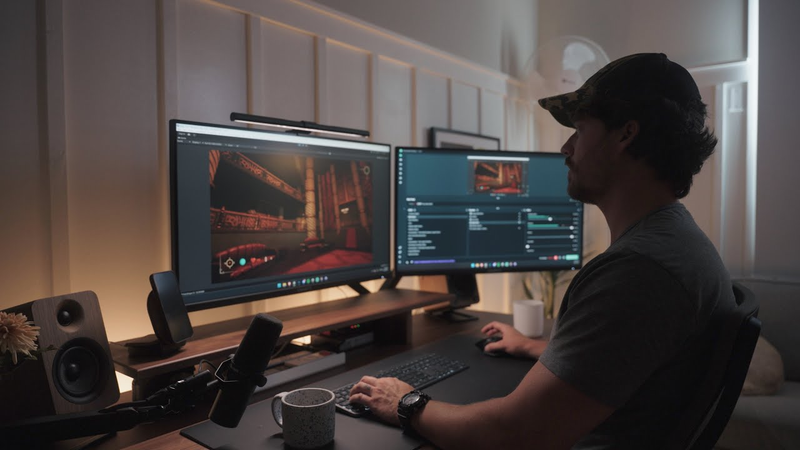
How To Create A 3D Level FAST In Unity
Efficient 3D level design in Unity relies on a structured, three-tiered workflow: establishing a structural blockout, applying custom textures, and finally populating the space with furniture and props.
- Implement a three-tiered workflow for 3D level design: structural blockout, texture application, and final prop population to ensure modularity and iterative flexibility.
- Utilize Unity’s ProBuilder for structural geometry, strictly adhering to a grid-based system to maintain precision and ease of future modifications.
- Use vertex snapping (triggered by the 'V' key in Unity) to ensure accurate alignment of prefabs during the structural phase.
Michał Azarewicz - How to profit from (what appears to be) a flop - Shing! story
The commercial trajectory of the action game Shing! illustrates that a disappointing initial launch does not necessitate a project’s abandonment.
- Persistence in platform relations is critical; securing promotional slots on consoles like Sony, Nintendo, and Xbox requires consistent, weekly outreach to platform representatives for months until your title is included in their internal promotional spreadsheets.
- A failed initial launch does not necessitate abandoning a project if the studio has enough runway to support subsequent releases on other platforms, such as the Xbox and Nintendo Switch, which can significantly outperform initial PC and PlayStation 4 performance.
- Long-term product management, including releasing a definitive '2.0' version with bug fixes and quality-of-life improvements years after the initial launch, can extend a game's lifecycle and maintain its commercial viability.
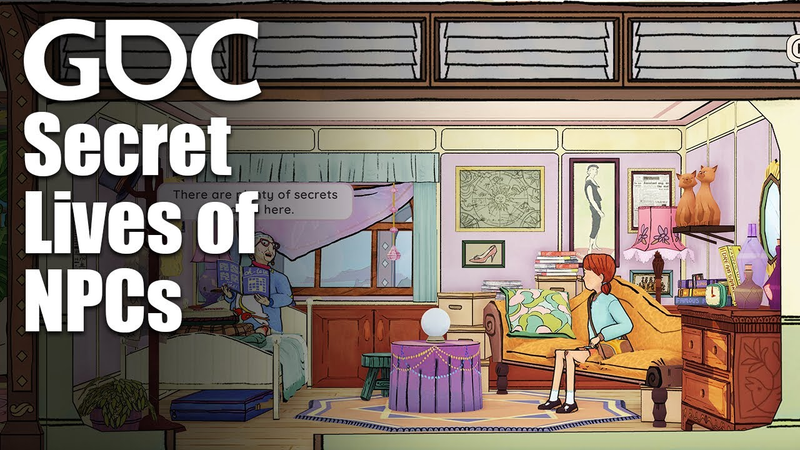
The Secret Lives of NPCs: 'Wayward Strand'
Wayward Strand redefines the narrative adventure genre by shifting the focus from traditional player-driven agency to a system of independent, simultaneous storytelling.
- Wayward Strand utilizes a real-time, autonomous NPC system where characters follow independent schedules, shifting player agency from direct control to observation and listening.
- The narrative structure is built on a 1,500-page script that maps character arcs and interactions across a fixed three-day timeline.
- Development relied on a 'braided' storytelling model where individual writers managed specific characters while a centralized editorial process ensured tonal and narrative coherence.
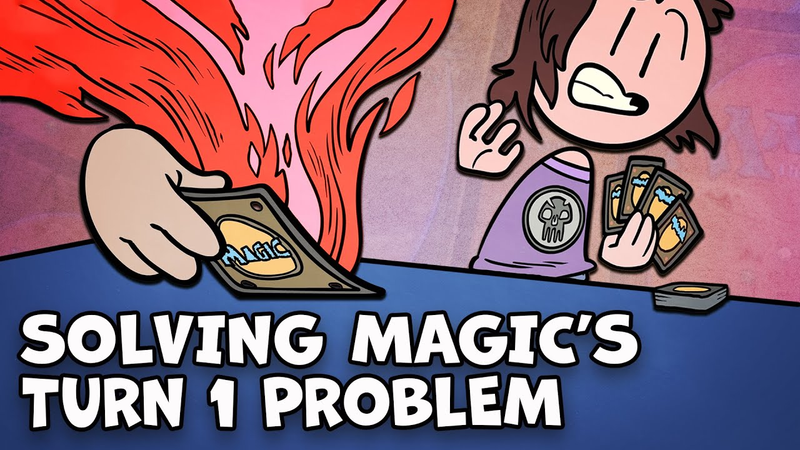
The Genius Behind MTG's First New Card Type in 15 Years - Extra Credits
The introduction of the Battle card type in Magic: The Gathering represents a strategic design intervention intended to address power creep and game pacing issues that emerged over the last decade.
- The introduction of the Battle card type serves as a strategic intervention to combat power creep and excessive game speed that rendered high-mana, late-game cards unplayable.
- Battles function as multi-stage assets that provide an immediate effect upon casting and transform into more powerful spells once a specific damage threshold is met.
- By requiring players to divert resources toward non-player targets, Battles effectively increase the total damage needed to win, naturally slowing the game's tempo.
'Dark Pictures: Season 1': 4 games in 4 years: Audio Systems for Narrative Horror
Supermassive Games successfully navigated the challenges of an aggressive annual release schedule for the Dark Pictures Anthology by shifting from traditional, linear audio pipelines to systemic, procedural frameworks.
- Supermassive Games developed a systemic, runtime-driven audio architecture for 'The Dark Pictures Anthology' to deliver cinematic quality without relying on linear, pre-rendered cutscene pipelines.
- To manage performance in titles like 'House of Ashes,' which featured up to 50 enemy soldiers and 11 friendlies, the team implemented a distance-based culling system for audio events and emitters to respect CPU constraints.
- The studio developed a '50% Center Bias' panning system for dialogue and Foley, which prevents immersion-breaking harsh cuts by constraining audio panning to half of the character's actual position relative to the listener.
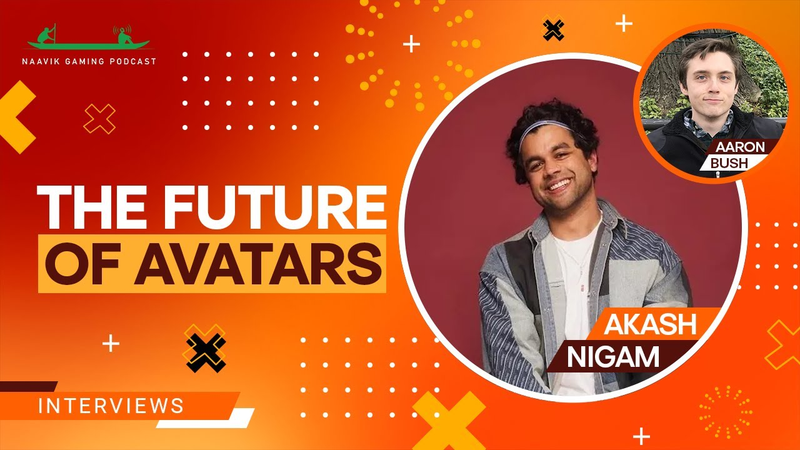
The Future of Avatars
Avatars are transitioning from static digital representations into persistent, user-owned identities that serve as the primary medium for human expression and communication in immersive 3D spaces.
- Avatars are evolving from static representations into persistent, user-owned digital identities that function as the primary social infrastructure for immersive 3D spaces.
- The industry is shifting toward interoperable character frameworks that allow digital identities to move seamlessly across diverse gaming and mixed reality environments.
- Machine learning is being utilized to retarget animations and assets across platforms, effectively breaking down the limitations of proprietary walled gardens.
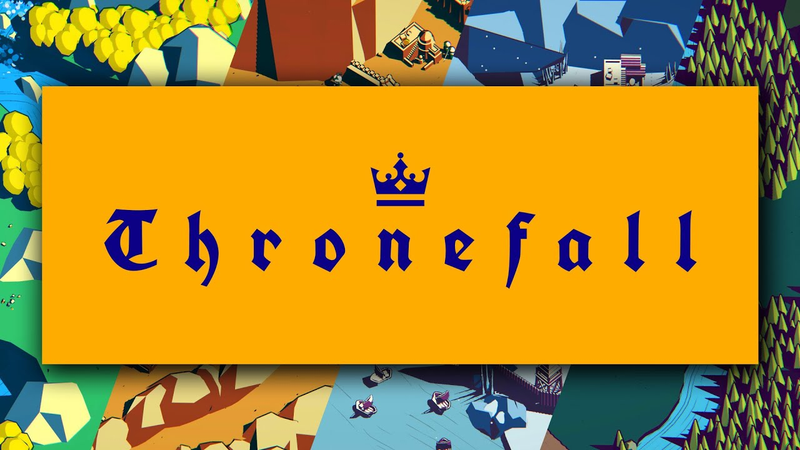
👑 Our Game Thronefall is OUT NOW!
Thronefall, a minimalist medieval base defense game developed by Grizzly Games, has officially launched into Early Access on Steam.
- Grizzly Games has launched its minimalist medieval base defense title, Thronefall, into Steam Early Access.
- The game aims to distill complex real-time strategy mechanics into a bite-sized, accessible format focused on balancing economic development with nightly defensive waves.
- Thronefall has generated significant market interest, with pre-launch wishlist numbers substantially outperforming the developer's previous title, Will You Snail.

Panel: Levelling up: How can Blockchain Help Upgrade the Gaming Experience?
Blockchain technology serves as a transformative tool for the gaming industry by facilitating true digital ownership, verifiable scarcity, and secondary market liquidity for in-game assets.
- The primary objective for blockchain integration must remain high-quality, engaging gameplay, as players prioritize entertainment value over the underlying technical architecture.
- Industry strategy is shifting toward a 'web 2.5' model that combines traditional, centralized creative leadership with tokenized economies to balance innovation with proven design principles.
- Mass adoption requires the abstraction of complex blockchain processes, such as gas fees and wallet management, to ensure a seamless user experience that does not impede core gameplay.