Game Design reports and market data
Documents
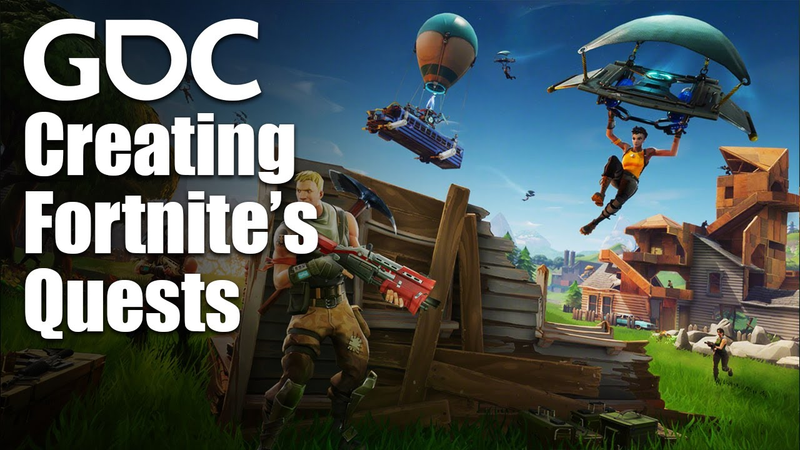
How 'Fortnite' Designers Made Their Own Tools
The development of Fortnite necessitated a fundamental shift in workflow strategy when traditional, spreadsheet-based quest editing systems proved too error-prone and inefficient for the game’s rapid production cycle.
- To resolve a production bottleneck where quest creation took days and was prone to errors, Fortnite's quest team empowered designers to build their own tools using Unreal Engine's Blueprint-driven Editor Utility Widgets.
- By shifting tool development to designers, the team reduced the complexity of the quest editor from six pages of tightly packed properties to a more user-friendly two-page interface.
- The new designer-centric workflow allowed for the creation of quest templates, which enabled fine-grained control and automated the addition of specific event rewards across multiple quest types.
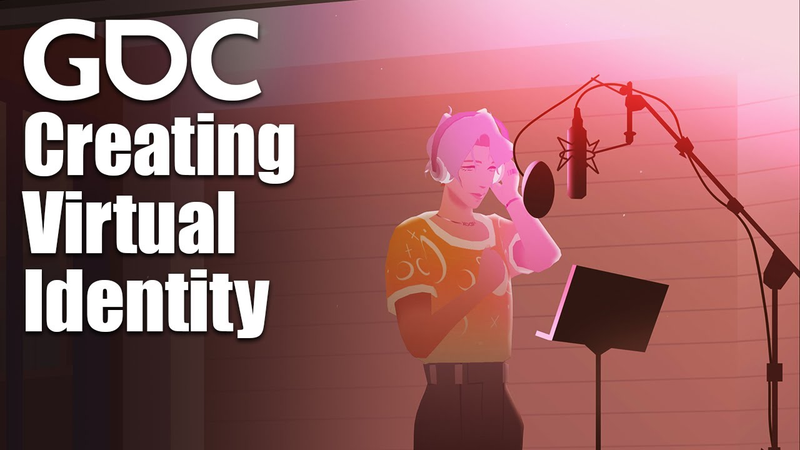
Gorillaz, Monkees, K/DA, and OFK: Creating Virtual Identity
The creation of virtual bands like OFK represents a strategic shift toward prioritizing relatability and creative honesty over the high-gloss, corporate-driven models exemplified by K/DA or Hatsune Miku.
- Virtual identities require a clear ethical boundary; creators should avoid manipulating audience emotions for product sales and must be transparent about the distinction between the character and the human behind it.
- When building a virtual band, creators should prioritize authenticity by anchoring the character's emotional state in the creator's genuine experiences, even if the narrative events are fictional.
- Virtual characters serve as a versatile marketing tool, allowing teams to generate content like award show appearances or public disclaimers using pre-recorded motion capture when budgets for new animation are limited.

AI and Player Psychology
The integration of artificial intelligence into game development is currently transitioning from basic procedural generation toward the creation of personalized, narrative-driven experiences rooted in human psychology.
- The game industry is shifting from basic procedural generation toward AI-driven, personalized narrative experiences that leverage human psychology.
- Significant shifts in large-scale, AI-integrated game design are expected to materialize within the next three to five years.
- Developers are moving beyond surface-level behavioral metrics to utilize adaptive psychometric assessments that identify enduring psychological profiles rather than transient player behaviors.

Script Murders: The Form and Design of the Most Popular Tabletop Genre in China
The Chinese script murder industry, known locally as jubensha, has matured from a niche adaptation of Western whodunit mysteries into a sophisticated, immersive social phenomenon.
- The Chinese 'jubensha' (script murder) market is driven by social interaction, with a core demographic of 18-to-25-year-olds (Gen C) who prioritize group activities and immersive experiences.
- The market is segmented into three primary design patterns: traditional 'whodunnit' mysteries (50% market share), supernatural themes (20%), and new mystery genres (30%).
- Operational success relies on four pillars: physical layout/cosplay, high-quality script writing, the role of the Dungeon Master (DM) to guide narrative flow, and the use of NPCs to enhance immersion.

Playing Your Will You Snail Levels | WYS Infinite
The introduction of the Infinite update for Will You Snail marks a significant shift toward community-driven content, centered on a robust level editor and Steam Workshop integration.
- The 'Will You Snail' Infinite update shifts the game's core value proposition toward community-driven content by integrating a robust level editor with Steam Workshop support.
- The level editor offers advanced technical capabilities, including gravity manipulation, dynamic character scaling, and camera trickery, enabling diverse genres like tower defense and rhythm-based platforming.
- A significant barrier to entry exists due to extreme difficulty levels that often demand pixel-perfect precision, potentially alienating casual players.

You Have No Idea How Hard It Is To Run a Sweatshop
Game design frequently fails to communicate intended moral or political messages because the mechanical requirements of gameplay often override thematic goals.
- Game designers often fail to communicate intended messages because players prioritize the game's underlying mathematical systems over the narrative setting or designer intent.
- Players naturally identify with the role they control, which can lead them to justify unethical actions—such as managing a sweatshop or committing atrocities—to achieve game-defined goals.
- Designers should embrace the role of explorers rather than creators of ordered systems, as players will inevitably break systems and find their own meaning within the chaos.

5 Steps To Making A Gorgeous 2D Game
Creating high-quality 2D game art does not require advanced illustration skills or expensive hardware; rather, it relies on the application of fundamental design principles, simple geometric shapes, and a methodical approach to composition.
- Establish a clear visual hierarchy by limiting your color palette to three primary tones representing the sky, foreground, and ground.
- Create depth and atmospheric perspective by using gradients, fog, and varying saturation levels to blend background elements.
- Apply shadows and lighting consistently across all assets by adhering to a single, unified light source.

AI x Games: What’s the Path Forward?
Artificial intelligence is fundamentally transforming the gaming industry by serving as both a tool for operational efficiency and a catalyst for disruptive creative experiences.
- AI is shifting from experimental research to production-ready applications, specifically enabling dynamic, player-driven narratives through adaptive NPC 'brains' and proactive, AI-managed community moderation.
- The industry is moving toward enterprise-level scalability, prioritizing multi-modal capabilities that integrate voice, image, and behavioral data into core game design.
- Studios are adopting modular integration strategies, such as AI-driven DLCs and self-serve tools, to ensure seamless adoption of complex models into major gaming titles.

Why My Game's Demo Cost Over $100,000
Developing a high-quality first-person shooter is a complex, resource-intensive endeavor that requires significant financial and temporal investment.
- Developing a high-quality first-person shooter demo can exceed $100,000 in costs and require multiple years of development time.
- The development process is inherently fragile, requiring a highly structured approach to integrate thousands of assets without causing project collapse.
- Level blockouts are the essential first phase of development, used to validate core gameplay mechanics and spatial flow before investing in expensive artistic polish.

Respecting Player Fantasies in Dating Sims
Effective narrative design in dating simulation games requires a disciplined approach to managing player expectations and delivering on established genre fantasies.
- Define the target audience early and conduct thorough research into their specific tropes and expectations, as shifting the target demographic mid-development is rarely successful.
- Character popularity in dating sims is heavily driven by established archetypes, with conventional 'hunk' archetypes consistently yielding the highest engagement metrics.
- Player retention drops significantly when narrative content violates established character canon or fails to provide agency, such as forcing sexual encounters without player consent.
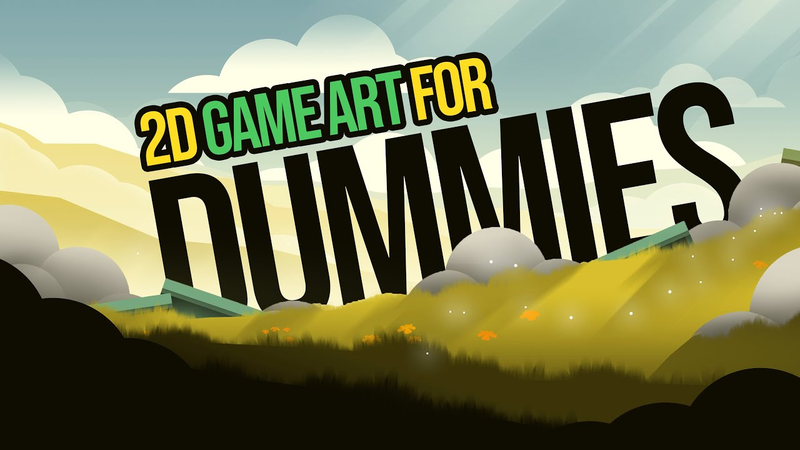
2D Game Art Tutorial In 10 Minutes
The primary objective of this guide is to demonstrate that high-quality 2D game art is accessible to creators of all skill levels, even when limited to basic hardware like a computer mouse.
- High-quality 2D environmental design relies on the disciplined application of a pre-defined, harmonious color palette rather than complex manual drawing techniques.
- Visual cohesion and three-dimensional depth are achieved by layering primary, secondary, and neutral tones, even if individual elements appear washed out in isolation.
- The composition process begins by establishing a horizon line using gradients to provide a consistent color context for all subsequent environmental elements.
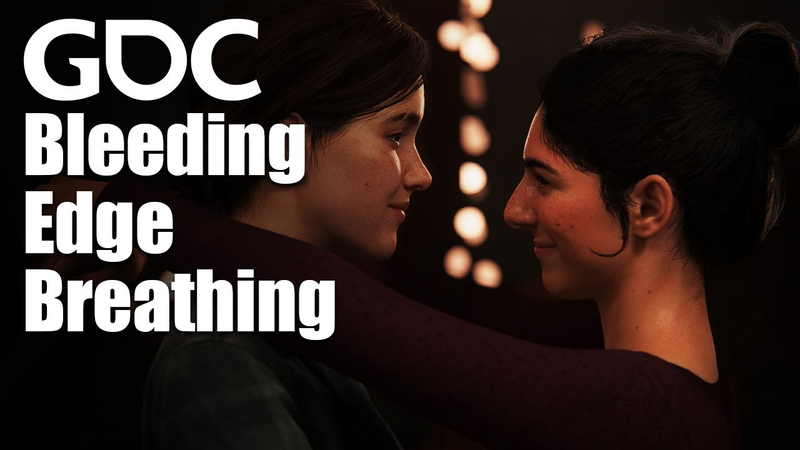
Breathing Life Into 'The Last of Us': Part I and II
The development of The Last of Us Part I and II centers on the creation of a sophisticated, procedural breathing system designed to heighten player immersion through dynamic physiological feedback.
- Naughty Dog developed a proprietary audio middleware called 'Scream' to manage complex, procedural breathing systems in 'The Last of Us' that move beyond traditional, error-prone animation tagging.
- The breathing system uses a logic-based 'murmuration' loop that checks real-time game variables—such as player injury, heart rate, and AI awareness states (ambient, stealth, or combat)—to dynamically trigger appropriate audio assets.
- To ensure visual-audio synchronization, the team implemented a system that automatically stretches or compresses 30-frame facial animations in real-time to match the specific duration of the triggered breath sound file.