Game Design reports and market data
Documents
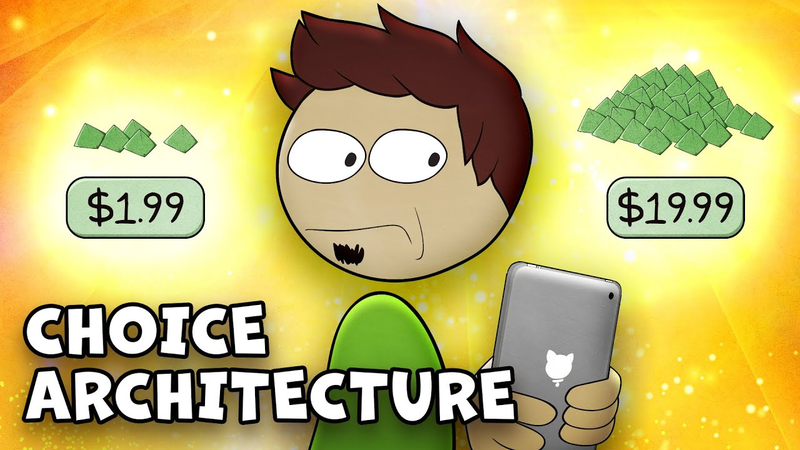
Choice Architecture: Manipulation for Fun and Profit! | Extra Credits Gaming
Choice architecture refers to the strategic arrangement of options to influence human decision-making, often creating an illusion of free will while guiding individuals toward specific outcomes.
- Choice architecture is the strategic arrangement of options to influence human decision-making, often creating an illusion of free will to guide users toward specific behaviors.
- Designers use anchoring to influence perception, such as displaying high-priced items to make mid-range options appear more reasonably priced by comparison.
- Framing significantly impacts user reception, as demonstrated by early MMOs that shifted from an 'unrested penalty' to a 'rested bonus' to achieve the same mathematical result with higher player satisfaction.
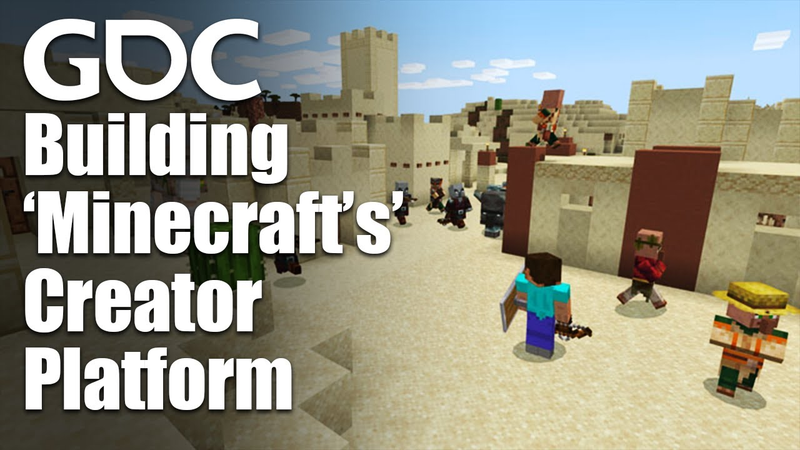
Building the 'Minecraft' Creator Platform Block-by-Block
Minecraft has successfully transformed from a sandbox game into a professional creator ecosystem by formalizing user-generated content through the Bedrock platform.
- Since launching in 2015, the Minecraft Marketplace has generated over $500 million in gross revenue and facilitated more than 1.7 billion downloads, supporting a professional creator ecosystem.
- Mojang Studios categorizes its user base into players, hobbyists, and professional creators, with the latter group transitioning from intrinsic motivation to business-oriented content production.
- To address the limitations of the C++ Bedrock codebase, Mojang is developing a formal Creator API and tooling to match the extensibility previously only available through Java decompilation.
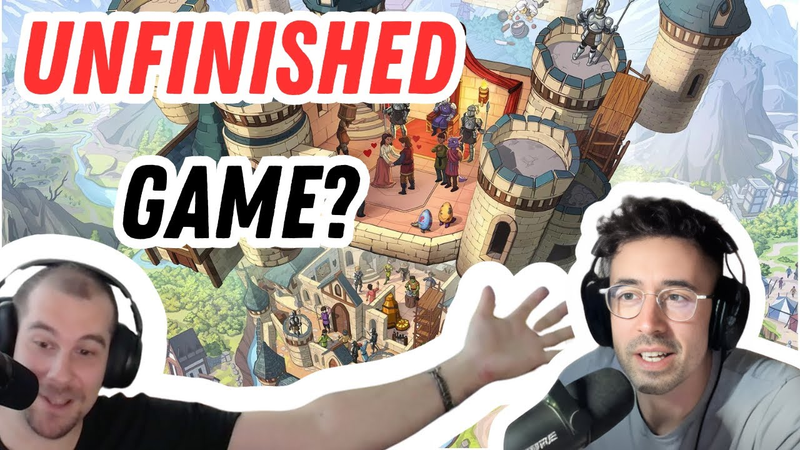
Elder Scrolls Castles: Flop with the most successful iteration of this core gameplay
Elder Scrolls: Castles represents a derivative entry in the mobile management genre, struggling to maintain momentum despite leveraging the high-profile Elder Scrolls intellectual property.
- Elder Scrolls: Castles experienced a sharp decline in player interest, with daily downloads dropping from an initial 230,000 to 40,000.
- The game struggles to generate significant revenue, with recent estimates placing daily ad income between only $9,000 and $12,000.
- The core gameplay loop, which combines mechanics from Fallout Shelter and Hustle Castle, is hindered by restrictive health-based gating and a punishing resource management cycle that creates player death spirals.
6 Game Design Mistakes You MUST Avoid
Effective game design relies on specific principles that prioritize player engagement while streamlining development to avoid feature creep.
- Present problems before solutions to ensure players feel a sense of accomplishment when overcoming obstacles.
- Simplify early-game levels to account for the gap between the creator's full context and the player's initial lack of understanding, thereby reducing abandonment rates.
- Prioritize mechanical choices like movement options and weapon upgrades over world-navigation choices to provide greater long-term value and gameplay experimentation.
Deadlock Valve's new game revealed: It's a shooter, NOT just MOBA.
Deadlock represents a significant evolution in competitive gaming by synthesizing the strategic depth of multiplayer online battle arenas with the mechanical intensity of high-mobility hero shooters.
- Valve's Deadlock is a 6v6 competitive title that blends MOBA-style lane management and objective control with the mechanical demands of a high-mobility hero shooter.
- The game has achieved significant market traction during its closed beta phase, consistently maintaining over 150,000 concurrent players on Steam.
- Matches typically last between 25 and 40 minutes and feature a 'Soul' economy that forces constant combat to secure or deny currency across four distinct lanes.
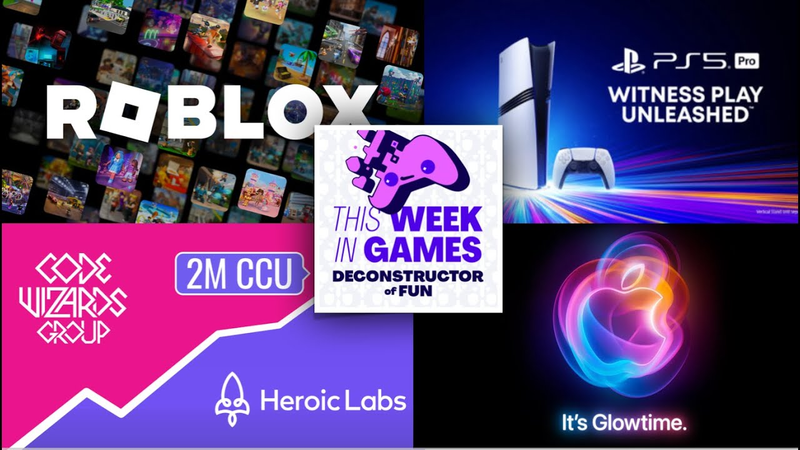
TWIG #299 Product Strategy, Market Insights & Marketing Challenges
The gaming industry is currently navigating a period of significant structural volatility, characterized by hardware stagnation, corporate downsizing, and shifting consumer engagement models.
- The $700 price point of the PlayStation 5 Pro highlights a growing disconnect between high-fidelity hardware advancements and the value proposition perceived by the average consumer.
- Major industry players are facing significant instability, evidenced by large-scale layoffs at Microsoft and activist pressure on Ubisoft to pursue privatization following a sharp decline in market valuation.
- Mobile growth is currently driven by hybrid monetization models that blend hyper-casual accessibility with deep 4X strategy mechanics, as seen in successful titles like Last War: Survival and Whiteout Survival.
Game Design For Engagement & Retention: How to keep your players playing
Sustainable player engagement and retention depend on the strategic integration of three interconnected frameworks: the core loop of rapid actions, the context loop of progression and narrative, and the cultural loop of social identity and lifestyle.
- Retention is primarily driven by the first-time user experience (FTUE), which is the root cause of failure in 99% of games requiring design intervention.
- Effective game design requires balancing the core loop (start, challenge, resolution, reward) with context and cultural loops to move players from initial engagement to long-term fandom.
- Designers should intentionally create 'imbalance' in game economies—such as the 'hot dog and bun' principle—to ensure players always have an unfulfilled goal that motivates them to return.
Game Economy Design: How to ensure player satisfaction and commitment, with Oscar Clark
Game economy design functions as a dynamic, mathematical system of sinks and sources rather than a static progression model.
- Game economy design relies on balancing 'sinks and sources' to maintain player momentum, ensuring that the flow of resources creates a dynamic equilibrium between progression and grind.
- Power progression should follow an S-curve model, where power grows rapidly to provide immediate excitement but tapers off to prevent power creep and maintain long-term balance.
- Retention is driven by providing players with meaningful choices, which requires a design loop of mastery, introduced challenge, potential for failure, and foreshadowing of future rewards.
Is Chess the Next Big eSport?♟️| Extra Credits Gaming
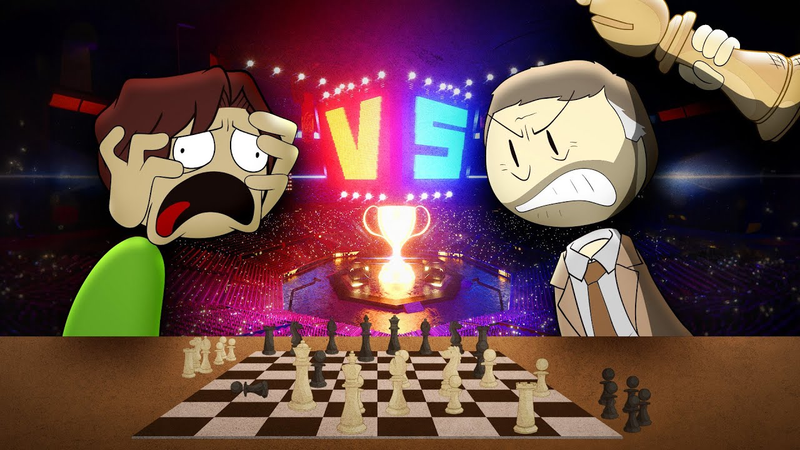
Chess has successfully transitioned from an ancient tabletop strategy game into a prominent, modern eSport.
- Online chess has successfully transitioned into a viable eSport by shifting from traditional, slow-paced play to high-frequency formats like blitz and bullet tournaments.
- The game meets core eSport criteria by offering a high skill ceiling with zero randomness, as players start with identical pieces and no luck-based mechanics like dice rolls.
- Modern digital platforms like Chess.com have popularized the game by integrating real-time 'evaluation bars' powered by the Stockfish engine, which provide viewers with immediate, data-driven insights into match momentum.
TWiG #296: THE RETURN OF LONG LOST HOST + Black Myth Wukong Goes Ape Shit and Stormgate Flops
The global gaming industry is currently navigating a period of intense volatility characterized by shifting player engagement patterns and the unsustainable escalation of AAA production costs.
- The gaming industry is facing a crisis of unsustainable AAA production costs and a stagnant hardware install base, forcing a shift away from traditional $70 premium models toward shorter, high-impact experiences or live-service ecosystems.
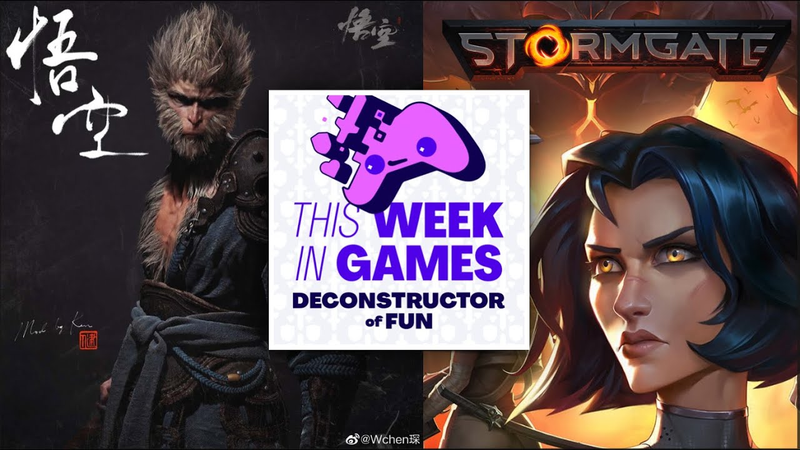
- Black Myth: Wukong has shattered Steam records, demonstrating the massive, untapped influence of the Chinese market on global commercial performance.
- Market performance is increasingly polarized, evidenced by the commercial failure of the RTS title Stormgate due to poor execution, contrasted with the success of EA’s College Football 25, which leveraged brand nostalgia and strategic bundling.
2.5 gamers x Live AM(F)A #5 - Ask Me Anything @ August 21 5:30pm CET
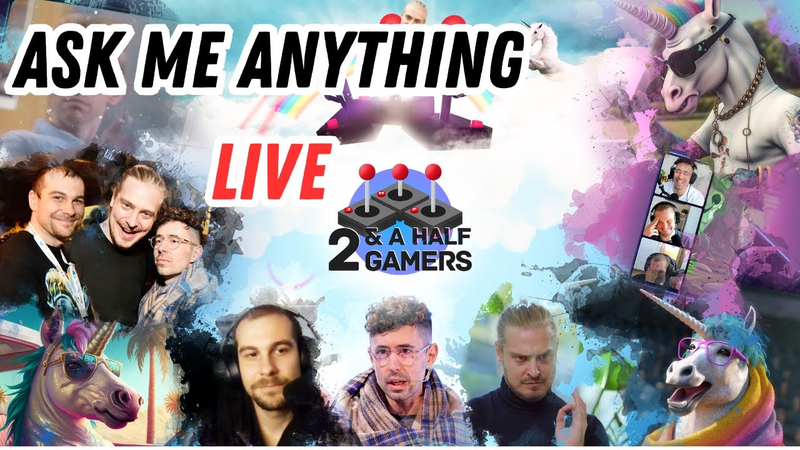
The mobile gaming industry is undergoing a significant transformation as developers increasingly adopt strategies from the broader subscription-based app economy.
- Developers are shifting toward subscription-based app economy models, prioritizing long-term community building and holistic lifetime value over purely transactional engagement.
- Maximizing profitability increasingly involves bypassing platform fees through web-based onboarding and external stores, which requires robust technical infrastructure like conversion APIs and pixels.
- Core gameplay quality is the primary driver of day-one retention, necessitating the use of professional testers rather than biased internal teams to refine onboarding experiences.
Squad Busters *BIG NEW* update: No more Pay to Win. No gacha, no money!
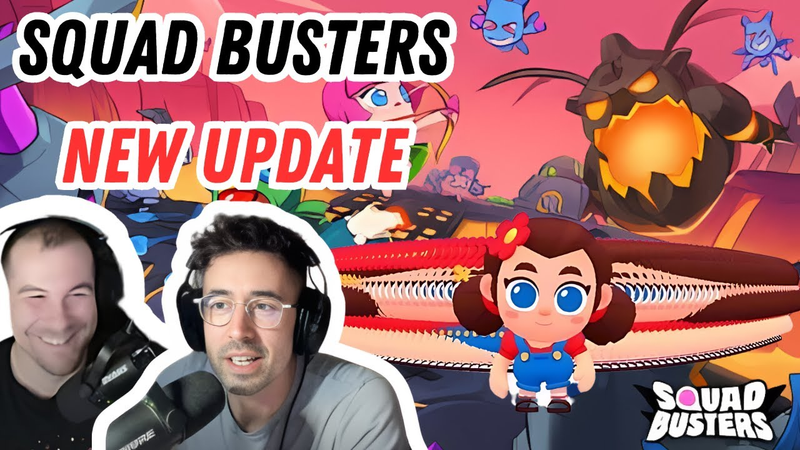
Squad Busters has undergone a fundamental transformation in its monetization and gameplay architecture, pivoting away from pay-to-win mechanics to address long-standing player dissatisfaction.
- Squad Busters has removed pay-to-win mechanics, specifically eliminating mega units, rerolls, and key consumables in favor of a cosmetic-focused monetization model.
- The game replaced previous comeback mechanics with a random fusion system and introduced player-controlled chest multipliers to improve competitive equity.
- Chest rewards operate on a deterministic cycle rather than true randomness, allowing players to use third-party trackers to apply multipliers exclusively to high-value epic chests.