Game Design reports and market data
Documents
Part I: Gaming's Emotional Blind Spot: Jenova Chen's Strategy Behind Making Journey and Sky
The gaming industry remains constrained by an emotional blind spot, primarily catering to a core male demographic through violent, action-oriented mechanics while neglecting the potential for romance, drama, and social simulation.
- The gaming industry suffers from an emotional blind spot by over-relying on violent, action-oriented mechanics that cater to a core male demographic while neglecting potential players like women and older adults.
- Game development should be treated as an emotional business that prioritizes satisfying specific psychological cravings and human connection over traditional genre conventions and high scores.
- Drawing from film theory, developers can bridge the gap between storytelling and gameplay by focusing on authentic, personal emotions rather than competitive mechanics.

Let's Review Your Games — Ep. 027
Indie game development requires a delicate balance between stylistic ambition and technical execution.
- Indie developers should avoid generic or AI-generated voice acting by hiring professional voice actors who can deliver emotional, unique performances that align with the game's specific narrative context.
- Game developers must ensure that audio loops, such as ambient soundscapes, are seamless and do not suffer from audible clipping or interruptions that break player immersion.
- Narrative-driven games require a clear through-line and motivation for the player, even when the story is abstract or mysterious, to ensure the player understands their goals and location.

Let's Review Your Games — Ep. 025
Effective game design hinges on the delicate balance between technical polish and the establishment of a clear, compelling player objective.
- Technical polish and high-quality aesthetics are insufficient for player retention if the game lacks a clear, compelling objective or rooting interest.
- Poorly paced or overwhelming onboarding processes act as a primary failure point, often discouraging players before they engage with the core gameplay loop.
- Developers must ensure that UI cues, narrative hooks, and journal entries work in tandem to guide the player, as obtuse design choices lead to frustrating trial-and-error loops.

Pokemon BDSP: Play Like A Designer Episode 2 Priority Moves, Status Effects, and a Rival Fight!
Pokémon Brilliant Diamond and Shining Pearl function as a sophisticated, elementally-based RPG that balances accessibility for new players with deep, technical systems for experienced strategists.
- Pokémon capture mechanics are influenced by the target's remaining health, with yellow health bars indicating approximately 50% HP and red bars signaling 25% or less, alongside status effects like sleep which increase catch probability.
- The 'Same Type Attack Bonus' (STAB) mechanic significantly increases move power when a Pokémon's type matches the type of the move being executed.
- Pokémon stats are influenced by 'Natures,' which provide specific modifiers to growth rates, such as a Jolly nature increasing speed while decreasing special attack.

Let's Review Your Games — Ep. 024
Effective game development hinges on the seamless integration of intuitive mechanics, immersive narrative delivery, and rigorous adherence to intellectual property standards.
- Indie developers should avoid using robot protagonists, as they make it difficult for players to project themselves onto the character and lack the emotional resonance required for effective storytelling.
- Game narratives must provide immediate context to the player, such as establishing the character's location and their lack of knowledge about their surroundings, to ground the player in the experience.
- Forcing players to abandon core mechanics, such as jumping, requires a strong narrative or visual justification, like a specific item or environmental change, to avoid feeling unintuitive or restrictive.
Make a Competitive Strategy Game Survive
Competitive strategy games face a persistent threat known as the death spiral, where declining player counts degrade matchmaking quality and jeopardize long-term viability.
- Balancing in strategy games should be treated as an iterative process of educated guesses rather than a search for perfection, acknowledging that some adjustments will inevitably underperform.
- Complexity should be viewed as a design cost rather than an inherent virtue; developers must ensure the fun provided by a mechanic outweighs the cognitive load it imposes on the player.
- When designing units, developers should prioritize filling functional gaps in a spreadsheet—such as specific ranges, attack speeds, or movement profiles—rather than simply creating direct counters to existing units.

Let's Review Your Games — Ep. 023
Indie game development hinges on practical experience and the ability to cultivate a distinct aesthetic identity rather than formal academic credentials.
- A developer's portfolio of tangible projects is more valuable for career advancement and market entry than formal academic credentials.
- Commercial viability depends on balancing atmospheric design with functional clarity, specifically through professional-grade UI and logical progression systems.
- Technical execution must address common failures such as inconsistent audio looping, poor lighting that hinders navigation, and mechanical frustrations lacking a compelling hook.

The Ultimate Guide To Writing A GREAT STORY For Your Game
The current landscape of game development suggests a potential renaissance for narrative-driven titles, as reduced production costs allow small teams of one to five people to create high-quality, personal experiences.
- A compelling game story is built on a strong, unique setting paired with a strange or interesting event, which can then be grounded by a relatable, sympathetic protagonist.
- Game developers should aim to create a 'perfect' short plot summary that acts as a recipe, including only essential story beats and excluding irrelevant details.
- Storytelling in indie games can be cost-effectively delivered through four primary mechanisms: cutscenes, NPCs, artifacts (like newspaper clippings), and audio diaries.
The Challenges of Finishing a Game with Drew Smith | 364
The modern game development landscape is currently defined by a profound tension between creative ambition and the structural realities of production.
- The shift to remote-first operations has eroded organic mentorship and cross-departmental collaboration, creating a significant barrier to professional development and cultural cohesion.
- A persistent disconnect between corporate leadership and development teams leads to the consistent underestimation of the labor required for technical and creative tasks, resulting in operational inefficiencies.
- The industry's reliance on safe, trend-chasing design patterns and live-service models often fails to match the player engagement achieved by titles focused on polished, intentional design.

The Indiana Jones game developer has a fight club in its basement
MachineGames, the Swedish developer behind the Wolfenstein series and Indiana Jones and the Great Circle, operates with a distinct studio culture defined by a commitment to immersive, first-person storytelling and a collaborative, hobbyist-driven environment.
- MachineGames is developing 'Indiana Jones and the Great Circle' using a hybrid perspective model that blends first-person immersion with third-person transitions to maintain character visibility.
- The studio’s strategic development for the 'Indiana Jones' title is shaped by the Game Pass ecosystem, prioritizing strong onboarding and accessibility to serve a broad, diverse player base.
- MachineGames utilizes DLC as a core operational tool to manage production workflows, allowing teams to maintain momentum and refine mechanics after the primary project concludes.
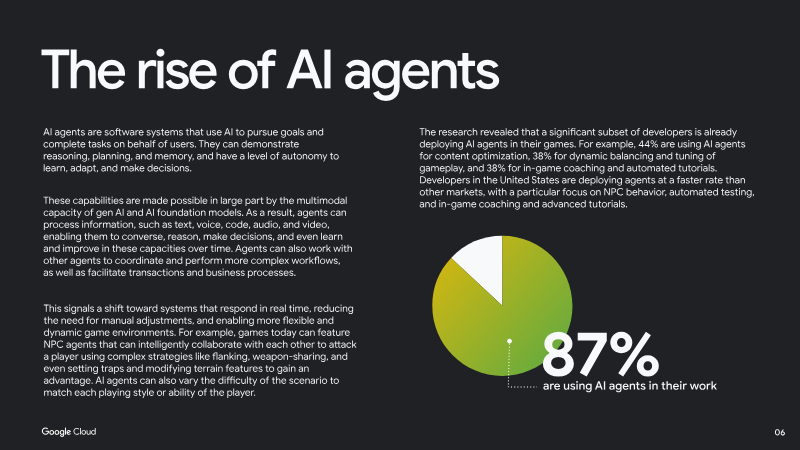
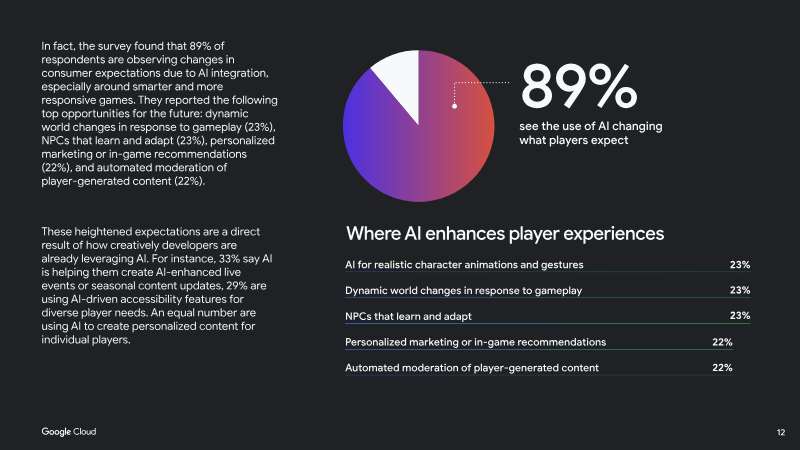

AI Meets the Games Industry: How Developers Are Using Generative AI to Create a New Generation of Games
Generative artificial intelligence is fundamentally reshaping the video game industry, serving as a catalyst for innovation, workflow efficiency, and the democratization of game development.
- 97% of industry professionals believe generative AI is fundamentally transforming the video game sector, with 90% of developers already integrating these tools into their professional workflows.
- Generative AI is primarily utilized to automate repetitive tasks—including code generation, localization, and playtesting—to reduce development cycles and prioritize creative iteration.
- 94% of developers expect the adoption of AI to lower long-term production costs, though studios are currently prioritizing staff upskilling and small-scale pilot programs to manage the transition.

Can Battlefield 6 Fix Everything Fans Want?
The upcoming release of Battlefield 6 has generated significant industry buzz, positioning the title as a formidable challenger to the long-standing market dominance of Call of Duty.
- Battlefield 6 has generated significant commercial momentum, securing 2.7 million wishlists and approximately $35 million in pre-order revenue on Steam.
- Industry projections estimate total sales for the title will reach 10 to 15 million units, with some analysts suggesting it could potentially outperform Call of Duty for the year.
- Development oversight has been centralized in Los Angeles under industry veterans to improve production focus, moving away from the previous reliance solely on the DICE studio in Sweden.