Game Design reports and market data
Documents

On the Front Lines of AI Game Dev
The integration of artificial intelligence into game development has transitioned from speculative experimentation to a critical operational necessity.
- Studios face significant pressure to adopt AI to optimize production costs and remain competitive, as rivals are already leveraging these tools to deliver high-quality content at a fraction of traditional costs.
- Localization and voice generation are currently the most mature AI applications in game development, with companies like Alconost and tools like 11Labs already providing production-ready solutions.
- The industry is shifting from experimental 'novelty' use cases toward integrating AI into specific pipeline tasks, such as automated testing and workflow efficiency, to allow teams to focus on complex, non-automatable creative work.
Want To Make Games? Listen To Advice From A 10 Year Veteran...
The primary objective for aspiring game developers in 2025 is to prioritize the completion of small, tangible projects to validate their skills and market interest.
- Aspiring developers should prioritize finishing a small, complete project to prove their capability, as studios and collaborators value the practical experience of navigating a game from start to finish.
- Testing a game concept with friends or a local circle is a vital validation step; if the idea fails to generate genuine enthusiasm, it is often better to pivot rather than continue development.
- While a clear, high-concept pitch is helpful, execution, atmosphere, and 'vibes' can be more important for commercial success than a unique mechanical loop, as seen in games like Inscription and Gone Home.

Call of Duty vs Battlefield: Ex-DICE, Bungie & Activision Unpack It All
The rivalry between the Call of Duty and Battlefield franchises represents a fundamental clash between a dominant market juggernaut and a tactical challenger attempting to modernize its identity.
- Call of Duty maintains market dominance through a massive studio infrastructure and a relentless content treadmill that ensures high-frequency player engagement.
- Battlefield is attempting to close its player retention gap by pivoting toward faster, arcade-like movement and individualistic hero-based gameplay elements.
- To compete with Call of Duty’s unified ecosystem, Battlefield is transitioning toward a consolidated model that streamlines monetization and player management.
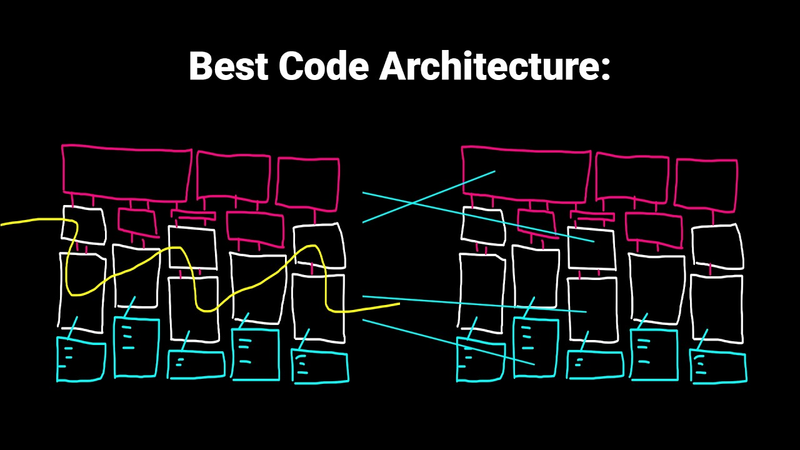
Best Code Architectures For Indie Games
Effective game development architecture relies on balancing the inherent chaos of "spaghetti code" with structured, modular design.
- Design game systems as independent, reusable modules—such as movement or health—to function like 'Lego bricks' that can be deployed across different projects.
- Decouple systems by avoiding direct cross-references, instead utilizing event systems, glue code, or in-engine connections to manage interactions.
- Separate gameplay data from code by storing parameters and translations in centralized databases or scriptable objects to enable rapid adjustments without modifying source files.

League’s New Control Scheme is a Gamble | Design Club
Riot Games is initiating a fundamental shift in League of Legends by introducing an optional WASD movement scheme, moving away from the traditional click-to-move interface that has defined the title for 16 years.
- Riot Games is introducing a WASD movement control scheme to League of Legends, marking a significant departure from the game's traditional 16-year-old click-to-move interface.
- The shift to WASD movement effectively divorces character movement from target selection, a change that could lower the game's skill floor and alter the competitive landscape.
- Riot is testing this feature on the Public Beta Environment (PBE) with a methodical, long-term rollout strategy to mitigate risks to the game's established competitive ecosystem.

TWIG #345 Clash Royale’s BIG Comeback and LEGO’s Digital Gamble
The global gaming industry is currently navigating a period of strategic recalibration, characterized by aggressive live-ops experimentation, the expansion of digital-first initiatives by legacy brands, and a critical focus on player retention mechanics.
- Clash Royale achieved a 39% year-to-date revenue increase in 2025 by integrating features from canceled projects and implementing more assertive monetization strategies.
- LEGO is internalizing digital development by establishing a dedicated London-based entity, reflecting a broader trend of legacy entertainment brands shifting toward first-party digital play.
- Modern engagement mechanics like daily streaks and loss aversion are effective for retention, but developers must manage the risk of player churn caused by the negative psychological impact of streak breakage.
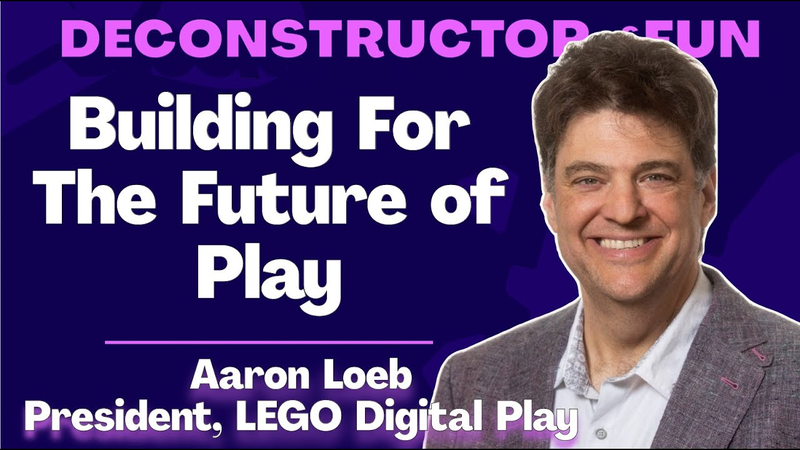
First-Ever Interview with Head of LEGO Digital Play – Aaron Loeb
LEGO Digital Play represents a strategic pivot toward establishing original, first-party digital experiences that operate independently of the company’s existing licensed gaming portfolio.
- LEGO is establishing a dedicated London-based division to develop original, first-party digital experiences that operate independently of its existing licensed gaming portfolio.
- The initiative is backed by a long-term generational mandate from the Kirk Kristiansen family, which prioritizes brand longevity and emotional resonance over short-term quarterly revenue targets.
- The strategy seeks to differentiate LEGO from entrenched social-hub live service platforms by leveraging artificial intelligence to create novel, creativity-focused play patterns.

Want To Make Games? This New Tool Changes Everything...
The integration of AI-driven development tools into the game production workflow offers significant efficiency gains for solo developers and small teams.
- Bezi is an AI coding tool for Unity that functions as a project-aware agent, capable of analyzing project hierarchy, metadata, and asset relationships to provide context-specific code solutions.
- Unlike isolated AI coding tools, Bezi can directly modify existing scripts and prefabs within a Unity project, reducing the manual debugging time required to integrate new features.
- The tool successfully implemented a new player speed-boost potion, fixed a dash-ability spam bug, and generated an editor tool for procedural island placement within the project.

Pokemon BDSP: Play Like A Designer Episode 1
Pokémon Brilliant Diamond and Shining Pearl serve as a masterclass in balancing accessibility with deep, underlying complexity.
- Game designers use initial environments to teach players that interacting with all objects is essential for discovering gear, story clues, and progression items.
- Developers employ environmental gating, such as impassable water or trees, to control player movement and create the illusion of a larger, explorable world beyond the starting area.
- Camera movement in modern Pokemon titles is designed to be dynamic during combat, shifting perspectives to enhance the visual impact of move selection and battle sequences.
Pokemon BDSP: Play Like A Designer Episode 0
The Pokémon franchise relies on a sophisticated architecture of stats, economies, and combat mechanics that have sustained its popularity across decades.
- Pokémon Brilliant Diamond and Shining Pearl serve as a controlled environment to analyze core franchise mechanics, such as stat systems and battle complexity, without the technical bloat of more recent titles.
- The franchise maintains long-term engagement by balancing accessibility for casual players with the deep, turn-based strategic systems required for competitive play.
- There is a fundamental design distinction between the real-time, augmented reality mechanics of Pokémon GO and the contained, math-heavy battle systems found in console entries.

Are guitar games coming back? The story of RedOctane's return
The gaming industry is currently undergoing a period of significant structural transformation, characterized by both corporate consolidation and a strategic pivot toward sustainable, community-driven development models.
- Embracer Group is reviving the RedOctane brand by merging original staff with open-source rhythm game developers to move away from the annual release model that previously caused market oversaturation.
- The new rhythm game strategy shifts toward a 'forever game' model, prioritizing long-term content updates and direct-to-consumer engagement over traditional retail cycles.
- Publishers are increasingly utilizing game bundles as a strategic tool to extend the lifecycle and reach of titles after initial launch momentum declines.

Test Your Game's Potential in Just 3 Days
The primary objective of modern indie game development is to mitigate financial and creative risk by prioritizing rapid validation over long-term production.
- Validate game concepts early by participating in game jams, which allow for the rapid development and testing of prototypes in as little as three days to gauge player interest.
- Use a 'core fancy' approach for game announcements, where a polished trailer showcasing the game's core loop serves as a primary validation point before committing to a full vertical slice.
- Maintain small, agile development teams to ensure projects remain within the team's specific skill set and to avoid the trap of transitioning from game design into full-time people management.