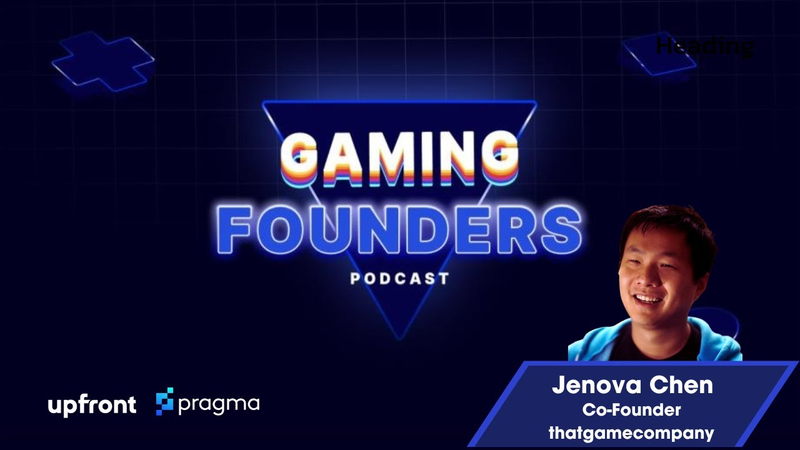
Part I: Gaming's Emotional Blind Spot: Jenova Chen's Strategy Behind Making Journey and Sky
9 Sept 202559 min video
Transcript
It's easy to do something that's proven to work and it's easy to get money for it. It's easy to tell your team just like that game mix with this game, right? Duct tape them together. You got something new, right? But it's a lot harder to say there is a game play that's going to make people feel like they're falling in love. It's not there. Yeah, there's nothing you can find reference for. Maybe you can check the novel or the watch this television, but you have to come up a new game play that's going to make people fall in love and it would prove to you that it's going to have a big market. It's a lot to prove to people. That's why not many people can start, raise money, bring a team, and stick working on it for 3 to seven years until they actually catch the big fish.
Welcome to the Gaming Founders Podcast, a show where we interview the founders that have shaped the gaming industry. I'm Eden, the CEO of Pragma. We build tools for studios to connect with their players and essential services, including First Look, our player relationship platform, Connect, and
Engine, our cloud and sourcebased backends that power many of the world's best studios today. If you have an interest in getting exclusive access to the game industry's best early access games, sign up at playtest.fverlook.gg. And I'm Kevin Zayn, partner at Upfront Ventures. We're a venture capital firm based in LA and San Francisco. I lead game investments both in studios as well as the pick and shovel tools that power game developers and content creators to do their best work including Pragma. We interview founders on their origin stories, the tactics that help them survive and thrive and key lessons for anyone interested in building the next generation of leading gaming companies. Learn more and subscribe today at pragma.gg/gaming founders. In this conversation, we have Ganova Chen, the founder of that game company. He discusses his early influences, the challenges he faced in pursuing a career in animation and game development, and the creation of his groundbreaking games Journey and Sky. Conversation delves
into the emotional aspects of game design, the importance of storytelling and the entrepreneurial journey that he went on. In this conversation, Gova emphasizes the importance of starting with emotions as the foundation of everything. He highlights the lack of content for games that cater to different audiences like women in his game Sky and the opportunities that exist in the gaming industry for developers willing to explore uncharted territories. The discussion also touches on the challenges of entrepreneurship in the gaming industry. We only scratched the surface of what we wanted to talk about, so we'll be recording a follow-up with Genova as a part two. I hope you enjoyed this episode with Genova Chan.
I was playing games since I was probably 10 years old. 10 years old. Yeah. When I was in third grade, at the time computer was still just a green screen, monocolor.
Yeah.
And at the time I I my dad he uh he was in a computer industry as a very pioneer. So he was like managing
computers that's the size of a library. U and he knew that computers the future. And when I was young I was a I I was really into drawing. I like painting. Um and all the teacher told my parents your your ch your child is gifted. He needs to be on a art track right and my dad is like no no no artists don't make money. Uh they are going to be starving to death and nobody in the family is artist. So he's like come here learn learn the computer thing right like because you know he see that's the future. Um and I hated it. I was I remember I was dragged into the computer class. Um, and then as soon as I got in, I was like, "What are these?" You know, it's like a pitfall. Oh, it's like a snake. Like all these computer games are playing before the class starts. Then I'm like, "Okay, if I come here early, I can play games." So that's that's the moment where I'm like put up with the the programming class when I was 10.
Um but then the programming was very helpful to allow me to you know win awards battles. So every my academic career become much easier because I have this special track nobody else know about right I'm basically studying computer five years early than anyone else.
Um but meanwhile I still hate computer programming. I like to play games. I I like to make art, tell stories. So by the time I went to um uh my college which certainly I'm majored in computer science um I I got into the school and remember I have four four roommates and three of them actually two of them never had own a computer then they're here for computer science department. Um, and the the other roommate is my uh kind of ACM competition buddy. Uh, he later actually
become the world's champion. But I was like, I'm done. I'm finally in college. I'm free from my parents influence. I want to learn art. So, I I go to study like art in the industrial design department. Uh, my my college doesn't have good art uh program. So I start to go to attend a different college to study like art design and animation. Um and so by the time I graduate from college, I have two degrees. I have the art degree and also I mean I'm barely passing my computer science. Um so so that's where I was at. And I I told my parents I'm like I'm going to go I want to be an artist. Uh but it's too late for me to be a painter because I I didn't go through the traditional training. But I realized with my computer skills, I can learn software really fast. I can code. I can write tools for myself to make art, which most artists don't have that background. So um I that's why I thought computer plus
animation will be like the best for me, right? So I I applied for the film school at USC which they have an animation program. That's like how I how I set my career. Um because in China my parents always think video game is like what we call the the porn pornography uh gambling and drugs right the three worst thing you can you don't want to touch. and video games was seen as more like the the gambling the addicting uh poison uh for the society. So I I wasn't even thinking about uh video game will be a career and I thought oh animation you know film making you will be seen as an artist and being respected. Um so I told my parents hey you know I don't want to go to computer PhD I want to do a MFA in film making. Um and my my dad was like really happy
about it because you know he he wanted me to go PhD be a professor and teach in the university that's his dream
you know I think this happens
but was he still in the computer science was he still in the computer industry? he's in the computer industry, you know, but there's this I don't know, maybe it's a very Asian parents thing. Whatever they didn't achieve, they want their children to achieve, right?
Um, and I was just like, I okay, I can apply for a computer degree, but I also going to apply for art, and if I got into art, you cannot stop me from going there, right? So, that's that's basically the the situation. So, I went to USC. Um, I thought I'm going to graduate and go work at Pixar. That's my dream. Um, but what happened is at USC it's a three-year master program and the the tuition is very expensive. Um, the entire saving of my parents can only pay for one year of tuition. And so I told
my parents like don't worry I think I'm good enough. I'm going to get some kind of scholarship which USC film school never gave scholarship on the first year. I don't know why. Um, so they they paid their entire saving including a house. They sold a house for me to come to the west. So it's a lot of pressure on me because I was like if I don't graduate this will be the entire saving of my family, right? I would be a disgrace to the family.
They also didn't want you to do it too.
Yeah.
Even more pressure.
Yeah. So I have to prove to them that this is the right choice. So I have no I have no place to go back. That's pretty much my life. It's like you never have it. You don't have a space to go backwards. Um, and while I was in USC, uh, I was studying film and there was this new department called interactive media where they they want you to tell a story but using the latest technologies,
which I thought was really interesting. like a school that's built on a medium that's already estab established over a 100 years is open to new technology and storytelling. Um, and so at the interactive media uh school, they have a video game grant where if you uh pitch a successful game, you can win a $20,000 uh grant. and I needed that $20,000 for my tuition because I couldn't afford it.
Um, and I need to figure out what how am I going to pay the second year and third year.
Um, and so so in order to win the grant, it's a innovation grant. So they say, "Hey, can you make a game that is uh not like what the mainstream video game was?" So 2003 was the year I arrived. That's the year of the Coline shooting. two teenager bring like machine guns and grenades into the school and they they
barricade the school killed lots of people and so the congress was like yeah GTA San Andreas was the most popular game of the year and they like this is crime simulator these teens they learned how to kill people how to shoot guns with the game so video game was the scapegoat even though Hollywood film is equally as violent or potentially even more right but they they targeted video game as the as the uh the the bad influence. Um and so the school was saying, can you make something that's not Grand Theft Auto?
Um and I was desperate to to win win the grant. So I really worked hard on making it the opposite of GTA purely to win to win the grant. Um and GTA was violent. So I want to make something that has nothing to do about violence, right? Uh, GT violence is usually about destroying something that is good and alive. So, I was like, can I
make a game that's about giving birth or repair or heal something that's been destroyed?
So, I was like, first like violence is flipped. Second, uh, GTA is very addicting and stressful. Um, you know, when you have the video game face, you you see like the the typical photo of a gamer's face and and it's kind of looking very intense and stressful. So, I was like, can I do the reverse, which is relaxed and feel, you know, kind of calm and, you know, uh, in harmony. Um, and then uh the third one is like there's usually some kind of boss and you you earn currency and coins and whatever and we just get rid of that. So it's about a story um of a ch my story from the childhood. Uh and there's no boss, there's no scores, it's just an a story you experience, right? And I I was
trying to make this game. Um, and it's funny, LA. So, LA never had clouds only until the winter when there's a very few narrow window there's there's rain, right? Uh, so I was at USC one day and there was a storm that that just passed by the USC and I I went out after the storm is over. I can still see the clouds leaving. So it's this massive cloud front you you rarely see in LA. So you you really when it's there it's like wow this is amazing. This is a beautiful cloud right and u the sun comes out after the rain. It it's just the most beautiful sky I've ever seen after being at Cal Southern California for a couple years. It's amazing. So I was like can I make a game that has something to do with these beautiful clouds? Right. So that's the initial instinct. Um and then
um I pitched the game. It's a peaceful healing game where you get to play with the clouds in the sky and there is a story of of a child. Um and it's it's very unique because I wasn't really thinking about art when I first um came to the US because my undergrad degree was computer science. So I only learn learn video game making by playing video games. I never think about games as a medium of selfexpression or art or storytelling. Um so when I win the grant uh my professor Tracy Bulletin she with one word she changed my life basically. So one one sentence changed my life. So I pitched this cloud game to her more like a simulation game. You imagine Sim City, but you can build storm and hurricanes. You you very quickly think about violent events and you know disasters. And so um
the my professor said, "So who is the protagonist of your game?" I said, "I don't know. Something someone who can manipulate weather, right? Maybe a mad scientist or alien from a gas planet or something." And uh she said, "What if it's a child?" And I was shocked because I I would never think that I'm I'm just barely 20some. Why would I think about a child? I have no kids. I have no siblings like that age. I would never think about a child.
And she said, "Well, just give it a try. What if the protagonist is a child?" So I was like, "Okay, what can I do?" Uh the only child I know the best is myself when I was a child. So I I have to basically I create this character based on my childhood which I was quite sick a lot. I was in the hospital all the time. I have to stay in the class where other kids are out there playing in the playground. So I have a lonely childhood
but I don't know that's special, right? I don't know that's weird because to me it's just how I was grown up. So I made this story about this child who's in the hospital who couldn't go out to play with the other kids and he look out the window. He see the clouds. He daydream. He can fly out the window to be free from his sickness and play with the clouds. And I have asthma uh which is quite I think a lot of kids grew up in Shanghai which my hometown have asthma because there's so much constructions and people didn't know about like the pollutions that everybody's breathing all those things. Um, so I just naturally have this feeling that the city needs to be cleaned. And so the story is about the child eventually bring the clouds together. They form the rain and they wash the city and wash the city clean. Um, and so I worked on it for 9 months cuz that's where the grant supposed to deliver, but we didn't finish it. So we keep laboring on that
thing for 12 months. And so when the game finally was released, uh, I was so shocked because one day I got a I got an email says I have to pay a $4,000 fine because my personal website has too much traffic. Uh, and so I was like, I have I don't have any cash to even pay my tuition. How am I going to pay the $4,000 fine? So I go to school and was like, please help me. And you know, this is not my fault. We just put this project up. you know, I could not afford this. Can you pay this? Like, can you also take this out of my personal website? So, the school put this game onto the cinema school website and then the cinema school website is down.
Um, and uh then
wait, so did you do any kind of promotion or you just put it out there?
That was 2004. Like, where is the promotion? And the game was a zip file. It was a zip file. There's no install. It looks very suspicious.
Um, and
it's just a free game though. You could just download it. Yeah, you can download from my personal website, right? Wow.
And then um the school have to call for EAS to put our game on the Electronic Arts commercial FTP server. I forgot the name of it, right? That was old time. Um and then we see all these newspaper like Sydney Morning Howard or some where in London Japan people are talking about this game called cloud where a lot of people cried uh playing the game and so I start to receive these email from all around the world and they say please tell you your team and everybody who's worked on this game that you guys are are beautiful people and that was very shocking because my parents parents would never say I'm a beautiful person. My wife doesn't even say I'm a beautiful person, right? But somehow like these people around the world are suddenly say like you guys are beautiful people. I
was like what is going on here? Like I've made some other games in the past. Nobody write letters to me. Um and then some people said, "Yeah, I I um please you should start a commercial company so that the world knows game is not just about violence and fighting and games can be artistic, can be can be a positive influence on people." So, so that's kind of like the moment I was like, "Wow, three people said I should start a company." I never thought about entrepreneurship, you know. I just always thought that's something somebody has a rich uncle, lots of money, so they can do that. I still have my loans. I still have like my debt. And uh I I never thought about starting up a company. So um but the more letter comes in, I think I had maybe maybe 70 80 letters and I start to realize maybe I should give that a try. Um so we
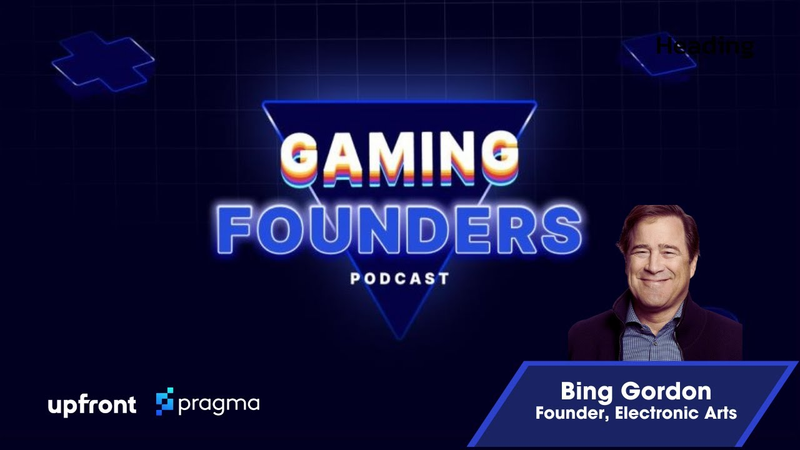
when we are in a film school we were also taught a business class. Uh the teacher was being Gordon you know and uh he was teaching us about like how to give pictures like how to convince other publisher to give you money to make a game and I was doing pretty good in that class. So I thought maybe I can take what I learned in this class and just start cold calling every publisher in in the US. And that's what I did.
Oh wow. Okay,
Bing is Bing is going to be on the podcast next surp like hilariously.
So I I talk to probably 19 publishers. Um and you know I'm pretty much fresh of both you know two years in the US terrible English and the when the publisher tell me, oh yeah, this is interesting. Well, take a look. That's that's their way to say no. But I was so naive that oh they said it's interesting. So they're interested into this game, right? So I was treating that as a positive feedback. So I just keep
pitching. I didn't think they didn't like it, you know? It was it's my naivveness that kept kept me going. What? So once I was finally at 18 and 19, I talked to Sony and Nintendo. They suddenly have the interest. And it was really lucky because that was a time when Microsoft rolled out Microsoft uh Xbox arcade basically the iTunes for games race, right? So so Xbox throw something out a year before PlayStation and Nintendo released their next console
and they have digital distribution and there was no plan by Sony or Nintendo like they have no plan to do anything like this. So, uh, John Hyde at the time was leading the digital distribution initiative at Sony and he's dying looking for something they can publish, you know, because there's only a year left. Like, how you going to sign up a game and release in a year? Um, and so that's the time where I went to there. I
pitched a cloud game and I said, "Look, I need $10 million to build this game, even though I've never built anything." And you can imagine that that must be a joke because even today if someone come to tell me to ask me for $10 million I'm like you don't know what the hell you're talking about. Um but uh John height at the time was looking at the cloud and after cloud is over I've actually made another game called flow. Uh cloud was big. It it had maybe worldwide 600,000 downloads right as a zip file. Flow had 6 million visits on a website that I made before I graduate. So I have my second game. I think Flow is kind of like Flappy Bird of Flash error like Flash Action Script 2 when it first roll out. We build this game you take advantage of their feature. So I have Flow rolling. So it's more of my desperate attempt. I after I pitched cloud I don't see much response.
say, "Oh, I have another game called Flow." And there's so many people playing that right now, 6 million people. And so I showed them the Flow game. And that's when John Height uh he start to see something. He said, "You know, I'm not sure about this cloud game, but let's sign a contract. So, let's port your flow game from the browser to the PlayStation." Cuz he sees it's a simple game. they can port it within four months to get to catch the PlayStation 3 launch. And so he signed the a three game deal kind of like how you know a movie director come out of school uh production house just signs three movies. So that that is basically how I started the company after 19 pictures. Uh we also have a Nintendo by the way they also like oh Nintendo has a digital distribution as well right. Um and then they were saying that we have to move to uh Seattle
uh because that's where the headquarter is. Um so we thought well maybe we will stay in LA just that that was our choice as as a student no business background that's how the company started. So Genova, what was the team like at the time? Like did you have co-founders? You know, sounds like the school helped you and EA helped you with the distribution. Like it was all free, right, at the time? Like what was the state of the quoteunquote company and team?
Yeah. So when we work on cloud, um we So before we work on cloud, we did something the the first year I was at USC. So I I came to USC at 2003. I was dying for money. I have three jobs. Um, and I couldn't take more jobs because there's F1 visa restrictions. Uh, and the the summer vacation come and the library jobs, the TA jobs, they all going to end. So, I'm looking for where to make money. And so, I run into this student who is about to come into our
program. Uh, his name is Rick Nelson. And he and I met at GDC. Um, and so we were talking and we were looking at what the other student competition is and I was like, "These are the games the the American students make." I thought everybody's like John Karmac. It's like the the nature of the video games. It's genius here. But then look at all the games. Like this doesn't even look as good as the one I made in college, right? So So Rick also was like, "Yeah, these are games. If we just work together, we'll be like in the award-winning video game category." That's basically like when we first started talking about this, but but I don't have time to work on this and Rick was like, "We can get school to pay us." And so this is his idea. So we went to school to say, "Hey, can you pay us the library, the library's uh money uh but we stay here for the whole summer and we just work on a video game engine? We just build a video game engine. We're going to build a game and this game will win awards. It will give the school a
lot of free press, right? And so the school was like, "Oh, yeah, that's interesting, but at it's minimum wage anyway. Maybe we should give it a try." Right? So we walked there for a whole summer. We just sleep in the basement there. Uh I think four there's four of us. Um at also the composer of Vincent Deante, who's also uh the year behind us. He later is the composer for Flower and he was the composer for Cloud. But together we work on the first game called Diodine. Uh it's a two-player parallel universe co-op game. This is a 2003. It's a very out there idea. Uh and obviously next year we win the student award. We are there, you know, in the GDC and the school is like wow minimum wages, maximum exposure and now we can say we our our game our school can teach games, right? Because you you have all these games. Um so that's how we started and then the school took the the grant from EA. the EA donated $8 million for USC and then
they they say, "Okay, let's let's let's put out a gaming innovation grant." That's the two $20,000 one we win later
because we have the track record of winning the first uh student awards. So, it's pretty safe for for the department to give the money to this team, right? But this time, we're working on cloud. Um so, um the cloud team is mostly just five people. Um and after cloud also win many awards in the ind independent and student uh game festivals. Um I was working on flow mostly by myself with one undergraduate student just two of us we worked on flow. Um and u but at the end we need some sound effect and Vincent was not he's also working on his dissertation as I mean yeah graduation thesis so he doesn't have time to help us. Um, and so I was talking to this random folks at Film
Square, do you know any composers that we can get to make some sound and music? He said, "Yeah, I know this guy Austin Winry. He's he's a student in the uh composing uh because film school have uh film school uh composing department. It's a one-year summer program. So he was there. He was looking for like cheap fil student films and student project to work on to build his portfolio. So basically it's like 500 bucks. Can you make the the music for us? Um and then so basically Flo was me plus Nick who's a undergrad student. We're just learning how to write action script too. And then we bring Austin Winry who we didn't know is going to be a huge composer in the game industry in the future. was like, "Hey, here's 500 bucks. Can you make something for us?" Um, and then then, yeah, that's how we started. Um, so as soon as the FL project was picked up by Sony, Austin had his first gig with
Sony, right? So, he's signing up as a professional composer to Sony to make the sound and music. Um, and uh, yeah. And u so when we started the company uh the co-founder was just myself and my classmate uh Kelly Santiago. So she and I she's the producer on cloud project. Um and uh so so I looked around. I'm like who can I start a company with? I don't even have the US visa. Like I I should probably go back to China after graduate. How can I start a company? I need to find someone who's American. Um, and so out of everybody in my class, I trust Kelly the most because we worked together on cloud all the way till the very end. So, so she and I started the company basically just the two of us.
What were the like reasons why you felt like you trusted her? Was it like she's
amazing or is it the skill sets being different? Like how do you pick the right co-founder?
So, so my class have only nine students. Um, and you you learn your students you learn your classmates pretty fast by working on projects, right? And uh I had a different classmate as a producer initially on the cloud project to manage the money and the pay and later we find out he stole the money.
Oh wow. Okay.
Yeah. And and then we kind of have to change producer in the middle of the production. And so then it was Kelly and we basically worked together until the very end. So you learn someone's, you know, quality by working with them and handing money to them, right? Like see how they manage your money.
Um,
was it hard to convince her to be a co-founder or was she already thinking about starting something anyway?
Uh, no. It was interesting cuz both she and I were like, "Oh, we need to find jobs because we're graduating, right?" But then then all these people are
writing to tell us to make a game company. So both Kelly and I were just like you know we got nothing to lose. We can go to me cold call every head exactive from all the different biggest companies to tell them about our game. The worst case we can ask for a job you know.
Yeah.
And and so that was kind of like yeah let's just go there. You know it was it was fun. It was fun time. We got nothing to lose, right? Um,
by the way, how did you come up with your $10 million budget? Like, was that just for flow? Was that for multiple games?
That was just for cloud. And I think what happened with that 10 million budget is I was talking to one of my professors, you know, who used to make some educational games. So, I asked him to help me to to estimate how much it would cost.
Um, and I think that probably somewhere the math is wrong. And I so after you you signed the three
game deal, you went eventually went down like the venture path, right? Like you um Yeah. What what was the progression there?
Yeah. Uh after Journey uh we were looking to venture. Uh I again I have no idea how much money to ask right to to a venture capitalist. It's different than a publisher. the publisher, you only ask for the money you need to finish the game. But for the venture, I was told you need to ask for more money just in case what if it doesn't work out, right? You don't want to bankrupt the company as soon as you finish making the game. Um, and I think uh what happened is Sony told us because we work on Journey um and we are like, "Hey, where's the money?" And so, you got to have to first pay all the costs we put in, right? uh before he was adding dollar. I said, "Well, how much does it cost to you guys?" Well, he they say $4.6 million. I was like, "$4.6 million?" No, I we
didn't even pay this much to our own people, right? Um and u it's like there's Q8 people, uh localization, all these other people. We never know, right? It's the solding side. So, I know, okay, journey would cost us $4.6 billion to make. And uh when we were raising series A, we just say, "Hey, let's make a journey, but let's put it on the phone. Uh let's touch people's heart with a story game, you know, and Steve Jobs is the CEO of Pixar and if we want to deliver a Pixar like heartwarming story on the Apple, they will support us." That was very simple because back in 2012, whatever Apple features makes money, right? Right.
Yeah. Uh so that was the business play like make a pixel-l like game on the phone. Mhm.
And so we thought well probably cost us about journey took us three years to figure out u and we thought well we can
do another journey fairly quickly now we know what to do right but then there's also the risk of like hey you don't have a controller anymore uh how do you do it on a touchcreen so we say okay let's we'll do journey faser but we will need another year to figure out the touch interface so let's put in the same budget so 4.6 million is what we are started to raise. But eventually the the the venture capitalist told us that you should probably raise a bit more so that you can you can keep the company afloat, right? So we raised 5.5 million at series 8.
I know the benchmark Mitch Slaski story is kind of famous, but were there other people involved? Like did you pitch like a ton of people or was there a ton of interest or was it kind of hard? My fundraising story is is I'm seeing a pattern. I don't know if it's the same as your patterns, but I will be talking to someone for a very long time and it's just dragged out and dragged out. It
just doesn't it's it's going to work. It doesn't work and it drags out for a year and last minute someone else come in and just take over.
Yeah, I I I actually agree with that a lot. You know, it's like the person who drags it out, they're probably not a full believer and they're still calculating. They want to squeeze out the benefits and it's just not working well. And for a long time, you don't have a second option. So, you just keep going. But then the moment someone sees the value, they're like, I'm committed, you know, let's sign the deal tomorrow. You guys have had so many successes and I want to try to understand how where does your what is like sort of the key starting point or the key crucial point of the game making process cuz it feels like you often start with like an emotion or some kind of like I want to evoke a certain thing and then a lot is built around that like I guess how do you come up with your ideas and
say let's build a world around this particular thing.
Yeah. I I think for I mean TGC is almost 18 maybe 19 years at this point. I've always been saying the same thing. Anywhere I go any people I told them about how I think about it. They like I've never heard of anybody thinking about games like this even till the day. So I was like maybe I'm just not doing enough of a of a propaganda. But basically the same the the perspective is very simple because I went to the film school. The film school teaches me to look at entertainment as a emotional business, right? Like you know if you go to uh a liquor store looking for something to drink, there's so many different brand but you have different cravings, right? The same person can have different craving for different tastes and it's the same thing for entertainment. And it's ultimately entertainment is
really kind of divide by emotions. If you look at all the genres of books, televisions, movies, you know, if you think about the name of the genre like horror, right, thriller, uh, comedy, romance, it's all about how it makes you feel, right? And so if I'm lonely, I want to feel friendship. You know, there's sitcoms, right? There's uh drama uh feelood dramas right like there's all these subg genres about different type of emotions based on the mood you are in based on the demographics you will have different craving uh my favorite example would be uh in Japan Dragon Ball Z right or Naruto like these are called shorty manga right so young young boys young men young boys manga And if you look at all shotty manga, it always follows a very similar emotional
trajectory, which is I'm a pathetic middle school student who's been bullied in school, has nothing, and one day I I picked up something like a death note or I suddenly learned a special power. I'm a superhero now, right? Suddenly I have all the freedom and the power to change the world. And the biggest way to change the world is to save the world, right? Um or destroy the world. So that's the shouting manga. And you were like, why is it all the young man likes to watch this type of manga, but the young woman don't, right? The Shjo manga has completely different plot. And so I start to notice as I age age older and older, I don't I don't really care to look at shi manga anymore. Right? So um you can kind of trace that uh men and women at different age have different emotional craving. Uh, another thing that's very popular and you can
even trace the age of video games is that young boys love horror. And I remember that time when I was young, uh, Doom was invented, right? Every kids in the library is talking about this game and it's so scary to play Doom or Wolvenstein 3D, right? It's scary to play it, but you kind of want to just play again and you want to see your buddy play it. You want to see them getting scared and that's that same thing that that that instinct of in that generation of teenager kids particularly boy who love to be scared they all bought Doom. It's the first platinum success game ever in the history. Right? So at that particular era, it proves there's at least a million people who wants to play games and they all teenager boys. They want to have to be scared. But a couple years later, those teenagers all went to high school.
Everybody's picking up their sports. So in Europe, people like soccer. So FIFA was huge. In the US, it's the Madden football, right? Uh and balance is huge, right? They are platinum success. Um and then the teenager finished high school, they go to college and now they are adult. So what does adult man want emotionally is I am a warrior now. I'm a man. I'm a warrior. I'm the hero. And so, Warrior Simulator, whether it's Call of Duty, Modern Warfare, Battlefield, uh, Medal of Honor, everything is about Warrior Simulator, whether it's using the swords, all the guns, it's it's the emotional needs to be a man. Um, and so you can see like our generation is pampered really, really well. You know, all the AAA success game is basically aged up as we age up, right? Um, and then once you finally become an adult,
you run your own company or you work in a big company, you make money, you have freedom, you don't need you're a man, a warrior anymore. At that point, what does grown up man thinking like 30-year-old man, what do they think? What do they need? They get into this settled statement uh this moment of kind of, you know, comfortableness, right? Job is comfortable. I can do anything I want. But then what do I really want to do? What is my role with the society? So there's a particular genre called sci-fi. Sci-fi is basically adult parables of the society. Like they use something that's very imaginary to be a metaphor of how the real world works. So sci-fi become very interesting to older men. And there's also action still the warrior simulator and there's adventure, right? Because man, you want to go to see the world. So if you mix action, adventure, and sci-fi together, you get
Halo, you get Mass Effect, you get Destiny. You know, that's basically the Yeah. Again, my generation, your generation, we just keep getting what we need emotionally. Um, but meanwhile, this whole tech tree of what male like as they aged up with female, it's almost empty. If you think about what does young girl like Papa Pig the day, you know, My Little Pony, right? Was there a My Little Pony video game back then? I don't remember. So, right. Uh what was big among young girls as we grow up? Tamagotchi, right? It's kind of like a close resemblance of like, hey, having a my pet. Um and then there was one game that's dominated the female gaming market for a decade. It's called Sims. And guess what Sims is? Sims is social game today. Back then when there's no internet, it's
simulating the social interactions.
Mhm.
So, it's a single player social simulator. And no wonder it's going to be very successful among female, right? And and there's no competitions. Um, and but besides the Sims games and some Dino Dash, you know, like u match three games, there wasn't much emotion in video games that is truly in the female um uh taste buds. You know, if you look at movies, the most successful female genre is romance, right? And the feeling of being loved, being cared. What is a video game? No, that that didn't exist until recently, right? And there was dating simulator for men. Um, and it's very much more about how much you're wearing, you know, how much is the girl wearing and that's that's for men, right? But for women, um, there was no interactive
u entertainment for the emotion they need. And so for a very long time I was like why isn't the society respecting video game as an art form? Well because most people think video game is not for them because there is no emotional u content that they like that could be found in games. Um so romance is pretty extreme. We as men probably don't care about romantic film. Like I don't know any man who would go to see a romantic film by themselves. But then next to romantic romance, there's romcom, romantic comedy and funny things, right? And then I don't think there was any romantic comedy games in the history of video games. Maybe It Takes Two is romcom. I don't I don't even think it's that. No,
there's no
Yeah.
And and then what other things does women like? Well, sitcoms, social
sitcoms, right? Just reality shows. It's about social dynamics. Sims that was there. Uh all the Facebook games. And now there was one genre in the film industry that female really liked. It's called musical. Uh but in Hollywood, musical is falling out of favor. Um, there's many other reasons, but if you think about in the entire video game industry, Guitar Hero, Rock Band, Dance, Dance Revolution is equivalent to me, the musicals. You see girls play that, right?
Yeah.
Yeah. So, those are the games that women are emotionally interested in. They are not interested in God of War, right? They are not interested in chopping people the head off with, you know, kill 2,000 people on the way and see all the guts and blood popping out. So that's why games on console are predominantly man men playing emotionally that that's
just why you know and so because I I I study film and I learned how emotion works with you know market and demand. I'm like, if video game don't offer those emotional content, it will never be respected by the female audience. Not to mention even the elderly audience, right? Because the older people, they don't like to see comedy anymore. They like to see drama. They like to see documentaries. They want to see things that bring them, you know, perspective.
So, you're actually starting with the audience first before the and then you're look, you're saying, okay, where is there a gap? And then you're you're tying okay what is the emotional tree that ties to that?
Yeah. What's the content right? But then it's like nobody made a romantic comedy. How am I supposed to make people those both feel in love and also laugh with interactions? Nobody has ever made that. So So my entire career is like trying to make something that's been made in traditional medium but nobody has ever
made in interactive medium. And so then we'll have to figure out how to do that in a new media. So journey is actually uh an adventure genre plus drama. Uh it's a person's transformation, right? Um with a little bit suspense, a little bit scared, right? But but that's that's journey. Um, and it it was doing really well with the judges, the award judges because adventure, older male, drama, older people and uh thriller uh you know the the scare of unknown is also older man. So older man like journey and they they give us uh the wood votes. So, it it's just really about how who are you making the emotional content for?
And I I've had this conversation with you the last time we talked. I'm sure you don't remember this, but people are scared of the games industry right now
because they're kind of like, hey, whatever 80% 90% of the market's playing these existing games and, you know, you're competing for smaller and smaller amounts of sort of gamer supply. And I remember your sort of take was that there's still so much opportunity in the games industry because there's all these areas that are completely unressed.
40% of the emotional spectrum was not covered.
Yeah. And I guess like I have a question on sort of like just generally speaking what you think about the games industry right now. I mean I'm sure you're seeing obviously all the layoffs and all of that. And is it just that founders and people are not they they need to shift their perspective on maybe not just like trying to replicate Call of Duty or whatever it might be but they're just approaching it the wrong way.
Okay. I I think you know the world has a bell curve right most of the people are in the middle they like to follow each other. I mean we are social animal right? So lots of us if you see other people do this successful you want to do
the same right? you want to repeat what what is giving you as a positive signal but the bell curve on what the other end is the explorer they wouldn't know do the same thing as the rest of them um but I I think it's easy to do something that's proven to work right um and it's easy to get money for it it's easy to tell your team just like that game mix with this game right duct take them together you got something new, right? But it's a lot harder to say uh there is a gameplay that's going to make people feel like they're falling in love. It's not there yet. There's nothing you can find reference for. Maybe you can check the novel or the watch this television, but you have to come up a new game play that's going to make people fall in love and it would prove to you that it's going to have a big market. It's a lot to prove to people, right? That's why not many people can
start, raise money, bring a team, and stick working on it for three to seven years until they actually catch the big fish. It's just harder. Um, and so only those people who really see it, they're committed to it, and they didn't run out of money before they they they made the game, they can actually get there. But as soon as they land, you know, like Minecraft or, you know, like uh don't staff these mini game that once they land on this new proven commercial success, a swarm of people will follow. Look at Power World. Look at Black M Goku. You're going to see like five games like that next year, right? So I it's hard to to invent something. It's much easier to to quick follow.
Yeah. I guess even in the fundraising journey, I wonder if it's like, you know, like you can't really raise money
as a game studio right now. Um or or I guess you never really could, but you could for a couple years during like 2020 and 2021. Uh
that's quick follow money. It's quick follow. All these game are making so much money. Maybe we should we should invest in there, right? And now also within the investment industry, I think like far big farmer like medical industry, it's kind of like the hardcore mode. It's like we have a new drug that's going to take 10 years to develop, right? Are you in or not? It's uh it's a big much higher risk uh than something you can make a company and sell it in two years, right? That's that's easier.
Well, okay. Okay, so we have a lightning round which I know is going to not be lightning because you always have awesome responses. So maybe we'll do that and then our cornerstone question and then we'll we'll find another time. All right. Uh so first question in lightning round. What uh kind of media generally speaking have you consumed recently that you that you like?
I mostly watch these days. I don't play
as much. I watch a lot of uh YouTube actually just YouTube. Uh I I I I I can't admit I mean as a film student I usually like big presentations. Maybe as I get older and also as the pacing grow faster I like to learn. So I watch a lot of uh like documentary or uh subject matter like YouTube channel hosts.
So I spend a lot of time looking into archaeology. Uh okay trying to trying to discover what who why they made pyramids and what is the reason behind sphinx that's like my current interest and some of the creators who were doing analysis and research was amazing. Uh they haven't been proven by mainstream scientists yet but I really believe in certain theories. Uh if you're interested about where we came from that's a big subject I I really have passion about. Um,
is there a channel you you would actually recommend? A channel or two?
Oh, uh, quite a lot. But quite a lot. Um, and but but I like those obscure ones, the ones that doesn't have like millions of followers, but their idea actually makes a tons of sense. So, it's like before people even discovered it.
I'm pretty sure you've heard of like the whole Eyes of Sahara, Jimmy Cidi on Joe Rogan. I knew about his stuff like two years before he was on Joe Rogan, right? So I know all these things ahead of anybody. It was really exciting to know all these knowledge that nobody knows, right? And that's what I really valued.
Got it. I mean, you say you don't play much anymore. Do do you have a favorite game, you know, over the last couple years or other than something you made?
Yeah, consistently I've been telling people I did really enjoying the whole Dark Souls series. Um, and I know they've made Elder Rings and other things, but the the whole genre was actually the the the one genre I really
really liked. Uh, even though our game is not violent, but I felt like if if Dark Soul doesn't have violence, it would be very much like our game.
Is there a dream IP that you would work with?
Um, I've been pretty open about that. I wanted to turn some of Miyazaki Ho Miyazaki's world into video game.
Yeah. Uh, and he is known for hating video games or AI or computerenerated images. He hates a lot of things. So, nobody got any of the IP he owns right now. But I hope one day one day we can do that.
By the way, do you happen to do you know if he's ever tried any of your games or like
No. Did you? No.
No. I mean, you know Roger Eert, right? Roger Eert is the most influential film critic and he made a criticism about video game can never be art. Uh so we actually sent him a PlayStation with flower installed on it
but he passed away before he admit
anything new. So um but yeah I think once you reach certain age you won't change your mind
right. Have you tried to make contact with them or like
I did many times.
That's awesome. Oh, that would be amazing. Oh, man. I if I knew Miyazaki, I would try to help you make that happen, but I don't think anybody knows. Yeah. Yeah, I would need a need a connection. What about uh productivity hack?
Productivity hack? I don't know what is hack. I mean, I don't have lunchtime because I'm all remote. So, my lunch is right here. Uh that same productivity hack.
Yeah.
What about on the other end like best way for you to relax?
That's funny because I could literally go down any moment and sleep cuz I'm already lack of sleep. So anytime I'm done sleeping I I don't know. I mean as an introvert best way to relax is just to stay alone and recharge.
Play some video games, watch some films. Yeah. biggest lesson from a mentor.
Which lesson is I mean I felt like the biggest lesson is usually something you experienced it that deeply burn into your mind. So it's usually not like a mantra says something and you just remember that that's that's why it didn't come up right away. I mean we do I did learn many things from the mentors but sometimes I question if if what they taught me apply to all situations,
right? Uh, and it certainly applied to the situation they were in, but does that apply to the situation I'm in right now? I I'm always kind of re-evaluating that. Um, but I think with uh what I said earlier about my professor Tracy Fitton,
you know, it's like what if the protagonist is a boy,
right?
Right. I would never think about and the
fact I had to make a game about my own childhood. It was the first time I practiced self expression.
Um and and that that's the moment I realized that's a moment where art is happening because I'm trying to communicate emotion that I remember strongly and if someone else felt it and they're touched by it then it's art. Yeah. And uh if I would continue to make mad scientists of gasplanet aliens, nobody would be touched because it to do with art,
right?
Yeah. Yeah. That's a beautiful one. Um and then we always ask this question. If you could go back to the founding of your company and give yourself a piece of advice, what would it be?
Entrepreneurship is the worst path forward. Uh and most people have to choose it because there's no other way. And uh just
remember in this past you will you will you will be hurt and by others and the other people who hurt you you might think they are enemies but ultimately they are all friends and your life wouldn't be exciting if it doesn't have you know some challenges you know.
Yeah. and some enemies and just don't take it to the heart. You know, everybody is here. They are your friends.
That's a beautiful one. I don't We never had that one. I like it.
Yeah. All right.
Well, we'll have to we'll have to cover like scaling, live opsing, China, growing struggles, all that stuff. We miss a lot.
Yeah. Multiame. Yeah. We missing for 19 years of entrepreneurship, right? That's that can't be covered in an hour. So,
yeah. Exactly. We got more we got a lot more to cover. I will find another time and we will definitely do a followup. Thank you so much for your time, Genova. It's uh it was very great to dive deep
on the on the topics that we did.
Cool. It was it was fun talking about this. Usually people don't ask me this. You know,
players don't ask, the co-workers don't ask. So, I'm glad to to talk about these [Music]
Key insights
6 takeaways · ~2 min read- 01The gaming industry suffers from an emotional blind spot by over-relying on violent, action-oriented mechanics that cater to a core male demographic while neglecting potential players like women and older adults.
- 02Game development should be treated as an emotional business that prioritizes satisfying specific psychological cravings and human connection over traditional genre conventions and high scores.
- 03Drawing from film theory, developers can bridge the gap between storytelling and gameplay by focusing on authentic, personal emotions rather than competitive mechanics.
- 04Early projects like Cloud and Flow validated the commercial viability of non-violent, emotionally resonant games by securing global acclaim and major publishing partnerships.
- 05Transitioning to a sustainable studio model requires moving beyond publisher-funded projects toward venture capital investment from partners who support high-quality, Pixar-like emotional depth.
- 06Professional success in the industry is defined by aligning the creator’s long-term vision with the audience’s emotional needs, treating development challenges as opportunities for growth.
Ask AI about this video
Summary
The gaming industry remains constrained by an emotional blind spot, primarily catering to a core male demographic through violent, action-oriented mechanics while neglecting the potential for romance, drama, and social simulation. By prioritizing traditional tropes over diverse emotional experiences, developers frequently overlook significant segments of the market, including women and older players. The core thesis of this development philosophy is that interactive media should function as an emotional business, where games are crafted to satisfy specific psychological cravings rather than merely adhering to established genre conventions.
This approach draws heavily from film theory, treating game design as a medium for communicating authentic, personal emotions. By shifting the focus from high scores and combat to positive psychology and human connection, developers can bridge the gap between traditional storytelling and interactive gameplay. This strategy was validated through the success of titles like Cloud and Flow, which demonstrated that non-violent, emotionally resonant experiences could achieve global acclaim and secure major publishing partnerships. These projects proved that there is a viable, untapped audience for games that prioritize empathy and social interaction over competitive mechanics.
Navigating the transition from student projects to sustainable commercial ventures requires a strategic focus on long-term vision and resilience. Building a successful studio involves moving beyond publisher-funded models toward venture capital, a process that demands finding investors who align with the goal of bringing high-quality, Pixar-like emotional depth to mobile and digital platforms. Ultimately, professional success in this space is defined by the ability to treat development challenges as opportunities for growth, ensuring that the final product serves as a meaningful bridge between the creator’s intent and the audience’s emotional needs.
Cite this video
Citation
Generating citation…














Comments