Game Design reports and market data
Documents
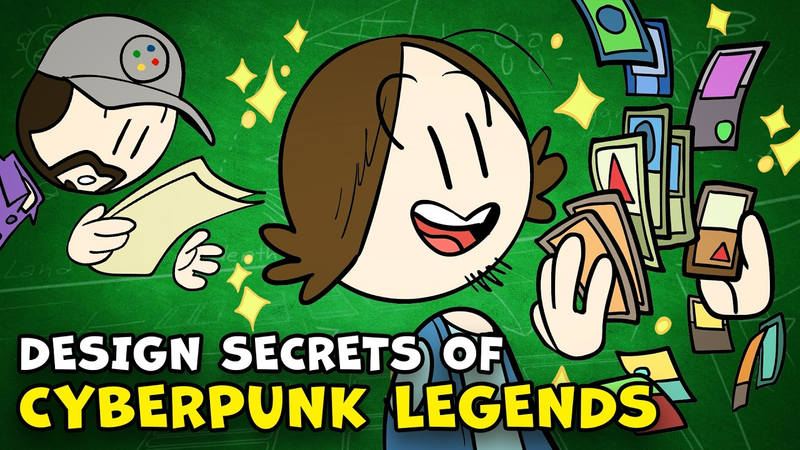
Tips for Making a Game You'll ACTUALLY Finish | Extra Credits Gaming
The design process for creating a tabletop game from scratch is best approached by leveraging constraints as creative fuel rather than viewing them as limitations.
- Start the design process by defining your constraints, such as budget, skill set, and available time, to ensure the project remains manageable and achievable.
- Establish clear design goals early—such as setup time, learning curve, and player experience—to serve as a benchmark for evaluating every future design decision.
- Identify market gaps by comparing your personal strengths against existing titles to find a niche, such as the lack of co-op, narrative-driven card games.
Watch THIS If You're Making Your First Game
The primary objective of this discussion is to analyze the challenges of independent game development, specifically focusing on the risks of long-term production cycles versus high-frequency release strategies.
- Launch-day performance is critical for long-term visibility, as demonstrated by the 2017 release of Sundered, where technical issues and poor balancing led to negative initial Steam reviews that hindered the game's market trajectory.
- Developers must choose between a 'perfectionist' model of multi-year development or a 'high-frequency' model that treats game releases like a portfolio to mitigate the high failure rate of individual titles.
- Relying on viral success is not a sustainable business strategy; developers must instead align their production models with their specific strengths and current market realities.
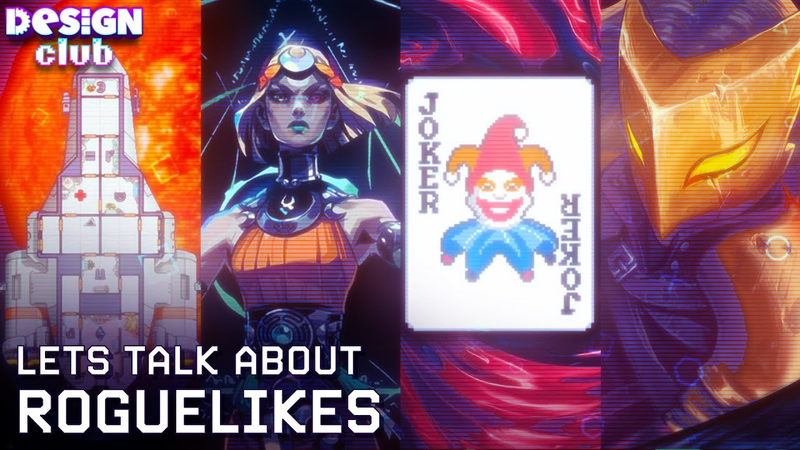
Roguelike Genre Exploration | Design Club
The roguelike genre has evolved from its rigid, turn-based origins into a versatile design framework that now permeates the broader gaming landscape.
- The roguelike label functions more as a set of design tags than a rigid genre, encompassing diverse titles ranging from deck-builders like Slay the Spire to action games like Hades.
- A core defining element of the roguelike experience is procedural alteration, ensuring that every individual run is unique through randomized seeds and encounters.
- Player loadouts—the tools, decks, or characters available at the start of a run—are essential to the roguelike structure, often allowing for strategic variety without necessarily increasing raw character power.
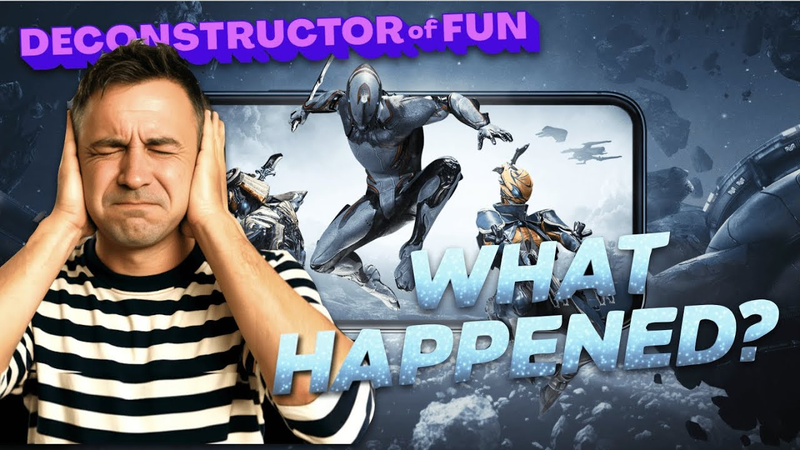
Why Warframe (and Other AAA Shooters) Struggle on Mobile
The mobile gaming market presents significant challenges for established PC and console shooters, as evidenced by the performance of titles like Warframe.
- The global games market reached $188.8 billion in 2025, a 3.4% year-over-year increase, though the mobile segment is experiencing a slowdown in the Asia-Pacific region.
- While the number of paying players rose 5% to 1.6 billion, the average spend per payer is declining, forcing developers to navigate higher user acquisition costs and shifting monetization dynamics.
- Porting complex, hardcore shooters like Warframe to mobile has proven ineffective, as these titles often fail to achieve market fit or the necessary polish when outsourced to smaller studios.
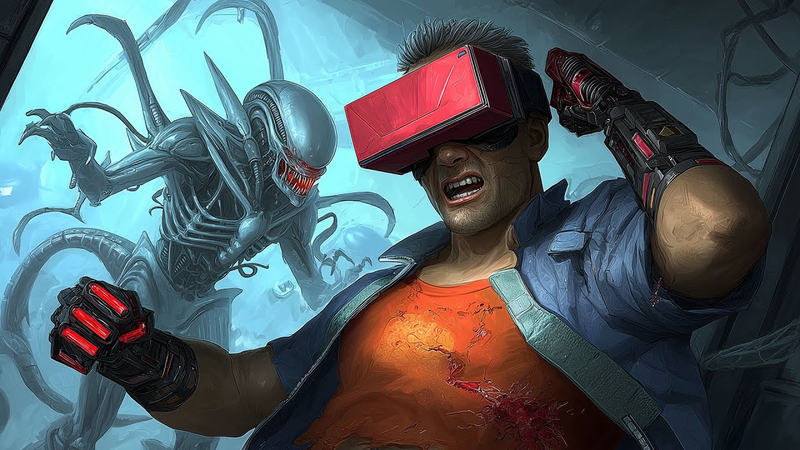
Alien: Rogue Incursion | Bridging VR and Flat Screen Experience with Ross DeVito | 366
The development of Alien: Rogue Incursion represents a strategic effort to bridge the gap between immersive virtual reality and traditional flat-screen gaming.
- Adapting VR titles for flat-screen platforms requires implementing subtle aim-assist trajectory modifications and recoil curves to replicate the immersive feel of VR movement while accounting for the higher precision of mouse and keyboard inputs.
- The development team for 'Alien: Rogue Incursion' utilizes in-house 'flat screen' (FS) terminology to distinguish non-VR ports from native virtual reality experiences, focusing on optimizing gameplay for traditional console and PC hardware constraints.
- PlayStation 5's DualSense controller features linear haptic motors that function similarly to audio speakers, allowing developers to map sound waves directly to physical vibrations for enhanced tactile feedback.
Part II: Gaming's Emotional Blind Spot: Jenova Chen's Strategy Behind Making Journey and Sky
The gaming industry is currently undergoing a period of consolidation characterized by a trend toward the Hollywoodification of content, where market dominance is increasingly concentrated in low-risk, established intellectual properties.
- Jenova Chen aims to evolve 'Sky: Children of the Light' from a three-quadrant experience into a four-quadrant product that appeals to all demographics, similar to Pixar or Disney films, by moving beyond traditional adventure-focused gameplay.
- By replacing predatory virtual currencies and loot boxes with a direct gifting-based monetization model, thatgamecompany achieved a 3x increase in purchase volume compared to standard conversion rates.
- The viral growth of 'Sky' was driven organically by a core community of Japanese female players who created fan art, demonstrating that high-quality social sharing features—such as UI-free video recording—can fuel user acquisition without traditional marketing spend.

Let's Review Your Games — Ep. 031
Indie game development requires a rigorous focus on visual cohesion and player communication to ensure professional-quality results.
- Professional-quality indie games require environmental normalization to eliminate technical inconsistencies like mismatched lighting, skyboxes, and fog.
- Developers must prioritize visual and mechanical consistency, as players consistently favor refined titles over those with unpolished assets and unclear objectives.
- UI elements and tutorials must be implemented from the opening sequence to explicitly guide players through core objectives and character motivations.

Let's Review Your Games — Ep. 029
Indie game development success hinges on the delicate balance between technical polish and intuitive player guidance.
- Prioritize intuitive player guidance and pacing over high-quality visual assets, as technical polish cannot compensate for unclear objectives or poor user experience.
- Replace static menu instructions with integrated, step-by-step tutorials to provide immediate motivation and reduce early player abandonment.
- Streamline opening sequences and maintain tight gameplay pacing to prevent significant drops in engagement caused by vague narrative context or disorienting camera perspectives.

Let's Review Your Games — Ep. 030
Independent game development success hinges on balancing high-quality technical assets with fundamental usability and narrative clarity.
- Game developers should provide a clear 'who, what, when, where, and why' narrative setup early in the experience to orient players, rather than relying on an ambiguous start.
- Intuitive control schemes are critical for player retention, as evidenced by Star Racer receiving positive reviews despite significant user feedback regarding wonky and buggy controller support.
- UI design should prioritize readability and visual clarity; for example, adjusting logo typography can significantly improve legibility and thematic impact.

Developers are holding back game features due to online safety laws
Global online safety legislation, including the UK’s Online Safety Act and the EU’s Digital Services Act, is fundamentally reshaping the video game industry by imposing rigorous compliance requirements on user-generated content, chat functionality, and monetization.
- New online safety regulations like the UK’s Online Safety Act and the EU’s Digital Services Act are forcing developers to omit or delay social and community features to avoid the high administrative burden of mandatory risk assessments.
- Console user growth has stagnated at approximately 2.5 percent, while revenue has increased by 5.5 percent, indicating that higher price points are driving short-term gains at the expense of long-term player acquisition.
- Private payment processors are increasingly acting as de facto regulators by enforcing their own content standards, adding a layer of complexity to official government compliance requirements.

Let's Review Your Games — Ep. 028
Indie game development often succeeds in crafting cohesive atmospheres and distinct visual identities, yet many titles struggle to retain players during the critical first five minutes of gameplay.
- Game developers should prioritize early player engagement by providing immediate control, such as walking out of an apartment, rather than relying on static screens that risk player drop-off within the first five minutes.
- Establishing clear character motivation and stakes early in a game is essential; without a defined incentive or sympathetic goal, players are less likely to remain invested in the experience.
- Visual clarity regarding time of day is a critical design element that helps ground the player in the game world, as ambiguous lighting can make it difficult to determine the setting's temporal context.
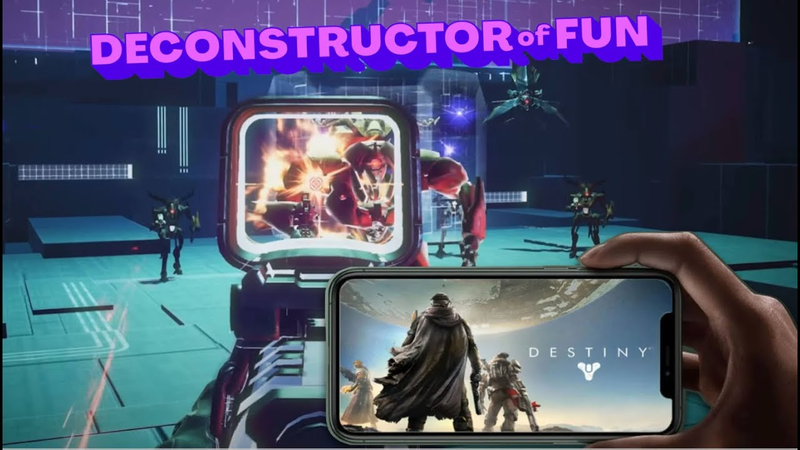
Destiny Rising Is Here, But Where Are the Downloads?
The global launch of Destiny Rising, a mobile spin-off developed by NetEase based on the Destiny franchise, has been marked by underwhelming download figures, raising questions regarding its product-market fit and the current state of the mobile shooter segment.
- Destiny Rising underperformed at launch with approximately 900,000 downloads and $2.3 million in revenue over its first four days.
- The game's initial download volume is considered lackluster compared to industry benchmarks, such as Call of Duty Mobile, which secured 80 million iOS downloads in its first month in China.
- The title faces significant product-market fit challenges in the Western mobile shooter segment, which remains heavily dominated by established competitors like Call of Duty Mobile.