Game Design reports and market data
Documents
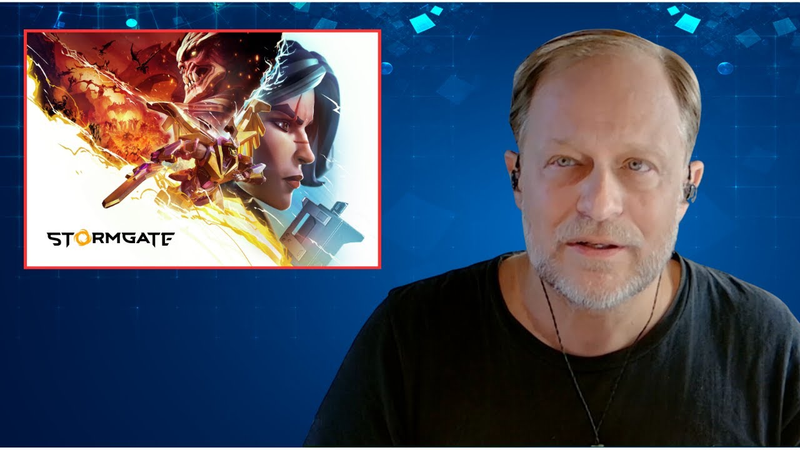
Is RTS Really Dead? How It Comes Back (Tim Morten StarCraft 2, StormGate)
The real-time strategy (RTS) genre maintains a dedicated and stable core audience, though it has been eclipsed in total market share by genres such as multiplayer online battle arenas (MOBAs) and battle royales.
- The core audience for the real-time strategy (RTS) genre remains passionate and has not diminished, but the genre has been eclipsed in total player count by massive genres like MOBA and Battle Royale.
- Achieving growth for the RTS genre beyond its current niche requires significant innovation, with social play identified as a primary, yet difficult-to-execute, growth strategy.
- Frost Giant’s development of Stormgate faced scope challenges that forced the team to prioritize core gameplay modes over the intended social and co-op experiences.
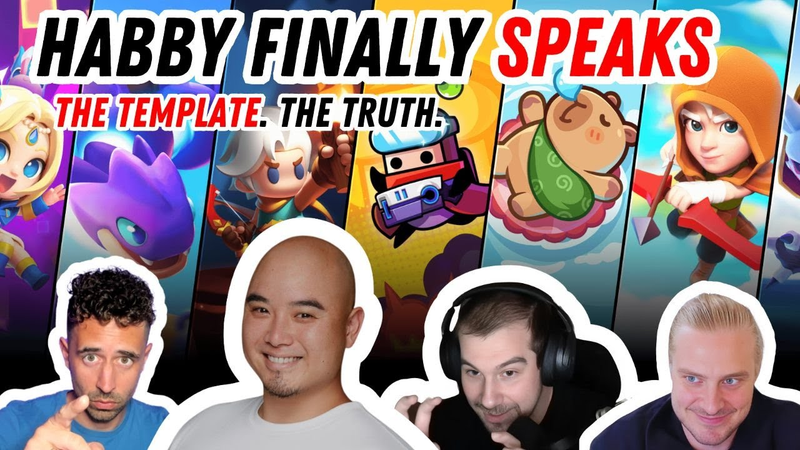
🎮 Habby finally SPEAKS: The template evolves! First-ever Habby Western interview
Habby has evolved from a publisher of simple puzzle games into a powerhouse of midcore, IAP-driven mobile experiences, exemplified by the global success of titles like Survivor.io and Archero.
- Habby has transitioned from simple puzzle games to a midcore, IAP-driven model, leveraging a repeatable development template that balances accessible onboarding with long-tail engagement.
- To combat rising user acquisition costs, Habby is shifting away from the hybrid-casual market and investing in long-term partnerships, such as a $2 million commitment to Mavis Games.
- Successful scaling requires integrating monetization directly into the core game loop, a strategy where Chinese developers currently outperform Western studios that often treat revenue as an afterthought.
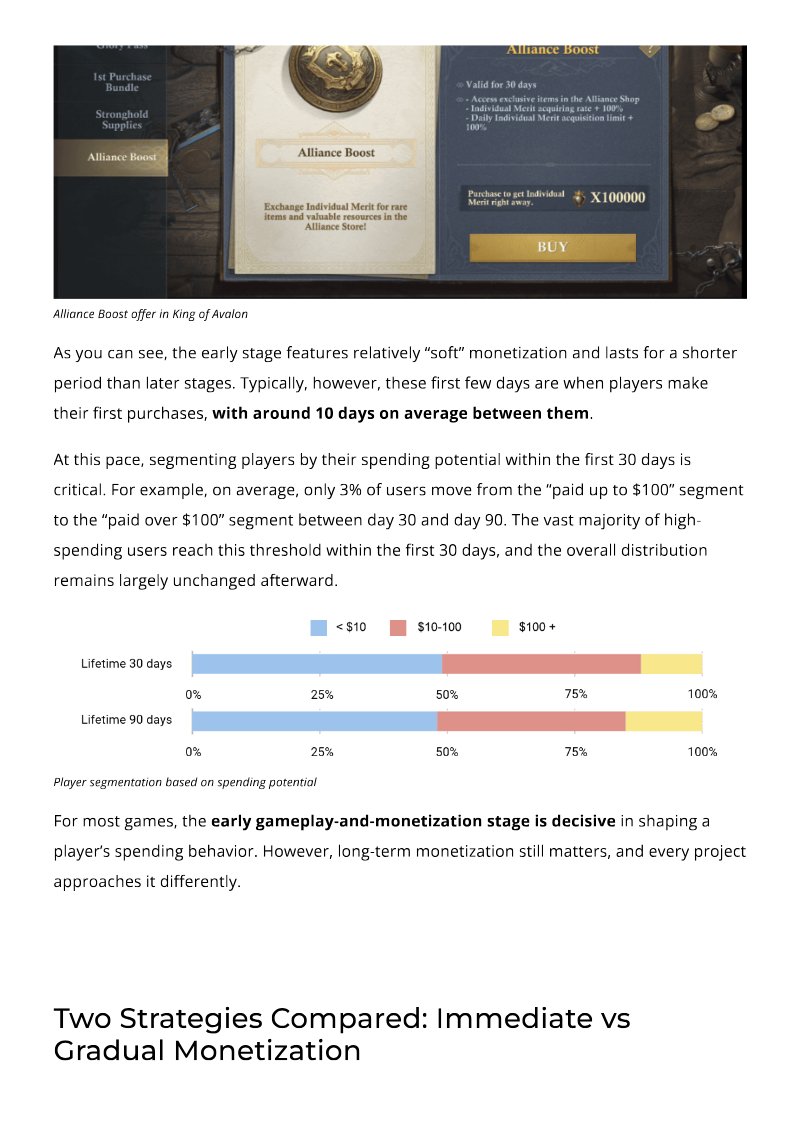
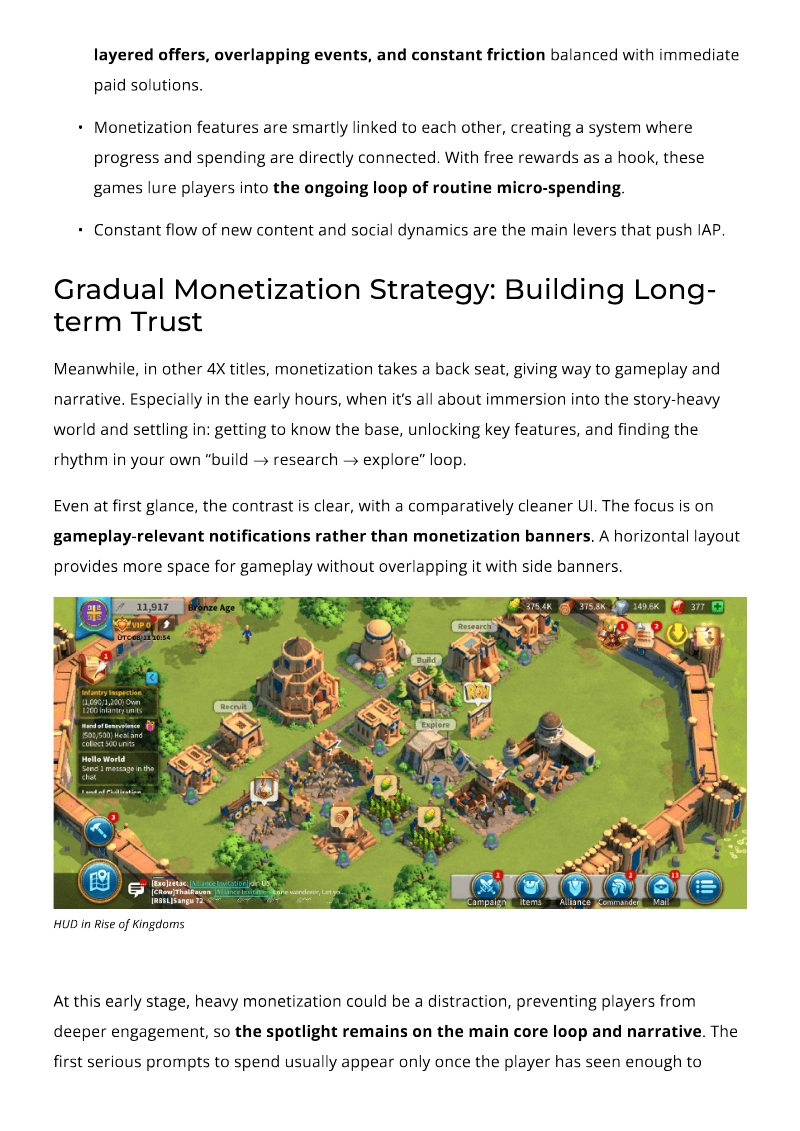
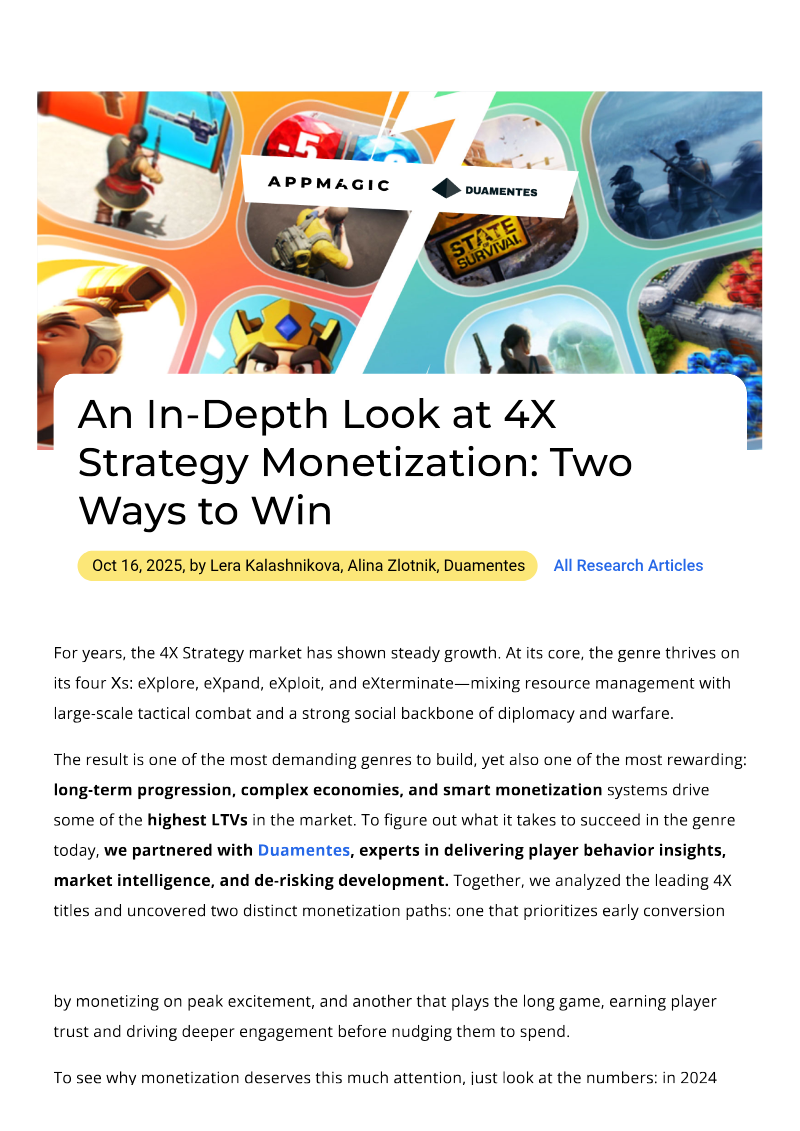
An In-Depth Look at 4X Strategy Monetization: Two Ways to Win
The 4X strategy genre currently operates as a highly concentrated and lucrative market, where the top five titles command half of all industry revenue.
- The 4X strategy market is highly concentrated, with the top five titles capturing 50% of total industry revenue.
- Developers must choose between an immediate monetization model, which uses high-frequency offers and gameplay friction, or a gradual approach that prioritizes long-term trust and narrative immersion.
- Successful monetization relies on a three-stage lifecycle—early, middle, and late—that synchronizes player progression with revenue-generating mechanics.
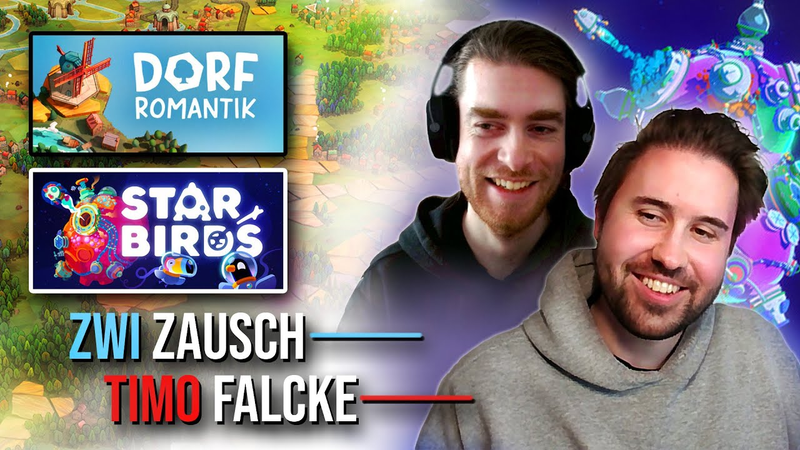
Making the Correct Game Is Key
The primary thesis for sustainable indie game development centers on the necessity of disciplined prototyping, clear core mechanics, and the strategic balance between innovation and market familiarity.
- Success in game development is difficult to replicate, even for the same studio, as evidenced by the distinct market performance and development challenges between Toukana Interactive's titles Dorfromantik and Star Birds.
- Toukana Interactive optimized Dorfromantik for the Nintendo Switch by using shader-based techniques to generate unique object seeds based on position and scale, avoiding the need for high-resolution meshes or textures that would exceed hardware limitations.
- The studio emphasizes that while making a game fun through iteration is a manageable skill for experienced developers, the primary challenge lies in establishing immediate visual appeal and communicating the core concept clearly through a single screenshot.
Christians Shouldn't Make Horror Games
The central thesis of this discussion is that creating horror games and films is a valid and potentially profound pursuit for a Christian developer, provided the work is grounded in honesty and thematic depth rather than gratuitous violence.
- Horror games serve as a valid medium for Christian developers to explore themes of human sin, the fallen state of the world, and the necessity of redemption.
- Effective horror functions as a cautionary tool that mirrors the dark, harrowing narratives and grotesque imagery found in biblical accounts.
- Creators should distinguish between 'carnal' horror, which relies on gratuitous violence for base impulses, and 'artistic' horror, which uses style to convey meaningful warnings or truths.
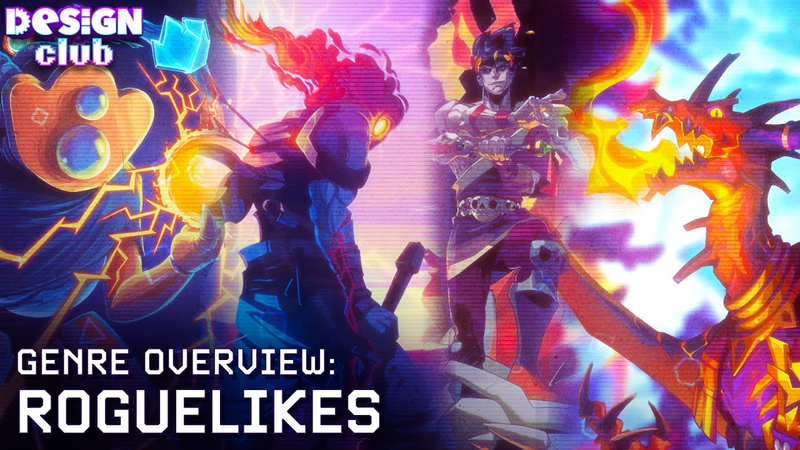
Roguelike Genre Exploration, Run 2!
The roguelike genre has evolved from a niche, punishing category into a pervasive design framework that influences modern gaming across diverse segments, including card games, shooters, and MMOs.
- The primary distinction between 'roguelikes' and 'roguelites' is meta-progression: roguelites feature persistent character upgrades or starting-state power increases across runs, whereas roguelikes require players to improve solely through increased game knowledge and skill.
- Core elements of the roguelike genre include short run durations (typically 30 minutes to two hours) and an expectation of frequent, repeated loss conditions that force the player to restart.
- Roguelike mechanics are increasingly viewed as a 'tag' or feature set—similar to RPG progression—rather than a rigid genre, as they are now applied across diverse formats including brawlers, shooters, and card games.
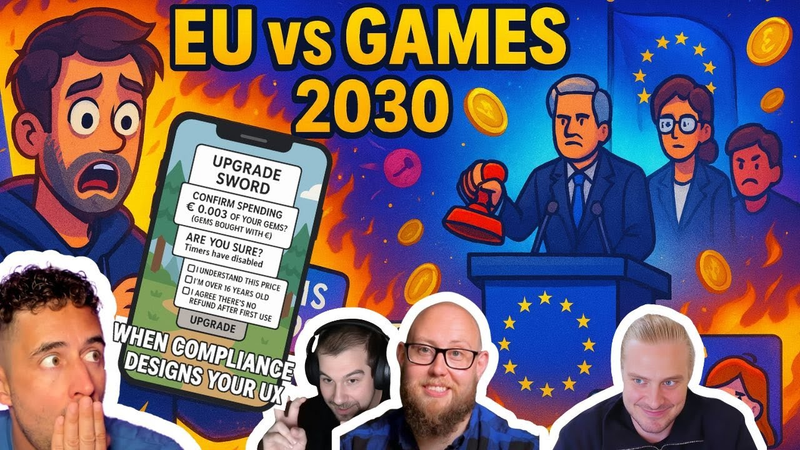
🚨 EMERGENCY EPISODE 🚨 Is EU’s Digital Fairness Act REALLY killing Free-to-Play games?
The European Union’s proposed Digital Fairness Act represents a significant regulatory shift aimed at restructuring the monetization frameworks of free-to-play gaming.
- The EU’s proposed Digital Fairness Act mandates a 14-day refund policy for virtual goods and restricts core free-to-play mechanics like multi-currency systems and dynamic economy balancing.
- These regulations threaten the operational viability of live-service games by dismantling the flexible, inflationary economic models currently used to drive revenue.
- High compliance costs and reduced monetization agility may force developers to exit the European market or shift toward ad-supported models, potentially degrading user experience.
Press Play, Part 2: What Games Get Wrong About Retention, and How to Fix It
The gaming industry is currently undergoing a significant shift as its core design principles—specifically those centered on behavioral psychology, engagement loops, and interactive mechanics—become highly sought-after assets in non-gaming sectors.
- Game design principles are increasingly being applied to non-gaming sectors, such as Duolingo’s gamified learning or BCG’s use of simulation games to teach corporate strategy to consultants.
- Retention is driven by a deep understanding of human psychology, personality traits, and motivations rather than relying solely on mechanics, monetization, or dopamine loops.
- The stigma surrounding video games has faded, allowing game developers to pivot their skills into roles within marketing, emerging technology, and digital product innovation at non-gaming firms.

What Sells on Steam: You Don't Need a Hook
Successful indie game development on Steam does not require a unique gameplay hook—a specific mechanic designed to differentiate a title—but rather a focus on compelling player experiences and market appeal.
- Commercial success on Steam is driven by the player's desired experience and fantasy, rather than a unique gameplay mechanic or 'hook'.
- Developers should prioritize solving for 'appeal'—the visual or conceptual urge that makes a player want to engage with the game before they have even played it.
- Successful game development strategies include iterating on proven formulas (like Thronefall), finding market gaps (like Islanders), or translating successful media tropes into a game environment.
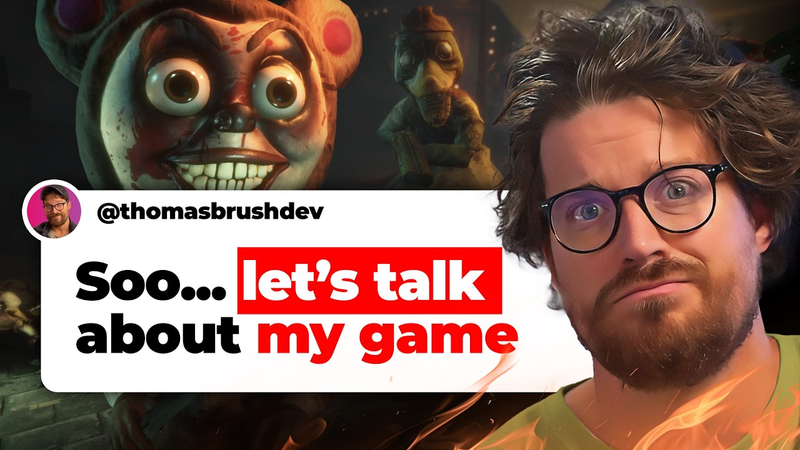
After 4 Years, We Need To Talk About Twisted Tower
The four-year development cycle of the horror title Twisted Tower serves as a case study in iterative refinement and the necessity of overcoming the sunk cost fallacy through strategic pivots.
- The four-year development cycle of Twisted Tower demonstrates that pivoting from a broad, self-directed vision to a focused, genre-aligned experience is essential for achieving commercial viability.
- Technical performance was significantly improved by replacing default real-time shadows with a minimal lighting setup, which simultaneously enhanced the game's horror aesthetic and ensured compatibility with hardware like the Steam Deck.
- Development shifted from melodic compositions to atonal, layered soundscapes to better manipulate player tension and improve atmospheric cohesion.
How Balatro Became a 7-Million-Copy Indie Hit | Harvey Elliott, CEO of Playstack
The success of the poker-themed roguelike Balatro, which has surpassed seven million units sold, serves as a primary case study for a publishing model that prioritizes niche community engagement over mainstream marketing.
- Balatro has achieved commercial success with over 7 million units sold by prioritizing niche community engagement over traditional mainstream marketing.
- Publishers can scale resource-constrained indie titles by focusing on games that combine an immediate, compelling core loop with long-term strategic depth.
- The publishing model for Balatro relies on organic discovery through social media and specialized forums to reach target audiences without aggressive, short-term promotional spending.

The Frustration of Bad Level Design in Modern Games
Modern game design faces a critical challenge regarding spatial clarity and player experience.
- Modern game design suffers from poor level layouts that force players to manage too many sightlines simultaneously, leading to frustrating combat experiences.
- The developers of 'Project Rail' are targeting a 2026 release for their free demo, with current development focused on core combat, atmosphere, gore systems, and destruction mechanics.
- The 'Project Rail' team plans to launch a Steam page this year to begin gathering wishlists and building community momentum.