Game Design reports and market data
Documents
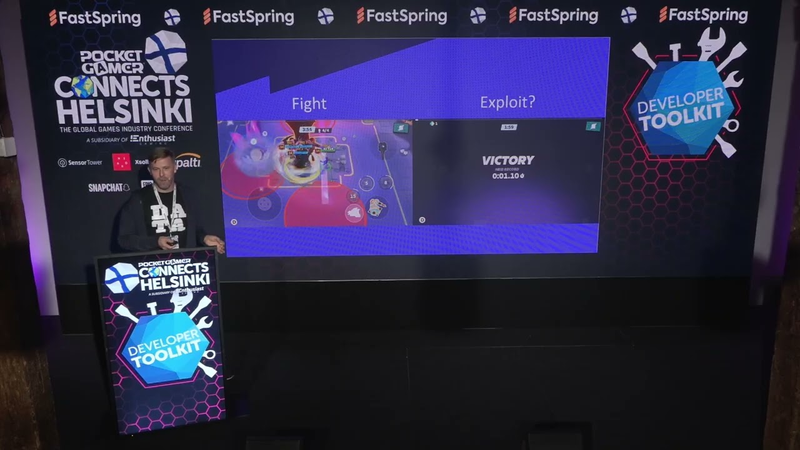
Session: Balancing Player Experience Without Players At Supercell: Case mo.co - Markus Ojala.
Supercell employs reinforcement learning (RL) to balance game mechanics for its multiplayer title, mo.co, specifically addressing the challenge of tuning game balance before a live player base exists.
- Supercell utilized reinforcement learning (RL) to balance the game mo.co during development, allowing designers to test items and gear combinations before the game had a live player base.
- The development team used a headless client integrated with C++ and Python to run approximately 1,000 parallel game simulations on a single GPU, enabling rapid iteration on balance changes every one to two weeks.
- Reinforcement learning agents were trained using Proximal Policy Optimization (PPO), where bots received incremental rewards for actions like staying alive, hitting monsters, and completing dungeons to learn optimal gameplay strategies.

Panel: Beyond The Algorithm - Will AI Redefine Player Experiences?
Artificial intelligence is fundamentally shifting the game development paradigm from static, hardcoded systems toward dynamic, AI-native experiences.
- The primary barrier to AI integration in mobile free-to-play games is the high cost of inference when using large foundation models, which can threaten the viability of existing business models.
- Developers should prioritize smaller, domain-specific, or distilled models over massive general-purpose models to optimize resource usage and reduce inference costs.
- Future AI architecture in gaming will likely rely on a 'mixture of experts' approach, where specialized models are fine-tuned for specific tasks rather than relying on a single, generalized foundation model.
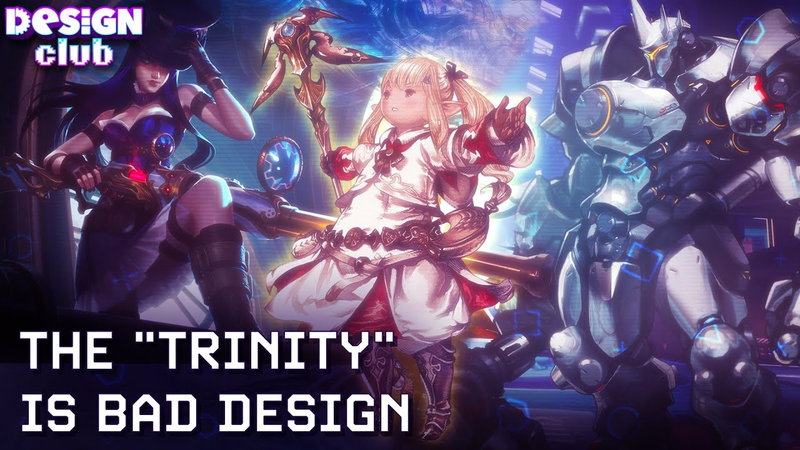
The Archetype Trap | Design Club
The traditional Holy Trinity of tank, healer, and damage dealer (DPS) serves as a pervasive, yet increasingly contentious, framework in modern game design.
- The 'Holy Trinity' of Tank, Healer, and DPS is a design shorthand used to simplify party management and matchmaking in large-scale games like Final Fantasy 14 and Warhammer Online, rather than a fundamental requirement of game design.
- Strict adherence to archetypes can lead to poor gameplay if developers prioritize these roles over the actual needs and mechanics of the game they are building.
- Game archetypes are often fluid; for example, modern tanking roles frequently incorporate crowd control to manage player-controlled opponents, whereas traditional aggro tables are primarily designed for NPCs.
Game Dev Teams Are Broken. Here's the Structure That Actually Works.
Modern game development frequently suffers from structural friction, where traditional craft-based silos impede progress and dilute creative intent.
- Studios should reorganize into autonomous, cross-functional teams of five to fifteen members to reduce communication overhead and accelerate iteration.
- Teams should be structured around specific product outcomes, such as combat mechanics or meta-systems, rather than traditional craft-based silos or task lists.
- Guilds must be established to facilitate cross-team knowledge sharing and maintain quality control while individual units operate with autonomy.

Week in Mobile Games E69 - The big AWS crash and Google delays Android regulation
The mobile gaming industry is currently navigating a period of significant structural and regulatory transformation, characterized by a push toward open ecosystems and a diversification of game genres.
- The mobile gaming industry generates approximately $120 billion in annual in-app purchase revenue, driving intense competition for user engagement.
- Google has been granted a one-week extension regarding a legal injunction that would require the company to permit rival payment options on its platform.
- Studios are increasingly adopting direct-to-consumer strategies and unified commerce dashboards to manage cross-platform operations independently of traditional platform gatekeepers.

🎮 Huntopia: The $100K/Day Idle RPG that monetizes everything. Literally everything!
Huntopia represents a significant case study in aggressive mobile game monetization, demonstrating how an idle RPG can generate substantial daily revenue—ranging between $50,000 and $100,000—by prioritizing constant financial conversion over traditional gameplay depth.
- Huntopia generates between $50,000 and $100,000 in daily revenue by prioritizing aggressive, constant monetization over traditional gameplay depth.
- The game integrates monetization directly into core user interactions, using contextual prompts during routine tasks like claiming rewards or advancing battle pass tiers.
- The design utilizes a menu-heavy, automated progression loop that requires minimal active input, effectively funneling users through a high-converting monetization path.
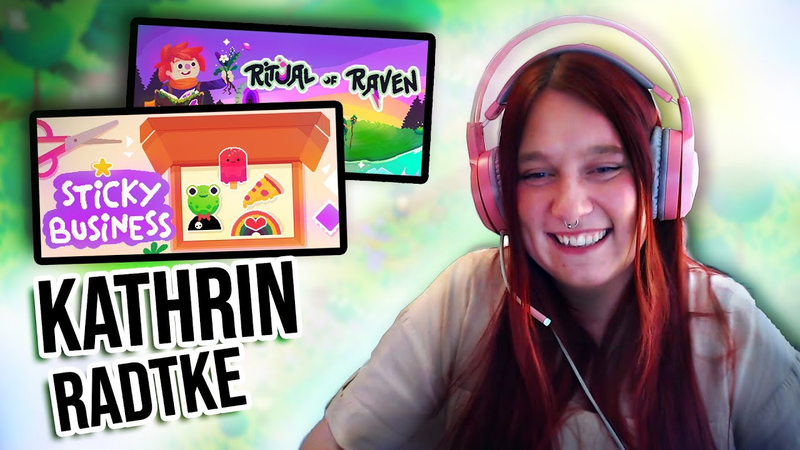
Making a Cozy Game Hit in 5 Months
The cozy game market is defined by low-stakes escapism, accessible mechanics, and hobby-based fantasies that prioritize player-driven creative expression over rigid optimization or punitive lose states.
- Cozy games are defined by low-stakes gameplay, the absence of severe failure states, and a focus on relaxing, non-apocalyptic themes like managing shops or bakeries.
- Marketing a game is significantly easier when the core concept is immediately understandable, as evidenced by the fact that games with similar marketing efforts can yield vastly different outcomes based on their inherent appeal.
- Early community engagement via platforms like TikTok allows developers to validate game concepts and gather feedback in real-time, even during the initial three-week prototyping phase.
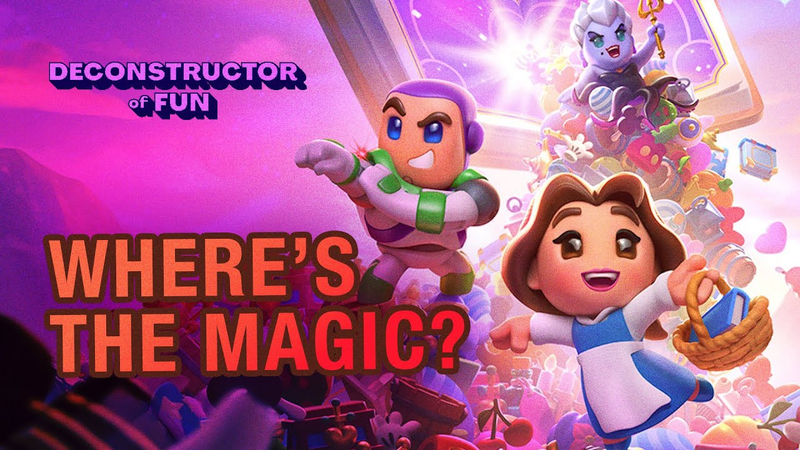
Disney Enters Match 3D — But the Magic’s Missing
Disney’s Magic Match, developed by Jam City, represents a recent entry into the competitive Match 3D mobile gaming subgenre.
- Disney’s Magic Match, developed by Jam City, is struggling to gain traction in the Match 3D subgenre due to its late entry against established leaders like Match Factory, which has dominated the market since late 2023.
- The game fails to implement effective monetization because it lacks early-game difficulty, with playtests showing zero fail states within the first 50 levels.
- Unlike traditional match-three games that use adaptive drop algorithms to drive revenue, Match 3D titles rely on time-based pressure and dexterity, which Magic Match fails to leverage for economic tuning.
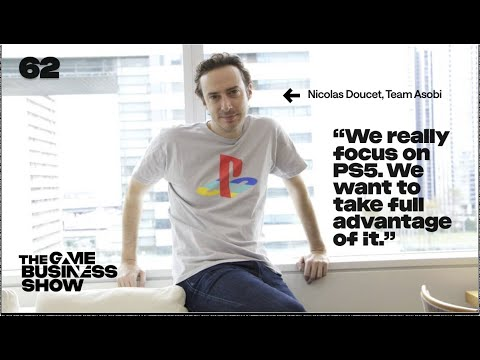
"The PS5 has really brought something special"
The modern gaming landscape often prioritizes massive scale and extended playtimes, yet a more effective development philosophy centers on high-quality, focused content.
- Maintaining a lean development team of approximately 65 people and utilizing rapid prototyping helps studios avoid the high costs and bloat associated with modern AAA production.
- Assigning individual developers ownership over specific gameplay segments ensures consistent quality and prevents player fatigue throughout the title.
- Integrating PS5 hardware features like high-speed SSDs and DualSense haptic feedback as core gameplay elements, rather than superficial additions, is essential for deepening player immersion.
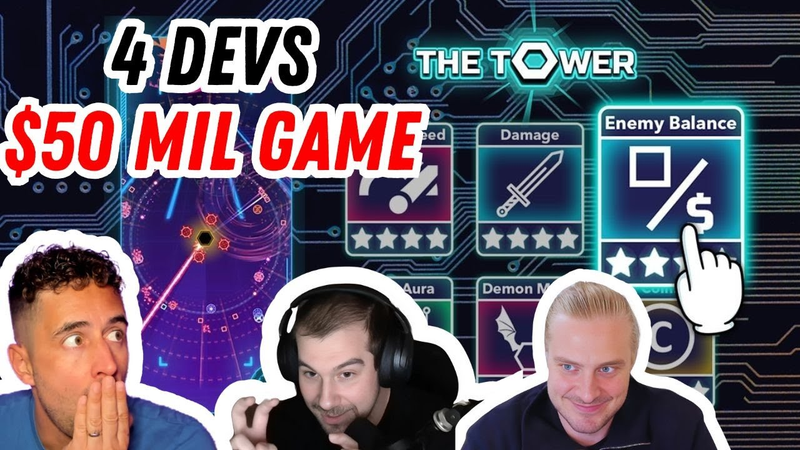
🏰👠 The Tower GD Masterclass Review: The ultimate Cinderella story
The Tower serves as a compelling case study in the mobile free-to-play market, demonstrating that deep mechanical complexity and community-driven engagement can generate substantial revenue, even in the absence of high-fidelity art or traditional production values.
- The Tower has generated over $50 million in total revenue with daily earnings peaking at $80,000, proving that minimalist, data-heavy interfaces can drive significant financial success.
- The game achieves long-term retention by prioritizing a core loop of macro-management and grinding, eschewing traditional energy-based monetization in favor of deep progression systems.
- A lean team of four full-time employees manages the project, utilizing a hybrid growth strategy where 50% of installs are organic, driven by an active Discord community and a creator code program.
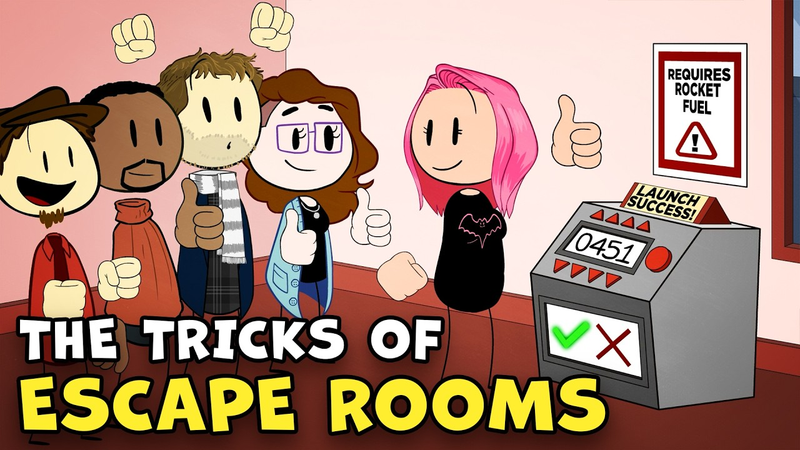
Escape Rooms: Manipulation for Fun and Profit! | Extra Credits Gaming
Modern escape rooms function as sophisticated psychological environments designed to immerse participants in a narrative while guiding their behavior through subtle game design techniques.
- The modern escape room industry originated with Takao Kato’s company SCRAP in 2007, and has since expanded to an estimated 50,000 rooms across at least 44 countries.
- Designers utilize the 'magic circle' concept to foster immersion, employing themed introductions and 'endowments'—such as specific titles or physical props—to help players adopt a role and suspend disbelief.
- Lighting is used as a non-verbal tool to guide player movement and focus, such as dimming lights in one area to encourage migration to a brighter room or using soft pulses to highlight puzzle components.
Pokemon BDSP: Play Like A Designer Episode 4, Forward to Floaroma!
Pokémon Brilliant Diamond and Shining Pearl serve as a case study for the enduring tension between casual accessibility and the rigorous demands of competitive play.
- Pokémon Brilliant Diamond and Shining Pearl features a quality-of-life mechanic where players can use Hidden Moves like Rock Smash via the Pokétch app, allowing wild Pokémon to perform the action without requiring the player to teach the move to a party member.
- Double battles in Pokémon expand the game's possibility space by allowing players to manage two active combatants, though the number of Pokémon each trainer can deploy is limited by the specific encounter's constraints.
- Time-bound mechanics in games, such as specific Pokémon spawn windows or MMO events tied to real-world clocks, create significant challenges for content creators and streamers who cannot maintain consistent availability for these events.